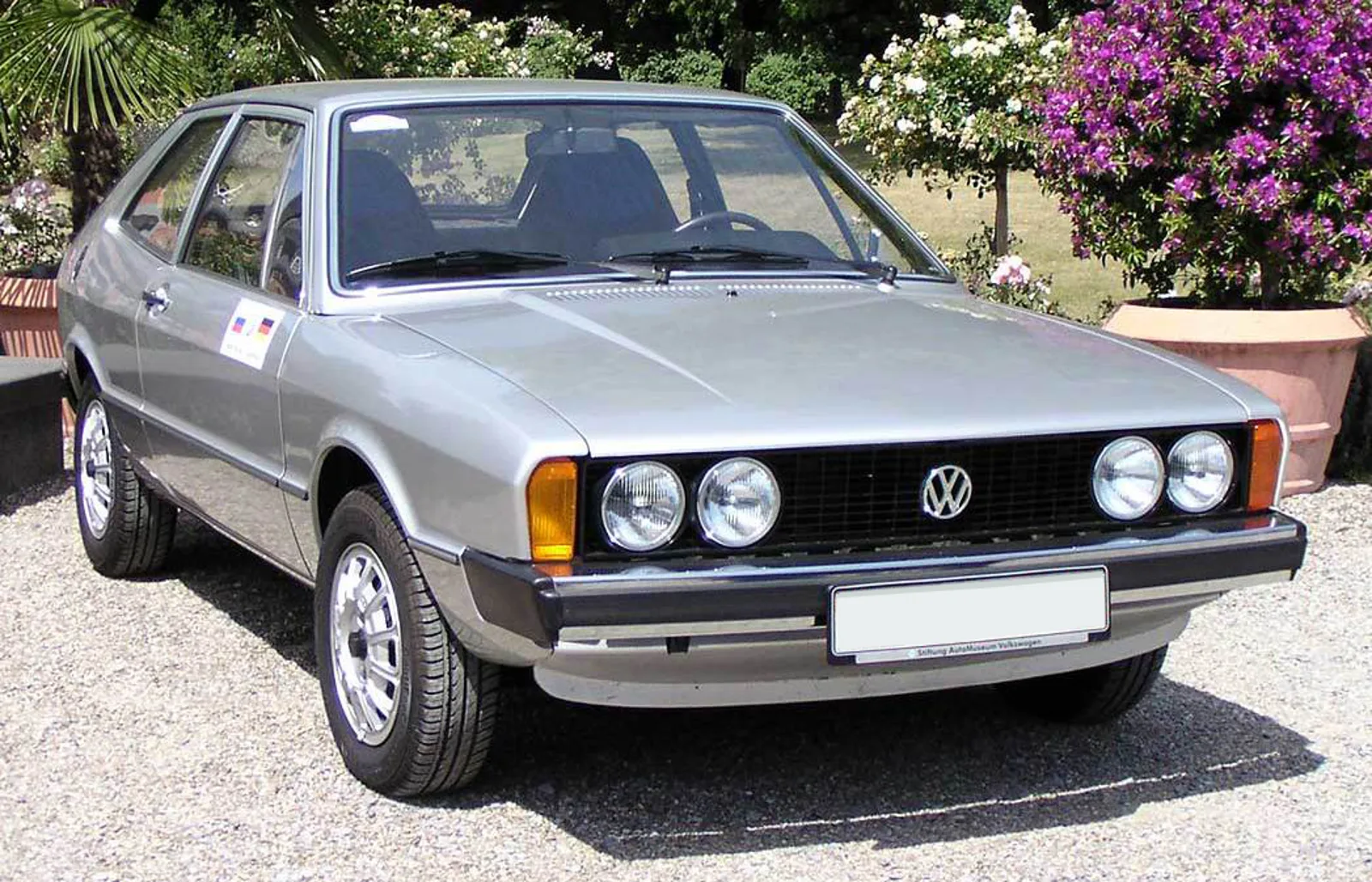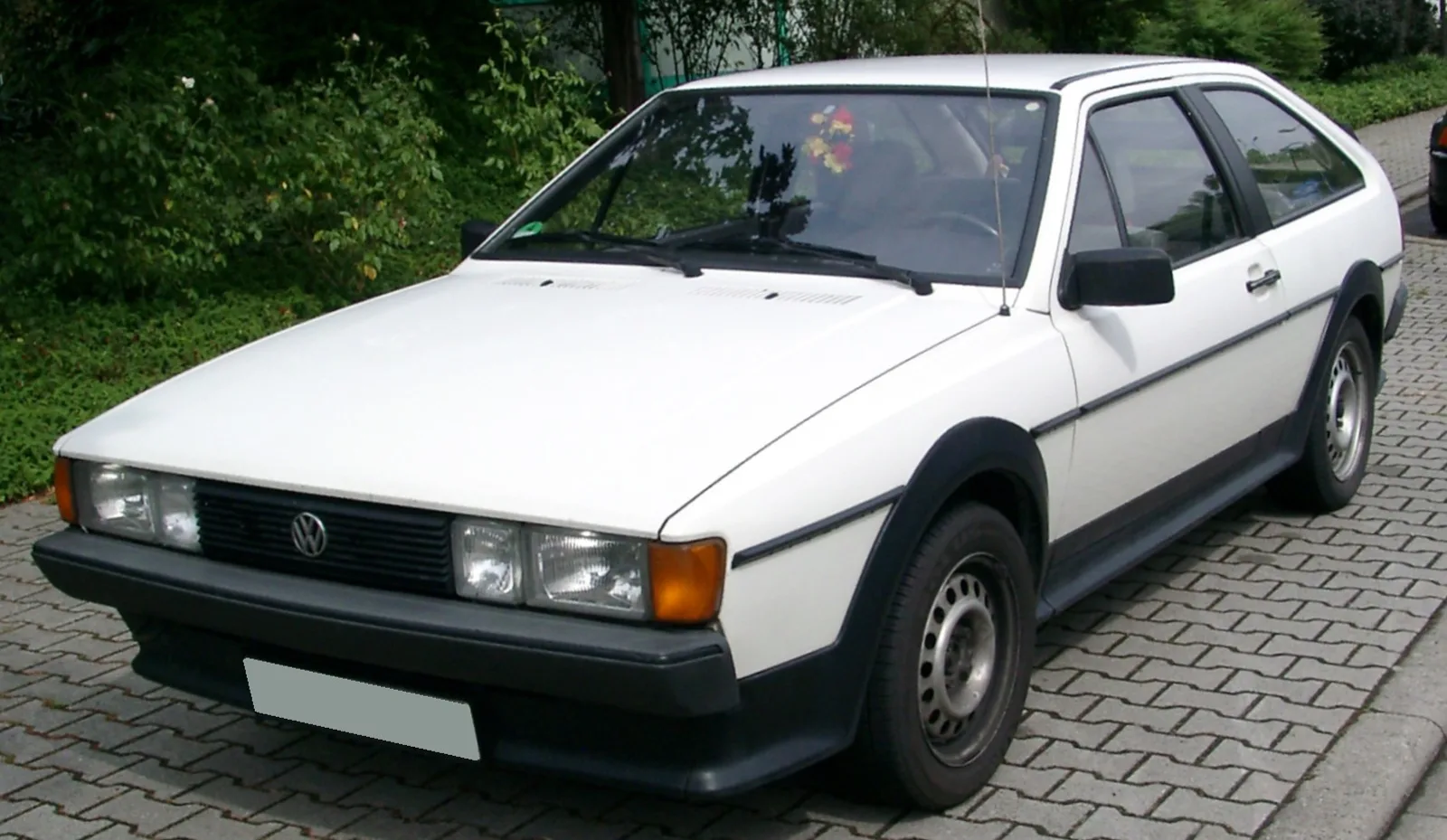
A Golf I-based coupe with a lower drag figure, a disappointing first two years and a 16-valve engine that brought a brief revival of demand before production ended in 1992.
The VW Scirocco II was a Golf I-based coupe that took over from the Scirocco I in May 1981. Its drag figure of 0.38 and a 16-valve engine from 1985 shaped its story, and production ended in September 1992 after sales that often fell short.
The Volkswagen Scirocco II was a sports coupe built on the platform of the Golf I. It replaced the Scirocco I on 15 May 1981 and took over the Scirocco I's chassis and proven drive technology, with a new body that cut drag and added luggage space. Sales started slowly, but a 16-valve engine arrived in 1985 and the car stayed in production until September 1992.
What did the Scirocco II replace, and what was it built on?
It replaced the first Scirocco. Design work on the second generation started in the mid-1970s, with two basic demands: a body with better airflow and more room for occupants and luggage. VW's Product Strategy Committee discussed the successor in February 1976, when it was planned for spring 1981.
The chassis, drivetrain and running gear came over from the predecessor, and the company kept the proven drive technology that it had been developing continuously. Performance, handling and fuel consumption stayed at roughly the same level, so the change was mostly in the body and the interior.
The 16-valve engine brought the Scirocco II only a brief revival of demand after a disappointing start.
How was the Scirocco II styled?
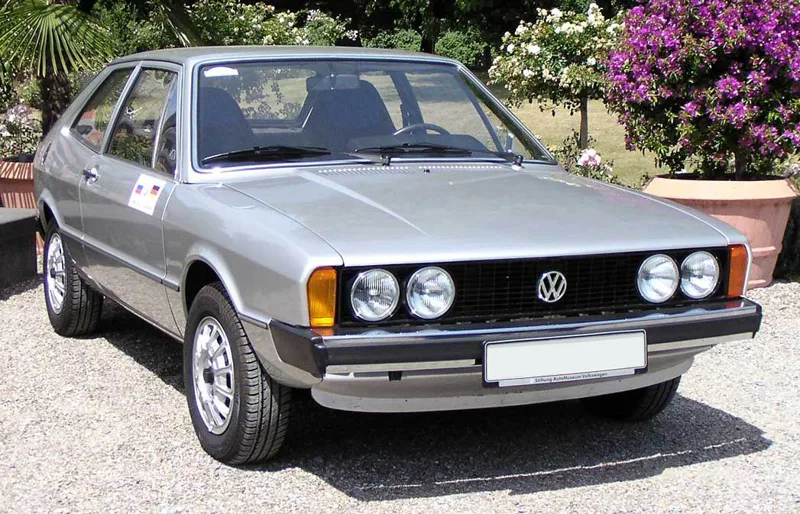
Wind-tunnel work shaped the new car. Its lines were softer and flowed where the first Scirocco had edges and sharp contours. The car had a more strongly emphasised wedge form, with a very flat nose and a high-set rear end, plus a spoiler to add downforce and keep the rear window clean. A continuous horizontal belt line ran the length of the body.
The tail sat much higher than before, and the rear window was pulled further down. The result was a drag coefficient of 0.38, against 0.42 for the Scirocco I, a reduction of almost ten per cent. For 1981 that was a typical figure. The Audi 100, shown a year later, reached a Cw value of 0.30.
Why did VW choose its own design?
VW's Product Strategy Committee was first shown styling models in September 1977. One came from Giugiaro and kept the striking lines of the predecessor. The other was a study from VW's in-house design department, and the committee chose it. That design better matched the marketing department's wish for a rather more moderate hardness in the lines.
The first styling models were internally called EA 491, a development order number. Giugiaro had produced another design, but in summer 1977 the decision went to the design of VW's own design department.
How much roomier was the Scirocco II?
Roominess improved, though not dramatically. Rear head room grew, and the boot gained 74 litres, reaching 414 litres. Measured another way, with the back seat folded, the figure was given as anywhere from 920 to 1,196 litres. Rear-axle lift was reportedly reduced by 60 per cent.
The body and interior were reshaped to give more room. Curved outer panels and indented inner trim provided extra space for the elbows and more head room, especially at the back. With 16.5 cm more length, the car also offered more luggage space. It was among the first cars to drop a conventional rain gutter.
When did the Scirocco II go on sale, and what did it cost?
The production car was shown at the Geneva Motor Show in early March 1981. Press test drives began on the Cote d'Azur on 16 March, and VAG dealers received cars from mid-May. Five advertising campaigns in June 1981 used the slogan "The new Scirocco. Excitingly sensible."
The planned entry point was the L version, better equipped and priced at 13,660 DM. The cheapest 1981 car, with the 44 kW (60 PS; 59 hp) engine, cost 16,755 DM. The Scirocco I's standard version had sold poorly, so the better-equipped L version became the planned entry model. The first models kept the single-arm wiper of the predecessor, and they reached the market in spring 1981 with the familiar engine range.
Why did sales fall short?
Sales were disappointing. Worldwide sales in 1981 reached 51,938 cars, 25 per cent below target, and in 1982 the figure fell to 48,000, so daily output was cut by 20 to 260. Roughly one buyer in five was a woman, a share that stood out at the time.
Market research in spring 1982 found that 60 per cent of respondents saw the car as too expensive, partly because there was no cheap basic model. A new Scirocco GTI cost over 17 per cent (3,300 DM) more than its predecessor. The planning figure of November 1978 had been 515,000 cars over the whole production run.
How did the GTI and GTS perform?
The GTI with the 81 kW (110 PS) engine reached 191 km/h, up from 185 km/h for its predecessor. Its 0 to 100 km/h time worsened from 8.8 to 9.1 seconds because the car was 95 kg heavier.
In autumn 1982 the GTS arrived as a special model. Its first version, with the 63 kW (85 PS) engine, started at 19,450 DM. A GTS with 82 kW (112 PS) cost 21,990 DM in 1982, which made it clearly cheaper than the GTI at 23,835 DM and the GLi at 23,550 DM, both with the same engine.
What changed with the 16-valve engine?
A 16-valve engine built by the tuning firm Oettinger Performance, which had no ties to VW or Karmann, appeared in autumn 1981. VW wanted to follow suit. From August 1982 the fuel-injected engine grew to 1,800 cc and the engine range was thoroughly reworked with long-stroke units. Service intervals stretched to 15,000 km or yearly, and the 1.3-litre engine dropped out.
At the Frankfurt show in 1983 VW displayed a 16-valve prototype with 102 kW (139 PS). It was based on the Oettinger model and went on sale from July 1985. The chassis was reworked with reinforced joints, wishbones and anti-roll bars, and it gained disc brakes at the rear. The rear spoiler was enlarged to reduce lift.
How did the Scirocco 16V perform?
At launch the 16V version with 102 kW (139 PS) carried a price of 27,190 DM. Its sprint from 0 to 100 km/h took 8.1 seconds, and the top speed was 208 km/h. Its introduction in July 1985 brought only a brief revival of demand.
From early 1986 the 16V was also available with a regulated catalytic converter, delivering 95 kW (129 PS). In Switzerland only that catalytic-converter version was sold. Sales in 1984 and 1985 had been 40,756 and 34,058 cars, and in 1986 33,000 were sold worldwide before the figure fell to 26,000 in 1987.
What options and special models were offered?
Between 1982 and 1986 several special models appeared: the GTS (1982), the GTX (1984), the White Cat (1985), and the Tropic and Scala (both 1986). Some carried all-round spoiler sets and extra kit. Sales nevertheless stayed low. A long list of options was also available, from a sliding roof with a wind deflector to air conditioning and electric windows.
Other firms offered convertible and targa conversions. Hornstein Autostyling in Volkertshausen and Bieber in Borken were named, and Raffay Tuning with Stephan Wambach in Hamburg offered targa work. Karmann built two prototypes with a targa roof, the Scirocco TR, in gold and silver. How many conversions were ever built is unknown.
When did Scirocco II production end?
Only 18,283 cars were sold from 1990 until production stopped in 1992. In spring 1989, shortly after the Corrado appeared, the range was pared back to two engines, and the 16V returned in 1990 to fill the gap between the 95 PS Scirocco and the 160 PS Corrado. The Scirocco GT II stayed on offer to the end in September 1992, while the Scala ended in August 1991.
Total production was 291,651 vehicles from 1981 to 1992. Once 291,497 cars had been completed, the final Scirocco II left the Osnabruck plant on 7 September 1992.
Who bought the Scirocco II?
Women made up over 20 per cent of customers in 1981, which was above average for the time.
The price complaints pointed to the missing piece: a cheap basic model. The standard version of the Scirocco I had sold poorly, which is why the better-equipped L was planned as the entry car.
What changed in the 1988 revision?
The Scirocco was revised in summer 1988. In spring 1989, a little under half a year after the Corrado appeared, the choice of versions and options was reduced to two engines: a 1.6-litre carburettor unit with a U-cat, rated 53 kW (72 PS), and a 1.8-litre fuel-injected engine with a catalytic converter, rated 70 kW (95 PS). The Scala special model was relaunched at the same time.
In 1990 the 16V returned to the range. The Scirocco with 70 kW (95 PS) and the Corrado with 118 kW (160 PS) had a wide gap between them, and the 16V helped close it, with a positive effect on sales. The 53 kW (72 PS) version was dropped at that point.
Did British makers borrow from the Scirocco II?
Yes, though only in small ways. Some parts of the Scirocco II were taken over by British car makers for their own series production. The rear lamps of the Scirocco appeared on the Aston Martin Virage, and the front headlamps went to the Bristol Britannia.
Which engines did the Scirocco II use?
| Engine | Displacement | Output | Fuel system |
|---|---|---|---|
| 1.3 litre | 1,272 cc (77.6 cu in) | 44 kW (60 PS) | Single-barrel Solex 34 PICT carburettor |
| 1.5 litre | 1,457 cc (88.9 cu in) | 51 kW (70 PS) | Single-barrel Pierburg 1B3 carburettor |
| 1.6 litre | 1,588 cc | 63 kW (85 PS) | Register carburettor Pierburg 2B5 |
| 1.6 litre | 1,588 cc | 81 kW (110 PS) | K-Jetronic injection |
| 1.8 litre | 1,781 cc | 82 kW (112 PS) | K-Jetronic injection |
| 1.8 litre 16V | 1,781 cc | 102 kW (139 PS) | K-Jetronic injection |