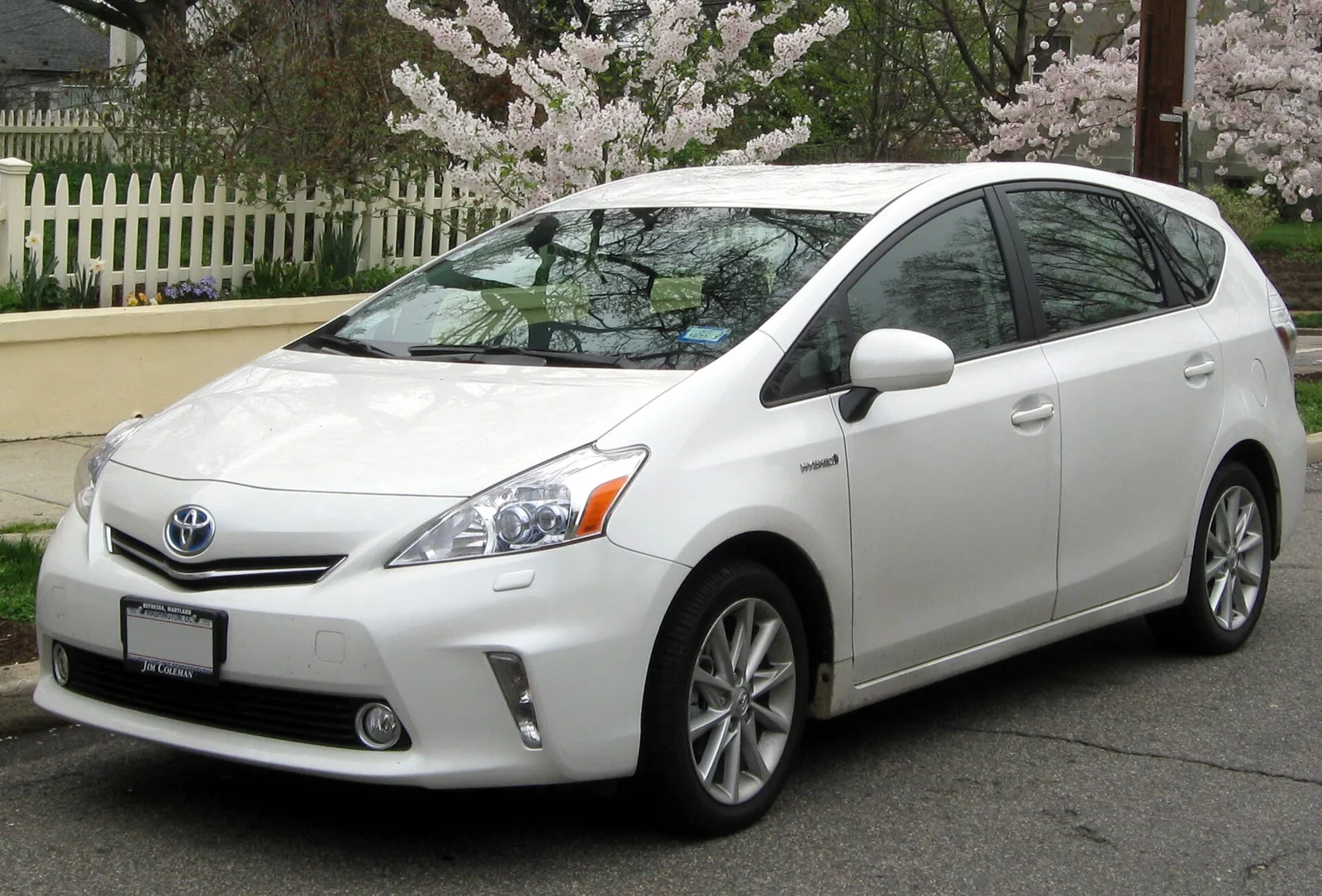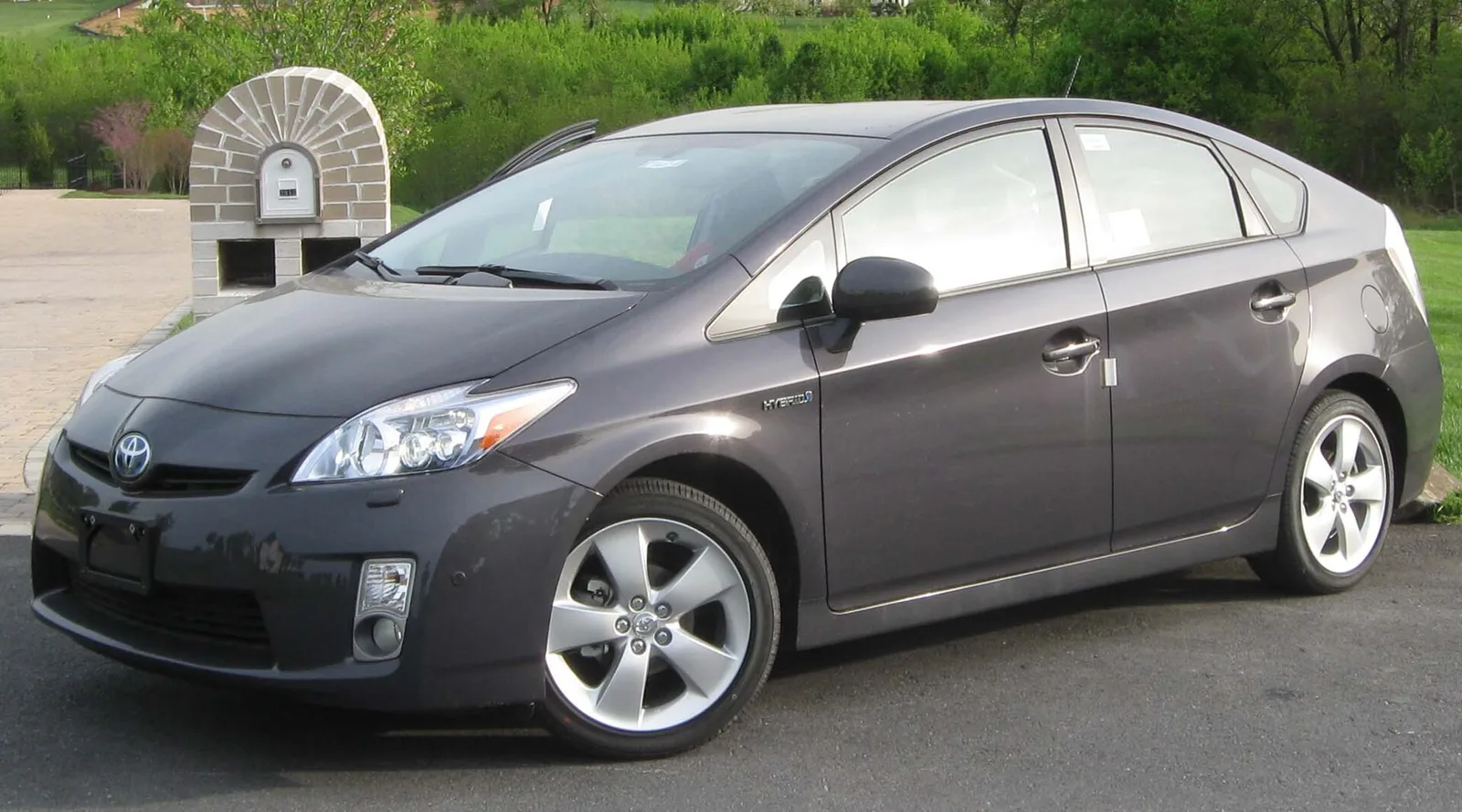
The 2009 third-generation Prius set a US fuel economy benchmark, gained a plug-in version and then faced a series of recalls.
The Toyota Prius XW30 is the third-generation Prius, launched in 2009 for the 2010 model year. Its 1.8-litre hybrid system and 50 mpg-US EPA combined rating made it a benchmark, and a plug-in version followed in 2012.
The third-generation Toyota Prius, internally the XW30, arrived as a compact liftback in 2009. It was known for a 1.8-litre hybrid system, a plug-in variant that followed in 2012, and a run of recalls that drew wide attention.
When did the XW30 Prius go on sale?
The XW30 was revealed at the January 2009 North American International Auto Show and went on sale in Japan on 18 May 2009. It replaced the XW20 generation, and US cars arrived as 2010 models. Its engine was enlarged to 1.8 litres while the hybrid layout stayed broadly the same.
Toyota set ambitious targets at launch, aiming for about 400,000 cars a year worldwide and 180,000 in the US by 2010. Production was lifted in May 2009 to 50,000 units a month, or 600,000 a year, to keep up with demand.
Demand then eased. Japanese waiting times fell from eight months at launch to three months, while US sales dropped 40 percent in February 2010 compared with October 2009, following concerns about Toyota vehicle safety. Toyota cut monthly output by 10 percent to 45,000 units in March 2010.
Global production had reached about 1,688,000 units since launch. The cars were built at the Tsutsumi plant in Japan and at Chachoengsao in Thailand.
A third-generation hybrid that dropped its accessory belts and drag figures, then learned the hard way about recalls.
What was new under the bodywork?
The XW30 was more aerodynamic than its predecessor, with a claimed drag coefficient of Cd=0.25 and an underbody rear fin to keep the car steady at speed. Disc brakes replaced the rear drums of the North American model, and the engine was the first production unit to run without accessory drive belts.
The body used plant-based bioplastics made from kenaf, a member of the hibiscus family related to cotton and okra, and from ramie, one of the strongest natural fibres. Toyota tied that choice to the United Nations' 2009 International Year of Natural Fibres.
Toyota said it filed 1,000 patents during development. The powertrain concept largely carried over from the XW20, with the engine enlarged and the transaxle changed to the THS III unit, which fitted the new layout.
How did the hybrid powertrain work?
The hybrid used a 1.8-litre four-cylinder petrol engine rated at 73 kW (99 PS; 98 hp), with an electric motor adding 20 kW (27 PS; 27 hp) for a total of 100 kW (134 hp). A 1.3 kWh nickel-metal hydride battery stored the energy, and total output was down from the previous car's 110 hp.
The larger engine let the car cruise at lower rpm, which improved economy at highway speeds. An electric water pump removed the need for accessory drive belts. Toyota estimated the new inverter, motor and transaxle were about 20 percent lighter than the parts they replaced.
Toyota's quiet-running fix came in August 2010, when it began selling an onboard sound device that mimics an electric motor at speeds up to about 25 km/h (16 mph). The pitch rises and falls with speed. In Japan the retrofit cost 12,600 yen (about US$150) including consumption tax, and it met the guidelines issued in January 2010 for near-silent vehicles.
When did the plug-in Prius reach showrooms?
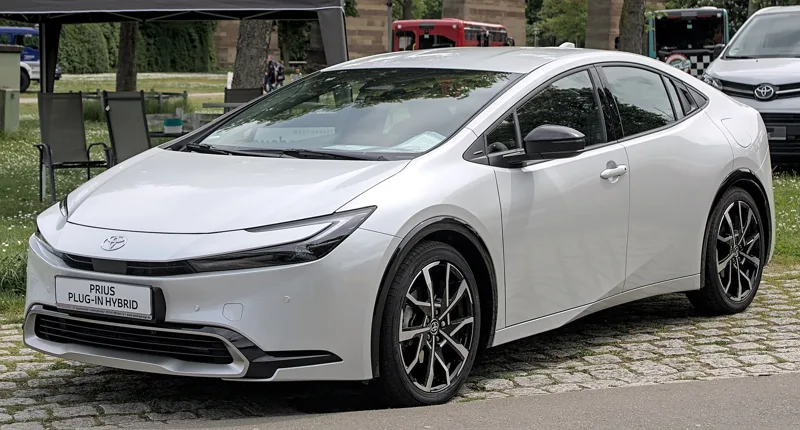
The plug-in version was first shown as a concept at the October 2009 Tokyo Motor Show, then as a demonstration fleet. It reached Japan in January 2012, the United States in late February 2012 and Europe in June 2012, with a production all-electric range of 23 km (14.3 mi).
The demonstration cars used 5.2 kWh lithium-ion batteries for an all-electric range of 21 km (13 mi). Toyota ran a global programme with 600 pre-production test cars from late 2009 in Japan, Europe, Canada, China, Australia, New Zealand and the United States.
The production plug-in, unveiled at the 2011 Frankfurt Motor Show, used a smaller 4.4 kWh lithium-ion battery and still managed a longer all-electric range. Engineering changes to the hybrid system, rather than a larger battery, made the difference.
How did the XW30 perform on fuel economy?
In the US the XW30 earned an EPA combined rating of 50 mpg-US (4.7 L/100 km; 60 mpg-imp), with 51 mpg-US in the city and 48 mpg-US on the highway. Those figures made it the most efficient car powered purely by liquid fuel available in the country, based on the official rating.
The EPA tested the car under its revised 2007 procedures. Only the discontinued first-generation Honda Insight did better, at 62 mpg-US (3.8 L/100 km; 74 mpg-imp) with a manual gearbox and no air conditioning. Most states rate the XW30 as Tier II Bin 3 for emissions.
In the UK the Department for Transport rated the Prius at 72.4 mpg-imp (3.90 L/100 km; 60.3 mpg-US) combined, and nineteen other models matched or beat that figure by February 2011. The car emitted 89 g/km of CO2, the same as the Skoda Fabia, Volkswagen Polo and Toyota Auris Hybrid.
Which trims and options did US buyers get?
US buyers could choose Two, Three, Four and Five trims. Standard kit included 15-inch alloy wheels, vehicle stability control, cruise control, a six-speaker audio system and a Smart Key, while option packages added navigation, a solar roof and an advanced technology package.
The Navigation Package brought a voice-activated touchscreen navigation system, an 8-speaker JBL audio system with XM satellite radio, Bluetooth and a backup camera. The Solar Roof Package added a power tilt and slide moonroof and a solar-powered ventilation fan. The solar cells were first meant to charge the battery, but they were set up only for ventilation after they interfered with the radio.
The Advanced Technology Package added a head-up display, Dynamic Radar Cruise Control, a Pre-Collision System that could retract the front seatbelts and apply the brakes, Lane Keep Assist and intelligent parking assist. The Plus Performance package, announced in June 2011, added a seven-piece body kit, 17-inch wheels and a rear anti-sway bar, and lowered the car by 28 mm at the front and 33 mm at the rear.
The update for the 2012 model year changed the headlamps, tail lamps and front bumper, and Toyota's Entune connectivity became an option with a 6.1-inch touchscreen. The Prius Two gained 15-inch wheel covers and LED daytime running lights, while the Prius Four added auto on/off headlamps and an eight-way power driver's seat.
How did the Prius fare in safety tests?
The IIHS rated the 2010 Prius Good in every category except the side-impact structure, which it rated Acceptable. Euro NCAP gave the car an overall rating of five out of five stars. From the 2012 model year, a Vehicle Proximity Notification System added artificial sound at low speed.
That system emitted engine-style noise to warn pedestrians of a hybrid running quietly in electric mode. Its external speakers activated automatically only below about 24 km/h (15 mph). The device was required under the Pedestrian Safety Enhancement Act of 2010, which targeted the quiet running of hybrids at low speed.
What recalls affected the XW30 Prius?
Toyota ran several recalls on the third generation. In February 2010 it recalled 2010 models built up to late January for a brake software update, and in February 2014 a hybrid-control software fault prompted a free fix. In October 2018 a recall covered about 2.4 million Prius cars worldwide, including 807,000 in the US.
The February 2010 recall covered 133,000 Priuses in the US and 52,000 in Europe, and the wider total reached 713,000 cars in North America, 997,000 in Japan and 130,000 in Europe, with the rest of the world added. The fix targeted delayed braking response over rough road surfaces.
Steve Wozniak, the Apple co-founder and a Prius owner, was quoted about a possible cruise control problem, but he later said he had been misquoted. A publicised acceleration incident in San Diego in March 2010 was later suspected to be a hoax or not repeatable.
The 2014 recall addressed a software fault in the hybrid-control system that could overheat the inverter transistors. The car could enter a limited performance mode or stall, and owners were notified by mail. The 2018 recall involved the 2010-2014 Prius and the 2012-2014 Prius V, which might fail to enter fail-safe mode.
How did the XW30 sell in other markets?
In Japan Toyota cut the price from 2,331,000 yen to 2,050,000 yen to compete with the Honda Insight, and the XW30 won the 2009 Japan Car of the Year award. The car also received G-Book connectivity from 18 May 2009.
In South Korea Toyota sold the Prius as a hybrid taxi from 2014, a niche where Hyundai and Kia had no hybrid rivals at the time. The price in 2019 was 26,000,000 won, about US$25,451 at the August 2019 exchange rate, and drivers reportedly liked its fuel economy.
China was a slower story. Toyota had planned to build the third-generation Prius at its FAW-Toyota joint venture from 2010, but the plan slipped to 2011 because of a lack of government incentives and worries about losing technology secrets.
Specifications and sales figures
| Specification | Detail |
|---|---|
| Launch | Japan sales from 18 May 2009; US model year 2010 |
| Engine | 1.8-litre four, 73 kW (99 PS; 98 hp) |
| Electric motor | 20 kW (27 PS; 27 hp) |
| System output | 100 kW (134 hp), previously 110 hp |
| Battery | 1.3 kWh nickel-metal hydride |
| Drag coefficient | Cd=0.25 |
| EPA combined | 50 mpg-US (4.7 L/100 km; 60 mpg-imp) |
| UK combined | 72.4 mpg-imp (3.90 L/100 km; 60.3 mpg-US) |
| Plug-in battery | 4.4 kWh lithium-ion, production version |
| Plug-in range | 23 km (14.3 mi) all-electric |
| US sales | 181,221 units in 2007; 139,682 in 2009 |
| Global production | About 1,688,000 units since launch |