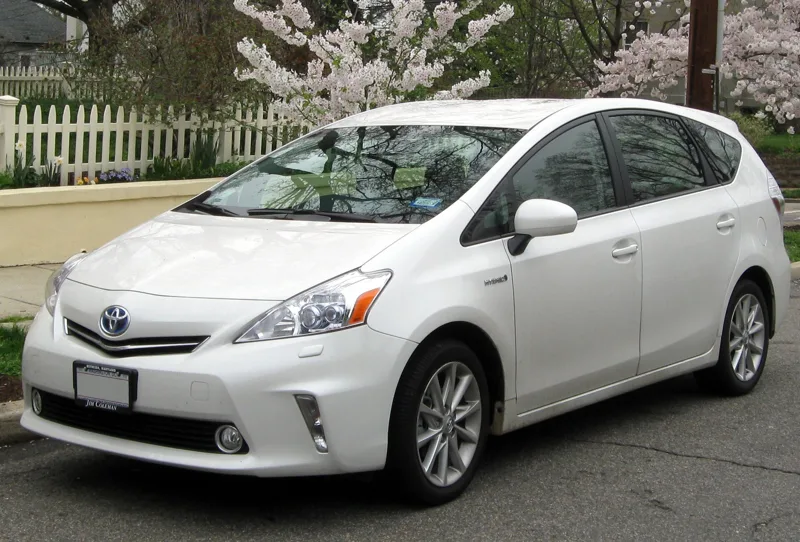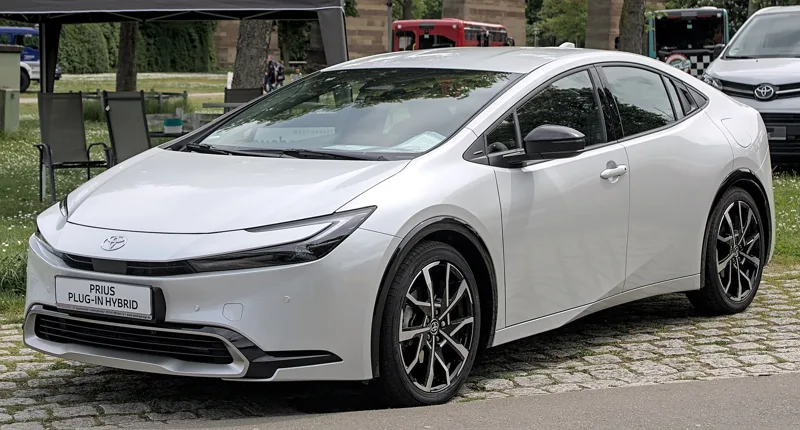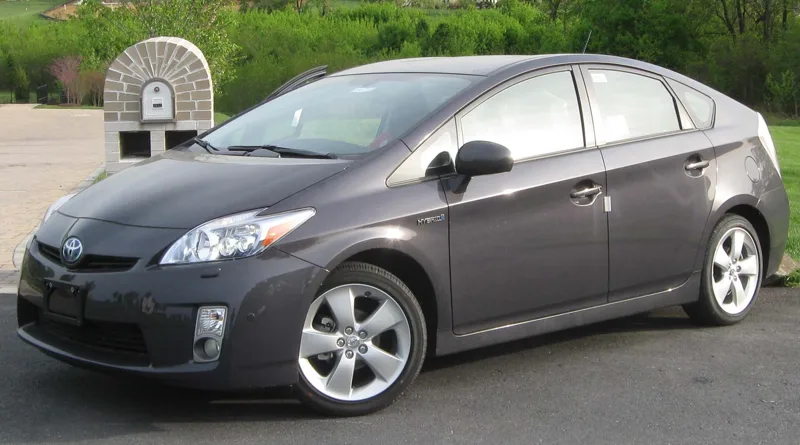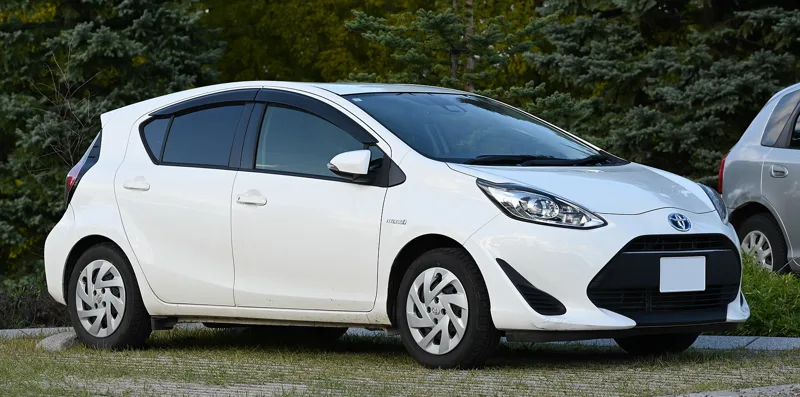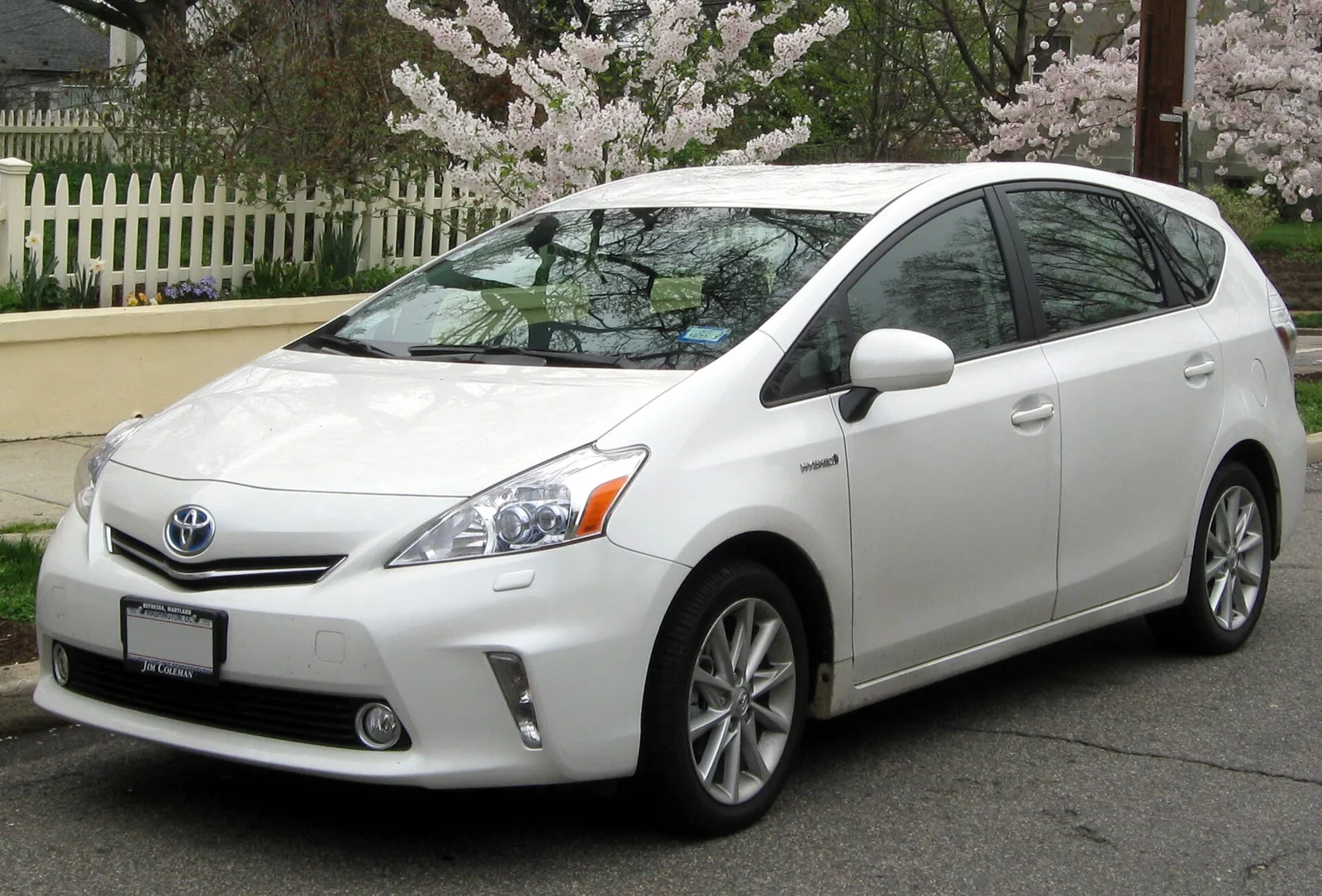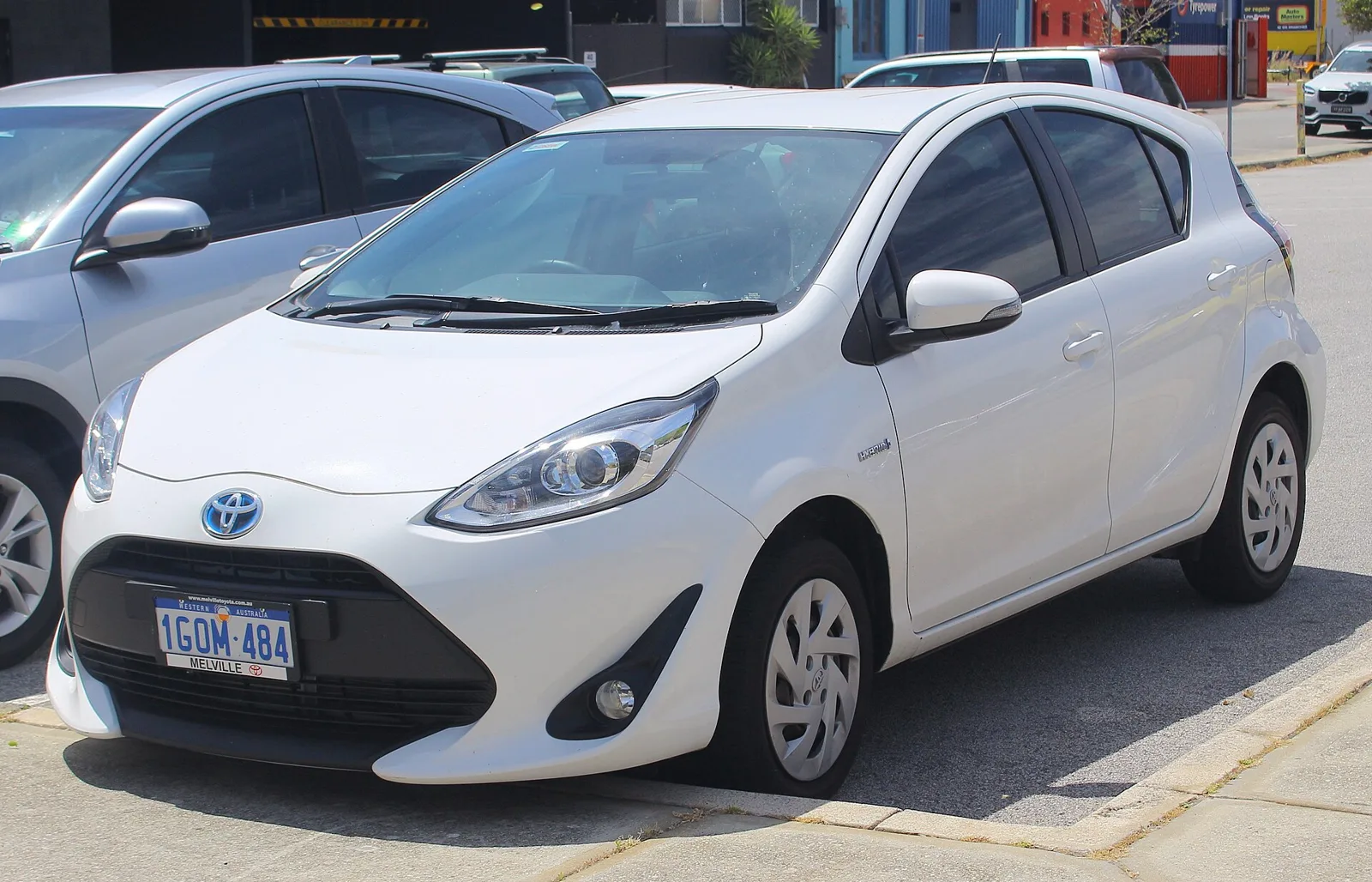
A Yaris-based hatchback that sold as the Aqua in Japan, led the new car charts for three years and left North America after 2019.
The Toyota Prius c is a small hybrid hatchback sold as the Aqua in Japan. It launched in Japan in December 2011, reached North America in 2012 and was dropped there after 2019. It used a 1.5-litre hybrid system and had sold 1,380,100 units worldwide by January 2017.
The Toyota Prius c is a small full hybrid hatchback built on a Yaris-inspired platform. Toyota sold it as the Aqua in Japan, where it topped new car sales for three years running. It reached North America in 2012 and left the range after the 2019 model year.
What is the Toyota Prius c?
The Prius c is the third model in the Prius line-up. The letter c stands for city, because Toyota aimed the car at younger buyers without families who need less cargo space. It combines a Yaris-sized body with a hybrid powertrain and was priced lower than the conventional Prius.
Passenger room stayed essentially the same as in the standard Prius, so the smaller footprint cost little in space for the people inside. Toyota dropped some of the luxury touches found on the larger model, and in return the c offered easier parking in tight spaces.
On the US Environmental Protection Agency's own test cycles, its city economy beat the standard Prius. The EPA ranked the 2012 Prius c as the most fuel efficient compact car once plug-in electric vehicles were excluded.
A Yaris-sized hybrid that topped Japan's new car charts before its North American run ended after 2019.
Where did the Prius c come from?
Toyota showed the Prius c as a concept in Detroit in January 2011, at the North American International Auto Show. The production Aqua followed at the 2011 Tokyo Motor Show, and sales began in Japan in December 2011. The US car was shown at the 2012 Detroit show and reached showrooms in March 2012.
The concept took its design cues from the Toyota FT-CH, which had appeared at the same Detroit event in 2010. At Tokyo, Toyota also displayed two other Aqua concepts, called the Aqua Kiriri and the Aqua Piriri.
Japanese buyers paid 1.69 million yen (US$21,700) at launch. Toyota had planned for 12,000 units a month, yet it collected 60,000 orders before the launch, which created a four-month wait for deliveries. Orders passed 120,000 by 31 January 2012.
Several Asian markets opened for sales in January 2012. Canada and the United States followed in March, and Australia and New Zealand opened in April 2012.
How was the Prius c engineered?
The Prius c used an enhanced, streamlined version of a Yaris-inspired platform together with Toyota's third-generation Hybrid Synergy Drive. Its 1.5-litre four-cylinder petrol engine, with sixteen valves and variable valve timing, shared the displacement of the earliest Prius engines. Toyota removed the belt drive from the engine, which it called beltless.
The transaxle was reworked as well. The chain drive used in the first two generations was replaced by helical gears, and the engine and motor-generator each received their own planetary gear path. The second motor-generator ran at a 2.5:1 ratio, where earlier units used 1:1, so the unit could shrink to the cross-section of the first.
A new high-voltage battery and inverter were paired with a smaller 12-volt battery. A welded tubular steel cage protects the batteries from impact and also supports the rear seat. The large traction battery sits under a passenger seat, which keeps the boot free and lowers the centre of gravity.
The hybrid powertrain weighs about 40 kg (88 lb) less than the one in the standard Prius Liftback. The engine, coded 1NZ-FXE, makes 54 kW (73 hp), the motor 45 kW (60 hp), and total output is 74 kW (99 hp).
Two driving modes were offered. EV Mode allowed electric driving for up to one mile (1.6 km), while ECO Mode limited climate control use and adjusted throttle input to save fuel.
What were the Prius c's dimensions and fuel economy?
The Prius c measured 4,000 mm (157.3 in) long on a 2,550 mm (100.4 in) wheelbase. That made it 490 mm (19.1 in) shorter than the Prius Liftback and placed it in the American subcompact class. Japanese versions also met the country's dimension rules, which reduced tax liability.
EPA figures for 2017 gave the car 48 mpg-US (4.9 L/100 km; 58 mpg-imp) in town and 43 mpg-US (5.5 L/100 km; 52 mpg-imp) on the highway. The combined figure was 46 mpg-US (5.1 L/100 km; 55 mpg-imp), and the car carried SULEV emissions certification.
The 1.5-litre engine also lowered the annual road tax bill in Japan. Owners there benefited twice, from smaller dimensions and from the engine size.
Once plug-in electric cars are counted, the Chevrolet Volt sits at the top of the compact class, with the Prius c second.
Where was the Prius c built?
The Prius c was built at Toyota Motor East Japan's Iwate Plant in Kanegasaki, northern Japan. The plant belongs to Toyota Motor Corporation through a wholly owned subsidiary. Its starting capacity for the Aqua and Prius c was 12,000 units a month, with a maximum of 30,000.
Which trims and special editions were offered?
In the United States the Prius c came in four trims, from One to Four. The entry One included power windows, automatic climate control and Bluetooth, while the Four brought Softex-trimmed seats, alloy wheels and fog lamps for US$23,230.
A light facelift for the 2015 model year altered the front and rear lamps and bumpers, and three bright colours were added to the North American range.
The first facelift arrived at the November 2014 Los Angeles show, with a front end similar to the GT86 and a redesigned climate control cluster. A second facelift in 2017 reshaped the bonnet, sculpted the bumpers and fitted LED tail lamps in a c-shaped design.
The sportier Aqua G's went on sale on 9 December 2013, after a preview at the 43rd Tokyo Motor Show. It was the sixth model in the G's series, with a redesigned front, side mudguards, rear bumper and LED lighting.
The Aqua GR Sport followed in November 2017 as the successor to the G's. It weighed 1,100 kg, or 1,110 kg on 17-inch tyres, and measured 4,070 mm in length. Its interior layout matched the second facelift Aqua, while the exterior echoed the GR Yaris.
For the 2016 model year the American market received the Persona Series, with black-on-black paint and alloy wheels. Electric Lime or Cherry Pearl accents gave it a baseball theme, and Toyota planned to sell only 1,500 examples.
How well did the Prius c sell?
Worldwide sales reached 315,406 units in 2012, and Japan took 266,574 of them, or 84.5%. Global sales passed 500,000 in August 2013 and topped one million in the first half of 2015.
By January 2017, the Aqua and Prius c had sold 1,380,100 units worldwide. That made it the second most sold Toyota hybrid after the regular Prius, with Japan accounting for 1,154,500 units, or 83.6% of the total.
Japan was where the car shone. The Aqua led the country's new car rankings in 2013, 2014 and 2015. Japanese sales were 262,367 in 2013, down 1.6%, then 233,212 in 2014, down 11.1%, and 215,525 in 2015, down 7.6%.
Early in 2016 the regular Prius liftback overtook the Aqua in Japan. Among nameplate launches in Japan over the last 20 years, the Aqua's debut ranks as the most successful.
In the United States the car opened at US$18,950, with a US$760 destination charge on top. It sold 4,875 units in its first month, which was 17.0% of Prius family sales, and then 35,733 units in 2012. Sales reached 41,979 in 2013, and the total stood at 177,218 by December 2016.
Canada began at CA$20,950 (US$21,100) and sold 2,530 units in 2012, 2,816 in 2013, 2,776 in 2014 and 3,029 in 2015. Australia's launch price was A$23,990 (US$24,426), and 1,883 cars sold in 2012, with 1,654 more in 2014 and 7,432 in total to April 2016.
Where else was the Prius c sold?
Outside Japan and North America, the Prius c had sold 25,462 units by September 2014. Toyota did not offer it in Europe, where the Yaris Hybrid, which shares the same powertrain, went on sale from June 2012.
Prices varied widely. Costa Rica's launch price was US$36,000 in 2012, but electric-drive vehicles there paid lower import duties. Owners were also exempted from the licence plate driving restriction in downtown San Jose from October 2012.
Uruguay gave the car a rough start. The 2012 launch price of US$39,900 was too high for the market, and fewer than 10 cars sold. Toyota returned in 2018 with a restyled model at US$25,990, helped by tax cuts for hybrids.
Hong Kong registered 358 Prius c sales in 2012, ahead of the conventional Prius at 132 and the Prius v at 113. New Zealand opened at NZ$30,990 (US$25,400) in April 2012, and Taiwan at NT$859,000 (US$29,100) in March 2012. South Korea followed in March 2018 at 24,900,000 won (US$22,000).
How did critics and owners rate the Prius c?
The Prius c was a finalist for the 2013 Green Car of the Year, the award Green Car Journal presented at the 2012 Los Angeles show. Consumer Reports later rated it the most reliable 2012 model year car sold in the US.
That ranking drew on survey responses covering 1.2 million vehicles, the cars its subscribers owned or leased. The magazine had earlier given the car a negative review, based on driving tests run by its own testers.
In 2018 Consumer Reports placed Toyota second among automakers for reliability. It also named the Prius C the most reliable vehicle the company offered, which reversed the earlier verdict on the car.
Why was the Prius c discontinued?
Toyota ended Prius c sales in the US and Canada once the 2019 model year finished. The larger Corolla Hybrid indirectly took its place in North America.
In Australia and New Zealand the Yaris Hybrid replaced the car from early 2020. In Japan the Aqua name continued with a second-generation car launched in July 2021, sold alongside the related Yaris, which was formerly the Vitz.
Taiwan ended both the standard and crossover Prius C in March 2021. The stated reason was internal competition with the Toyota Corolla Cross.
What are the Prius c specifications?
| Specification | Detail |
|---|---|
| Body | Subcompact hatchback, third member of the Prius family |
| Platform | Enhanced, streamlined Yaris-inspired platform |
| Engine | 1.5-litre DOHC four-cylinder, sixteen-valve, VVT-i (1NZ-FXE), beltless |
| Motor output | 45 kW (60 hp) HSD motor |
| Total output | 74 kW (99 hp) combined; engine 54 kW (73 hp) |
| Powertrain weight | Roughly 40 kg (88 lb) lighter than the Liftback |
| Wheelbase | 2,550 mm (100.4 in) |
| Length | 4,000 mm (157.3 in) overall |
| EPA rating (2017) | Combined 46 mpg-US (5.1 L/100 km; 55 mpg-imp); SULEV |
| Japan launch | 26 December 2011 as the Aqua, 1.69 million yen (US$21,700) |
| US launch | March 2012 from US$18,950 plus US$760 destination |
| Canada launch | March 2012 from CA$20,950 (US$21,100) |
| Australia launch | April 2012 from A$23,990 (US$24,426) |
| Assembly | Iwate Plant, Kanegasaki; 12,000 units a month at start, 30,000 maximum |
| Global sales | 1,380,100 units to January 2017 |