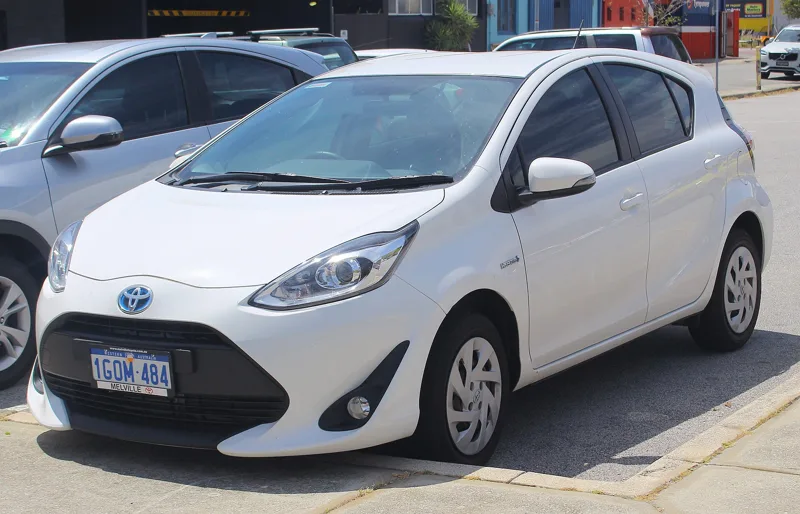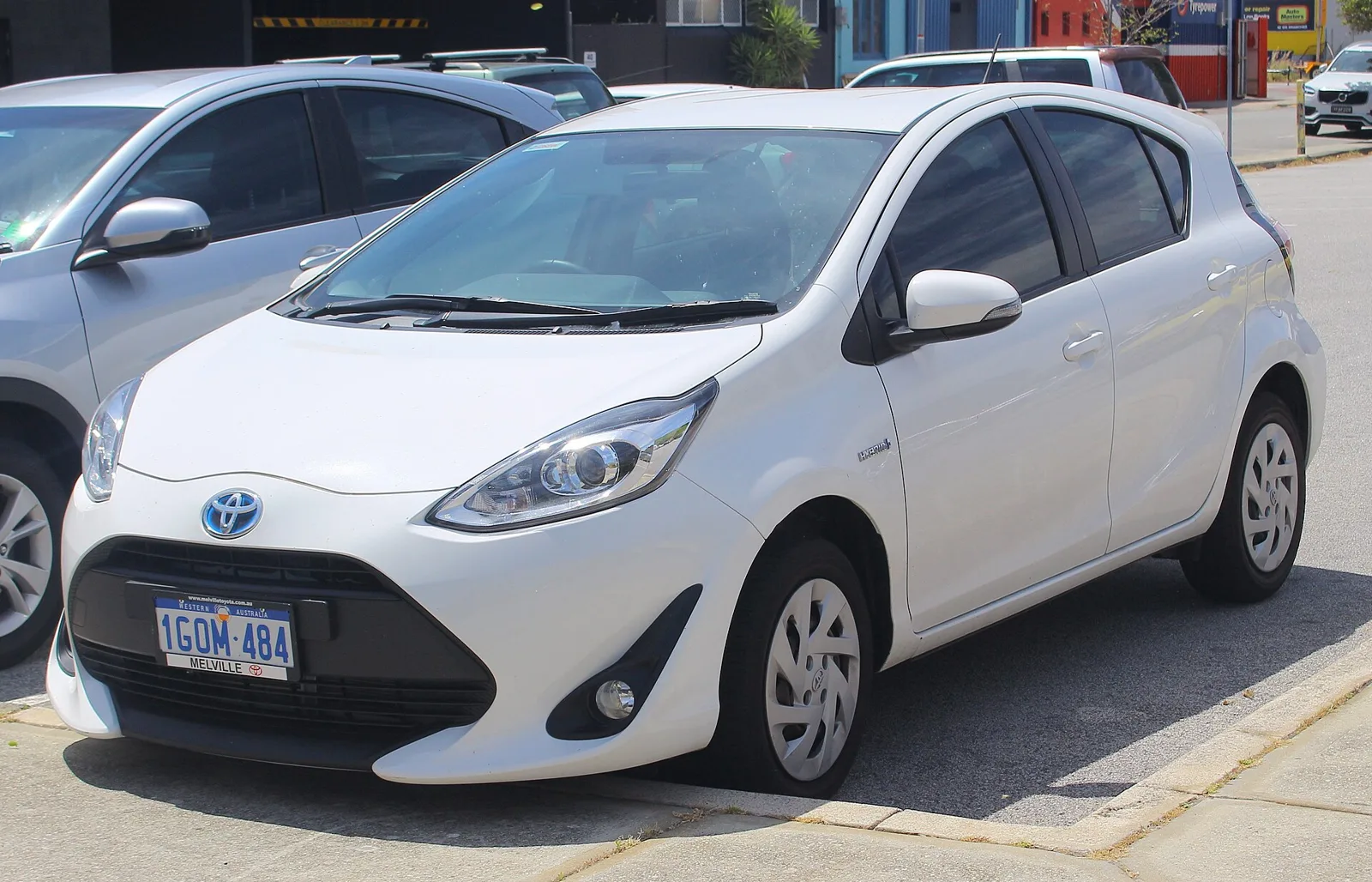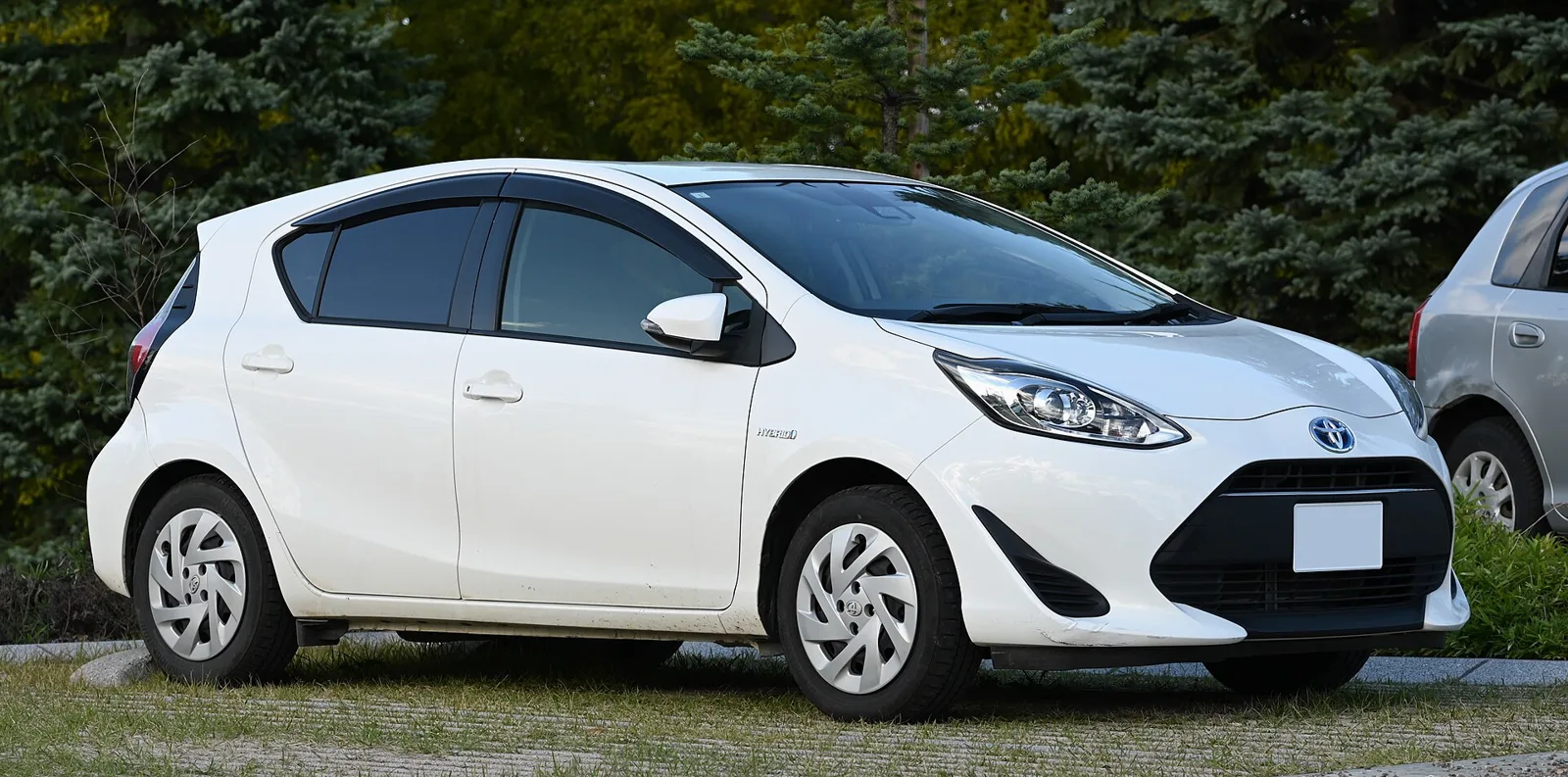
A low-cost saloon and hatchback built around India and Brazil, and a small full-hybrid hatchback that Japan bought in the hundreds of thousands.
The Toyota Etios is a low-cost subcompact saloon and hatchback built mainly in India and Brazil from 2010 to 2023. The Toyota Aqua is a full-hybrid supermini sold since 2011, called Aqua in Japan and Prius c elsewhere. Etios targeted emerging markets, Aqua targeted hybrid buyers.
For three years in a row, from 2013 to 2015, the best-selling car in Japan that was not a kei car was a small Toyota hybrid called the Aqua. On the other side of the world, a different small Toyota, the Etios, was being built in India and Brazil to a very different brief: be cheap, be roomy and take on the Logan.
What is the Toyota Aqua?
Toyota has built the Aqua, a B-segment hatchback with a full hybrid system, since 2011. Only Japan uses the Aqua name. Abroad the same car was sold as the Prius c, a smaller alternative to the Prius liftback that borrowed the Prius's reputation. By January 2017 it was the second best-selling Toyota hybrid after the Prius itself.
The numbers were large. Worldwide sales had reached 1,380,100 by January 2017, and Japan alone accounted for 1,154,500 of them. The name Aqua is Latin for water, chosen to suggest an image of clean transparency and something universally cherished. By 2013, some observers argued that the Aqua was the most successful nameplate launch in Japan in 20 years.
One Toyota was designed to be cheap enough for India and Brazil; the other was designed to be the smaller Prius.
How did the first-generation Aqua launch?
The first-generation Aqua (NHP10) appeared as a production car at the 2011 Tokyo Motor Show, after the Prius c concept had previewed its shape at the North American International Auto Show in January that year. It went on sale on 26 December 2011.
Toyota updated it twice. The first facelift, announced on 8 December 2014, came with the X-URBAN, a version styled like a crossover. The second, announced on 19 June 2017, redesigned that variant and renamed it the Aqua Crossover.
What changed with the second-generation Aqua?
The second-generation Aqua (XP210) was unveiled and put on sale on the same day, 19 July 2021. It uses the GA-B platform that it has in common with the XP210 Yaris, and its wheelbase is 50 mm (2.0 in) longer than before. Width stayed at 1,695 mm (66.7 in), so the car remains in the compact category under Japanese government dimension rules.
Four grades launched: B, X, G and Z. The GR Sport joined them on 29 November 2022.
The big technical change was the battery. According to Toyota, the new Aqua is the first vehicle anywhere fitted with a high-output bipolar nickel-metal hydride battery. Toyota says the pack doubles the output of the ordinary nickel-metal hydride unit used before, and that it improves accelerator response, gives smooth, linear acceleration from low speeds and widens the speed range in which the car can run on electricity alone. The X, G, Z and GR Sport grades use it, and the B grade uses a lithium-ion unit instead.
What did the 2025 facelift add?
A refresh followed on 1 September 2025. It brought a hammerhead grille and slim LED headlights, with a unique centre lamp on some trims. The latest Toyota Safety Sense arrived with Proactive Driving Assist, which supports steering and braking around pedestrians, cyclists and stationary objects.
New equipment includes front and rear dash cameras, ETC 2.0 compatibility, a Blind Spot Monitor and a Panoramic View Monitor. A subscription-only U grade was added under Toyota's KINTO service, and the GR Sport variant was updated on 6 July 2026.
What is the Toyota Etios?
The Toyota Etios is a subcompact car sold as a four-door saloon and a five-door hatchback from 2010 to 2023. The saloon launched in December 2010 and the hatchback followed in June 2011, with Liva and Valco suffixes in India and Indonesia. It was built in India from 2010 to 2020, in Brazil from 2012, and in Indonesia from 2013 to 2017.
Toyota also exported it to South Africa and several markets in the Americas. Brazilian production has been export only since 2021.
The names carry meaning. Etios comes from the Greek word ethos, which means spirit, character and ideals. The Liva suffix came from the development phrase live your life, and Valco combines the words value and comfort. The Etios Cross, a crossover-inspired version based on the Liva, was launched in 2014.
Why did Toyota build the Etios in India and Brazil?
Toyota built the Etios as a low-cost entry car for emerging markets, and its internal codename, EFC, stood for Entry Family Car. The company aimed it as a rival to the Dacia and Renault Logan and centred the plan on India and Brazil as manufacturing bases. The concepts debuted at the 10th Auto Expo in New Delhi, a saloon with a 1.5-litre petrol engine and a hatchback with a 1.2-litre.
Cost shaped the engineering. The Etios was originally planned for the Yaris platform, but Toyota switched to the EFC platform, a low-cost design derived from the NBC platform. The company then invested $350 million in a second plant in India, with an initial annual capacity of around 100,000 vehicles, and commercial production began in December 2010.
The strategy worked quickly. By May 2012 the Etios series had reached total sales of 100,000 units in India, and by 2013 over 90% of the parts in Indian cars were sourced locally. Petrol engines and transmissions for India were made locally at Toyota Kirloskar Auto Parts in Bidadi, Karnataka. In Brazil, the saloon and hatchback ran on a flexible-fuel engine optimised for ethanol blends from E20/E25 up to neat hydrous ethanol, known as E100.
How practical was the Etios?
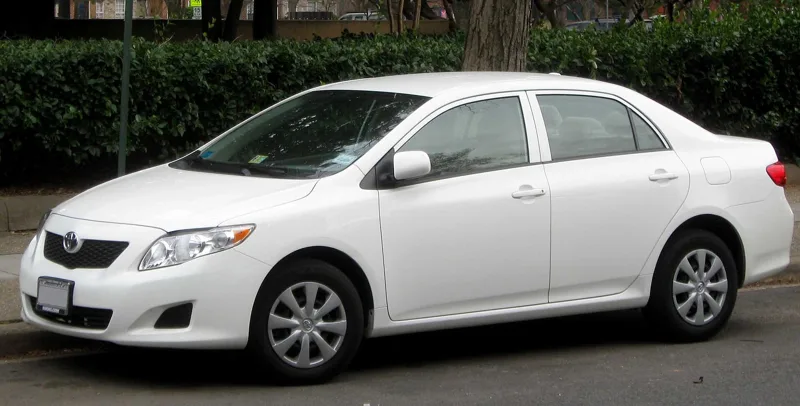
Space was a selling point. In Argentina, as of 2022, the Etios sedan offered the biggest luggage space among its rivals, at 562 litres against 470 litres for the Toyota Corolla.
Toyota updated the Etios three times, in March 2013, November 2014 and September 2016. The overall design did not change, but the interiors, front fascia and taillamps did.
How safe was the Toyota Etios?
Safety equipment varied by market and trim. In India, the Etios and Etios Liva came with an immobiliser and a door ajar warning on every trim, while dual SRS airbags, ABS and EBD were available only on the G+, V and VX. In 2016, without ABS, the Indian car earned a 4-star adult occupant and 3-star child occupant rating from Global NCAP 1.0.
Latin NCAP 1.0 tested the Brazilian Etios in 2012, in basic Latin American specification with two airbags, and gave it 4 stars for adults and 2 for children. In 2019 the newer version earned 4 stars on both measures under the stricter Latin NCAP 2.0 protocol, again with two airbags.
Did the Toyota Etios go racing?
It did, in a one-make series that Toyota India launched in 2012 called Etios Motor Racing. The response was large, with 3,300 applicants. After a three-round selection, Toyota held two exhibition rounds in 2012, one at a purpose-built track at Sriperumbudur near Chennai and the other as a Race of Champions event in Gurgaon. Twenty-five chosen drivers then contested the full championship in the later part of 2013, in cars prepared by Red Rooster Performance of Bangalore and designed by Toyota Racing Development.
There was also a rally version. The Etios R5, built by Toyota Gazoo Racing Paraguay on the road car, was launched in 2016.
How did the Etios end?
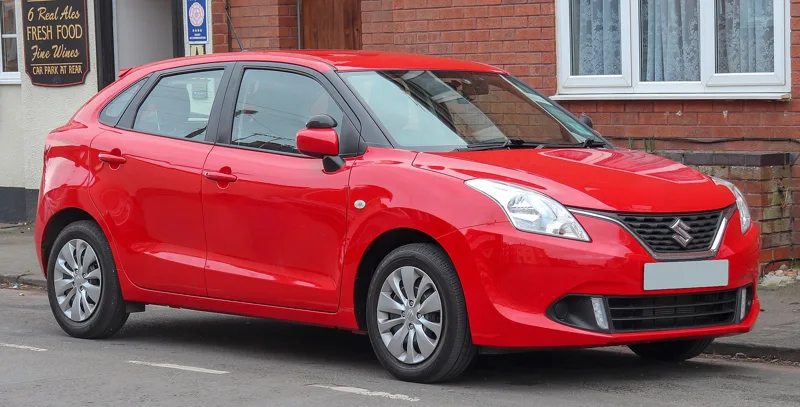
Indian production stopped in March 2020, a month before Bharat Stage 6 emissions standards took effect. Toyota did not want to upgrade the Etios to meet them, and two other cars took over: a pricier Yaris saloon from the XP150 series and the Glanza hatchback, which is based on the Suzuki Baleno. Brazil followed in April 2021, with 620,000 cars made there up to March of that year.
Production for export markets continued until mid-2023. In the region, the XP150 Yaris took on the role of Toyota's entry-level car.
How do the Etios and Aqua compare, and where does the Yaris fit?
| Feature | Etios | Aqua |
|---|---|---|
| Years | 2010 to 2023 | 2011 to the present |
| Body | Four-door saloon and five-door hatchback | Hatchback |
| Powertrain | Petrol, diesel and flex-fuel engines depending on market | Full hybrid |
| Main markets | India, Brazil, Indonesia, exports to South Africa and the Americas | Japan, and overseas as the Prius c |
| Platform | EFC, derived from NBC platform | GA-B in the second generation, shared with the XP210 Yaris |
| Fate | Ended in India in 2020, Brazil in 2021, exports in mid-2023 | Facelifted in 2025 |
The Yaris threads through both stories. Toyota first planned the Etios on the Yaris platform before settling on the cheaper EFC platform, and the XP150 Yaris then replaced it in India. The second-generation Aqua, for its part, shares the GA-B platform with the XP210 Yaris.
What does it mean for someone buying a small Toyota?
An Etios buyer in India should look at trim first: dual airbags, ABS and EBD were fitted only to the G+, V and VX. In Brazil, the flex-fuel engine accepts ethanol blends all the way to E100. An Aqua buyer outside Japan will find the car under the Prius c name, and in the second generation the grade decides the battery, since the B grade uses lithium-ion and the others use bipolar nickel-metal hydride.
Is either the Etios or the Aqua still being built?
Production of the Aqua continues. The facelift announced on 1 September 2025 brought the new styling and safety equipment, and the GR Sport version was updated on 6 July 2026. The Etios is finished: after export production ended in mid-2023, the Yaris took over as Toyota's entry-level car in the region.