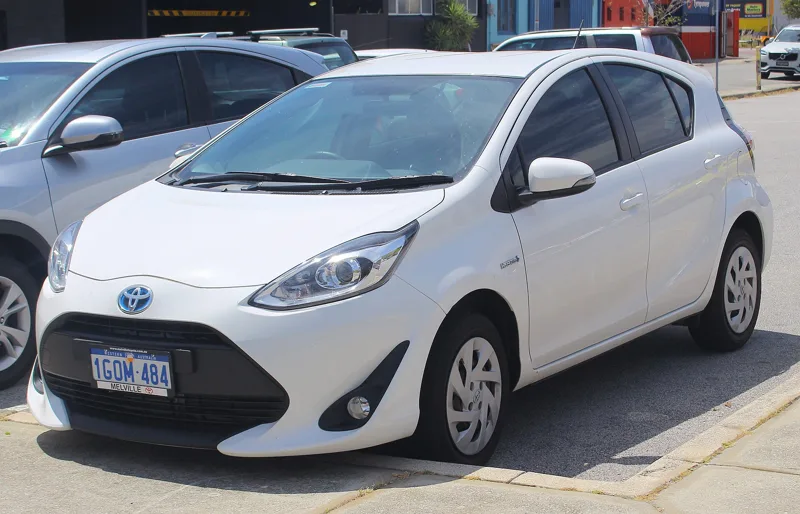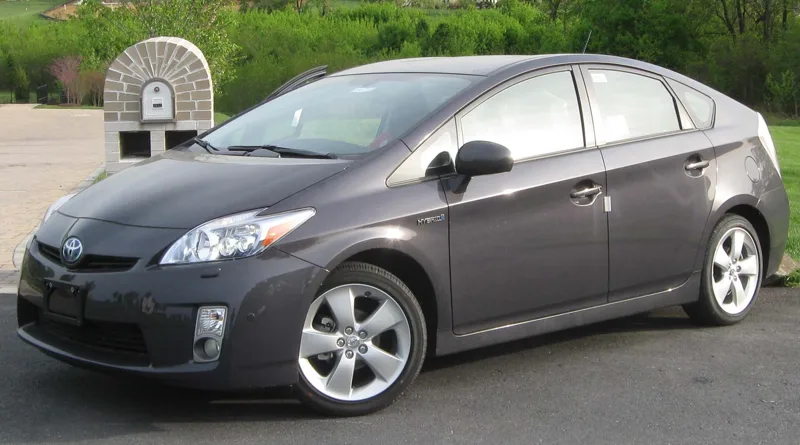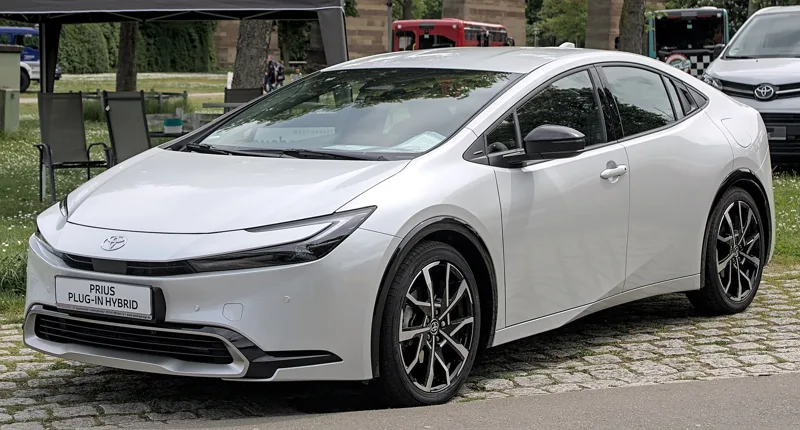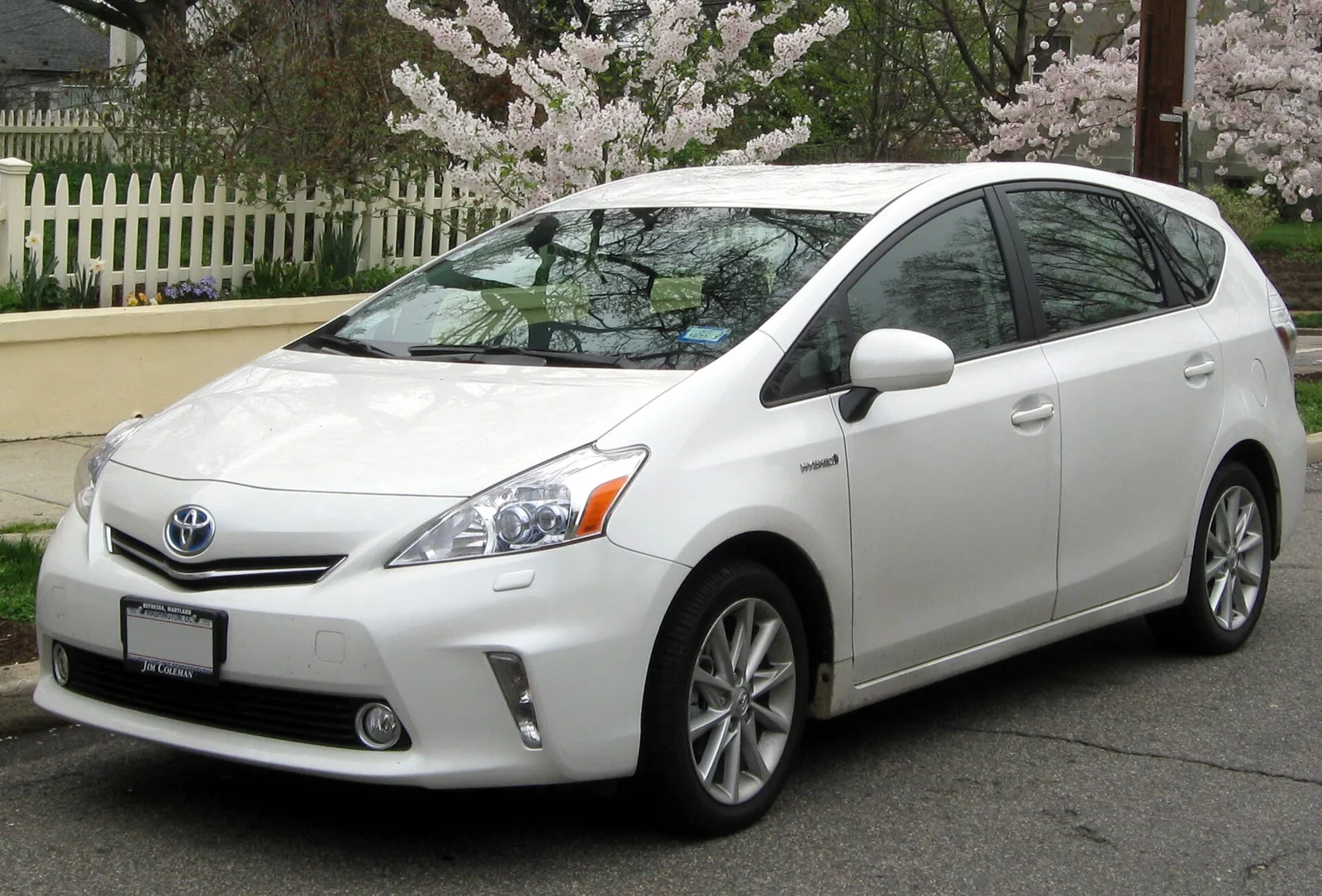
Toyota's first Prius spin-off, sold as the Prius Alpha in Japan and the Prius+ in Europe, with cargo room that outgrew the hatchback.
The Toyota Prius v, also sold as the Prius Alpha in Japan and the Prius+ in Europe, is a compact hybrid MPV launched in 2011. It shares the Prius's 1.8-litre petrol hybrid system and seats five or seven depending on market.
The Toyota Prius v is a compact hybrid MPV and the first Prius variant spun off from the Prius platform. Toyota sold it as the Prius Alpha in Japan and as the Prius+ in Europe and Singapore, and it used the same petrol-electric drivetrain as the standard car. The aim was a hybrid with more room for families than the hatchback could offer.
What did the Prius v add to the Prius family?
The Prius v was the first member of the Prius family to be spun off from the Prius platform. Toyota said the v stood for versatility, and the car was shown at the January 2011 North American International Auto Show alongside the Prius c Concept.
Its styling resembles the compact minivans popular in Europe, but the silhouette evolved from the Prius. The roofline is extended to keep the triangular profile that marks the family, and the drag coefficient is Cd=0.29.
The front has a trapezoidal shape with sharp-edged headlamps and wind-slipping aero corners, plus an enlarged under grille. At the rear, a specially designed roof spoiler improves airflow over the tailgate.
Toyota launched the car in Japan in May 2011, in the United States in October 2011 and in Europe in June 2012. In Japan it was called the Prius alpha, pronounced Alpha.
A hybrid that gave families more room than the Prius hatchback, sold under three names across three regions.
How much cargo space does the Prius v offer?
The Prius v offers 970 litres (34.3 cubic feet) of cargo space behind the rear seats, more than 50 percent larger than the 2010 Prius. The body is 130 mm (5 inches) longer and 25 mm (1 inch) wider than that car, with 970 mm (38 inches) of rear legroom.
Equipment includes keyless push-button start, an electronic gear selector, hill start assistance and a rear camera. The car offers four driving modes: Normal, Power, Eco and EV.
Its panoramic sunroof is made of lightweight resin rather than glass. Toyota said the resin roof is 40 percent lighter than a glass roof of the same size.
What powertrain does the Prius v use?
The Prius v uses the same 1.8-litre Atkinson cycle petrol inline-four as the conventional Prius, with a 60 kW traction motor and a 201 volt nickel-metal hydride battery pack. The setup is Hybrid Synergy Drive, the same system the standard Prius uses, so the two cars share their core hardware.
Toyota added a few refinements for the larger car. A new Pitch and Bounce motor control works with the suspension to cancel the up-and-down motion that the car can pick up on undulating roads. The suspension components were redesigned for better handling and ride quality, because the vehicle carries more load.
Cold-weather performance also received attention. The engine coolant heating structure around the catalytic converter was redesigned, and the exhaust heat recirculation system was refined to shorten warm-up time. A switch valve electronically controls coolant flow through that system, which speeds up heater response for occupants.
Why does the Prius v make a warning sound?
US models from the 2012 model year fitted Toyota's Vehicle Proximity Notification System. It sounds when the car runs quietly on electric power, so pedestrians and people who cannot see or hear the car can tell it is nearby. The Pedestrian Safety Enhancement Act of 2010 required this kind of warning in the United States.
The sound comes from externally mounted speakers and switches on automatically below about 15 mph (24 km/h). Its pitch rises and falls with speed, so a listener can tell whether the car is accelerating or slowing down.
Reception was mixed. Green Car Reports was unimpressed and described the noise as more spaceship than car.
How economical was the Prius v?
The EPA rated the US Prius v at 44 mpg (5.3 L/100 km) in the city, 40 mpg (5.9 L/100 km) on the highway and 42 mpg (5.6 L/100 km) combined. Toyota put its smog-forming emissions at 66 percent below those of a typical new car.
Under the New European Driving Cycle, the base model returned 4.1 L/100 km (69 mpg-imp; 57 mpg-US) on the combined cycle and 3.8 L/100 km in town, with CO2 emissions of 96 g/km. The top-of-the-line model rated 4.4 L/100 km (64 mpg-imp; 53 mpg-US) with 101 g/km of CO2.
The Australian figures, given under ADR81/02, match the top-of-the-line European result of 4.4 L/100 km and 101 g/km.
Where was the Prius v sold?
The Prius v was sold in Japan as the Prius Alpha, in North America as the Prius v, and in Europe and Singapore as the Prius+. Its other markets included Australia, Canada and Hong Kong, but Japan was the largest market by a wide margin.
Japan
Toyota introduced the Prius alpha on 13 May 2011 with a sales target of 3,000 units a month. Buyers could choose a five-seat, two-row model or a seven-seat, three-row model, and the seven-seat car used a lithium-ion drive battery in the centre console. Daihatsu sold an OEM version as the Mebius from 8 April 2013 until February 2021.
Toyota announced in December 2020 that the Prius alpha would be discontinued from March 2021. Japanese production had already been affected by the 2011 earthquake and tsunami, which delayed early deliveries.
Australia
The Prius v arrived in Australia in May 2012 as a seven-seat car with a lithium-ion battery. It came in base and i-Tech specifications, and the i-Tech added leather, LED headlamps, radar cruise control, a pre-collision system, a panoramic roof and satellite navigation.
Canada
Canadian sales began in October 2011. The car sold 553 units in 2011 and 4,077 in 2012, then fell to 2,640 in 2013 and 1,442 in 2014 before recovering to 2,497 in 2015.
Europe
The European version was called the Prius+ and launched in June 2012. It used a lithium-ion battery and seated seven. In the UK, the base T4 trim emitted 96 g/km, which kept it free of road tax, and cars enrolled in an incentive scheme were exempt from the London congestion charge until 24 June 2016.
Hong Kong and Singapore
Hong Kong received the seven-seat lithium-ion version in April 2012, in Luxury and Super luxury trims. In Singapore, Borneo Motors sold the car as the Prius+ from 2018, replacing the Toyota Wish, with a single 1.8-litre hybrid variant rated at 100 kW (134 hp). That model was discontinued in 2023.
United States
Sales began in October 2011 with a nickel-metal hydride battery and two rows of seats for five passengers. Toyota aimed for about 15 to 20 percent of conventional Prius sales, which it estimated at around 30,000 units a year, by targeting young families who wanted more space.
How well did the Prius v sell?
Global sales reached about 634,000 units by April 2016, and Japan took 428,400 of them, or 67.6 percent. The car sold 186,989 units across its three names worldwide in 2012, its first full year on sale.
- Japan: 428,400 units (67.6%)
- United States: 148,079 units (23.4%)
- Europe: 38,200 units (6.0%)
- Canada: 12,670 units (2.0%)
- Rest of the world: 6,600 units (1.0%)
Before Japanese sales began, Toyota said it had received 25,000 orders for the Prius alpha hybrid wagon and minivan. By the end of April 2012, 111,500 had been sold in Japan, and the total passed 289,000 by December 2013.
US sales were strongest in the early years. They reached 40,669 units in 2012 before falling to 34,989 in 2013, 30,762 in 2014 and 28,290 in 2015, a drop of 8 percent from the year before.
What awards did the Prius v win?
The 2012 Prius v was one of five finalists for the 2012 Green Car of the Year, an award that Green Car Journal presented at the Los Angeles Auto Show in November 2011. The Prius alpha was also shortlisted for 2012 Car of the Year Japan.
Green Car Reports shared its Best Car to Buy 2012 title between the Prius v and the Prius Plug-in Hybrid, so the Prius name carried the recognition across two models.
What replaced the Prius v?
The Prius v left the US market after the 2017 model year, and the RAV4 Hybrid took over much of its role. Japanese production ended in March 2021. In Australia and New Zealand, the larger Kluger Hybrid took its place from July 2021.
Europe received no direct successor to the Prius+. The alternatives listed for the region are the RAV4 Hybrid and the Corolla Touring Sports Hybrid.
What are the Prius v specifications?
| Specification | Detail |
|---|---|
| Body | Compact MPV; five seats in the US, seven seats in Europe and Australia |
| Engine | 1.8-litre Atkinson cycle petrol inline-four |
| Traction motor | 60 kW |
| Battery | 201 volt nickel-metal hydride; lithium-ion on seven-seat models |
| Drag coefficient | Cd=0.29 |
| Cargo space | 970 L (34.3 cu ft) behind the rear seats |
| Rear leg room | 970 mm (38 inches) |
| EPA rating (US) | 44 mpg city, 40 mpg highway, 42 mpg combined (5.6 L/100 km combined) |
| NEDC base model | 4.1 L/100 km combined; 96 g/km CO2 |
| NEDC top model | 4.4 L/100 km; 101 g/km CO2 |
| Launch | Japan May 2011; US October 2011; Europe June 2012 |
| End of sales | US after 2017 model year; Japanese production March 2021 |