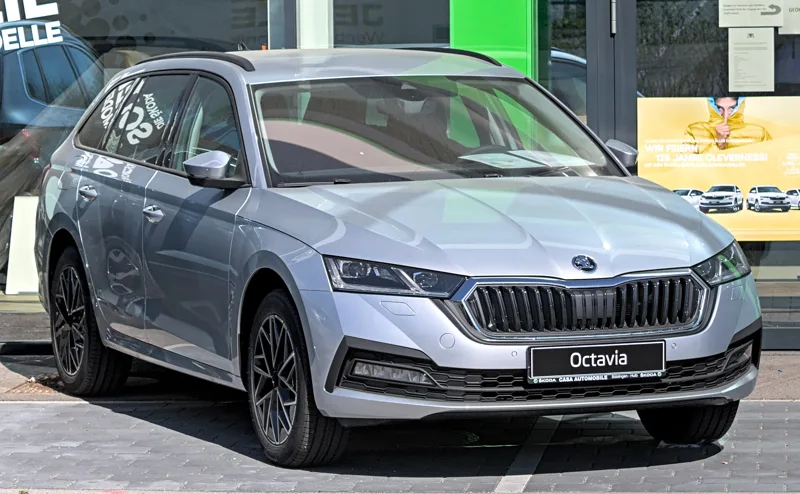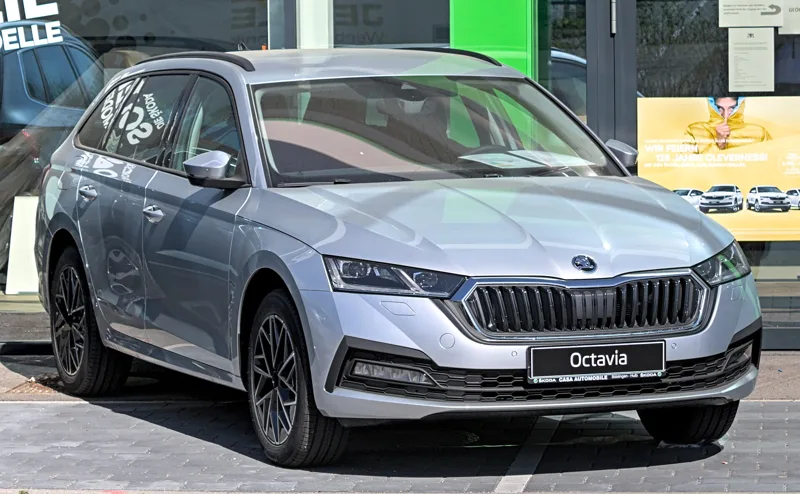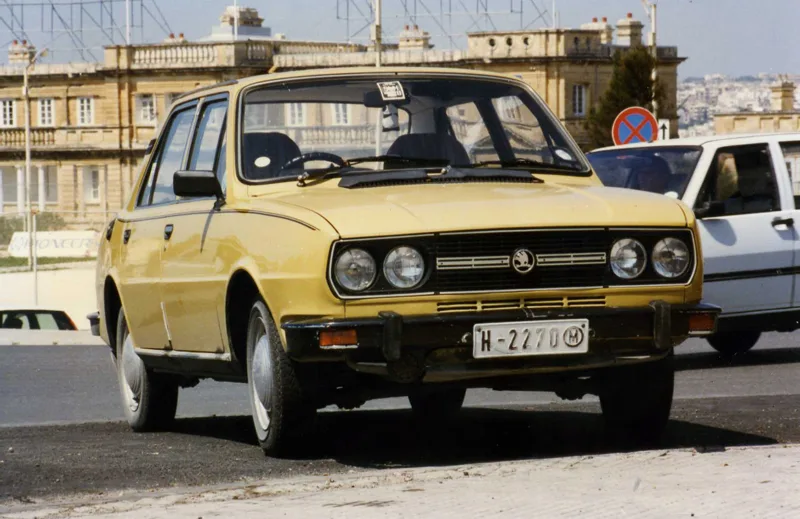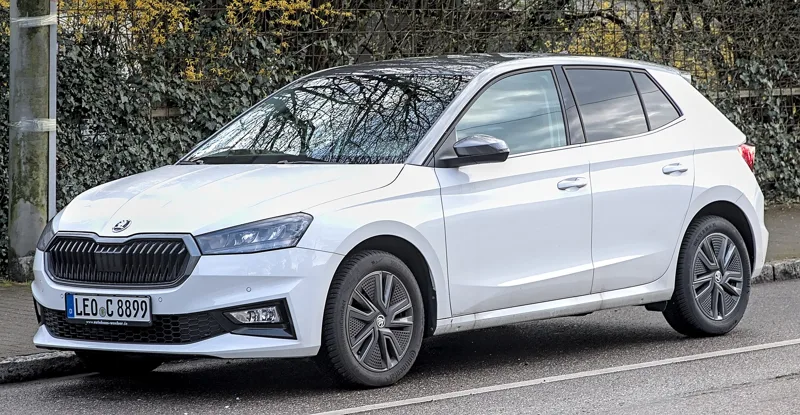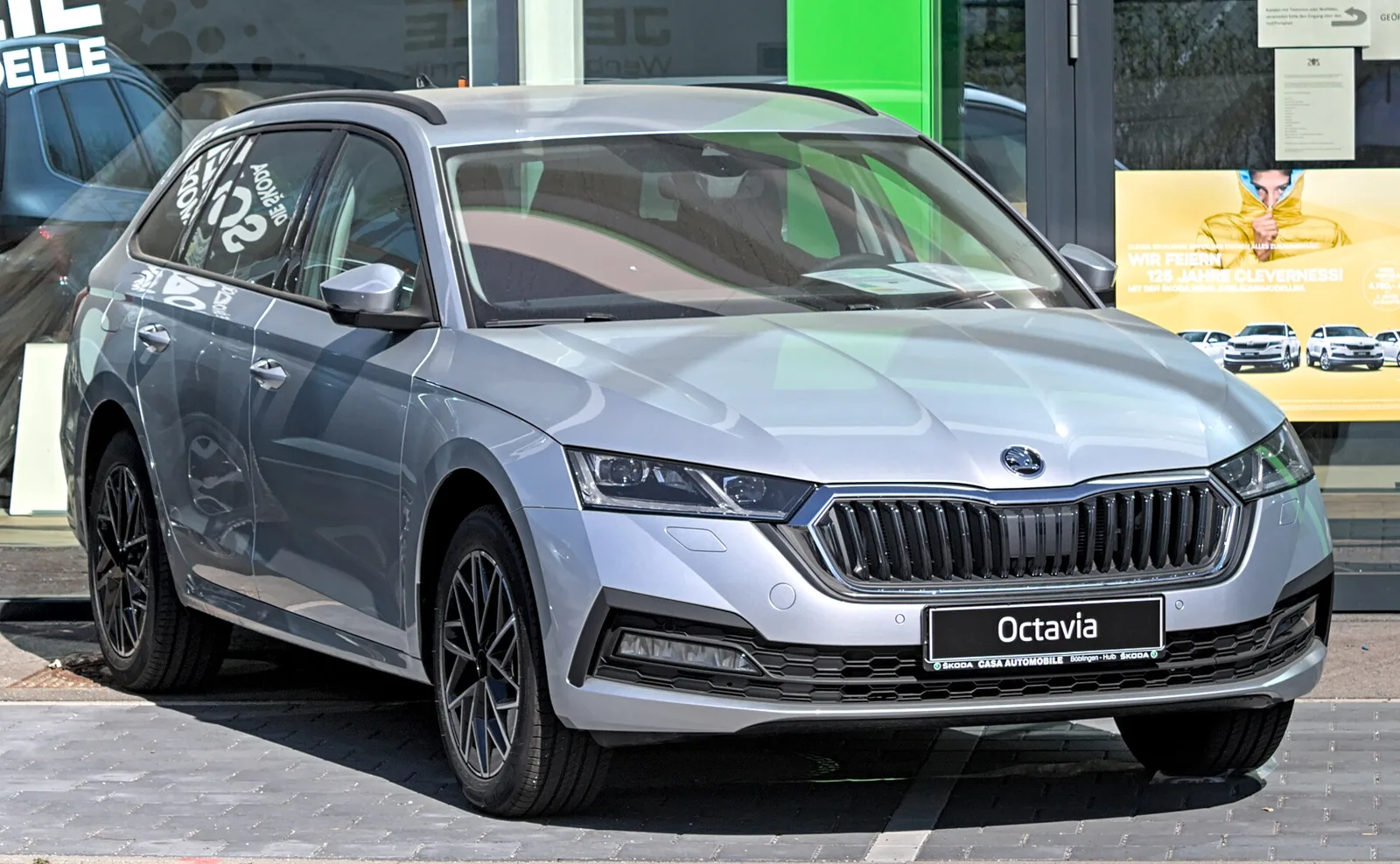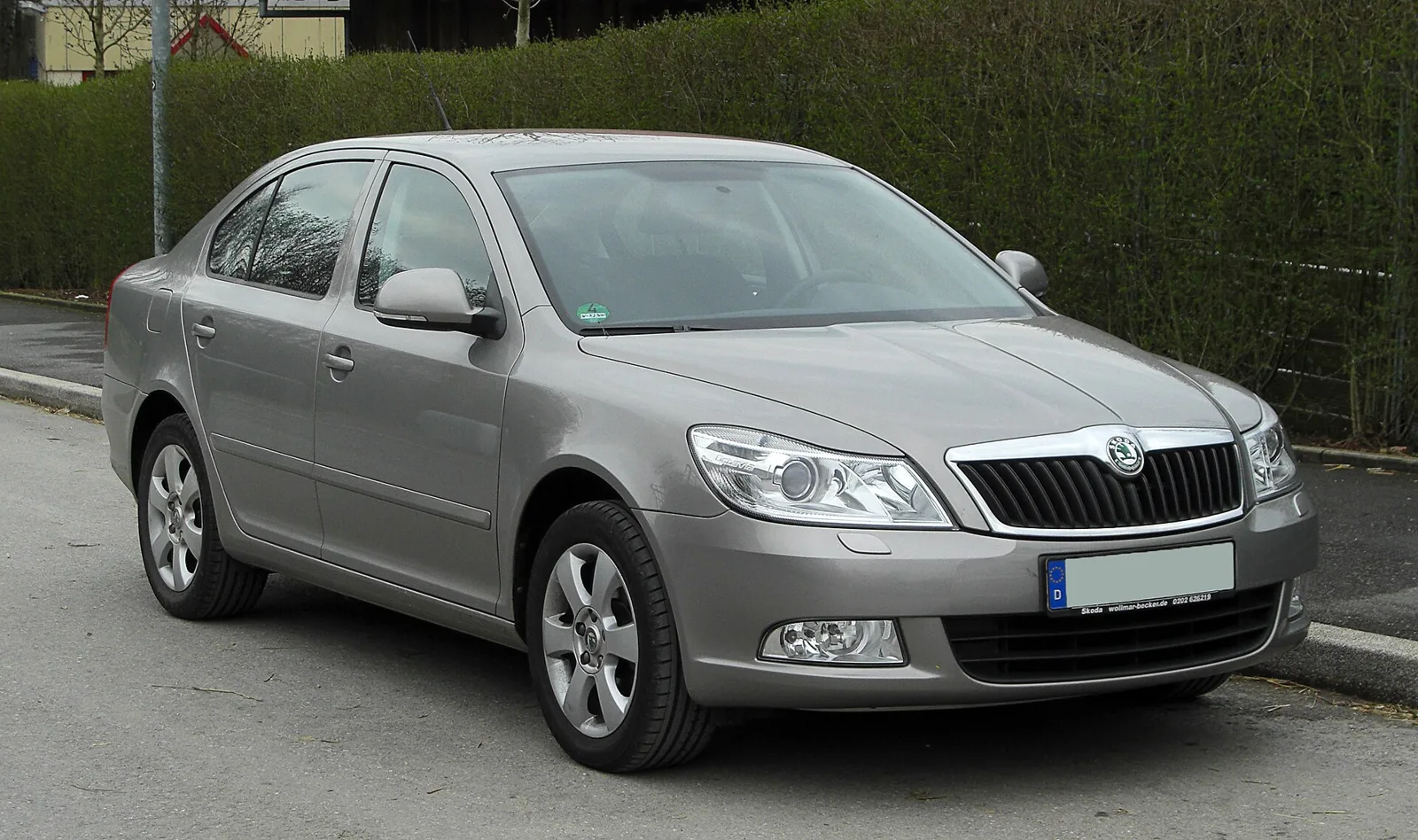
The second Octavia, sold from 2004 to 2013 as a saloon and Combi, shared its architecture with the Golf and Touran and picked up RS, Scout and electric concept variants along the way.
The Skoda Octavia II was the second generation of the Octavia, introduced in February 2004 and sold as a saloon and a Combi estate. It used the Volkswagen Group PQ35 platform, shared with the Golf and Touran, and was replaced by the Octavia III in January 2013.
The Skoda Octavia II arrived in February 2004 as the second generation of the Octavia, sold as a saloon and as a Combi estate. Its underpinnings came from the Volkswagen Group's PQ35 family, and it remained on sale until the Octavia III succeeded it in January 2013.
What platform was the Octavia II built on?
The Octavia II used the PQ35 platform, which also carried the Audi A3 8P, the Seat Leon II and the Seat Altea, along with the VW Golf V, Golf VI, Golf Plus and Touran I. Germany's Kraftfahrt-Bundesamt lists the Octavia as a compact car, though the specialist press sometimes puts it in the mid-size class.
A Volkswagen Group platform under a saloon body and a Combi estate, with the Octavia name carried through to 2013.
How was the Octavia II different from the Octavia I?
A new engine range set the second generation apart from its predecessor, along with body changes, more rear legroom and greater ground clearance at both the front and the rear. A design honour came in 2006, when the Combi took a Red Dot prize for product design.
Where was the Octavia II built?
In Europe, cars were made at Mlada Boleslav and Vrchlabi, both in the Czech Republic. From 2008 to 2010 cars were also built in Bratislava, Slovakia. Versions adapted only for local buyers were made in China, Russia and India.
India sold the second generation under the name Laura, which kept it apart from the first generation there. In Austria a light-commercial version was sold as the Praktik.
Octavia II model history, year by year
The saloon came first in February 2004, and the Combi followed in January 2005. In May 2006 the ESP gained Dynamic Steering Control, Hill Hold Control was added to the options list, and the 1.4-16V petrol, once 55 kW, climbed to 59 kW (80 PS; 79 hp). In August 2006 the raised Scout, with plastic cladding and permanent all-wheel drive, was presented.
June 2007 brought a diesel particulate filter for the 1.9 TDI and an MP3 function for the Stream radio. In November 2007 Skoda added the Combi II 1.6 CNG, the first vehicle with bivalent natural gas and petrol drive. In January 2008 the 1.8 TFSI began to replace part of the 2.0 FSI range.
In May 2008 the RS diesel of 2.0 litres became the first unit switched from pump-nozzle to common rail, and buyers could add a direct-shift box. By then every engine was available with DSG. The facelift followed in January 2009. In February 2010 the 1.2 TSI took over from the 1.6 MPI. The 2.0 TDI with 103 kW made the same change to common rail in May 2010.
From December 2010 the original version, built from spring 2004 until early 2009, returned as the new Octavia Tour. September 2011 renamed the Classic and Ambiente trim levels Active and Ambition. The Scout left the range in April 2012, and the Tour followed in May 2012, before the Octavia III took over in January 2013.
What did the 2009 facelift change?
The facelift reached the market on 3 January 2009 and could be ordered from late 2008. Skoda unveiled the updated car in October 2008 at the Paris show, and it altered both styling and engineering.
Front styling changed, with new headlamp and fog lamp shapes and a reworked radiator grille. The bottom intake shrank, and the black plastic bumper strips disappeared. The door mirrors grew, and the side protection strips were painted. At the rear the tail lamp design changed, and the reflectors moved into the lower part of a bumper painted entirely in body colour.
Inside, the seat covers and materials were upgraded, and the air conditioning controls, audio system, steering wheel and instrument panel were reworked. A fresh unit, the 1.4 TSI, arrived with 90 kW (122 PS; 121 hp) and could be paired with the seven-speed DSG. RS and Scout had to wait until May 2009 for their visual update. Front head restraints with whiplash protection became standard. Xenon headlamps with cornering light could be had as an option, and the fog lamps gained built-in daytime running lights. A GreenLine version, fitted with a 77 kW (105 PS; 103 hp) diesel, was also offered.
Engine and specification summary
| Engine | Power | Where it appeared |
|---|---|---|
| 1.8 TSI | 118 kW (160 PS; 158 hp) | Combi 4x4 and Scout |
| 2.0 FSI | 110 kW (150 PS; 148 hp) | Combi 4x4 and Scout |
| 1.6 TDI | 77 kW (105 PS; 103 hp) | Combi 4x4 and GreenLine |
| 1.9 TDI | 77 kW (105 PS; 103 hp) | Combi 4x4 |
| 2.0 TDI | 103 kW (140 PS; 138 hp) | Combi 4x4 and Scout |
| 1.4 TSI | 90 kW (122 PS; 121 hp) | Facelift model, with seven-speed DSG |
What made the Octavia RS stand out?
From September 2005 the sportier RS was offered as an estate and a saloon, and in Britain and Ireland it was called the vRS. Its petrol version made 147 kW (200 PS; 197 hp), and an August 2006 diesel added 125 kW (170 PS; 168 hp). Xenon headlamps were standard, the front had a larger cooling air opening, and the rear apron carried reflectors. The brake discs grew to 312 mm to cope with the extra power.
The 125 kW diesel was first delivered as a pump-nozzle engine from mid-2006, and in mid-2008 it gave way to a common-rail unit of the same output. Early in 2009 the RS received an interior facelift and a visual update. The new Climatronic air conditioning, music systems and speedometer unit came in, along with a three-spoke sports steering wheel. The front, apron, lights and mirrors were also reworked. Paired with DSG, a three-spoke multifunction wheel with paddle shifters was offered.
The Octavia Scout and the Tour
From 2007 the Octavia Scout was offered as a soft off-road variant, with all-wheel drive and raised ground clearance. The body lift was raised by a further four centimetres over the Octavia 4x4, to 18 cm. Power was split between the four wheels by a Haldex multi-plate clutch, and the same Haldex unit was fitted to the Golf V and to the Audi A3. The Scout was offered with the 1.8 TSI, the 2.0 FSI and the 2.0 TDI.
What was the Octavia Tour?
The Tour was the first version of the second generation, sold from late 2010 to mid-2012 in several markets, among them Poland, Hungary, Slovenia and Bulgaria, as well as the Czech Republic and Slovakia. It succeeded the first Octavia Tour, which had been built alongside the new generation until 2010.
The second Tour had a slightly plainer interior: the shift lever, wheel and door handles lacked chrome. Its exterior matched the first Octavia II versions except for unpainted plastic mirrors and door handles and no side protection strips. In Europe it was offered only with 1.4 and 1.6 petrol engines, at 59 kW (80 PS; 79 hp) and 75 kW (102 PS; 101 hp). Its production ended with model year 2012. As announced by Reinhard Jung, then Skoda's chief, the Rapid took over the space between the Fabia II and the Octavia III from 2013, in place of the Tour.
What did the Octavia Green E Line concept offer?
In 2010 Skoda showed an electric concept based on the Octavia at the Paris show. Its 180 lithium-ion cells were said to give a range of 140 kilometres (87 mi). The battery weighed 315 kg (694 lb) and took eight hours to charge from a 230-volt mains supply.
The motor gave a continuous 60 kW (82 PS; 80 hp), and it could be lifted to 85 kW (116 PS; 114 hp) if needed. Peak torque reached 270 Nm (199 lb ft), and the car needed twelve seconds to reach 100 km/h from a standstill; electronics capped it at 135 km/h (84 mph). It had a black roof covered in solar modules and flat wheels.