The rear-engined five-door Twingo of 2014 to 2024, its Smart platform, a 2020 electric version and the special editions that marked its life.
The Twingo III was a rear-engined, rear-wheel-drive five-door city car sold from September 2014. Its petrol engines included 71 PS and 90 PS units, and a 2020 electric version was added. Production ended on 30 March 2024.
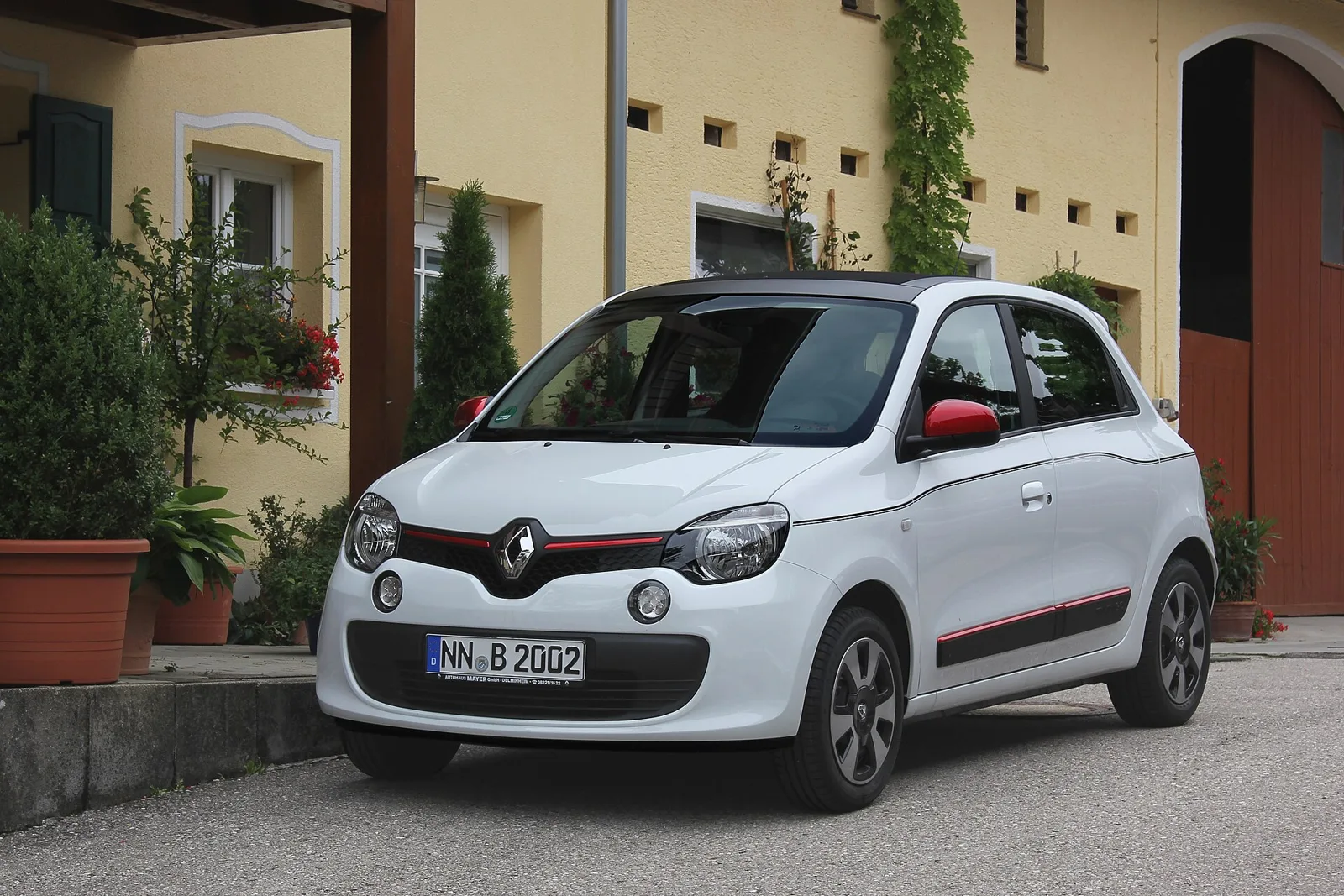
The Renault Twingo III was a small city car from the French maker, produced from 13 September 2014 to 30 March 2024. It was the first five-door Twingo, and it was built on a platform shared with the Smart Fortwo III and Forfour II. Its engine sat at the back, under the boot floor.
Where did the Twingo III come from?
The car was known internally as X07, and during its genesis it went by the name project Edison. It was the first model to come out of the accords with the German group Daimler, parent of Mercedes and Smart, signed in April 2010. Sharing a platform with the Smarts kept development and production costs down.
The Twingo III was presented on 13 February 2014 and shown to the public at the Geneva motor show on 4 March. Sales began on 13 September 2014, and the car replaced the second Twingo, which had been sold from 15 June 2007 to 12 September 2014 and was the best-selling mini city car in France.
A rear-engined five-door city car whose 2013 concept had already sketched its shape.
How did Renault reveal the Twingo III?
Renault used a website with a countdown and the slogan calling people to strip down the new Twingo on 13 February at 17h. The site ran in four languages: French, English, German and Italian. The company called the approach a strip-tweet, because it invited internet users to peel away the camouflage on Twitter using the tag UndressNewTwingo.
How well did the Twingo III sell in France?
In 2015 the Twingo III was the best-selling car in its category in France, with more than 45,000 units sold.
Why was the Twingo III rear-engined?
The Twingo III had a rear engine and rear-wheel drive, like its Smart twins. The engine was tilted at 49 degrees, ahead of the wheels, and it rested on a De Dion type rear axle. Freeing the front end let the front wheels turn through 45 degrees, against about 30 degrees on average in the city car segment.
That steering angle gave the car a turning circle of 8.69 m between kerbs, which was 1.40 m less than the Twingo II. Despite the engine at the back, the car behaved on the road more like a front-wheel-drive car, with ESP counteracting the oversteer that a rear-engined car tends to show.
The layout put 45% of the weight on the front wheels and 55% on the rear. A single anti-roll bar of 22 mm at the front, fitted on every version, kept the balance and gave good road holding.
Renault had used the same basic arrangement in 1946 for the 4CV, and it abandoned the layout in the 1970s when the R10 was discontinued. The Twingo III's engine sits under the boot floor, which frees a little space at the back, but the space under the front bonnet is not usable.
Which engines did the Twingo III use?
One engine was a 900 cc (54.9 cu in) three-cylinder turbo TCe unit producing 90 PS (66 kW; 89 hp), the same engine found in the Renault Clio IV and Captur. The alternative was the naturally aspirated 999 cc (61.0 cu in) SCe three-cylinder, which made 71 PS (52 kW; 70 hp) and was also of Renault origin.
No diesel was offered. Fitting the emissions equipment needed for the Euro VI standard would have cost too much on a city car. Valves were driven by a maintenance-free chain, and the fuel tank held 35 litres.
Renault said at the 2014 Geneva show that there would be no electric version of the new Twingo. A dual-clutch robotised gearbox, called EDC, was planned about a year after launch: for the 90 PS car in 2015, and for the 71 PS car at the end of 2016 or early 2017.
What did the Twingo III phase 2 change?
Renault released the first official photographs of the facelifted Twingo III on 22 January 2019, and it made its public debut at the Geneva International Motor Show that year. The facelift dropped the round daytime lights on the front bumper. Instead the light signatures moved into the headlights in a C-shaped design, and fog lights appeared low in the bumper.
At the rear, an air intake was added on the wings to feed air to the engine. The sporty 110 PS GT version disappeared from the catalogue at this stage.
Full Euro 6d compliance arrived in 2021 and brought the end of the SCe 75 PS and TCe 95 PS engines. The SCe 65 PS was the last combustion option left.
How did the electric Twingo work?
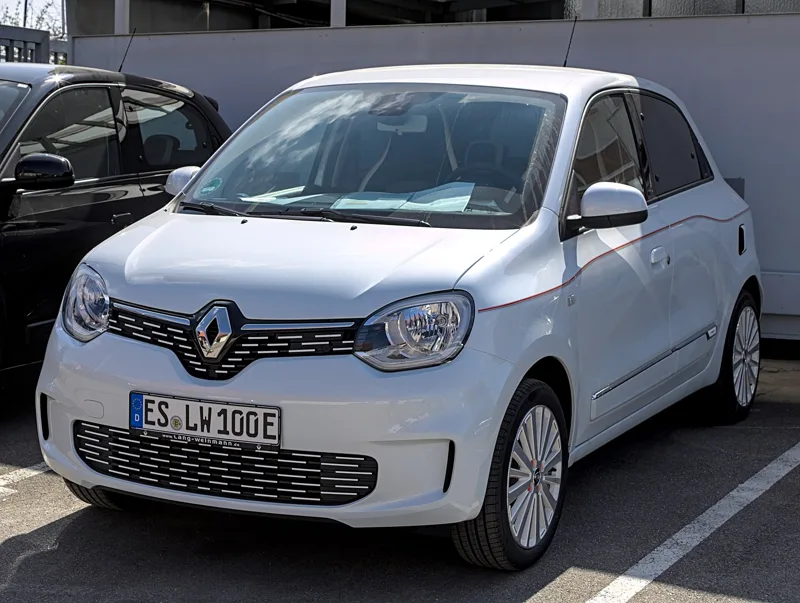
A year after the facelift was shown, Renault unveiled the electric version, the Twingo ZE RE80, in late February 2020. The car was to debut at the Geneva motor show of 2020, but that show was cancelled because of the Covid-19 epidemic. Sales started in October 2020.
The electric car was built on the same basis as its technical cousin, the Smart Forfour EQ, and it came off the same lines in Slovenia. Its battery holds 22 kWh, against 17.6 kWh for the Forfour, which gives a range of 180 km. The battery sits in the floor at the front-seat level, and the electric motor replaces the petrol engine under the boot, and the boot keeps its 188 dm3 of volume.
The electric model went through several names over its life: Twingo Electric, then Twingo E-Tech Electrique, and finally Twingo E-Tech 100% Electric.
How could buyers personalise the Twingo III?
Buyers could choose from eight body colours, among them Blanc Cristal, Bleu Dragee, Jaune Mango, Gris Lunaire, Noir Etoile, Blanc Quartz, Rouge Flamme and Vert Pistache. Two personalisation packs were offered, one for the interior and one for the exterior.
The interior pack added coloured inserts in Jaune Mango, red or black to the steering wheel, the strip across the centre console, the rings around the air vents and the gear lever, along with an animated upholstery pattern. The exterior pack used white, red or Jaune Mango inserts on the radiator grille surround, plus chrome strips on the lower door protectors, the rear bumper surround and the mirror casings.
Upholstery depended on the trim. The Life had dark fabric with Kario patterns, while the Zen and the Limited series had black fabric with a grey strip as standard, with light grey fabric as an option. The Intens used mixed TEP and fabric, available in Jaune Mango, red or black depending on the interior pack.
Side decorations called strippings came in Cosmic and Dots patterns, with an older 3 Lines design now gone. On the electric car the particular strippings were standard on the Zen and Intens trims, while the petrol Intens had them as standard and the Limited series could take the Dots pattern as an option.
Wheels also varied. The Life and Zen had 15-inch Makao hubcaps, the Limited series had two-tone 15-inch Aria hubcaps, and the Intens came with 15-inch Altana alloy wheels, with 16-inch Monega alloys as an option. The electric version fitted its 16-inch wheels with a blue cabochon surround.
What trim levels did the Twingo III have?
At the start of phase 2 the French range came in Life, Zen and Intens trims. Life became Authentic from March 2022, Zen became Equilibre, and Intens became Techno.
Over roughly five years after the facelift, the price climbed by close to 5%, which meant 600 euros more. Even so, the gap between the base version and the next one was significant, at 2,100 euros.
Prices rose during the car's life. In 2019 the range ran from 11,400 euros for the Life SCe 65 to 17,700 euros for the SL Le Coq Sportif TCe 95 EDC. On 7 May 2022 prices went up by 150 euros, which put the entry price at 15,750 euros, and the electric version rose by 500 euros to 23,650 euros.
Which special editions were made?
The first special series was the Edition One, launched with the car in 2014 and limited to 500 units. Later limited runs included Cosmic in 2015, which brought the EDC gearbox to the 0.9 TCe 90 engine, followed by Hipanema, Midnight, La Parisienne and Red Night.
Later series included Le Coq Sportif, Signature, Vibes from September 2020, a Team Rugby edition of 1,000 units, a Limited edition from October 2020, Urban Night from October 2021 and a Schumacher limited edition.
What concept cars came before the Twingo III?
The Renault Twin'Z concept was created by Renault designer Raphael Linari with stylist Ross Lovegrove for the Milan Triennale, held from 9 to 14 April 2013. It measures 3.62 m (11.9 ft) long and 1.70 m (5.6 ft) wide, and it took its cues from the Twingo I and the Renault 5. Its electric motor produced 50 kW (68 PS; 67 hp), with a range of 160 km (99 miles).
The Twin'Run followed in 2013. It was presented at the Monaco Formula One Grand Prix on 24 May 2013, and it was a running concept drawn by Csaba Wittinger. Its style evoked the R5 Turbo and foreshadowed the Twingo III. A 3.5 L Nissan V6 sat in the centre-rear position and produced 320 PS (235 kW; 316 hp) at 6,800 rpm.
Where was the Twingo III sold?
The Twingo III was sold across Western Europe, with one exception. Sales in the United Kingdom ended in 2019 for lack of demand, after about 1,000 units sold in the year before the car was withdrawn from the British market. The phase 2 Twingo was therefore never sold there.
The car also appeared in rallying from 2016 onwards.
What were the Renault Twingo III specifications?
| Specification | Detail |
|---|---|
| Body | Five-door city car, rear engine, rear-wheel drive |
| Petrol engines | TCe 900 cc (54.9 cu in), 90 PS (66 kW; 89 hp); SCe 999 cc (61.0 cu in), 71 PS (52 kW; 70 hp) |
| Fuel tank | 35 litres |
| Turning circle | 8.69 m (28.5 ft) between kerbs |
| Weight distribution | 45% front, 55% rear |
| Electric version | 22 kWh battery, 180 km (112 miles) range |
| 2019 price range | 11,400 to 17,700 euros |
| Production | 13 September 2014 to 30 March 2024 |