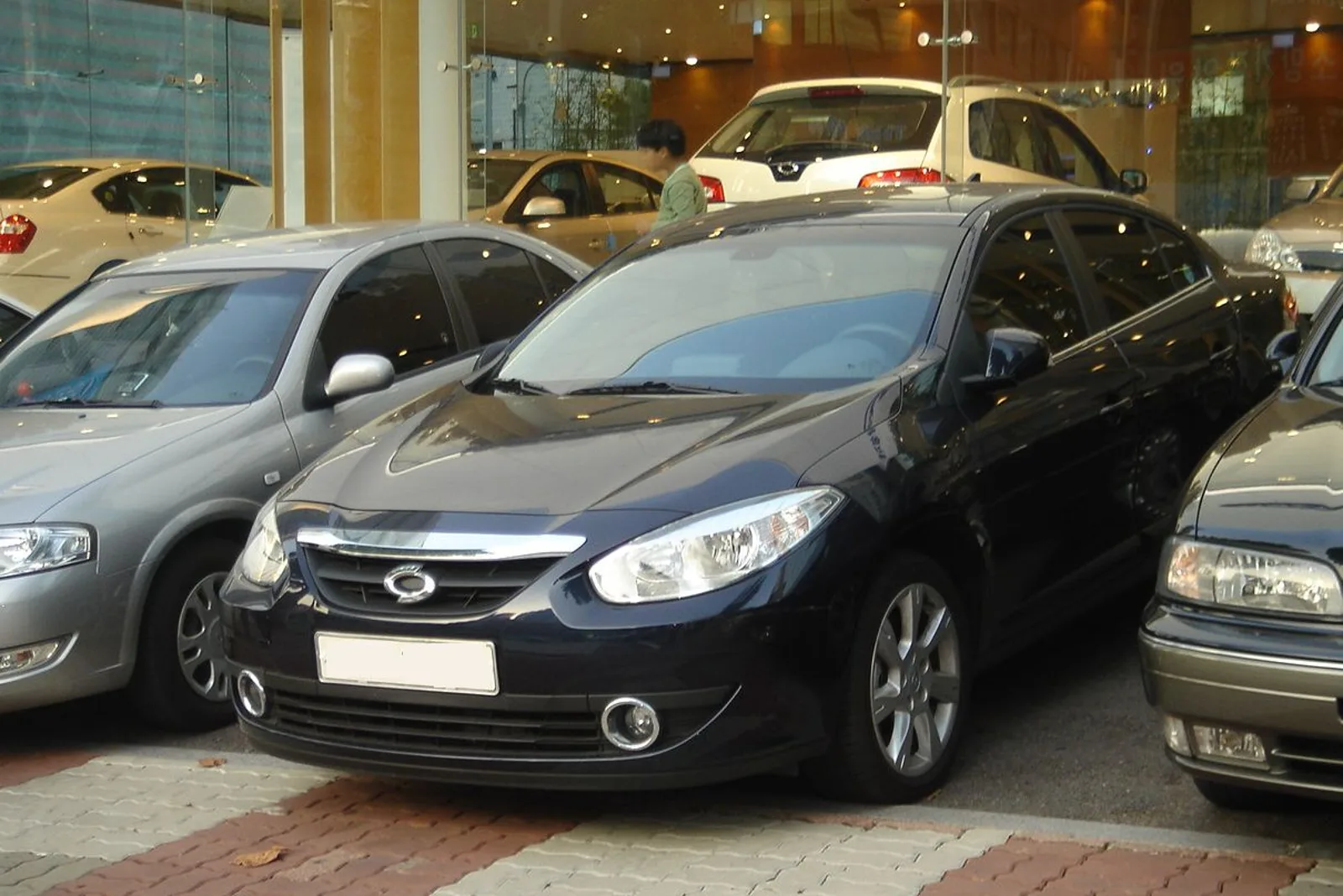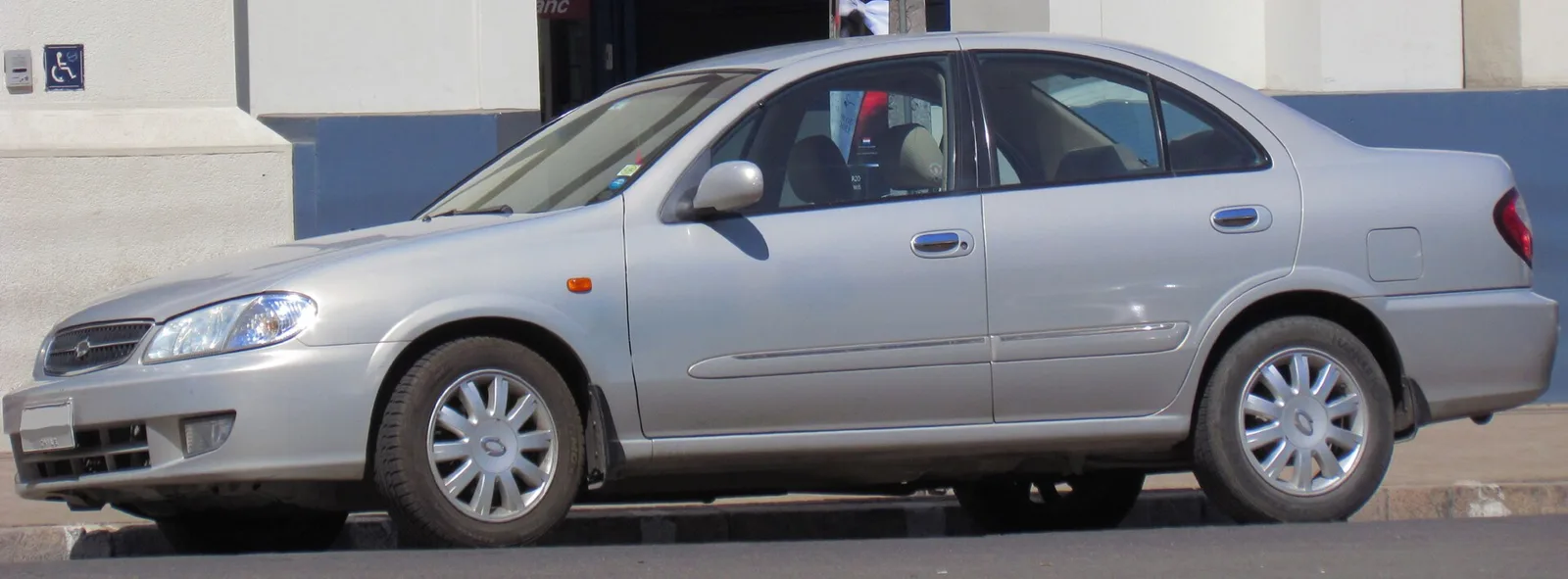
A Busan-built saloon on a Nissan Almera platform, sold under several names, that found over 100 thousand buyers in Russia.
The first Renault Samsung SM3 was a Busan-built four-door saloon from 2002 to 2013, closely related to the second-generation Nissan Almera. It also sold as the Almera Classic, Nissan Sunny and Renault Scala in export markets. Russia alone took a little over 100 thousand cars.
The first-generation Renault Samsung SM3 was built by a joint venture in Busan, South Korea, yet its underpinnings came from Nissan. The saloon ran from 2002 to 2013 and reached export markets under several different names. It sold well in Russia at first, and its reviews there were mixed.
Where did the SM3 come from?
Development began in September 2000 and took 21 months, as part of a medium-term brand plan published in February 2001. The SM3 was the second model for the Korean plant after the SM5, and according to Korean media about 150 billion won went into it. Around 500 different organisations took part.
Pre-orders opened in July 2002, and the first production cars rolled out in August. Sales began in September, when the brand already had 101 official dealers spread around the country. Outside South Korea, exports to Chile also began.
Built on a Nissan, sold under several names, and carrying a boot that never changed shape.
What changed with the 2005 restyle?
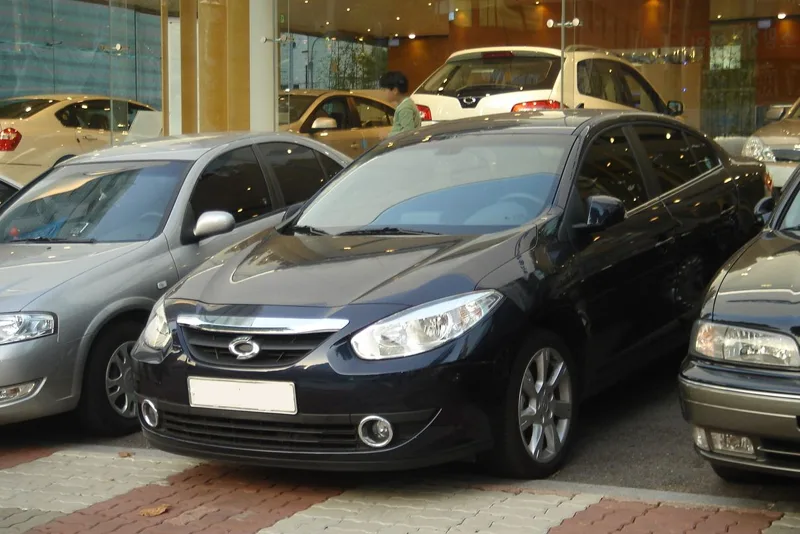
Sales of a restyled version started in August 2005, under the name SM3 New Generation. It gained a new front bumper, a radiator grille taken from the SM7 and triangular rear lights. The 1.6-litre engine also gained variable valve timing, which raised output from 105 to 107 PS.
The quoted fuel figure also changed in the same update, from 12.3 km/l to 12.6 km/l.
Why did the SM3 become a Nissan?
In November 2005 Carlos Ghosn, then president of Nissan, announced at a Seoul press conference that the alliance wanted the SM3 to become a global model. Developing markets, including Russia, the Middle East and Latin America, would sell it under the Nissan brand. Production of the export version began in February 2006.
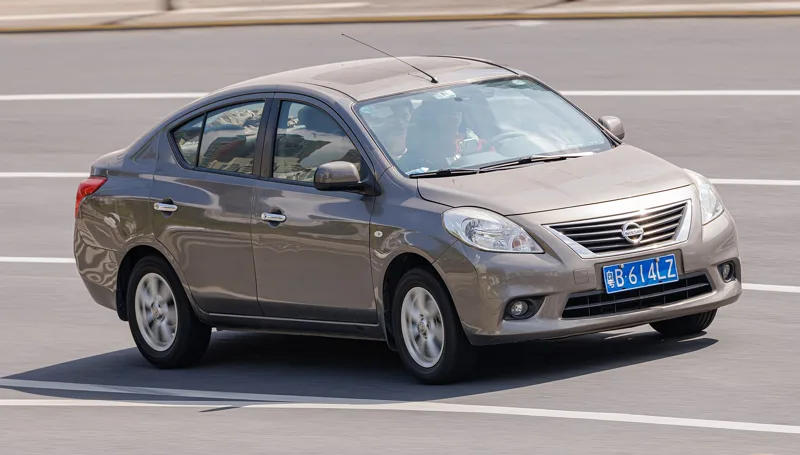
The name changed from market to market. It was the Almera Classic in Russia and Ukraine, the Sunny in the Gulf states and the Scala in Mexico and Colombia, while the Korean-built car kept the SM3 name at home.
How much did the Almera Classic cost in Russia?
From April 2006 the model was sold in Russia and Ukraine as the Nissan Almera Classic. Russian prices started at 13,490 dollars and Ukrainian ones at 14,390 dollars, with the top price at 18,140 dollars. Export to both countries ended in spring 2013.
Which trim levels were offered in Russia and Ukraine?
The Almera Classic came in three trim levels. The base PE, at 13,490 dollars in Russia on launch, had a driver's airbag, power steering, central locking and electric front windows. The PE+ at 15,090 dollars added a passenger airbag, air conditioning, heated and electrically adjusted mirrors. The top SE, at 17,990 dollars, brought anti-lock brakes, alloy wheels, rear electric windows and a CD head unit.
Each step up the Russian price list therefore bought safety and comfort equipment, rather than a different car.
Mexico, Colombia and the Scala
In May 2010 sales began in Mexico and Colombia under the Renault Scala name. The model was offered in two trims, Expression and Dynamique. Mexican prices ran from 154,900 to 184,900 pesos, and Colombian prices were 39 to 43 million pesos. The Scala was also exported to Egypt.
The top Dynamique version cost between 171 and 188 thousand pesos in Mexico, depending on the gearbox. Its equipment included steering-wheel audio controls, air conditioning, electric windows, ABS, EBD and two airbags. The Expression trim had one airbag and no ABS or EBD.
Technically the Scala was the same car as the Almera Classic, with the 1.6-litre engine paired to a five-speed manual or a four-speed automatic.
Gulf sales as the Nissan Sunny
Sales in the Gulf Cooperation Council (GCC) states used the Nissan Sunny name. Unlike the Almera Classic, the Sunny was sold only to legal entities. Private buyers were offered the Tiida saloon instead.
Design and cabin
There was only one body style, a four-door saloon. On the restyled car the indicators sit low, alongside the fog lamps, and the rear lights take a shape close to a triangle. The interior looks much like that of the second-generation Almera, but it uses cheaper plastic for trim.
The climate control unit on the centre console looks dated, closer to designs of the mid-1990s. The seats are another weak point. The front seats adjust only for backrest angle, and the rear bench cannot be adjusted apart from its head restraints, though it has ISOFIX anchors for child seats.
The boot holds 460 litres, and that figure never changes, because the rear seat backs do not fold. Long loads can go through a hatch in the centre of the rear seat, but only on the top SE trim. The boot lid opens from inside the cabin or from a button on the key, and a full-size spare wheel sits under the boot floor.
Technical specifications
| Item | Detail |
|---|---|
| Drive | Front-wheel |
| Engine | 1.6-litre QG16DE, continuously variable valve timing |
| Output | 107 PS (79 kW) at 6,000 rpm |
| Torque | 146 Nm (108 lb ft) at 3,600 rpm |
| Gearbox | Five-speed manual or four-speed automatic |
| Front suspension | McPherson with anti-roll bar |
| Rear suspension | Dependent, coil springs |
| Brakes | Ventilated discs front, drums rear |
| Tyres | 175/70 R14 or 185/65 R15 |
| Boot | 460 litres, fixed volume |
A 1.5-litre QG15DE was also offered, but it was not available outside South Korea.
What sat under the Almera Classic?
The underlying car was the second-generation Nissan Almera, produced between 2000 and 2006. Unlike the exterior and interior, that base barely changed, so the Almera Classic inherited its mechanical layout almost unaltered.
Drive went to the front wheels. The front suspension was a McPherson layout with an anti-roll bar, while the rear was a dependent arrangement on coil springs. Front brakes were ventilated discs, and the rear brakes were drums.
Engine choice was narrow. Export cars used the 1.6-litre QG16DE, which made 107 PS at 6,000 rpm and 146 Nm at 3,600 rpm. The 1.5-litre unit stayed at home, so the Russian and Ukrainian buyers of the Almera Classic had only the larger engine to choose from.
How did reviewers judge the car?
Russian magazines were divided. Avtoreview's 2008 comparison put the Almera Classic last, with 720 points out of 1,000, while Za Rulem's 2006 test praised its manoeuvrability. Both found fault with the cramped interior.
What did the 2008 Avtoreview test involve?
Avtoreview compared several C-class cars with a B-class benchmark, the Renault Symbol saloon. The Almera Classic was up against the Chevrolet Lacetti, Skoda Octavia and Renault Logan, and it finished last with 720 points out of 1,000. The Skoda took the win with 805.
The verdict on the Nissan was harsh on several counts. Its rear seat row was cramped, though it was the only one in the group with a centre armrest. Speed control in the higher gears was awkward, cornering was poor, and the ride lacked smoothness, with what the magazine called a wobbly suspension.
On the plus side, the reviewers found the driving position reasonably comfortable compared with the French models, the instrument panel informative, and the car well controlled on flat roads.
Za Rulem found the suspension rather firm and the cabin low and tight, with a boot that could not be reconfigured. Its manoeuvrability was praised, which was the opposite of the Avtoreview view.
How did the car sell in Russia?
In Russia the model started with high sales, around 20 thousand cars a year. The 2008 crisis roughly halved that figure. In total about 105 thousand cars were sold.
The Russian launch in April 2006 meant that the strong early years ran straight into the 2008 crisis.
The Almera Classic received no major updates in its seven years on sale. Only the electrics were reworked, in 2008, so that they suffered fewer faults.