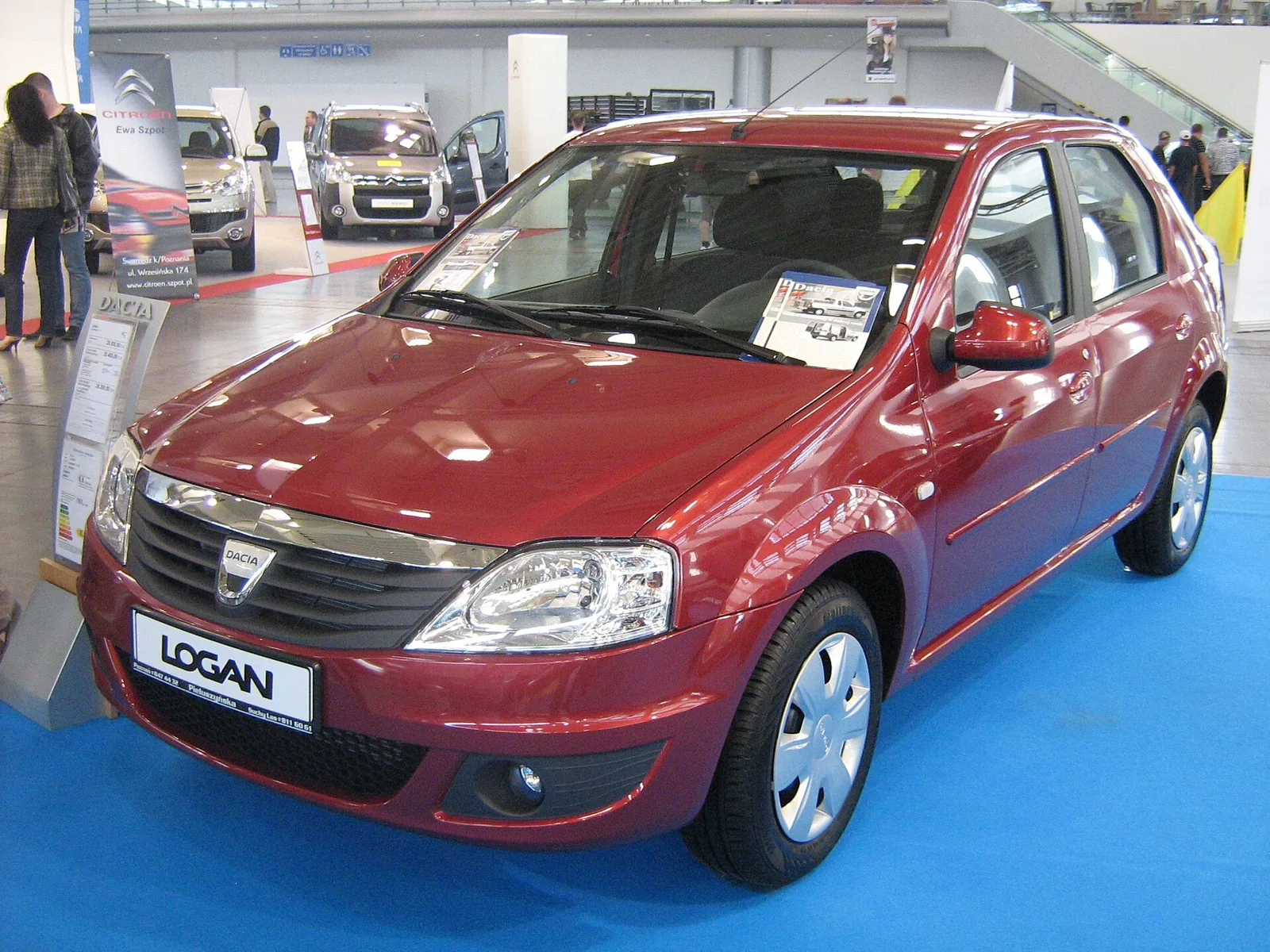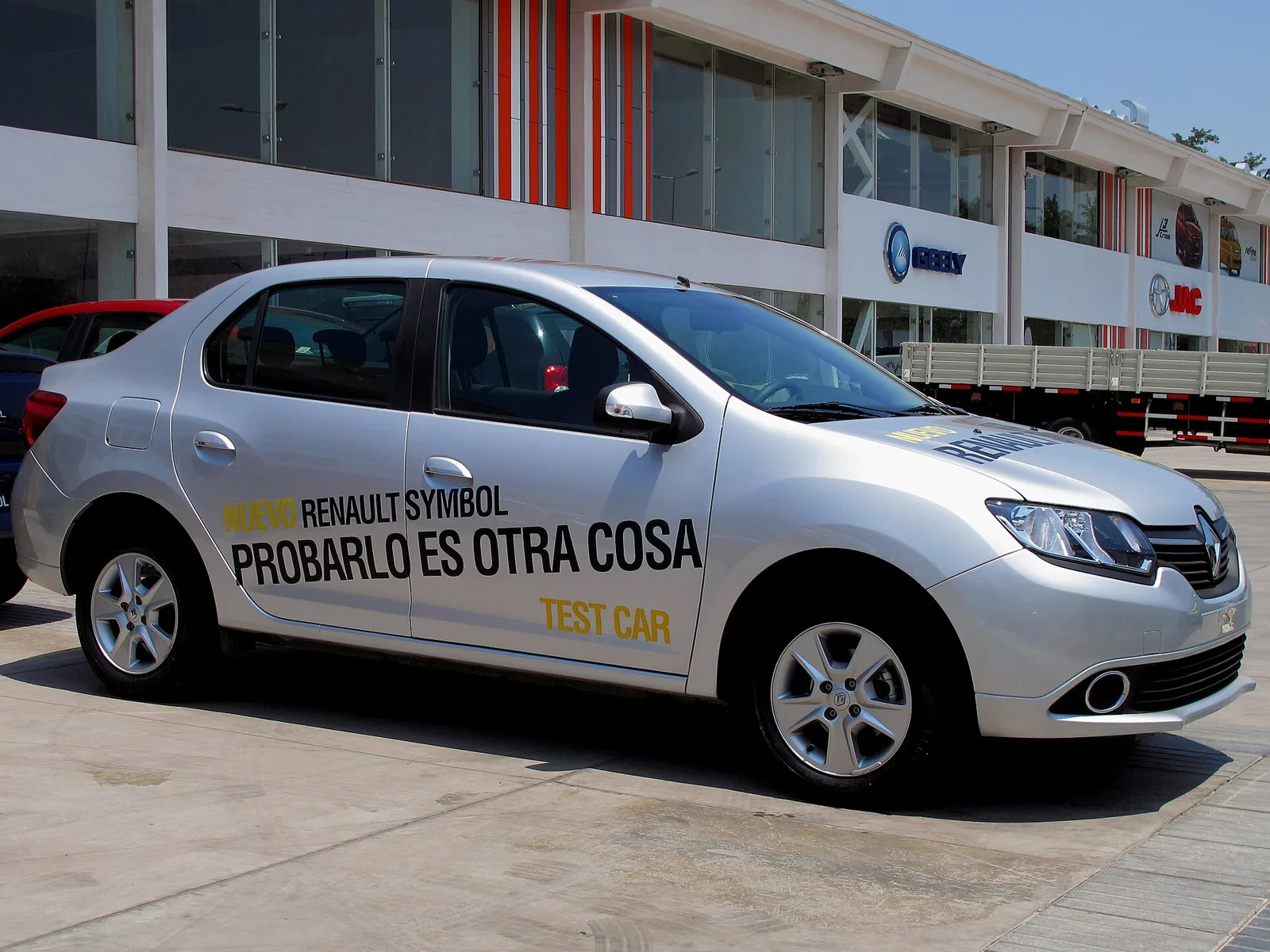
A Clio-based saloon from 1999 sold as the Clio Symbol, Thalia and Symbol, and later rebadged from the Dacia Logan.
A Clio-family saloon, the Symbol arrived in 1999 and returned in 2012 as a rebadged Dacia Logan. Known as Thalia and Clio Sedan in some countries, it served emerging markets, with Turkey, Brazil and Russia among its notable markets during its three generations.
The Renault Symbol is a subcompact saloon from the French maker Renault, first sold in late 1999 as the Clio Symbol. Known as Thalia in some markets, it was aimed at emerging car markets, from Eastern Europe to Latin America. Its three generations were sold under several names in different markets.
Where did the Renault Symbol come from?
The Symbol began as the saloon sibling of the second generation Renault Clio, arriving in late 1999 as the Clio Symbol. It was aimed at markets where buyers preferred saloons, and it was not sold in Western Europe. Its only French sales were in overseas departments and regions.
The main regions were Central and Eastern Europe and Latin America, along with North Africa and the Gulf states. Among the named countries were Turkey, Brazil and Romania, with Russia, Algeria, Colombia and Tunisia also cited.
A Clio-based saloon for emerging markets that changed names and platforms over three generations.
What was the first generation like?
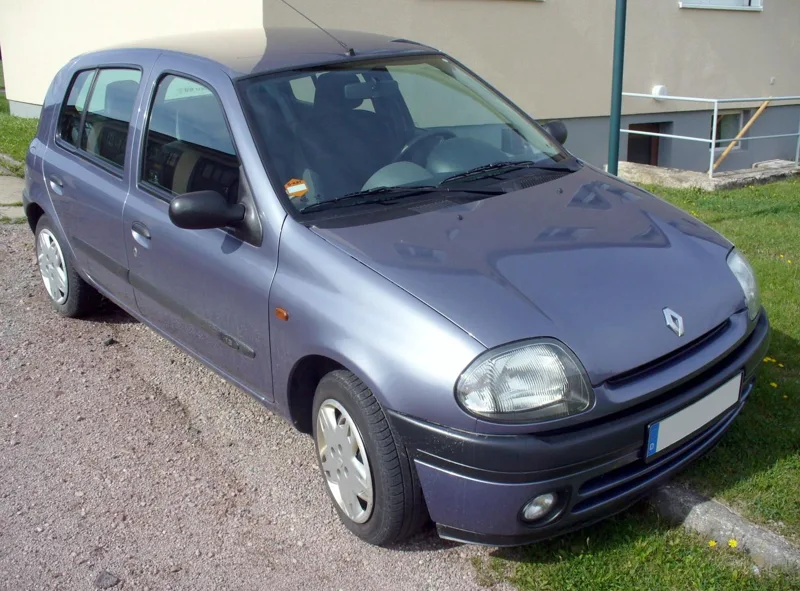
The first generation was a sedan version of the Clio II, built to suit developing markets, most notably in Eastern Europe. It was 38 cm (15.0 in) longer than the hatchback and offered a 510 litre (18 cu ft) boot. Worldwide sales of the first generation passed 600,000 units.
Europe initially received two 1.4-litre petrol engines: an 8-valve unit with 75 hp and 114 Nm, and a 16-valve unit with 98 hp and 127 Nm, both with multi-point injection. Argentina had a 1.6-litre 16-valve petrol and a non-turbo 1.9-litre diesel, while Brazil also offered a 1.0-litre 16-valve petrol.
The Expression trim added a driver airbag, air conditioning and a trip computer, while Dynamique added a passenger airbag, ABS and alloy rims.
What changed in the 2002 facelift?
The March 2002 facelift brought the Clio hatchback's front end, black bumper mouldings and a revised interior, along with improved safety. New engines included a 1.5-litre diesel with 65 hp and a 1.6-litre 16-valve petrol with 105 hp, the latter offered only with Dynamique trim.
Diesel development continued. The 65 hp dCi was raised to 70 hp to meet Euro IV rules from January 2005, and an 80 hp version with 185 Nm arrived in the second half of 2004. A 1.2-litre 16-valve engine with 75 hp and 105 Nm followed in the first half of 2006.
South America received the new front end from 2003, and Brazilian engines were adapted for flexible fuel, with the 1.6-litre 16-valve making 110 hp on petrol. Nissan's version, the Platina, was sold in Mexico and Chile with the same 1.6-litre 16-valve petrol. The Platina came in four Grado trims, lettered Q, K, K plus and A, a naming that echoes the highest cards in a playing deck.
Where was the first generation built?
Turkey was the main base, at the Oyak-Renault plant in Bursa, where manufacturing began in 1999. Brazil, Colombia, Mexico and Russia also built the car, and the Russian line ran only from late 2002 to 2004. The Mexican version was the Nissan Platina.
Brazilian assembly at the Ayrton Senna complex began in 2000, and Colombian production by Sofasa started in 2001. The Platina was dropped after the 2010 model year.
How did the second generation differ?
The second generation was revealed at the Moscow International Motor Show in August 2008 and went on sale between September and November. Renault dropped the Clio name, leaving Symbol, or Thalia where that name was used. It was 7 cm (2.8 in) longer than its predecessor, with a 506 litre (17.9 cu ft) boot.
Engineering teams in France, Turkey and Romania designed the car jointly over 26 months under the codename L35. Production stayed at Bursa, and from 2009 the South American version was built at Cordoba in Argentina, where only the 1.6-litre 16-valve engine was fitted.
Safety equipment included driver and passenger airbags, ABS, EBD and rear parking sensors, while side airbags depended on version. Three trims were offered: Authentique, Expression and Privilege.
The Autobest 2009 prize was awarded in December 2008 by a jury of journalists from fifteen countries. The second generation never received a facelift, and it was replaced in 2013 by a Dacia Logan-based Symbol.
What was the third generation based on?
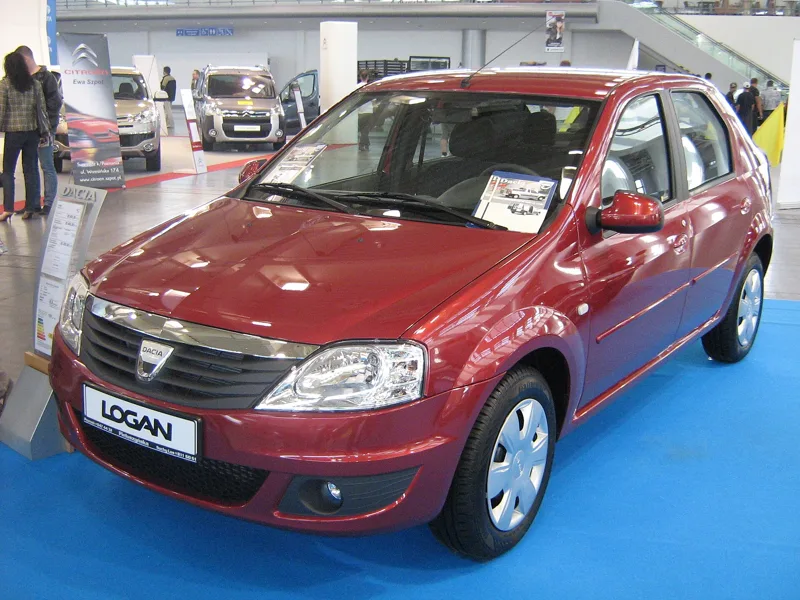
The third generation debuted at the 2012 Istanbul Motor Show as a rebadged second generation Dacia Logan. Sales in Turkey started early in 2013, and Algeria and Tunisia also received the car.
Brazil has built the Renault Logan since November 2013, while Chile sells the same car as the Renault Symbol. Algeria opened a CKD assembly plant in Oran in November 2014 with capacity of 25,000 units per year, which could eventually rise to 75,000.
The South American and Turkish cars keep small design differences. The interior differs mainly at the central dashboard, and the exterior has a different front end, a large Renault badge and mirror-mounted indicators.
What engines did the third generation use?
In Turkey the third generation used a 1.2-litre 16-valve petrol producing 55 kW (75 PS) and 107 Nm, or a 1.5-litre diesel with 66 kW (90 PS) and 220 Nm. Chile offered a 1.6-litre petrol with 61 kW (83 PS) and 131 Nm, with trims named Expression, Dynamique and Privilege.
Turkish cars were offered in seven colours and two trims, Joy and Touch. Gearboxes were a five-speed manual at launch, and the Dacia Easy-R automated manual arrived with the 2017 facelift.
What changed in the 2017 facelift?
The facelift arrived in the first quarter of 2017 and applied to Turkey, nearby export markets and Chile. It brought LED daytime running lights and a revised front, a new trunk and taillights at the rear, and a new three-spoke steering wheel with the horn.
The facelifted car was not sold in Mexico, which left Renault without a saloon there until the Arkana arrived. Iran received the car from August 2015, and the updated version reached several Persian Gulf states in early 2017, including Saudi Arabia, the UAE and Qatar.
How did the first generation perform in crash tests?
In a 2002 frontal crash test run by the Russian magazine Autoreview, the first generation scored 12 points out of 16. That result was considered equivalent to the score of the hatchback version in Euro NCAP testing.
The Thalia left the Croatian market in 2005, when the Dacia Logan took its place. From early 2006 the model was no longer shown on Renault's websites.
What does the Symbol's table show?
| Specification | Detail |
|---|---|
| Type | Subcompact saloon, sold as Clio Symbol, Thalia or Symbol |
| Generations | Late 1999, August 2008, late 2012 |
| First generation boot | 510 litres (18 cu ft) |
| Second generation boot | 506 litres (17.9 cu ft) |
| First generation length | 38 cm (15.0 in) longer than the hatchback |
| Second generation length | 7 cm (2.8 in) longer than its predecessor |
| Turkey petrol (third generation) | 1.2-litre 16-valve, 55 kW (75 PS), 107 Nm |
| Turkey diesel (third generation) | 1.5-litre, 66 kW (90 PS), 220 Nm |
| Chile petrol (third generation) | 1.6-litre, 61 kW (83 PS), 131 Nm |
| Oran plant capacity | 25,000 units per year, rising to 75,000 |
| 2002 frontal crash test | 12 points out of 16 |