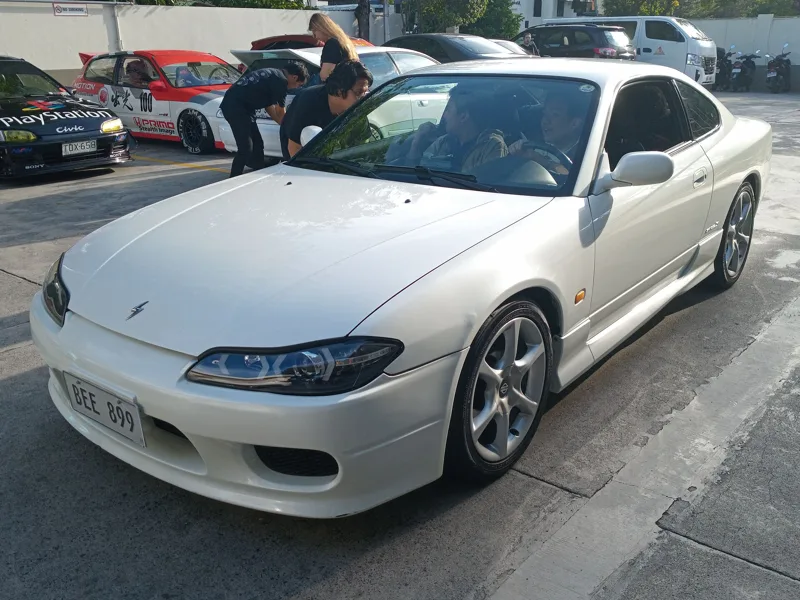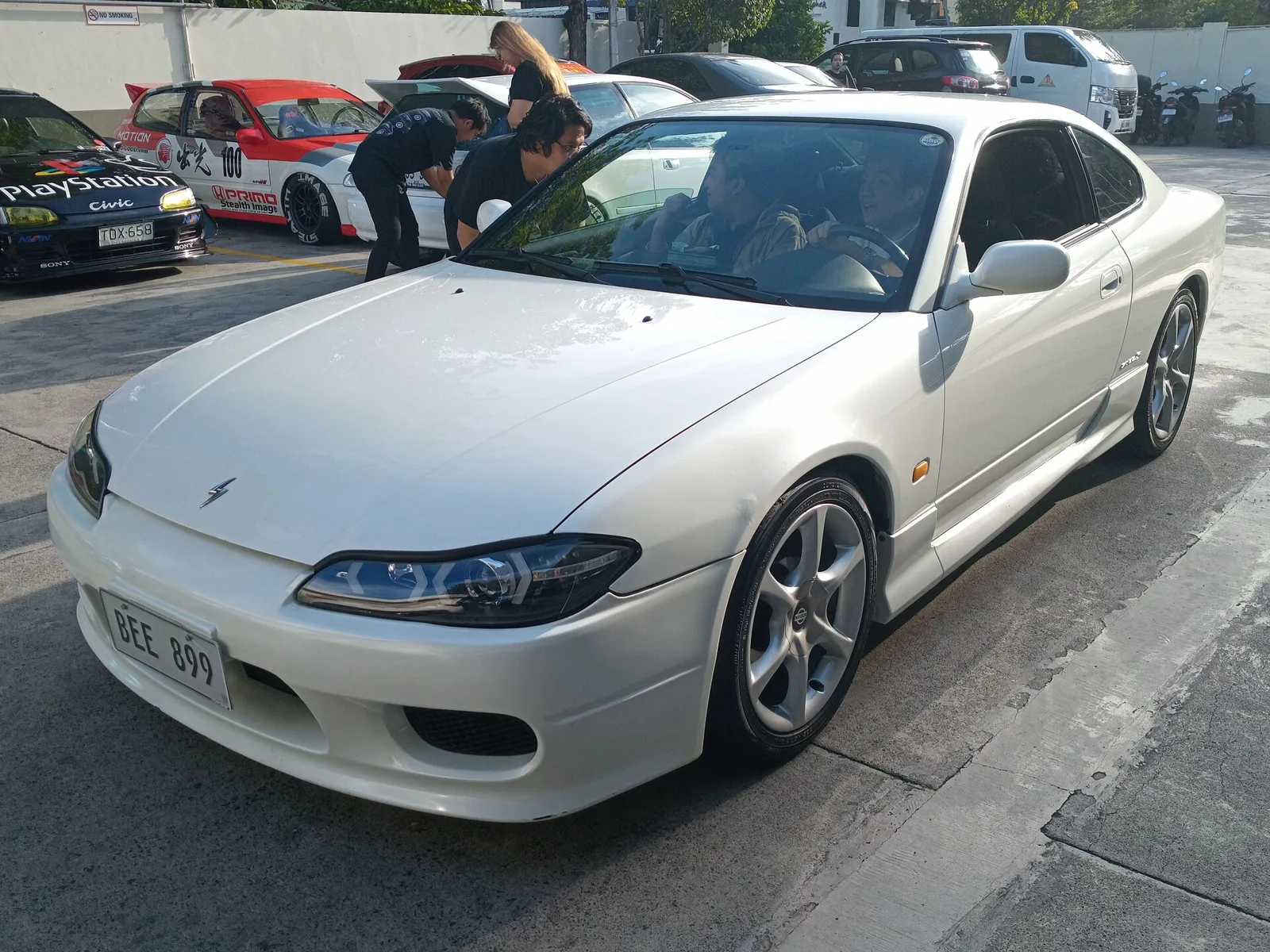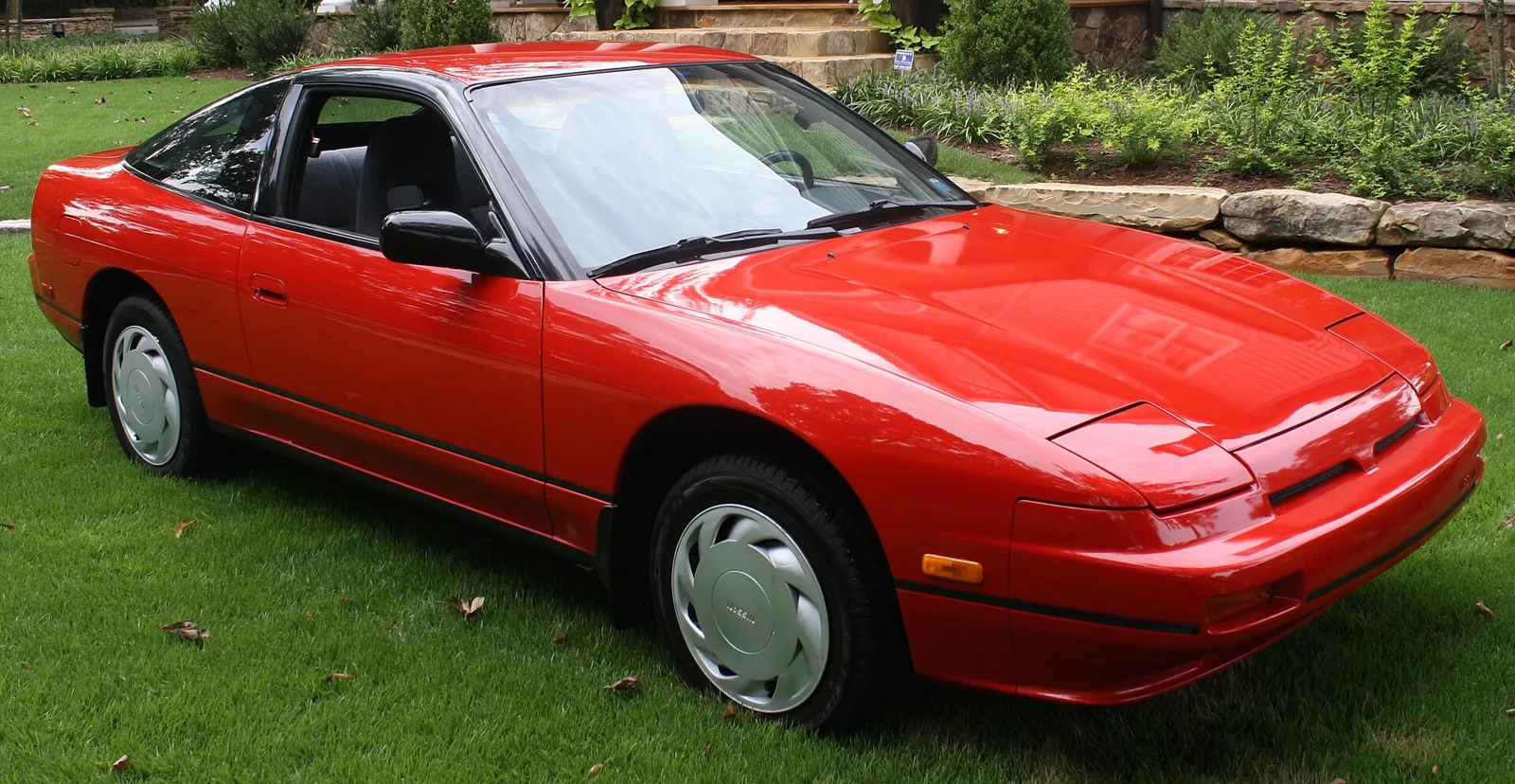
Built on the S13 chassis from 1988 to 1998, the 180SX traded the Silvia's notchback for a liftgate, pop-up headlights and a turbocharged engine.
The Nissan 180SX was a turbocharged fastback built by Nissan from 1988 to 1998 on the S13 chassis. It was sold only in Japan and was a sister model to the Silvia, with a liftgate and pop-up headlights.
The Nissan 180SX was a fastback that Nissan built between 1988 and 1998 on the S13 chassis of the Nissan S platform. It was sold only in Japan, where it carried an R designation in its model codes, such as RS13 and RPS13. Outside Japan it was re-badged as the 200SX and, in the United States, as the 240SX.
How did the 180SX fit into Nissan's range?
The 180SX was a sister model to the S13 Silvia, which was sold from the 1989 model year through 1998. The two cars were sold at different Japanese dealership chains, with the Silvia at Nissan Prince Stores and the 180SX at Nissan Bluebird Stores. In Japan, the 180SX replaced the Gazelle.
The two cars were closely related but not identical. The 180SX had pop-up headlights and a liftgate with different rear bodywork, while the Silvia was a notchback. Their specifications and equipment were largely the same, including the use of a turbocharged CA18DET engine.
The S13 Silvia was discontinued in 1993, but the 180SX stayed on sale for the full length of the next generation Silvia, the S14, and it helped persuade Nissan to keep the fastback in the market.
A turbocharged fastback sold only in Japan, sharing the Silvia's bones and a long afterlife on the drift circuit.
Why is it called the 180SX?
The name was first a reference to the 1.8-litre CA18DET engine used in the chassis. In 1991 the engine was upgraded to a 2.0-litre unit, offered as the turbocharged SR20DET and the naturally aspirated SR20DE. The larger engine kept the 180SX name, so the badge no longer matched the displacement.
The naturally aspirated SR20DE arrived in 1996. The original CA18DET turbo was never offered alongside a naturally aspirated version in the first place, so the 180SX was always a turbo car in its early years.
The name also appeared where it did not quite belong. In Europe, 180SX was a trim of the S110 Silvia, and its badges read Silvia 180SX. Left-hand-drive cars with 180SX badges and non-retractable headlamps were sent to Micronesia and the South Pacific islands.
What were the 180SX generations?
The 180SX came in three generations. The first ran from March 1989 to January 1991, the second from January 1991 to August 1996, and the third from August 1996 to December 1998. Each one brought engine, trim or safety changes that shaped how the car was sold.
The first generation came in two versions, Type I as the standard car and Type II as the advanced one. HICAS II four-wheel steering came as an option, but only on the Type II. Every version used the CA18DET engine, rated at 175 PS, with a five-speed manual or four-speed automatic.
The second generation, from January 1991, moved to the SR20DET engine rated at 205 PS. The brakes were enlarged, a limited-slip differential was added, and the front bumper and parts of the interior were redesigned. Super HICAS became an option on all models, and a Type III trim was added at the January 1991 facelift.
The third generation, from August 1996, had a revised front bumper, tail lights, 15-inch wheels and interior. It added a driver-side airbag and seat belt pre-tensioners. Type X, Type S and Type R were offered, and the Type S became the first 180SX sold without a turbocharged engine.
Which 180SX trims were available?
The trim list grew over time. Type I and Type II were the first pair, Type III joined in 1991, and the 1994 facelift renamed the range to Type R and Type X, with Type X as the highest level. A Type G later joined the third generation as another naturally aspirated model.
The Type X and Type R shared the 205 PS (202 hp) engine and the same mechanical package. The Type R lacked many of the Type X's cosmetic additions, among them a front lip, a rear spoiler, side skirts and a rear valence. The Type S and Type G used the naturally aspirated SR20DE rated at 140 PS and were otherwise close to the Type X in detail.
The Type X and Type R ceased production in October 1998. The Type S and Type G carried on until December 1998, when all 180SX production stopped.
How did the overseas 200SX and 240SX differ?
In Europe and South Africa, the S13 was sold as the 200SX, using the CA18DET engine rated at 169 PS (124 kW; 167 hp). It could reach 100 km/h (62 mph) in 7.5 seconds and top out at 220 km/h. The 200SX was sold from 1989 to 1994, when it gave way to the S14.
North American buyers got the 240SX, which initially used the KA24E engine with a single overhead cam and later the KA24DE with dual overhead cams. The 240SX also came as a coupe and a convertible, both of which took their rear styling from the S13 Silvia.
How did the European RS13U 200SX get its engine and brakes?
The RS13U 200SX was a fastback three-door hatchback with a body shell like the Japanese 180SX. It used pop-up headlights, as its predecessor the S12 had in Europe. The notchback coupe was never offered in Europe, although some Japanese S13 Silvias were imported privately.
The RS13U kept the CA18DET engines carried over from the end of S12 production. An intercooler was added for a slight increase in stability and power. The SR20DET was never offered in Europe, because it would have needed new European testing and regulations.
Early European cars had 257 mm front brakes, later upgraded to 280 mm. Several Nismo options that were optional in Japan were standard on the RS13U, including a water and oil heat exchanger, a differential oil cooler, an alloy radiator and a 3.916 final drive ratio. These were needed because the car had no speed limiter, while Japanese cars were fitted with a 180 km/h (112 mph) limiter.
The FS5W71C gearbox used different ratios from the other S13 and S14 units, and its layshaft gear changed from 22/31 to 21/32. That made it slower-running with more torque, and it is generally considered weaker than other S13 and S14 gearboxes.
What was the Sileighty?
The Sileighty was a 180SX and Silvia hybrid built by Japanese tuner Kid's Heart, which produced 500 units. It used the 1998 180SX platform but swapped in the headlamps, front wings, bonnet, front bumper and fixings from an S13 Silvia.
Both naturally aspirated and turbo engines were offered, matching the 140 or 205 PS of the standard S13, and buyers could pick either transmission. Kid's Heart also offered mechanical work: suspension tuning, a better limited-slip differential and a Nismo ECU map, lifting the turbo model to 230 PS (169 kW) with 13 psi (0.9 bar) of boost.
The front-end swap was also a common modification for 180SX owners, and 200SX and 240SX owners fitted the same parts to their own cars.
Did the 180SX become a motorsport car?
Yes, in drifting. Like other S platform cars, the 180SX became popular with drivers in that discipline. It was a frequent entrant at the D1 Grand Prix, and Masato Kawabata used one on his way to the 2013 championship.
Kazuya Matsukawa also won the 2007 Street Legal category with a 180SX.
What are the Nissan 180SX specifications?
| Specification | Detail |
|---|---|
| Production | 1988 to 1998 in Japan; 200SX in Europe; 240SX in North America |
| Chassis | S13 of the Nissan S platform, model code RS13 or RPS13 |
| First generation engine | 1.8-litre CA18DET turbo, 175 PS |
| Second generation engine | 2.0-litre SR20DET turbo, 205 PS |
| Naturally aspirated engine | SR20DE, 140 PS (introduced in 1996) |
| European 200SX output | 169 PS (124 kW; 167 hp) from the CA18DET |
| European 200SX 0-100 km/h | 7.5 seconds, with a top speed of 220 km/h |
| Transmission | 5-speed manual or 4-speed automatic |
| Suspension | MacPherson strut front, multi-link rear |
| Japanese speed limiter | 180 km/h (112 mph) |
| Sileighty output | 230 PS (169 kW) at 13 psi (0.9 bar), with Nismo ECU tune |
| Final production | December 1998, with Type S and Type G |