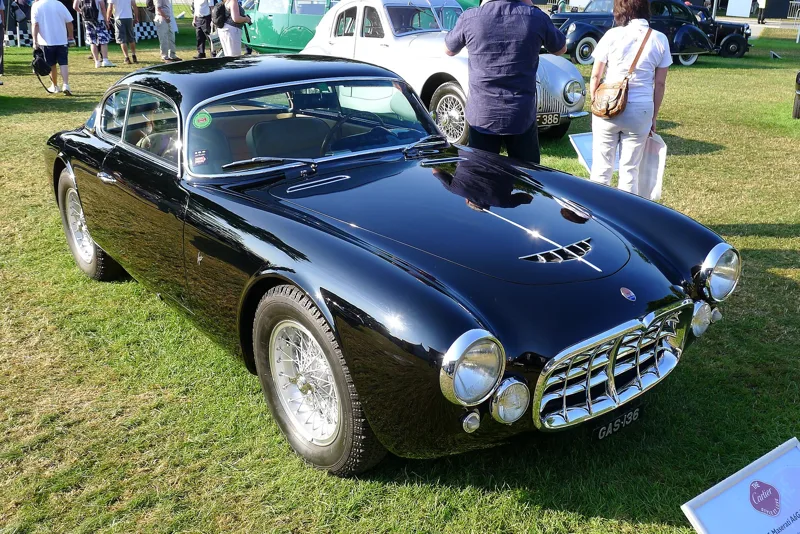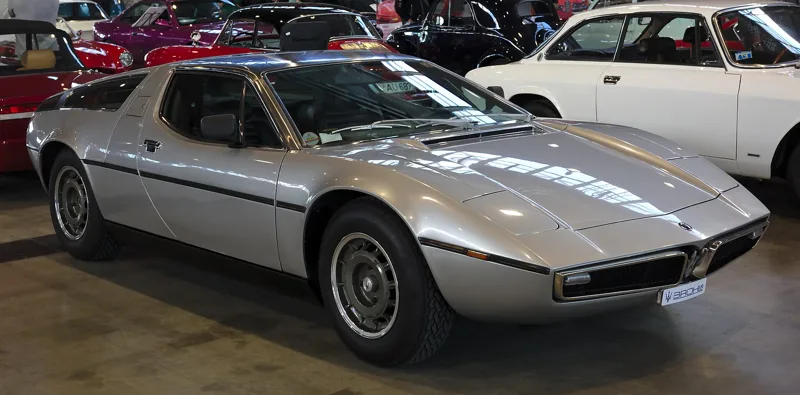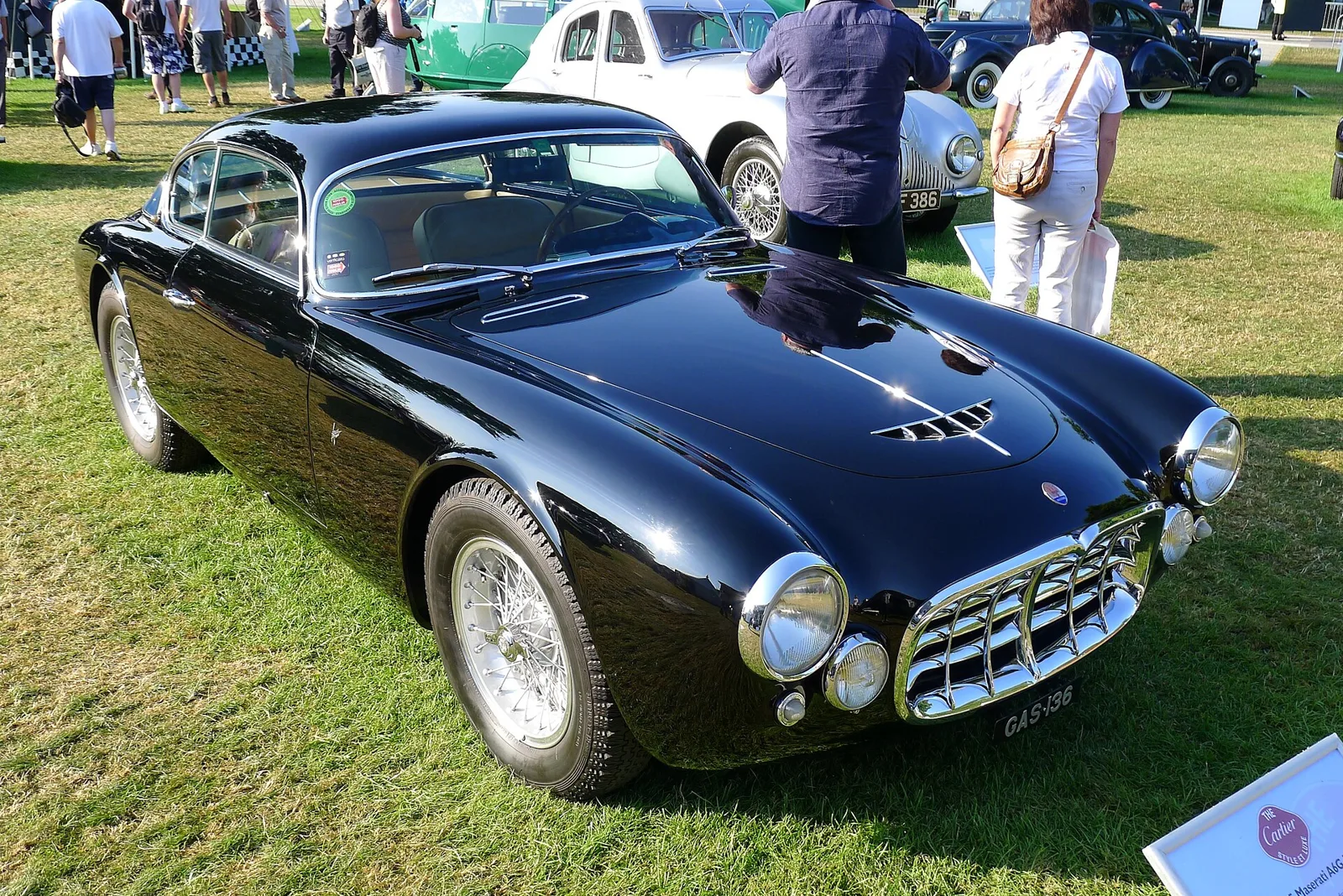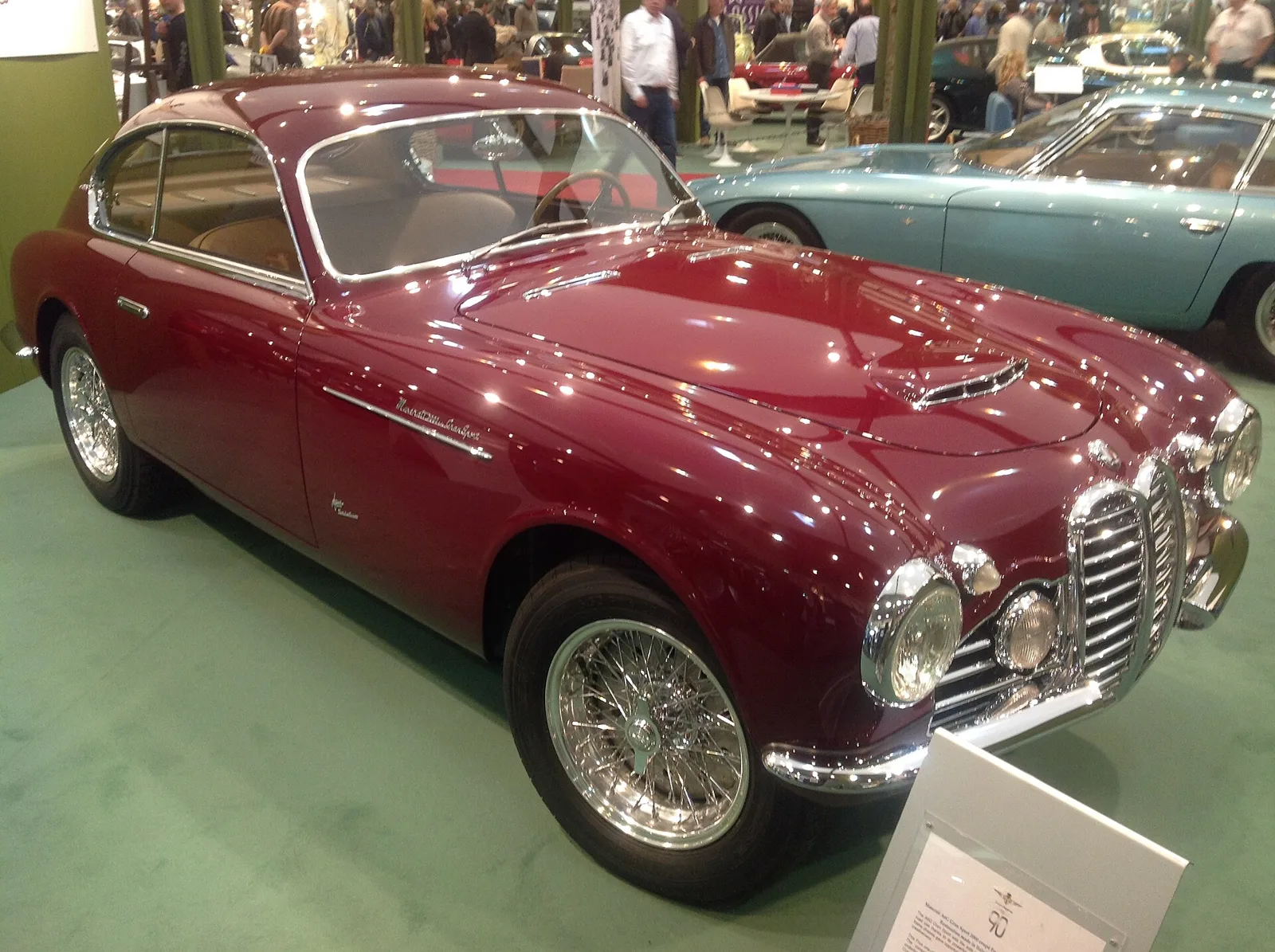
A small-series road sports car that Maserati sold from 1950 to 1954, also as the 2000 GT, with bodies from three coachbuilders.
Sixteen A6G cars came out of Maserati's small run between 1950 and 1953. Its 1,954 cc six-cylinder engine descended from a racing car, and the model was also sold as the 2000 GT before the A6G54 took over. Pininfarina, Frua and Vignale each supplied its bodies, and the revised version followed in 1954.
Maserati's A6G was a road sports car built in small series from 1950 to 1954, also sold under the name Maserati 2000 GT. It grew out of the 1947 A6 with a bigger engine and bodies from three different coachbuilders. Sales stayed thin, and the revised A6G54 of 1954 became the more successful version.
Why did Maserati build the A6G?
The A6 of 1947 had a 1.5-litre engine that made only 65 PS (48 kW; 64 hp), and its top speed of 146 to 153 km/h (91 to 95 mph) lagged behind the first Ferrari road cars. The A6G answered with a larger engine and a higher output, intended to carry heavier and more luxurious bodies at a high selling price.
Maserati, founded in 1914, was mainly involved in motor racing until the Second World War, and under Alfieri Maserati it produced many successful competition cars in the 1920s and 1930s. Road sports cars derived from those racers were individual one-offs made to customer request, because series production did not exist before 1945.
The A6 was the first Maserati sports car with road approval, offered from 1947 with Pininfarina bodies and a 1.5-litre engine. To gain durability and ease of maintenance, Maserati had dropped several features common in its racing engines, and that cost the engine output. Until 1950 Maserati sold a total of 59 examples of the A6. The A6G sold even worse, and only 16 examples were built from 1950 to 1953.
Maserati's 2000 GT road car was built in just 16 examples, each wearing a body from one of three coachbuilders.
What engine and chassis did the A6G use?
The A6G used an in-line six-cylinder engine of 1,954 cc (119.2 cu in), taken from the A6GCS racing car. It had a 72 mm (2.8 in) bore and an 80 mm (3.1 in) stroke, three Weber carburettors and a compression ratio of 7.8:1. Output was 100 PS (74 kW; 99 hp) at 5,500 rpm, delivered through a manual four-speed gearbox.
The A6GCS had first grown from the A6 engine to 1,978 cc (120.7 cu in) and later to 1,988 cc (121.3 cu in). Its block was cast iron, which the G in the model name pointed to, from the Italian word ghisa. The racing version kept one overhead camshaft and two valves per cylinder, and the road engine inherited that layout.
The model name pointed to cast iron, yet some A6G engines had aluminium blocks despite it. The road engine was taken over from the racer with its displacement reduced slightly, which is why the A6GCS figures and the A6G figures differ.
The chassis matched the A6 in every detail and was considered very simple. It was a welded steel tube frame braced by cross members, with independent front wheels on coil springs and wishbones. The rear used a live axle with leaf springs taken from Fiat's large-series production.
Who built the A6G bodies?
There was no standard A6G body. Pininfarina, Frua and Vignale each supplied different bodies for the chassis. Pininfarina built nine fastback coupes, Frua made six models, mostly spyders, and Vignale produced a single coupe on a 2000 GT chassis.
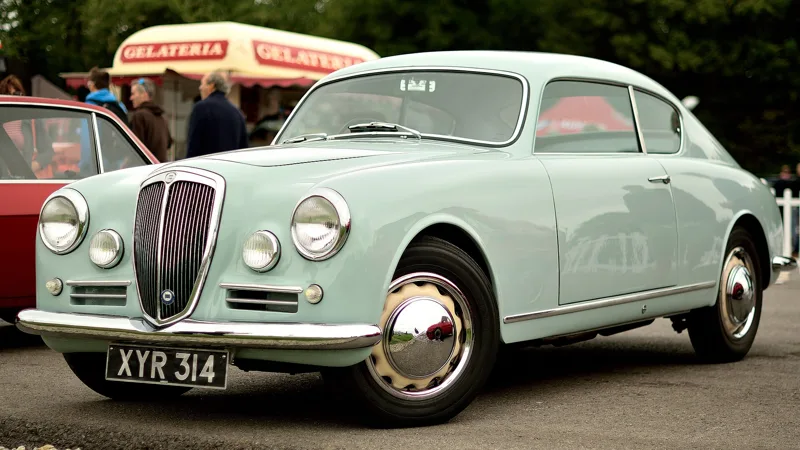
The Pininfarina cars resembled the Lancia Aurelia B20 coupe in profile, a design usually credited to the Ghia designer Mario Felice Boano. The details varied between them: some had large, broad radiator grilles, others a narrow but tall surround, and some flanks ran in one line from nose to tail while others kinked at the doors.
Pininfarina's designs were not regarded as a masterpiece. The ornaments and the massive grille, which made the cars look heavy, drew criticism, and some Pininfarina cars were later seen as inelegant or clumsy.
Pietro Frua made five spyders and one coupe, sold exclusively through Mimmo Dei, the Maserati dealer in Rome. The first three spyders, with chassis numbers 2015, 2017 and 2018, used shortened A6-1500-GT chassis fitted with the A6 2000 GT engine. Their wheelbases were 10 cm (3.9 in) shorter, and each was a two-seater with an aluminium body.
These early cars had a split windscreen and a two-part bumper with a third headlight called the Monofaro, a feature that recalled the A6 GCS racer. The first convertible went to the film director Elo Pannaccio, the second to a customer in Rome, and the third, shown at the 1951 Turin Motor Show, to the Cuban General Motors importer Amadeo Barletta.
The second pair of Frua spyders used the uncut 2000 GT chassis and seated 2+2. Their bodies were mostly steel, with aluminium doors and bonnets, and the windscreen became one piece. The central auxiliary headlight gave way to two small lights beside the radiator mask. One car went to Rome and one to New York.
The one-off Gran Sport coupe, chassis 2028, was built in the winter of 1951/52 for Mimmo Dei, with a fastback roof that fell smoothly to the rear bumper. Its closed body was considered more balanced than the Pininfarina coupe, and its lines were described as clean and plain. The car was shown at the 1952 Turin show, after which it was sold to the Californian entrepreneur Tony Parravano. It returned to Italy in 1955 for a time and went to an American customer in 1962.
How did the Vignale coupe look and perform?
The Vignale coupe was a two-tone fastback, dark blue below and yellow above, and its elegant profile made the GT 2000 look lighter from the side than Pininfarina's coupes. Mimmo Dei again initiated the project. A contemporary road test put its top speed at 190 km/h (118 mph), while the Frua spyders were rated at 160 km/h (99 mph).
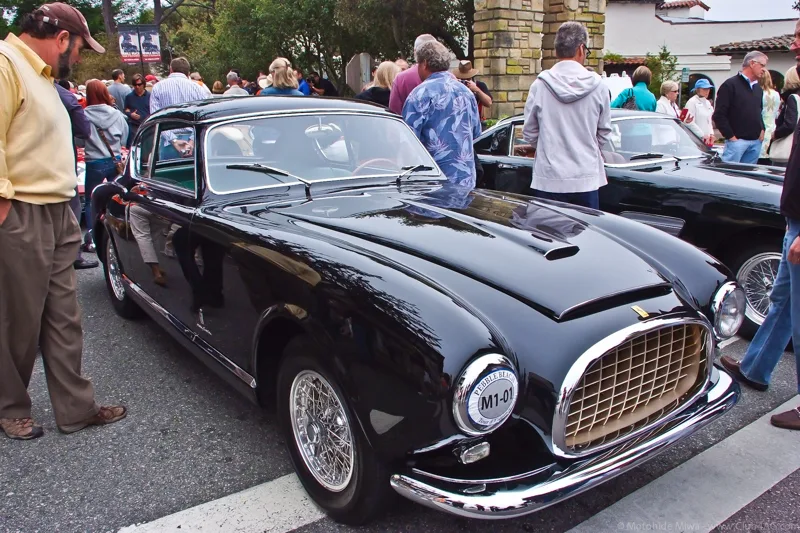
The front end was much busier. The radiator surround was clearly defined, a horizontal decorative strip ran above the bumper, and four vertical struts on each side of the grille looked like teeth. By contrast, the Maserati's front was heavily laden with chrome ornament. Vignale had built similarly profiled bodies for Ferrari too, especially for the 195.
The coupe was shown at the 1951 Paris Motor Show and then taken over by the Frenchman Marcel Schwob d'Herincourt. With Frederic Albertini he took it to the occasional motorsport event, among them the 1952 Tour de France for Automobiles. The car later went to the USA, and an Italian collector took it over and restored it in the 1990s.
How fast was the A6G compared with its rivals?
Performance depended on the body. The Frua spyders reached 160 km/h (99 mph), and the Vignale coupe reached 190 km/h (118 mph) in a contemporary road test. Maserati's 100 PS road engine was, however, outclassed by Ferrari's contemporary cars, which were clearly stronger and faster.
The 1950 Ferrari 195 Inter produced about 135 PS (99 kW; 133 hp), and later export versions of the Ferrari 212 reached up to 170 PS (125 kW; 168 hp). Buyers who could afford an A6G expected a sporting character that matched the reputation of Maserati's racers, and the A6G did not deliver it.
Why did so few A6G cars sell?
Several factors held sales back. Labour disputes early in the 1950s led owner Adolfo Orsi to dismiss several hundred employees, which halted production for a time. The modest performance also failed to match the sporting reputation that wealthy buyers expected.
The purchase price was high, and only a wealthy clientele could meet it. Some bodies were heavy-looking and attracted little attention, which compounded the problem. The revised A6G54 followed in 1954 and became the more successful version.
Maserati A6G specifications
| Item | Detail |
|---|---|
| Engine | 1,954 cc (119.2 cu in) in-line six |
| Bore and stroke | 72 mm (2.8 in) by 80 mm (3.1 in) |
| Compression ratio | 7.8:1 |
| Output | 100 PS (74 kW; 99 hp) at 5,500 rpm |
| Gearbox | Manual four-speed |
| Built | 16 examples, 1950 to 1953 |
| Chassis numbers | 2013 to 2031 |
| Frua spyder top speed | 160 km/h (99 mph) |
| Vignale coupe top speed | 190 km/h (118 mph), contemporary road test |