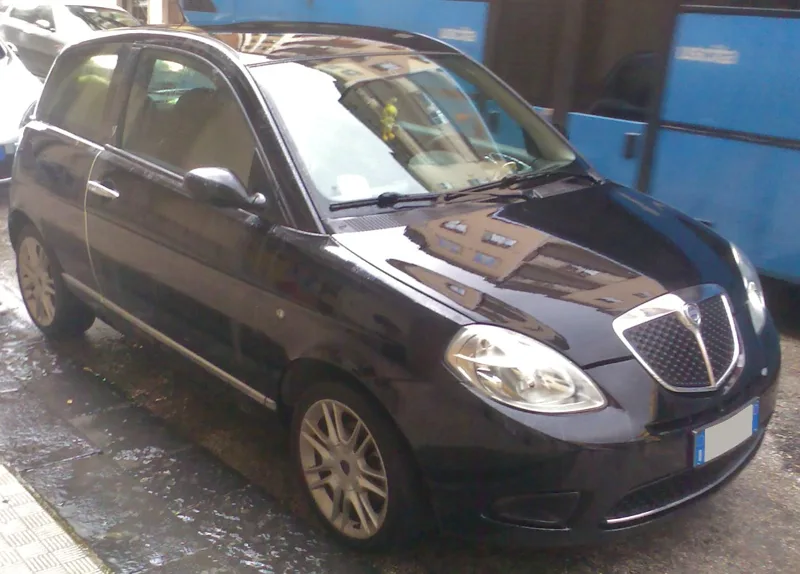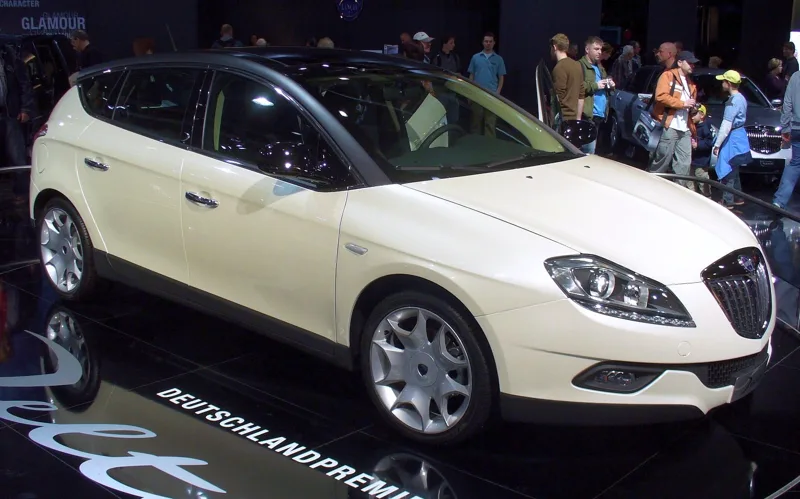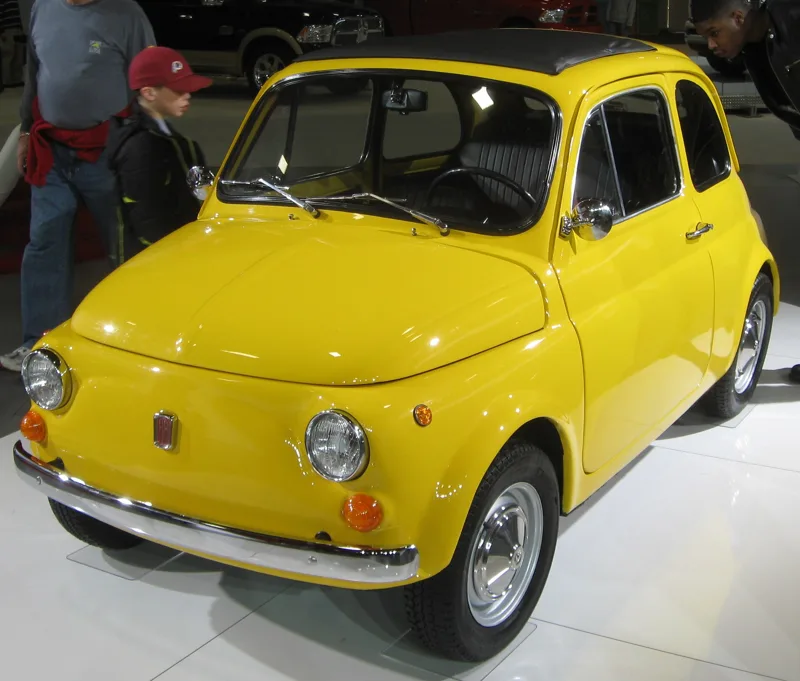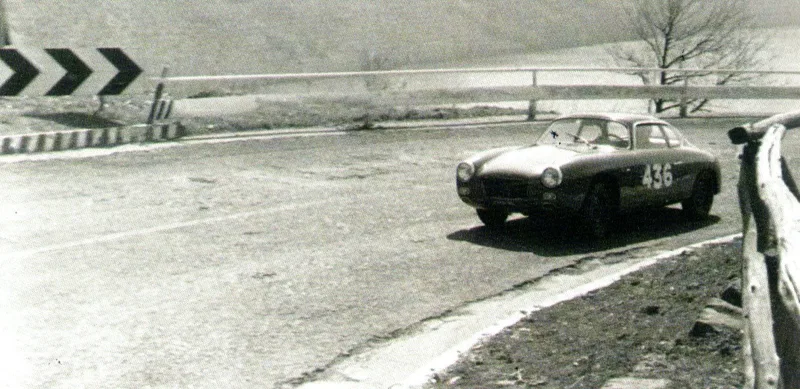
Four generations of Lancia's supermini, from the 1995 Y to the electric Ypsilon of 2024, with the HF performance model and a rally programme.
The Lancia Y, also called the Ypsilon, is a supermini that Lancia launched in 1995 as a larger successor to the Y10. Four generations followed, and the fourth, revealed in 2024, is the brand's first electric car. It was built in large numbers in Italy, where it remained especially popular.
Lancia's Y, also called the Ypsilon, arrived in 1995 as a bigger supermini that replaced the Y10. Over four generations it became one of the most familiar small cars on Italian roads, and the newest version runs on electricity.
Where did the Lancia Y come from?
Lancia designed the Y in 1992 as a bigger and pricier replacement for the Y10. The car was built at the Melfi plant in the Potenza region. Lancia had left right-hand drive markets two years earlier, so no right-hand drive version was made.
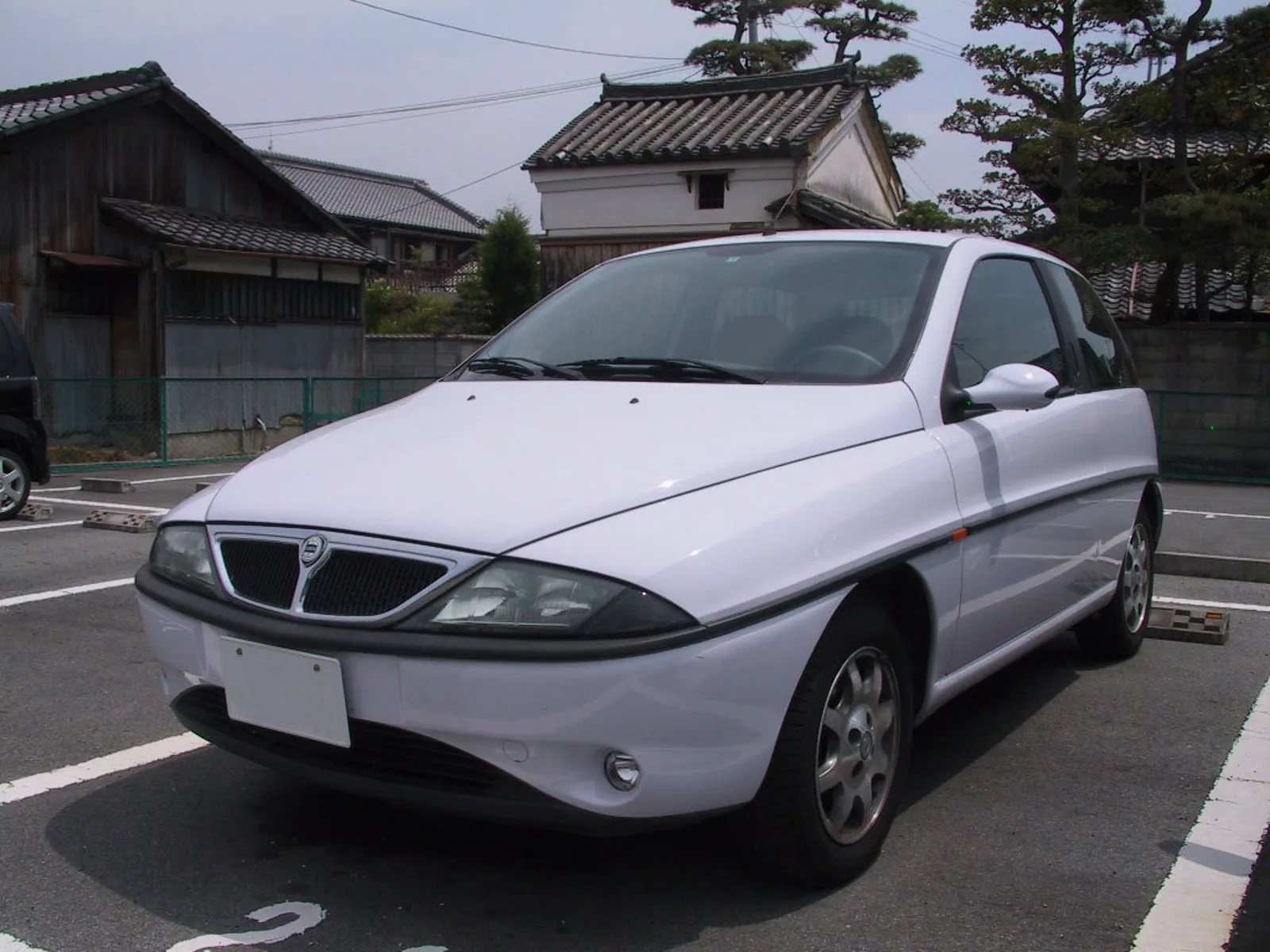
Enrico Fumia's design took 24 months to develop, at a cost of around 400 billion Italian lira. Lancia released the car in 1995 and presented it in Rome in January 1996. At 3.72 m it was 33 cm longer than the Y10 it replaced.
The car shared the Fiat Punto series 176 platform. Its front suspension used MacPherson struts and the rear used trailing arms.
Wheel arches repeated on every side of the body. Inside were five seats, a soft plastic dashboard and an instrument cluster set in the centre of the dashboard. Buyers could choose body colours from 100 shades in the Lancia Kaleidoscope catalogue.
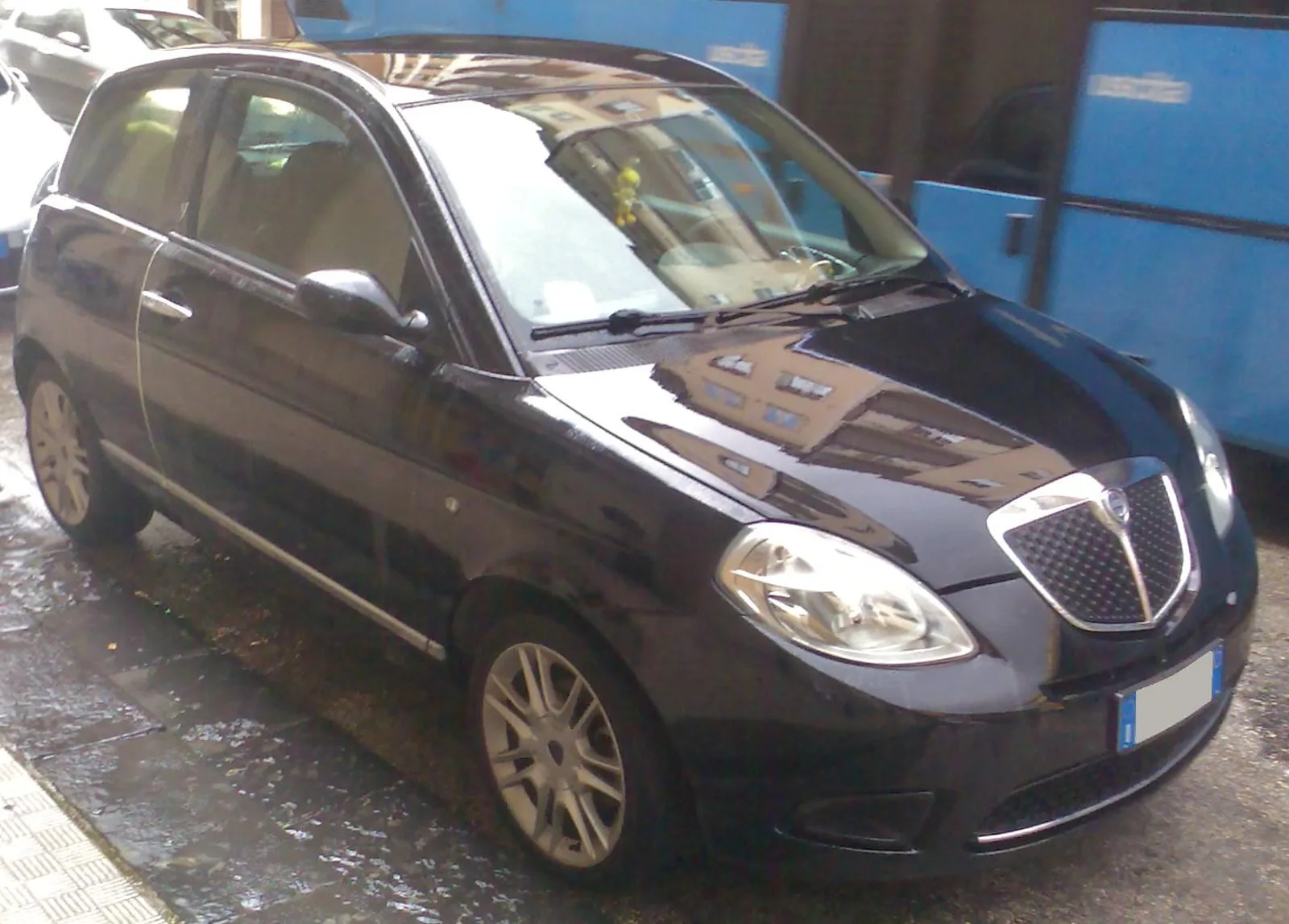
Four generations of Lancia's supermini, from the 1995 Y to the electric Ypsilon of 2024.
What engines did the first Lancia Y use?
The first Y used the FIRE family of engines, which had debuted in the Y10 in 1985, in 1,108 cc and 1,242 cc eight-valve form. Lancia later introduced SuperFIRE, a four-valve engine with multipoint fuel injection, and the Y was the first car to receive it. Its 1,242 cc version made 63 kW (86 PS) at 6,000 rpm.
The launch line-up also included the 1.4 12-valve Pratola Serra, which made 59 kW (80 PS) but had limited success. SuperFIRE soon took over, and its torque figure was 113 Nm at 4,500 rpm.
Was there a sporty first-generation Lancia Y?
Yes. The Elefantino Rosso, named after the symbol of the historic Lancia HF cars, was the sports model of the range. It came with 15-inch wheels, a lowered and stiffened suspension and a top speed of 177 km/h.
Inside, the car had grey Alcantara trim and a shorter gearbox ratio that quickened acceleration. Steering was more direct and the roll bars were bigger. It was the only model in the range fitted with 15-inch wheels, which wore 195/50R15 tyres.
Italian magazine Quattroruote took the 16V LX beyond city use and praised its power reserves and comfort. The Y sold over 42,000 units in its first two months.
What changed in the 2000 restyle?
The October 2000 restyle gave the Y a larger grille, new bumpers and taillights, and smoother body-coloured side mouldings. Inside, the seats were new and the instrument panel gained a modern LED display. The car grew from 3.72 m to 3.74 m.
Euro 3 rules then reshaped the engine range. Lancia dropped the 1,108 cc unit, which had not been adapted, and 16-valve versions lost 6 PS (4 kW) of output as a result of the new standard.
How did the second-generation Ypsilon differ?
Introduced in 2003, the Ypsilon Type 843 was aimed at younger buyers and became Lancia's best-selling car. It was a three-door model about 3.78 m long, with a transverse engine, front-wheel drive and a shortened version of the Fiat Punto B platform.
The styling took cues from the historic Lancia Ardea. Sales were especially strong among women buyers, and annual production reached about 60,000 cars.
Suspension was MacPherson struts at the front and a semi-independent torsion beam at the rear. Ventilated front discs came as standard with drums behind them, and four-disc brakes were reserved for the Sport Momo Design versions.
Production started at Melfi and moved to Termini Imerese in Sicily in June 2005. A 2006 update brought a new grille and rounder bumpers, plus a 1.3 Multijet 16-valve diesel offered with 75, 90 or 105 PS. The 105 PS version was the most powerful diesel in that line-up.
How many Ypsilons were built and sold?
Lancia built more than 870,000 first-generation Ypsilons at Melfi between 1995 and 2005, and just above 804,600 units had sold by the time the successor debuted in September 2003. In Italy alone, over 1.6 million Y and Ypsilon cars sold from 1995 to 2019.
Production of the second generation ended on 23 November 2011, when Fiat closed the Termini Imerese factory where it was assembled. The third generation was then built at Tychy in Poland, a plant with capacity for 100,000 units a year.
Even in 2023, despite its age, the Ypsilon held the top share of Italy's B-segment. That result came almost three decades after the first car went on sale.
What changed with the third-generation Ypsilon?
The third generation, Type 846, was shown at the 2011 Geneva Motor Show. It switched to a five-door body on the Fiat Mini platform that it shared with the 500 and Panda, and it was built at Tychy in Poland. Its body measured 3.84 m with a 2.39 m wheelbase.
The first sketches came from Lancia's style department under Alberto Dilillo, in late 2006 and early 2007, before the Fiat and Chrysler alliance was formed. The final car changed little from them. The most visible change was the grille, which swapped two lobes for horizontal slats in a style that recalls most Chrysler models.
Lancia invested EUR 500,000,000 in the project, of which EUR 150 million went on development and EUR 40 million on the industrial structure. Standard equipment included four airbags, ESP and ASR traction control with hill holder, and ABS with EBD.
Accessories included the Magic Parking automatic parking system. Right-hand drive cars for the UK and Ireland were sold as the Chrysler Ypsilon, and the car reached Japan in 2012 under the Chrysler brand.
The car never came to the United States, where it would have competed with the Fiat 500 built in Toluca, Mexico.
What engines did the third generation use?
The petrol range opened with a 1.2 eight-valve Fire making 69 PS with a five-speed manual. The new 0.9-litre TwinAir turbo two-cylinder with MultiAir made 85 PS (63 kW; 84 hp), and the 1.3 Multijet diesel offered 95 PS with a diesel particulate filter.
The manual TwinAir emitted 99 g/km of CO2, while the DFN automated version emitted 97 g/km. Lancia claimed 23.8 to 24.4 km/L for the TwinAir and 26.3 km/L for the diesel.
The 2015 facelift and EcoChic hybrid
The 2015 facelift brought a 5-inch UConnect touchscreen, and all engines met Euro 6 standards. The 1.3 Multijet diesel was dropped after the facelift because its sales were low.
In March 2020 Lancia added the Ypsilon EcoChic Hybrid, with a 1.0-litre three-cylinder GSE FireFly petrol engine making 70 PS (51 kW; 69 hp). The car should cut fuel use and emissions by up to 24 percent compared with the non-hybrid version.
What is the fourth-generation Ypsilon?
The fourth-generation Ypsilon was revealed in images on 2 February 2024. It is the first new Lancia model since 2011 and the brand's first electric car, built on the CMP and eCMP platform that it shares with the Peugeot 208 II and Opel Corsa F.
The fourth generation also marks the brand's expansion in Europe. Lancia chose those markets because of the popularity of Italian products and of B-segment cars.
The design uses the Pu+Ra language, with an illuminated three-light grille, round headlights and taillights that carry a letter Y motif. Inside, the S.A.L.A. infotainment system includes a virtual assistant.
The Ypsilon is the only car in its segment equipped with Level 2 autonomous driving. Lancia returned to Belgium, the Netherlands, Luxembourg, France and Spain in 2024, while a German return planned for 2025 had not happened by 2026. That year a non-hybrid petrol Turbo 100 joined the range, with a 1.2-litre turbo and a six-speed manual.
What is the Ypsilon HF?
The Ypsilon HF, revealed in May 2025, is the high-performance version. It uses a front-mounted electric motor producing 206 kW (280 PS; 276 hp), together with a wider track, a limited-slip differential and Alcon brakes. Stellantis plans a Peugeot 208 GTi based on it.
Journalists drove the car in June 2025, and the first customer cars were delivered in December.
Did the Lancia Y compete in rallying?
Yes. Lancia built two rally cars from the Ypsilon: the Rally4 HF for Group Rally4 in 2024 and the Rally2 HF Integrale for Group Rally2 in 2025. The Rally2 car is aimed at the WRC2 class, and its entry is Lancia's comeback to the World Rally Championship after decades away.
The Rally4 car came a year before the Rally2 machine, so the programme grew in steps. Both cars carry the HF name, which Lancia used on its historic rally cars. The Rally2 car's WRC2 entry is the most visible part of that programme.
Which limited editions are worth knowing about?
The Edizione Limitata Cassina was co-developed with the Italian furniture maker Cassina S.p.A. and capped at 1,906 units, a figure that references Lancia's foundation in 1906. The Ypsilon Versus, designed by Versace, was limited to 1,000 cars from 2009.
The Sport Momo Design model grew out of a 2005 Geneva concept developed with the Zagato Design Centre.
What are the Lancia Y specifications?
| Specification | Detail |
|---|---|
| First-generation length | 3.72 m at launch, 3.74 m after the 2000 restyle |
| First-generation production | Over 870,000 built at Melfi, 1995 to 2005 |
| Top first-generation engine | 1,242 cc SuperFIRE, 63 kW (86 PS) at 6,000 rpm |
| First-generation torque | 113 Nm at 4,500 rpm (SuperFIRE) |
| Elefantino Rosso | 177 km/h top speed, 15-inch wheels |
| Second-generation body | Three-door, about 3.78 m long |
| Third-generation body | Five-door, 3.84 m long, 2.39 m wheelbase |
| Third-generation TwinAir | 0.9 litre turbo, 85 PS (63 kW; 84 hp), 99 g/km CO2 manual |
| Third-generation diesel | 1.3 Multijet, 95 PS, 26.3 km/L claimed |
| Hybrid EcoChic | 1.0 GSE FireFly, 70 PS (51 kW; 69 hp) |
| Fourth-generation platform | CMP and eCMP, electric |
| Ypsilon HF | 206 kW (280 PS; 276 hp) front-mounted electric motor |
| Cassina edition | 1,906 units |