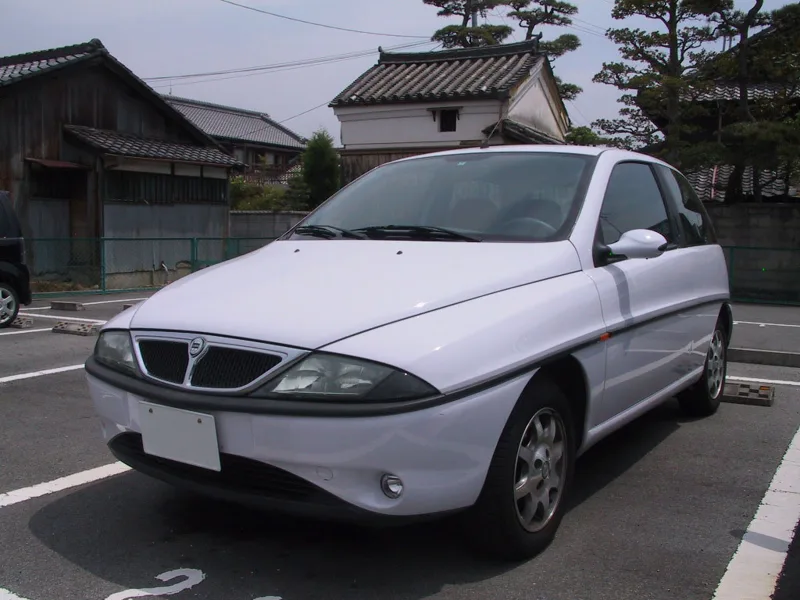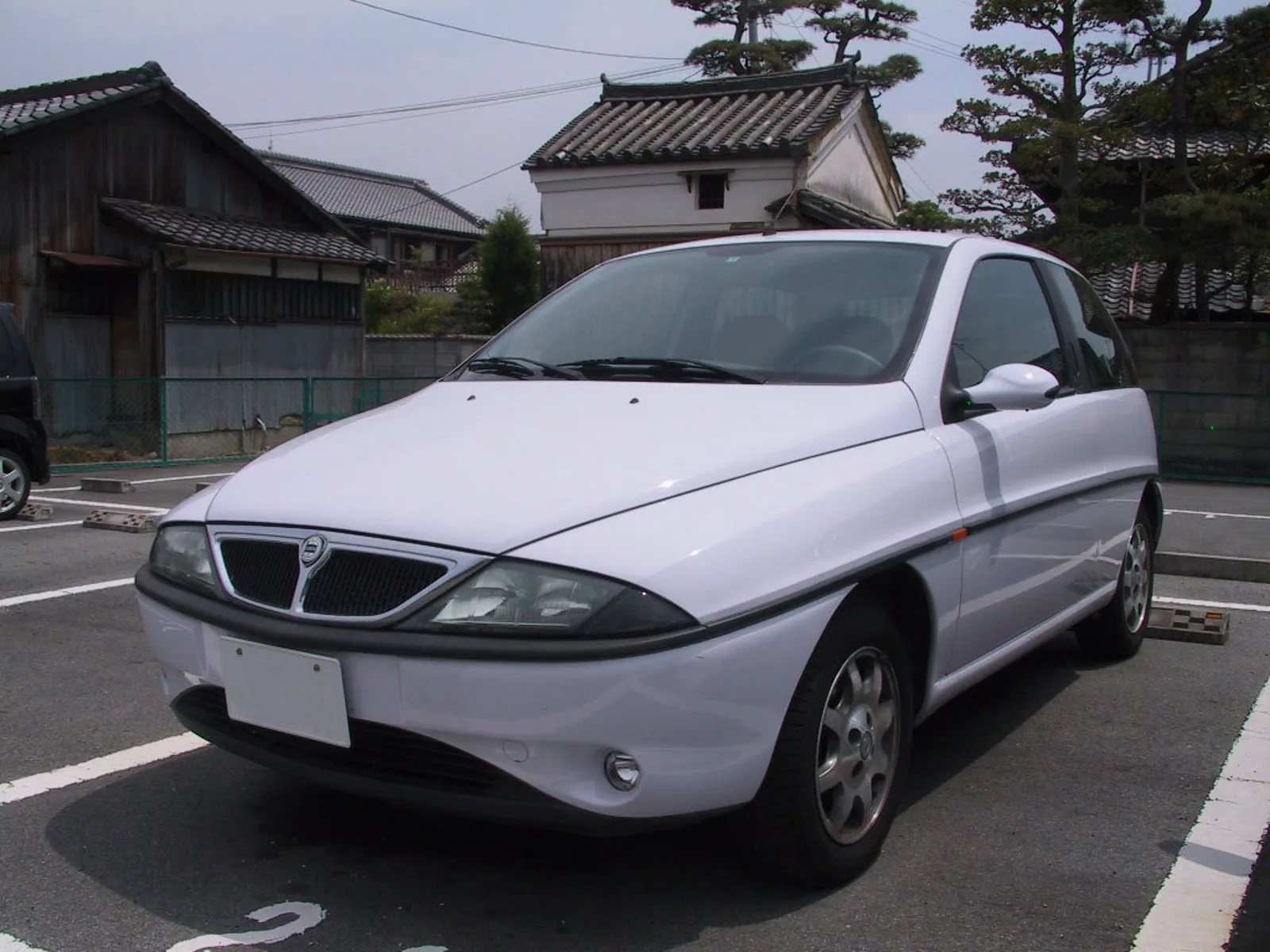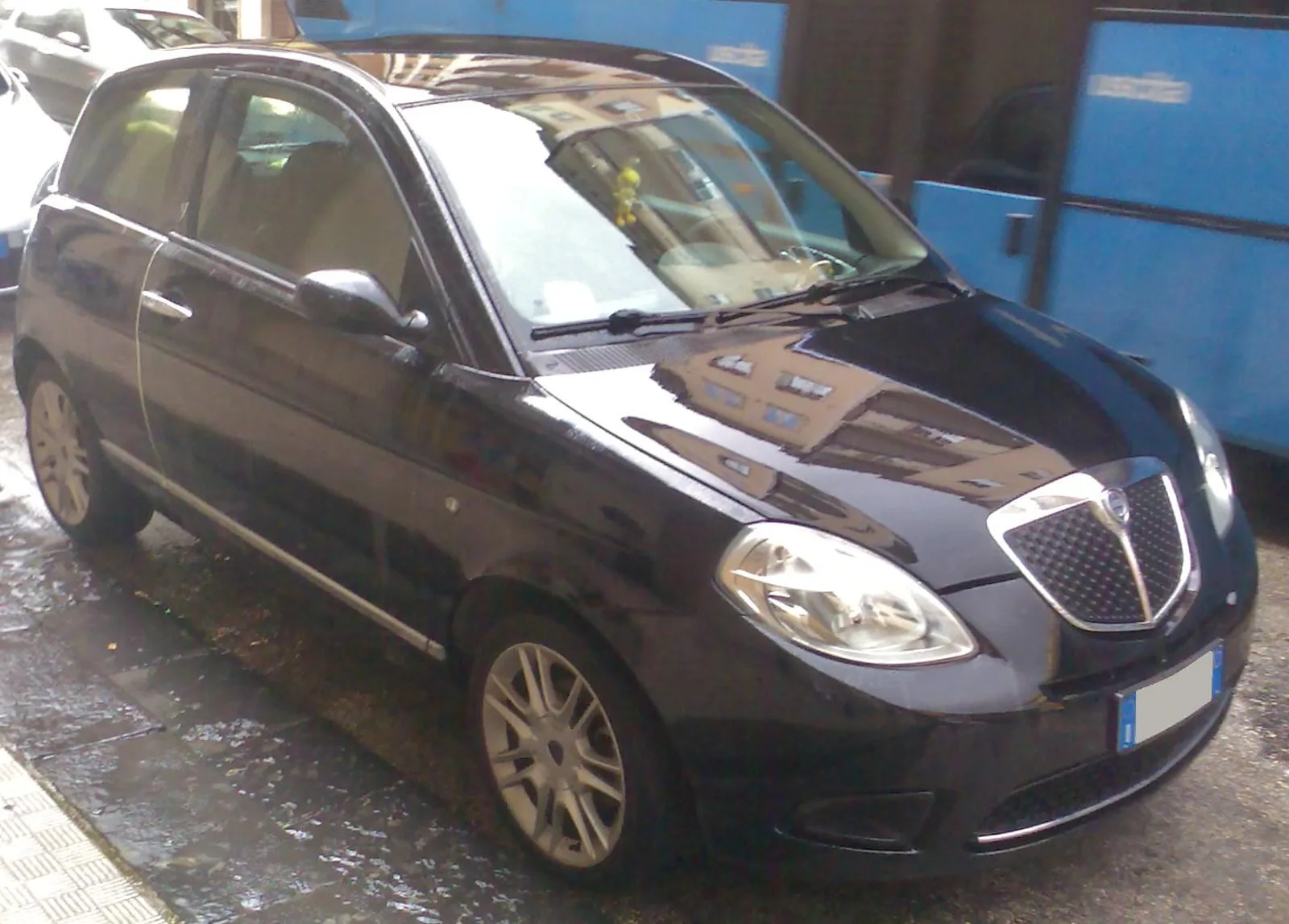
A tall three-door Lancia small car with a DFN automated gearbox and no clutch pedal, built from 2003 until the Termini Imerese plant closed in 2011.
Sold in Europe from October 2003, the Lancia Ypsilon ranged from a 1.2 petrol with 60 PS to a 1.3 Multijet diesel with 105 PS. It was a three-door hatchback 1.53 m tall, and its DFN automated manual gearbox had no clutch pedal.
The Lancia Ypsilon, internal type 843, was a three-door small car that Lancia built from 2003, with production running until its Termini Imerese plant closed in late November 2011. It replaced the Lancia Y, stood 1.53 m (5 ft 0 in) tall, and was offered with petrol engines and 1.3 Multijet diesels.
Where did the Ypsilon come from?
The Ypsilon was shown at the Geneva Motor Show in March 2003 and went on sale across Europe from October 2003. Lancia's styling department, Centro Stile Lancia, developed it from the Lancia Y. The name was written out in full to separate the new car from its predecessor, and its internal type designation is 843.
The successor arrived in June 2011, and in Germany sales of this type ended at the same moment. Production had continued until the Termini Imerese works closed in late November 2011, feeding the markets of Italy, France, Austria, Portugal and Spain, and Sicily.
A tall three-door Lancia with a DFN automated gearbox and no clutch pedal, built until the Termini Imerese plant closed.
How did the Ypsilon's shape differ from the Y?
The Ypsilon was five centimetres longer than the Lancia Y and almost 10 cm taller. At 1.53 m it sat among the tallest cars in the small-car class, and its seats were set higher than usual, which made getting in and out easier.
Lancia built only a three-door Ypsilon. For customers who wanted a smaller five-door car, the slightly longer Lancia Musa minivan was the suggested alternative, since it offered a five-door layout. In 2004 the design won the European Automotive Design Award in the small-car category, under the title L'Automobile piu Bella del Mondo.
What colours and trim could buyers choose?
The Ypsilon came in a far smaller palette than the Lancia Y, which had offered more than 100 paint colours. Rarer shades such as ivory, orange, yellow, several browns and pink were still regularly listed, and two-tone finishes from 2004 gave the car a more individual look.
The Bi-Colore finish painted the roof, exterior mirrors and tailgate in a high-gloss or matt shade that contrasted with the body. The Versus special model in 2008 came from a collaboration with a fashion house, with screen-printed Versus lettering on the roof and tailgate. The model update brought two-colour alloy wheels, with parts polished to a chrome-like high gloss and the rest painted anthracite, black or brown.
What was inside the cabin?
The dashboard stood out. A shelf ran across the full width of the cabin, with the instruments set into its centre. The gear lever sat in the middle of the dashboard support, just below the radio and the heating or air-conditioning controls, and it was higher than is usual.
Seats could be trimmed in velour, textile, Alcantara microfibre or leather. After the facelift, leather and Alcantara became the usual choice, often in a Bi-Colore finish. A lumbar support could be added to the driver's seat, and part of the dashboard was always covered in textile or leather, which is probably unique in the class. Rear seating came as a three-seat bench that folded as a whole, or as a two-seat bench whose backrest adjusted in three steps. On some versions that two-seat bench also slid and split 50:50. With the rear backrests upright and the bench slid, the boot ranged from 215 to 290 litres. Lancia gave no maximum figure with the rear seats folded, but the ADAC measured 525 litres up to the bottom edge of the windows. A large glass sunroof took up almost 70 percent of the roof lining.
What equipment came as standard?
Every Ypsilon had electric power steering with speed-dependent assistance and a city mode that could be selected at the press of a button. The standard comfort fittings were radio-controlled central locking, electric windows, an on-board computer and a rev counter, plus a follow-me-home function that kept the headlamps on for a while after switch-off.
Depending on the trim line, a manual air conditioner with a pollen filter and recirculation was standard, along with 15-inch alloy wheels, a CD radio, fog lamps and cruise control. Exterior mirrors could be adjusted electrically and heated, and the steering wheel and gear knob were leather-trimmed. An automatic two-zone climate control could allow a temperature difference of 7 degrees between the two sides of the cabin. Optional extras included a premium sound system with six speakers and a subwoofer in the boot, the Blue&Me hands-free Bluetooth system with voice control and a USB port, and the Connect Nav+ satellite navigation with a 6.5-inch TFT colour screen. A CD changer was also available as an option. Extras on offer also included a rain sensor, a light sensor, Isofix mounting, a smoker's pack, rear parking sensors and 16-inch wheels.
How safe was the Ypsilon?
In Germany the standard safety kit included four airbags, two of them window airbags, seat belt pretensioners for the front seats and ABS with electronic brake force distribution.
Buyers could add two side airbags, plus ESP with a hill-start assistant, traction control and Hydraulic Brake Assistance. The standard list covered the basics, and those extras added stability and traction aids for buyers who wanted more. The Ypsilon was never assessed in a Euro NCAP crash test.
What changed in the 2006 update?
Lancia unveiled the revised Ypsilon in August 2006 at the 63rd Venice International Film Festival, to mark the company's 100th anniversary. It went on sale in October 2006. The front and rear aprons were reworked, the unpainted black trim strips disappeared, and the rear apron became fully painted with a red reflector at each end of a horizontal strip.
The new bumpers lengthened the car by 3.2 cm to 3.81 m, and the wheel trims were redesigned. The higher trim lines gained chrome strips above the sills, the seat covers were matched to the paint range, and the Blue&Me-Info telematics system arrived. With the Sport Momo Design model of 2007 the new Lancia emblem began to be introduced across the range. On leather seats the centre strip became Alcantara, and the Ypsilon lettering was embroidered on the head restraints.
What were the chassis and gearbox like?
The Ypsilon used MacPherson struts and wishbones with an anti-roll bar at the front, with rack-and-pinion steering that had electric assistance. At the rear, a compound-link axle carried the wheels, with an anti-roll bar, coil springs and telescopic dampers. The floor pan was that of the Fiat Punto II.
Alongside five- and six-speed manual gearboxes, a five-speed automatic was offered in the form of the DFN gearbox. DFN stands for Dolce Far Niente, which means the sweet doing nothing. It is an automated manual: a conventional gearbox in which one unit works the clutch and another selects the gears under electronic control. There is no clutch pedal. Its shift pattern is meant to learn the driver's style. It does not match the comfort of a conventional torque-converter automatic, because of the gear-change pauses built into the system.
Why did the Ypsilon stand out in its class?
The Ypsilon stood out for its height, its textile and leather dashboard trim and a design that won a European award in 2004. Its height of 1.53 m was among the greatest in the small-car class, and its raised seating position made getting in and out easier.
Lancia credited the styling to elements taken from the Thesis, Ardea and Appia, while the three-door body kept the car compact. The electric steering added a city mode for parking, and from 70 km/h both modes gave the same assistance.
Which special editions were sold?
Lancia sold the Ypsilon in a long run of special models, and not every one was offered in Germany. The list runs to seventeen names, from the Centenario collection to the Elefantino.
Among them were Momo Design, Platino Plus, Eco Chic, Elefantino Blu and Elefantino Rosso, along with the Diva Collection and Collection 2011. The Elefantino name appeared in three forms, and Blue&Me also appeared as a special name, as did a Unique Edition and an Ego version.
Engine range by build period
| Built | Engine | Output |
|---|---|---|
| 07/2003 to 07/2010 | 1.2 8V petrol | 44 kW (60 PS; 59 hp) |
| 08/2010 to 11/2011 | 1.2 8V petrol | 51 kW (69 PS; 68 hp) |
| 07/2003 to 08/2006 | 1.2 16V petrol | 59 kW (80 PS; 79 hp) |
| 09/2006 to 11/2011 | 1.4 8V petrol | 57 kW (77 PS; 76 hp) |
| 07/2003 to 11/2011 | 1.4 16V petrol | 70 kW (95 PS; 94 hp) |
| 07/2003 to 08/2006 | 1.3 Multijet 16V diesel | 51 kW (70 PS; 68 hp) |
| 09/2006 to 11/2011 | 1.3 Multijet 16V diesel | 55 kW (75 PS; 74 hp) |
| 09/2006 to 11/2011 | 1.3 Multijet 16V diesel | 66 kW (90 PS; 89 hp) |
| 09/2006 to 11/2011 | 1.3 Multijet 16V diesel | 77 kW (105 PS; 103 hp) |
Over the whole run the table lists five petrol and four diesel versions, though not all of them were on sale at the same time.
Which petrol engines did the Ypsilon get?
At launch in October 2003 buyers could pick from three petrol units: the 1.2 8V, the 1.2 16V and the 1.4 16V. The 2006 update replaced the 1.2 16V with the more economical 1.4 8V. All of them met the Euro 4 emissions standard.
From August 2010 the 1.2 8V with 69 PS was the only petrol engine offered in Germany. It was the most economical petrol version, met Euro 5, and emitted 114 g/km of CO2, a level the most economical diesels with the DFN gearbox also reached. Most petrol versions came with a five-speed manual, although the 1.4 16V had a six-speed manual as standard. Only in Italy was the Ypsilon available from the factory with LPG autogas, sold as the EcoChic.
Which diesel engines were fitted?
The Ypsilon was the first Lancia in its class to be offered with diesel power. The launch engine was the 1.3 Multijet 16V with 70 PS, a 1.3-litre turbo diesel with common-rail direct injection. Its camshaft is driven by a timing chain designed for 250,000 km, a distance over which the engine is said to need no mechanical maintenance.
The 2006 update swapped the 70 PS unit for a 75 PS version and added a 90 PS engine. The 75 and 90 PS engines received a soot particulate filter, and the 90 and 105 PS engines used turbochargers with variable turbine vanes. The 105 PS engine was available only in the Sport Momo Design from spring 2007. Diesel engines were offered with a five-speed manual or the DFN automatic, the latter not for the 105 PS version. Diesels were withdrawn from the German range in February 2010.
How long did the Termini Imerese plant keep building it?
Production continued until the Termini Imerese works in Sicily closed in late November 2011. The successor had already been introduced in June 2011, when German sales of the first model stopped, and production of the first model carried on for several months after that.