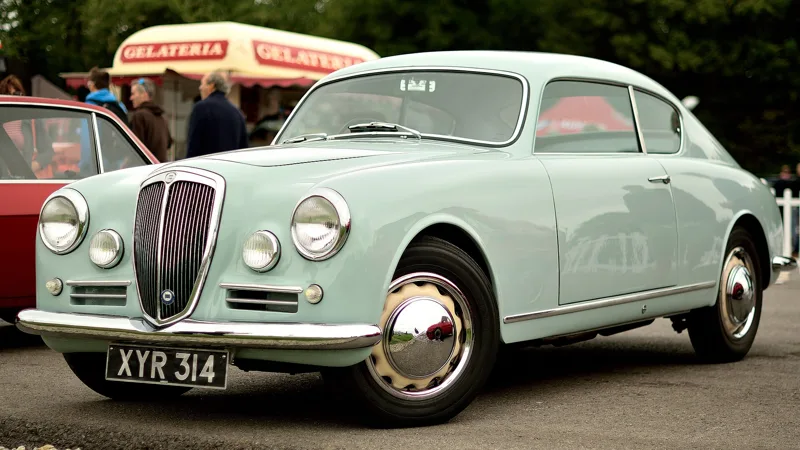
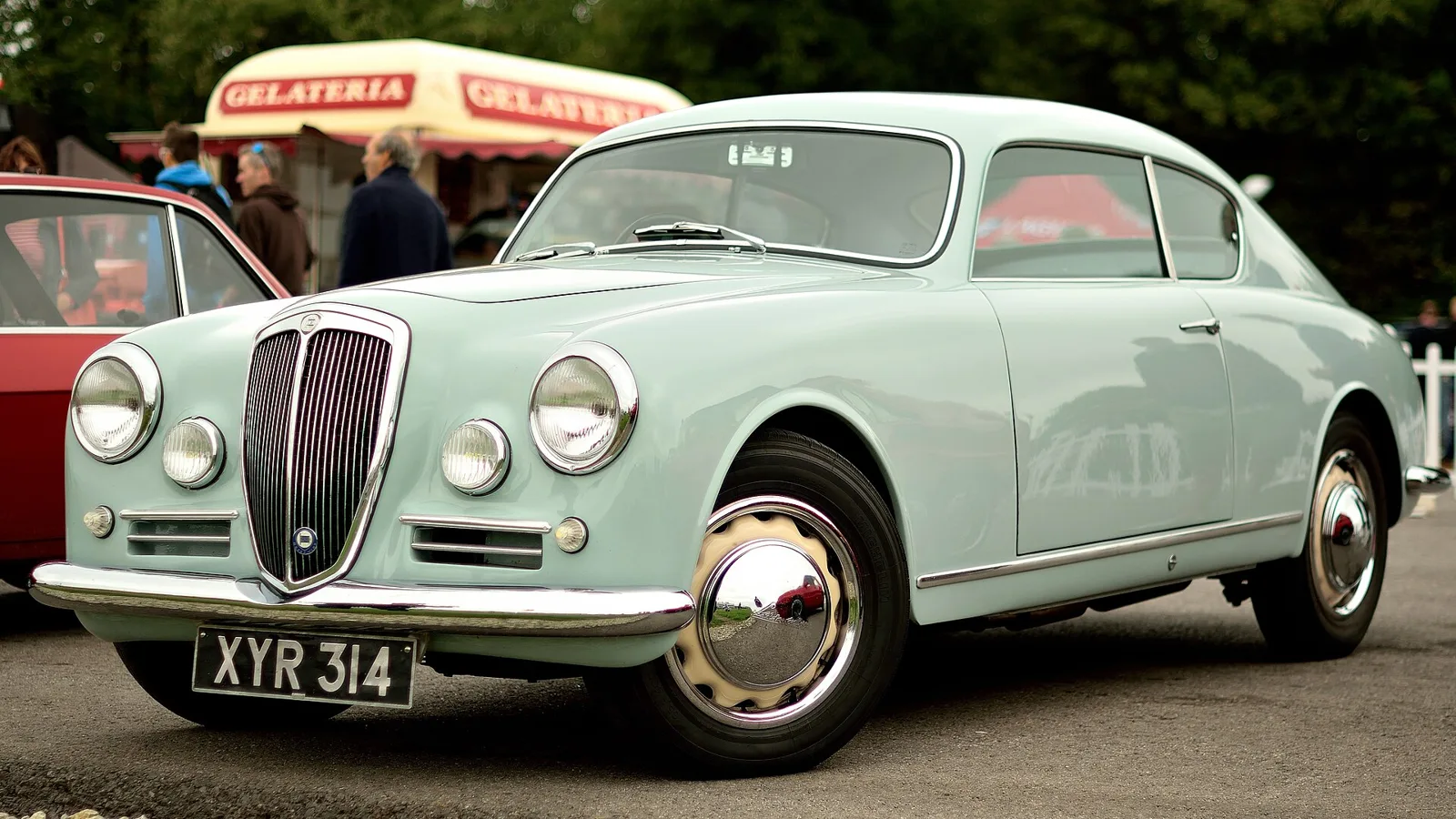
Four versions of Lancia's coupe, from the 1958 Turin debut to the Supersport that stayed in the price list until 1968, with the press tests that judged them.
Sold from 1958 to 1968, the Zagato-bodied Flaminia coupes went through four versions, with output rising from 119 PS (88 kW; 117 hp) to 152 PS (112 kW; 150 hp) and a claimed top speed of 210 km/h (130 mph). The Supersport, introduced in November 1964, closed the line.
The Lancia Flaminia Sport and Supersport were coupe versions of the Flaminia, with bodywork by Zagato. They were offered from 1958 and stayed in Lancia's price list until 1968, passing through four versions with different engines and body detail. The Zagato coupe was built to be a purely sporty car, which set it apart from the Pininfarina and Touring coupes.
Where did the Flaminia Sport come from?
The Flaminia Sport made its official debut at the fifteenth Turin Motor Show, held from 5 to 16 November 1958. It stood alongside the saloon and the other two-door models by Pininfarina and Touring. The Pininfarina coupe was a luxury car that could carry four or five people, and the Touring version tried to balance luxury and sportiness.
Zagato's car was built in the spirit of its Milanese coachbuilder, purely as a sports car. Lancia and Zagato had already worked closely for several years. Three Aurelia B20 competition cars came first, and one of them went to Ferdinando Gatta, who was Gianni Lancia's brother-in-law and a gentleman driver.
The Appia had followed that, starting in 1956 with the original Appia-Cammello, which remained a one-off, and continuing with other models built in small series. The Flaminia Sport was the next step in that partnership.
Its bodywork kept the familiar Sport line but added a truncated tail and a lowered bonnet.
How did the first-series Sport look?
Early pictures showed bodywork very close to that of the Appia GTE, which Zagato was starting to build at the same time: low, streamlined, with a long bonnet, a short tail and Perspex-domed headlamps. The roof carried two humps over the driver and passenger, a feature of Zagato cars of the period.
The pre-production car had some side trim that the definitive version would lose, and it had no ram bars on its bumpers. Those were soon added at the rear and then, in the production version, at the front as well. Zagato's Flaminias were not all identical, even within the same series, since many examples differed in detail and trim, perhaps mostly to suit customers' wishes.
The rectangular position lamps of the pre-series gave way during 1959 to larger round ones, the same as those on the Flaminia Coupe, which improved the look of the front. Some of the first cars had drum brakes, but by the Geneva show of March 1959 the Sport was displayed with disc brakes from an outside supplier.
What were the early Sport's specifications?
At the Turin show the specification was announced, close to that of the Touring GT. The engine produced 119 PS (DIN) against 102 for the saloon, and the wheelbase was shortened to 252 cm (99.2 in), compared with 287 cm (113.0 in) on the saloon and 275 cm (108.3 in) on Pininfarina's coupe.
The manufacturer rated the Sport at 190 km/h (118 mph). The saloon managed 160 km/h (99 mph), Pininfarina's coupe 170 km/h (106 mph) and Touring's GT coupe 180 km/h (112 mph). The car weighed about 1,200 kg (2,646 lb) and measured 449.5 cm (177.0 in) long and 163 cm (64.2 in) wide.
| Version | Engine | Power | Top speed | Kerb weight | Units |
|---|---|---|---|---|---|
| Sport, first series (1959 to 1961) | 2,457.98 cc (150.0 cu in) V6 | 119 PS (DIN) (88 kW; 117 hp) | 190 km/h (118 mph) | About 1,200 kg (2,646 lb) | 199 |
| 3C Sport (1962 to 1963) | 2,457.98 cc (150.0 cu in) V6, three Weber carburettors | 140 PS (103 kW; 138 hp) | 200 km/h (124 mph) | 1,260 kg (2,778 lb) | 152 |
| 3C Sport 2.8 (1963 to 1964) | 2,774.83 cc (169.3 cu in) V6 | 150 PS (110 kW; 148 hp) | 200 km/h (124 mph) | 1,260 kg (2,778 lb) | 33 |
| Supersport (1964 to 1967) | 2,774.83 cc (169.3 cu in) V6 | 152 PS (112 kW; 150 hp) | 210 km/h (130 mph), claimed | 1,260 kg (2,778 lb) | 150 |
What changed in the Sport during 1960 and 1961?
The 1960 Sport lost its faired headlamps and gained a more refined finish, with better soundproofing and water resistance from new seals. Chrome-plated brass replaced aluminium on the trim, and the handles and locks matched the rest of the Flaminia range.
Changes to the lamps followed the entry into force of a new Highway Code, the most visible being side flashing repeaters for the indicators. The Sport also received a steering improvement in the form of a telescopic hydraulic damper, which absorbed small jolts from the suspension and reduced the kickback felt through the wheel. Owners of Flaminias not yet fitted with this improvement could have it for 20,000 lire.
The 1961 model passed without major changes, and the first series ended when a three-carburettor version was introduced in early January 1962.
How much more power did the 3C Sport get?
Maximum power rose from 119 to 140 PS (103 kW; 138 hp) with the 3C Sport, announced on 13 January 1962. It used three double-barrel carburettors, carefully adjusted and synchronised, drawing air through one large filter, and an electric fuel pump instead of a mechanical one.
Torque went from 19 to 20.7 kgm. The rev counter scale reached 6,500, a rear reverse light was added, and a warning light on the edge of the doors showed when they were open. A small plate with the code 3C sat on the bonnet air intake.
Weight rose slightly, but performance improved considerably and the claimed top speed went up by 10 km/h, from 190 to 200 km/h. The maximum climbable gradient rose from 36% to 38%. The price also climbed to 3,320,000 lire, up from 3,200,000. Fuel use went up as well, and on the CUNA cycle the 11.7 L/100 km figure became 13.3 L/100 km (24.1 mpg-imp and 20.1 mpg-US became 21.2 mpg-imp and 17.7 mpg-US).
What did the 2.8-litre version change?
At the Frankfurt show in autumn 1963, Lancia presented its Flaminias with an engine enlarged from 2.5 to 2.8 litres, achieved by boring the cylinders from 80 to 85 mm. In the sporty versions such as the Sport Zagato, output reached 150 PS (110 kW; 148 hp) against the previous 140, and the engine was more flexible.
Maximum torque rose from 20.7 to 22.8 kgm at 3,500 rpm, which gave the 3C Sport a noticeable improvement in acceleration, while the top speed stayed around 200 km/h (124 mph). Consumption rose only slightly, to 13.5 L/100 km (20.9 mpg-imp; 17.4 mpg-US).
The bodywork was not changed, so the 2800 differed from the 2.5-litre car only by a 2.8 badge on the boot lid. Other changes included more oil capacity, new gearbox ratios, larger brake discs, a battery of higher amperage and new spark plugs.
What made the Flaminia Supersport different?
The Supersport debuted at the start of November 1964, a few days after the forty-sixth Turin Motor Show opened. It was the last of the Flaminia models bodied by Zagato, and it brought no major mechanical changes beyond new carburettors. Its bodywork kept the familiar Sport line but introduced a truncated tail that retained the earlier lamps.
The front was revised with a more streamlined and less conspicuous air intake, oval headlamp housings with chrome surrounds, and a lowered bonnet. A wider windscreen and new, more anatomical seats with a backrest adjustment device completed the changes.
The Supersport was more streamlined than its forebear, with ground clearance of 128 cm (50.4 in) instead of 130.5 cm (51.4 in). The lowered bonnet, made possible by the new carburettor set, was 6 cm (2.4 in) lower and helped aerodynamics. Its power was 152 PS (112 kW; 150 hp), and its maximum torque rose from 22.8 to 23.6 kgm, reached at 3,000 rpm instead of 3,500.
How fast was the Supersport?
The Supersport passed the 200 km/h (124 mph) barrier, with the manufacturer claiming 210 km/h (130 mph). It was described as the first road-going Lancia able to run that fast. Its power was 152 PS (112 kW; 150 hp), only slightly above the 2.8 version.
Built in 150 units in a little over two years, the Supersport brought the total of coupes that left the Zagato works to 534 examples over eight years, from early 1959 to early 1967. Other tallies give 526 for that total.
The record for light alloys is a striking detail. In Italian car production of the mid-sixties, the Supersport had the highest share of light alloys, almost 25% of its total weight. That came to over three quintals, with 215 kg (474 lb) in the mechanics and 95 kg (209 lb) in the bodywork.
How did the press judge the first-series Sport?
The weekly magazine L'Automobile of the Automobile Club d'Italia tested a first-series Sport with faired headlamps in October 1959. Its driver praised the car's engine flexibility and its progression in acceleration, and noted that it was easy to drive in town thanks to compact dimensions and excellent visibility.
The criticisms were the lack of quarter-lights in the doors and a finish that was too spartan.
In December 1960 Auto Italiana put racing driver Giulio Cabianca at the wheel of a first-series Sport with unfaired headlamps. He called it a comfortable two-seater, praised its boot and a rare hinged door between cabin and boot, which allowed skis to be carried inside.
Cabianca also rated the quietness and visibility, the ease of the gearbox, the disc brakes and the road holding. He found the acceleration sweet rather than furious, while the clutch felt delicate and the suspension was too soft for sporty driving. His single recorded figure was a top speed of 188.365 km/h.
How did the 3C Sport feel to drive?
In January 1962, when the Touring and Zagato Flaminias with three carburettors were shown to the press, journalists were allowed to drive them over a short route. No timed measurements were possible, but the reports praised the seats, the visibility, the gearbox and the braking.
The complaints were minor. Small instruments were hard to read, and the lighting stalk, which projected from the dashboard, was too long and could be knocked by accident during a quick gear change. The suspension had stiffened in keeping with the sporty character, and the acceleration was described as not furious, with better pick-up above 3,000 rpm, while below that speed the earlier version performed better.
What did the Flaminia Sport cost?
In Italy the Zagato Flaminia Sport was priced almost identically to its sister, the Touring GT coupe. The first series was listed from January 1959 to January 1962 at 3,200,000 lire, the same as the Touring GT, and the disc brakes that were fitted to all Sports cost a 60,000 lire supplement until August 1962.
The 3C version appeared in February 1962 at 3,320,000 lire. It rose by a further 60,000 lire in August 1962, when the disc brake supplement disappeared, and it was sold without further price changes until June 1965. The 2.8 litre version came out in October 1963 at 200,000 lire more, costing 3,580,000 lire. In December 1964 the Supersport replaced it, sold at 3,615,000 lire until October 1968, after which the Flaminia Zagato left the price lists in November 1968.