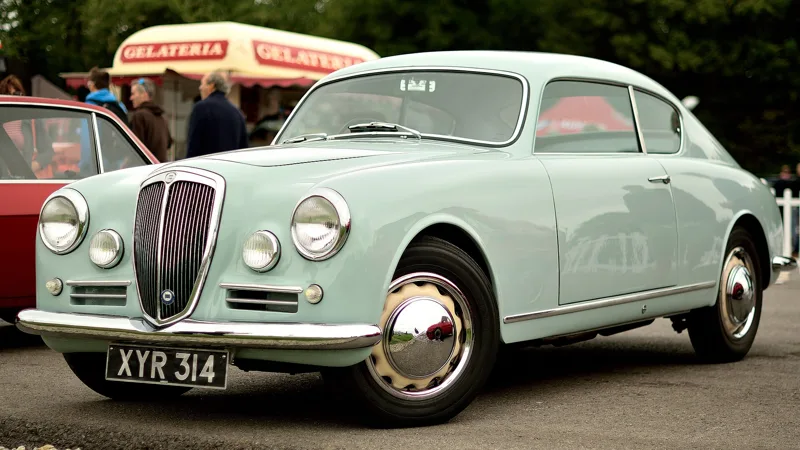
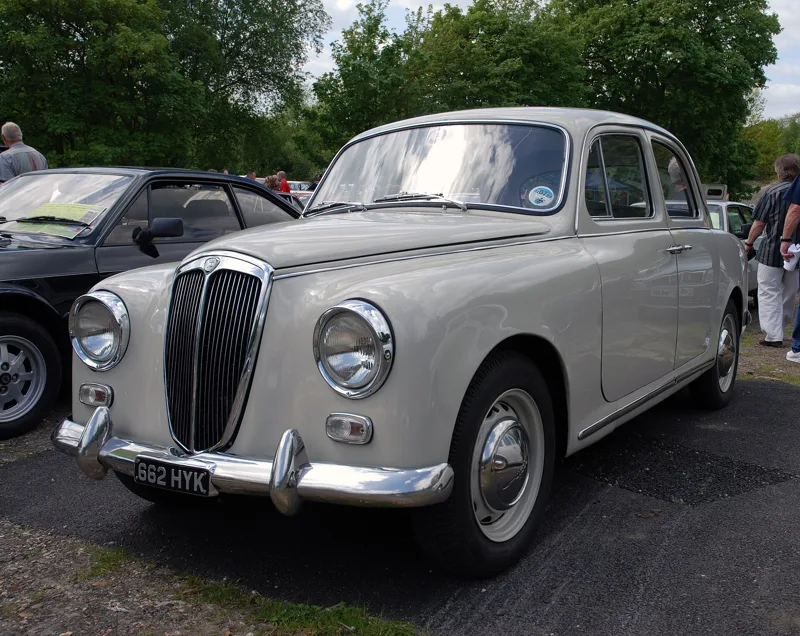
Three series, power rising from 119 PS to 150 PS, Coupe-level list prices and a 1996 road test that showed what age does to a fast car.
The Lancia Flaminia GT Convertible was the open version of the Flaminia Coupe, built from 1960 and kept on the price lists until 1968. It came in three series: 119 PS first, 140 PS with three carburettors, then 150 PS with the 2.8-litre engine. The first series cost the same as the Coupe at launch.
Lancia's open Flaminia, the GT Convertible, was built from 1960 and kept on sale until 1968. Three series came out of the programme, each adding power or capacity to the same two-door, two-seat cabriolet body. What follows covers where it came from, how each series differed, what it cost and how it performed when a magazine tested one.
Where did the Flaminia GT Convertible come from?
Lancia presented the open Flaminia in March 1960, with the Coupe on sale since early 1959. It was meant to fill the gap left by the Aurelia B24 and was offered at the Coupe's list price of 3,200,000 lire, with deliveries expected from May.
The Flaminia, more than the others, had taken the place of the Aurelia B20 berlinetta, and its Gran Turismo Coupe had been shown at the 1958 Turin Motor Show before going on sale in early 1959. Lancia preferred the term Convertible to spyder or cabriolet for its open car.
Three series, one body, and power that climbed from 119 PS to 150 PS.
How did the first series differ from the Coupe?
The first-series Convertible copied the hard-top car's mechanics closely, with a 60-degree V6 of 2,457.98 cc (150 cu in) making 119 PS (88 kW; 117 hp) at 5,100 rpm. Its main differences were a little more weight, 1,300 kg (2,866 lb), and a top speed of 178 km/h (111 mph), against 180 km/h for the Coupe.
The car had a front-mounted engine with overhead valves, a four-speed manual gearbox plus reverse and rear-wheel drive. The front suspension was independent, while the rear was semi-independent on a De Dion layout, and the body was a monocoque.
In summer 1960 the entire Flaminia line got a steering change. A telescopic hydraulic damper was added to absorb the small kickbacks that came through the wheel, and owners of cars without it could have one fitted for 20,000 lire.
First-series production ran from about March 1960 to December 1961. Of the 421 numbers in the range 1001 to 1421, 378 were built as Convertibles, 41 chassis were later modified into the three-carburettor type 824.14, and two more went to the coachbuilders Vignale and Boneschi for one-off cars.
What did the three-carburettor version change?
The 3C version, shown on 13 January 1962, switched to three double-barrel Weber carburettors. Peak output went up from 119 to 140 PS (103 kW; 138 hp) and torque from 19 to 20.7 kgf-m, although the car's weight also increased considerably, and performance still improved.
Other changes included a slightly less reduced axle ratio, now 3.615 against the earlier 3.692, plus a new dynamo, a rev counter scale reaching 6,500, and a warning light on the door edge that shows when a door is open. Two reversing lights took the centre of the light cluster, and the reflectors moved to the small gap between the cluster and the boot opening.
The top speed as declared rose by 12 km/h to 190 km/h (118 mph). The price rose too, from 3,200,000 to 3,320,000 lire, while fuel use went from 11.8 to 13 L/100 km (21.7 mpg-imp; 18.1 mpg-US), by CUNA's test rules.
Customers received their first cars on 1 February 1962. The 3C was built until September 1963, when the 2.8 replaced it, yet the car remained listed by Lancia until October 1968, apparently to use up stocks of 2.5-litre engines.
What changed with the 2.8-litre engine?
The 2.8 engine enlarged the cylinders, from 80 to 85 mm in bore, lifting capacity from 2.5 to 2.8 litres. It produced 150 PS (110 kW; 148 hp) at 5,400 rpm against 140 PS before, and peak torque climbed from 20.7 to 22.8 kgf-m, reached at 3,500 rpm, giving noticeably better acceleration in gear.
Top speed climbed to 193 km/h (120 mph) from 190 km/h. Fuel consumption rose by 10%, to 14.2 L/100 km (19.9 mpg-imp; 16.6 mpg-US). The bodywork did not change, so the 2.8 was distinguished from the 2.5 only by a '2.8' badge on the boot lid.
What were the Flaminia GT Convertible's dimensions?
All three series shared the same wheelbase of 252 cm (99.2 in), length of 450 cm (177.2 in) and width of 166 cm (65.4 in). Only the unladen weight changed between them, from 1,300 kg (2,866 lb) in the first series to 1,330 kg (2,932 lb) in the 3C and 2.8 cars.
How much did the Convertible cost?
Prices stayed within a narrow band. Launch pricing in January 1959 applied to both the Coupe and the Convertible GT models, at 3,200,000 lire. The price rose to 3,320,000 lire in February 1962 with the three-carburettor versions, reached 3,435,000 lire in September 1962, then fell to 3,335,000 lire in June 1964.
The 2.8 carried a 200,000 lire premium over the 2.5 from October 1963, at 3,635,000 lire, and that dropped to 3,535,000 lire by June 1964. The 2+2 Coupe, offered only with the 2.8 engine, cost 3,750,000 lire from October 1963 until May 1964, then 3,650,000 lire from June 1964 to October 1968, when sales finished.
Who bought the GT Touring Convertible?
The GT Touring was less luxurious than the Pininfarina Coupe, but it was aimed at a perhaps more sophisticated buyer who enjoyed the extra touch of sportiness the GT offered. That buyer could pay a slightly higher price, though over roughly a decade in Italy the gap never passed 200,000 lire, or 5.6%.
Owners of cars not yet fitted with the steering damper could have it added for 20,000 lire.
Which series was built in the largest numbers?
The first series was the largest of the three groups, with 378 cars. The 3C series followed with 247, and the 2.8 series was the smallest with 180 cars.
The serial numbers show how the groups divided: 1001 to 1421 for the first series, 2001 to 2247 for the 3C, and 1001 to 1180 for the 2.8. Right-hand-drive cars were rare, with 2 in the 3C series and 4 in the 2.8 series.
How long did the 2.8 stay on sale?
The 2.8 was built until 1964, but it stayed listed until October 1968. That gap was evidently meant to sell off units that had been built but not sold straight away.
How fast was the Convertible on the road?
Ruoteclassiche, a monthly from the Editoriale Domus house devoted to historic motoring, gave a first-series GT a brief road test, published in issue 93 of March 1996. The car was about 35 years old, so its figures could not match what it had once been able to do.
- Top speed: 173.35 km/h (108 mph)
- Reaching 60 km/h from rest: 6.1 seconds
- Reaching 100 km/h from rest: 14.1 seconds
- Reaching 140 km/h from rest: 30.3 seconds
- Reaching 160 km/h from rest: 49.6 seconds
- Standing-start kilometre: 39.4 seconds
- Fourth-gear pickup, 30 to 60 km/h: 11.7 seconds
- Fourth-gear pickup, 30 to 100 km/h: 26.1 seconds
- Braking from 100 km/h: 57.2 metres
Those numbers sat below the 178 km/h declared for the first series when it was new. Over the years five publications have tested a Flaminia Touring.
Lancia Flaminia GT Convertible specifications by series
| Specification | First series | 3C | 2.8 |
|---|---|---|---|
| Production period | March 1960 to December 1961 | January 1962 to September 1963 | 1963 to 1964 |
| Type | 824.04 | 824.14 and 824.15 | 826.134 and 826.135 |
| Serial numbers | 1001 to 1421 | 2001 to 2247 | 1001 to 1180 |
| Units built | 378 | 247 | 180 |
| Capacity | 2,457.98 cc (150 cu in) | 2,457.98 cc (150 cu in) | 2,774.83 cc (169 cu in) |
| Power | 119 PS (88 kW; 117 hp) at 5,100 rpm | 140 PS (103 kW; 138 hp) at 5,600 rpm | 150 PS (110 kW; 148 hp) at 5,400 rpm |
| Unladen weight | 1,300 kg (2,866 lb) | 1,330 kg (2,932 lb) | 1,330 kg (2,932 lb) |
| Length and width | 450 cm (177.2 in) and 166 cm (65.4 in) | 450 cm (177.2 in) and 166 cm (65.4 in) | 450 cm (177.2 in) and 166 cm (65.4 in) |
| Top speed | 178 km/h (111 mph) | 190 km/h (118 mph) | 193 km/h (120 mph) |