Touring-bodied two-seaters, a 2.8-litre engine and a 2+2 version, with prices and road tests from 1959 to 1968.
The Lancia Flaminia GT Coupe was a Touring-bodied two-seater that Lancia sold from 1959 onward in several forms. It came as a first series, a 3C with three carburettors, a 2.8-litre coupe and a GTL 2+2, and it stayed in the catalogue until 1968.
The Lancia Flaminia GT Coupe was a two-seat coupe with a Touring body, built from 1959 to 1965 and kept in Lancia's catalogue until 1968. It began as one of three sporting coupes shown in Turin in November 1958, and it grew from a 2.5-litre first series into a three-carburettor 3C, a 2.8-litre version and a 2+2 derivative.
The car's story shows how Lancia handled its sporting range in the late 1950s and early 1960s. Prices barely moved, the engines grew in modest steps, and the magazines that tested it kept returning to brakes, steering and performance figures that did not always agree.
Where did the Flaminia GT Coupe come from?
The GT Coupe was created to give the Flaminia range a sporting face. Lancia meant the coupes to replace the Aurelia B20 coupe and B24 spyder, and it took the Appia approach by building one chassis that Italian coachbuilders could clothe in their own bodies.
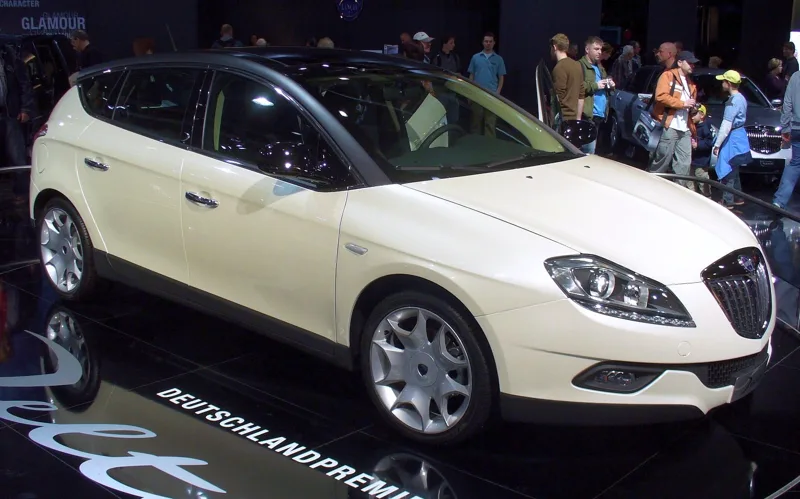
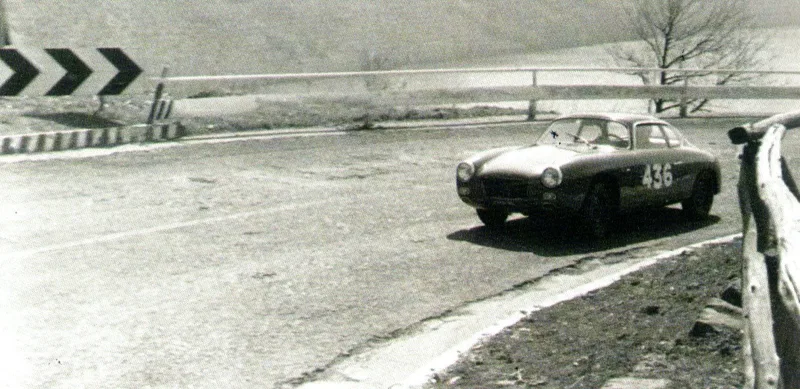
The three sporting coupes were first shown at Turin on 5 November 1958. Pininfarina supplied a luxurious coupe, Zagato a spartan and sporty berlinetta, and Touring a streamlined two-seater with double front lamps and conspicuous rear light clusters.
Touring's involvement came about in an unusual way. The firm had no dealings with Lancia since the Aprilia, and the commission is linked to a friendship between Carlo Pesenti and Gateano Ponzoni.
Touring built its body with the Superleggera method, a skeleton of steel tubes covered in aluminium. Its lighting was conspicuous at both the front and the rear.
A Touring-bodied Flaminia that stayed in Lancia's catalogue from 1959 to 1968.
What did the first series offer on the road?
The first series used a front-mounted six-cylinder V engine of 2,457.98 cc (150.0 cu in), producing 119 PS (DIN) (87.5 kW; 117 hp) at 5,100 rpm. Lancia rated its top speed at 180 km/h (112 mph), and the chassis used independent front suspension with a semi-independent De Dion rear.
Drive went to the rear wheels through a four-speed gearbox plus reverse. Mechanically the coupes changed little from the saloon, although the wheelbase was shortened compared with it.
Disc brakes were a notable step. Dunlop discs were fitted to every example, but buyers had to pay a supplement of 60,000 lire for them. Autorama later praised the brakes, yet Paul Frere found that they could lock the wheels when the road was wet.
The steering needed attention too. In the summer of 1960 the whole Flaminia range received a telescopic hydraulic damper, designed to absorb the small jolts from the wheels' vertical movement and so reduce the kickback felt at the steering wheel. Owners of cars not yet fitted with it could have the improvement for 20,000 lire.
Lighting also changed in 1960, when the coupes were modified to meet new road traffic rules.
Testers did not agree on every point. Quattroruote criticised the oversteer and the lack of heel-and-toe, a technique the car would not allow.
What changed when the 3C arrived in 1962?
The 3C, presented at a ceremony on 13 January 1962, fitted three double-barrel Weber carburettors fed by an electric pump. Power rose from 119 PS to 140 PS (103 kW; 138 hp), torque from 19 mkg (137 lb ft) to 20.7 mkg (150 lb ft), and top speed to 191 km/h (119 mph).
The ceremony honoured the sporting customers who had distinguished themselves in competitions during 1961.
Other changes were less dramatic but added up. The rear axle ratio changed from 3.692 to 3.615, the rev counter scale reached 6,500, and a warning light on the edge of each door showed when it was open.
The extra power came with extra weight. Kerb weight rose from 1,250 kg (2,756 lb) to 1,290 kg (2,844 lb), yet the 3C was quicker, and the maximum gradient it could climb rose from 37% to 39%. Deliveries to customers began on 1 February 1962.
What did the 2.8-litre engine change?
The 2.8-litre engine came from boring the cylinders from 80 to 85 mm, giving 2,774.83 cc (169.3 cu in). In the coupe it made 150 PS (110 kW; 148 hp) at 5,400 rpm and 22.8 mkg (165 lb ft) of torque at 3,500 rpm, which lifted the top speed to 194 km/h (121 mph).
Lancia introduced the 2.8 across the Flaminia range at the Frankfurt Motor Show in autumn 1963. Acceleration improved noticeably, while the top speed rose only slightly. Fuel use went up by a good 10%, from 13 to 14.5 litres per 100 km.
The bodywork stayed the same. Its only exterior mark was a 2.8 badge on the boot lid, while the mechanical changes included larger brake discs, a higher-amperage battery and extra lubrication capacity.
What was the GTL 2+2?
The GTL 2+2, introduced in September 1963, was a version of the Touring coupe with a modified roof and a rear seat for two more people. Its wheelbase was 260 cm (102.4 in), it weighed 1,350 kg (2,976 lb), and with the 2.8 engine it reached 191 km/h (119 mph).
The roof was modified to make room for the rear seat, and the wheelbase grew by only 8 cm. Performance was essentially the same as the two-seater's, which reached 194 km/h (121 mph) with the 2.8 engine.
Lancia listed the 2+2 only with the 2.8 engine, although two or three examples were built with the 2.5-litre unit. It cost 115,000 lire more than the two-seater coupe, and it stayed in the price lists until October 1968.
What did the Flaminia GT Coupe cost?
The GT coupe and convertible launched in January 1959 at 3,200,000 lire. The price rose to 3,320,000 lire in February 1962 and to 3,435,000 lire from September 1962, before it fell to 3,335,000 lire in June 1964. Prices stayed steady across the decade because inflation was modest.
The 2.8 versions appeared in the price lists from October 1963 and cost 200,000 lire more than the 2.5, which put them at 3,635,000 lire. The GTL 2+2 cost 3,750,000 lire when it launched, which made it dearer than the two-seater by 115,000 lire.
The price gap between the Touring GT and the Pininfarina coupe never exceeded 200,000 lire, or 5.6%. The Touring car was aimed at a more sophisticated, sporty buyer, and that buyer could accept a slightly higher price for the extra sportiness the GT offered.
Specifications at a glance
| Specification | First series | 3C | 2.8 coupe | GTL 2+2 (2.8) |
|---|---|---|---|---|
| Engine | 2,457.98 cc (150.0 cu in) | 2,457.98 cc (150.0 cu in) | 2,774.83 cc (169.3 cu in) | 2,774.83 cc (169.3 cu in) |
| Power | 119 PS (DIN) (87.5 kW; 117 hp) at 5,100 rpm | 140 PS (CUNA) (103 kW; 138 hp) at 5,600 rpm | 150 PS (CUNA) (110 kW; 148 hp) at 5,400 rpm | 150 PS (CUNA) (110 kW; 148 hp) at 5,400 rpm |
| Torque | 19 mkg (137 lb ft) | 20.7 mkg (150 lb ft) | 22.8 mkg (165 lb ft) at 3,500 rpm | - |
| Top speed | 180 km/h (112 mph) | 191 km/h (119 mph) | 194 km/h (121 mph) | 191 km/h (119 mph) |
| Wheelbase | 252 cm (99.2 in) | 252 cm (99.2 in) | 252 cm (99.2 in) | 260 cm (102.4 in) |
| Length | 450 cm (177.2 in) | 450 cm (177.2 in) | 450 cm (177.2 in) | 453 cm (178.3 in) |
| Width | 166 cm (65.4 in) | 166 cm (65.4 in) | 166 cm (65.4 in) | 166 cm (65.4 in) |
| Kerb weight | 1,250 kg (2,756 lb) | 1,290 kg (2,844 lb) | 1,290 kg (2,844 lb) | 1,350 kg (2,976 lb) |
| Fuel use | 11.8 litres per 100 km (CUNA) | 13 litres per 100 km (CUNA) | 14.5 litres per 100 km (CUNA) | - |
How did the magazines judge the car on the road?
Testers praised the road holding and the brakes in some reports, but they criticised the oversteer and found the brakes could lock in the wet. Their figures disagreed, partly because some relied on a speedometer that probably read optimistic, so the readings need to be treated with care.
Quattroruote tested a first-series coupe in April 1959. It measured 34 seconds for a standing-start kilometre and 11.4 seconds from standstill to 100 km/h. Those times came from speedometer readings, so the magazine's figures need to be read with caution.
Sports Cars Illustrated took its own readings in 1960 and found the car slower. It recorded 106 miles per hour, a little over 170 km/h, against Lancia's claim of 180 km/h, The likely reason is that the car had covered only a few kilometres and had not finished running in.
Paul Frere, a Belgian racer and journalist, tested the 3C for Lancia's own magazine in spring 1962. He found the engine flexible enough to pick up in fourth gear from just 1,000 rpm, or 33 km/h, which showed how willing it was at low speed. He also recorded 11 seconds from standstill to 100 km/h and a top speed of 187 km/h (116 mph).
Set side by side, the figures show the spread. Frere's 11 seconds to 100 km/h came close to Quattroruote's 11.4 seconds, while Sports Cars Illustrated's top speed of 106 mph sat well below Lancia's 180 km/h claim.
The Frere and Autorama tests both date from 1962, the year the 3C arrived, so they describe the car in its first year of 3C production.
Autorama drove the 3C over a route of about 1,000 km. It found the cabin finish spartan, and it reached almost 190 km/h (118 mph). Autorama also recorded 18 litres per 100 km on the same route.
Car & Driver, the new name of Sports Cars Illustrated, road-tested the car in 1964.
Was there a convertible version?
Yes. Lancia showed a Cabriolet, called the Convertibile, at the Geneva Motor Show in March 1960. It copied the coupe's forms, used the same engine and offered the same performance on the road, and it was priced the same as the coupe.
Ruoteclassiche tested a Flaminia GT convertible in 1996, when the car was 35 years old.
Did the Flaminia GT Coupe come with right-hand drive?
Yes, though only in small numbers. The first series was overwhelmingly left-hand drive, the 3C series included 10 right-hand drive cars, and the 2.8 coupe had just one. The GTL 2+2 fared a little better, with five right-hand drive examples among the 300 cars built with the 2.8 engine.
The 3C figures add up to 682 cars, 672 of them left-hand drive and 10 right-hand drive. The 2.8 coupe is the clearest example of how small that share was, since 165 of its 166 cars were left-hand drive.
Across all three series, the right-hand drive cars were a small minority, and the left-hand drive cars made up the bulk of what the factory built.
Why does the Flaminia GT Coupe still matter?
The Flaminia GT Coupe matters because it gave Lancia a sporting Flaminia in three coachbuilt forms, and because the Touring car stayed in the catalogue for roughly a decade. Its prices, variants and small production runs show how a carmaker built a niche range around one saloon.
The production numbers were modest. The first series had 868 cars, the 3C series 682, and the 2.8 coupe 166, while the GTL 2+2 with 2.8 engine reached 300. Zagato's Sport cars made up another 199 first-series units.
Two one-off bodies were built outside the series. Pininfarina built the Speciale on chassis 1167, and Ghia built the Marica on chassis 1168, so both unique cars sit apart from the production figures.