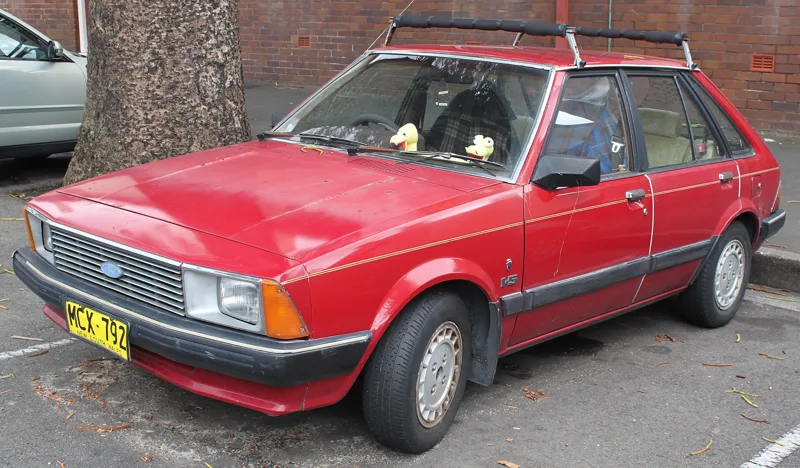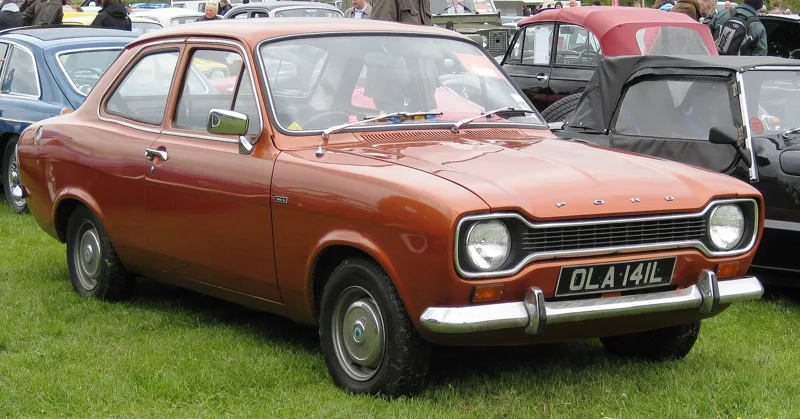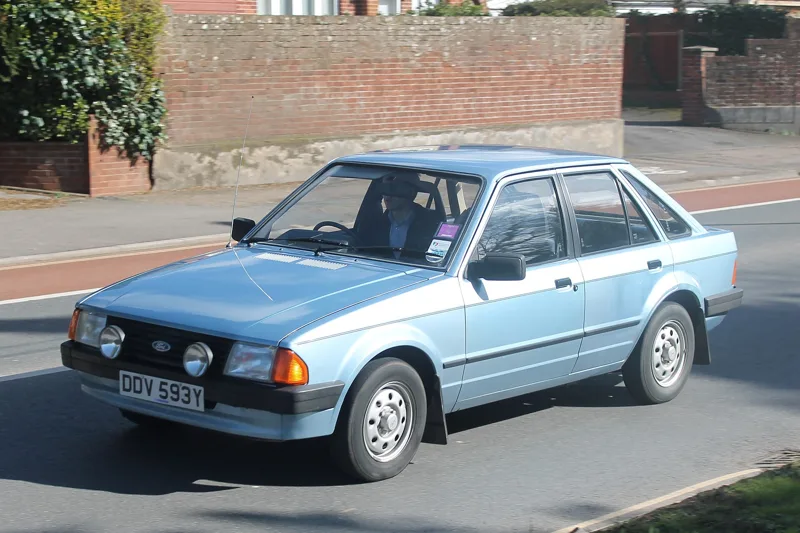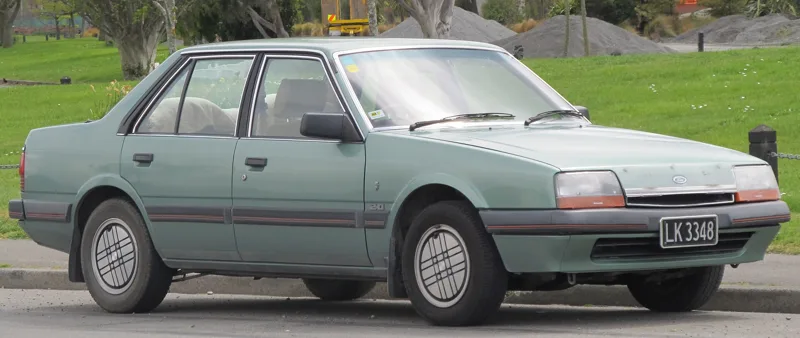
Ford's 1975 second-generation Escort, built in England and assembled from Sydney to Montevideo, with a fastback body, a Ghia niche and a run of special editions.
The Ford Escort Mk2 was the second-generation Escort, built from December 1974 and shown in January 1975. It introduced a fastback body on the platform of its predecessor and was assembled in England, Australia, New Zealand and Uruguay.
Ford's second-generation Escort arrived as a fastback in 1975 and shared its platform and much of its mechanical hardware with the car it replaced. It was built at Halewood in England, then assembled in Australia, New Zealand and, from 1977, Uruguay. Mazda-based models eventually took over its place in Oceania.
Where did the Mk2 Escort come from?
The Mk2 was the second generation of the Escort, replacing the first-generation car at the end of 1974 and taking over its production sites. Its production began on 2 December 1974 at the historic Halewood factory, and the official presentation followed in January 1975. Its main components, such as engines and chassis, carried over from its predecessor.
The first-generation car had been designed solely by Ford England. This one was developed jointly with Ford Germany, under the working name Brenda. The body was new, but the car was still built on the predecessor's base, and its three-box fastback shape was the one that later Escorts would keep.
Built in Halewood and assembled from Sydney to Montevideo, the Mk2 carried a fastback shape far beyond England.
What did the Mk2 Escort look like?
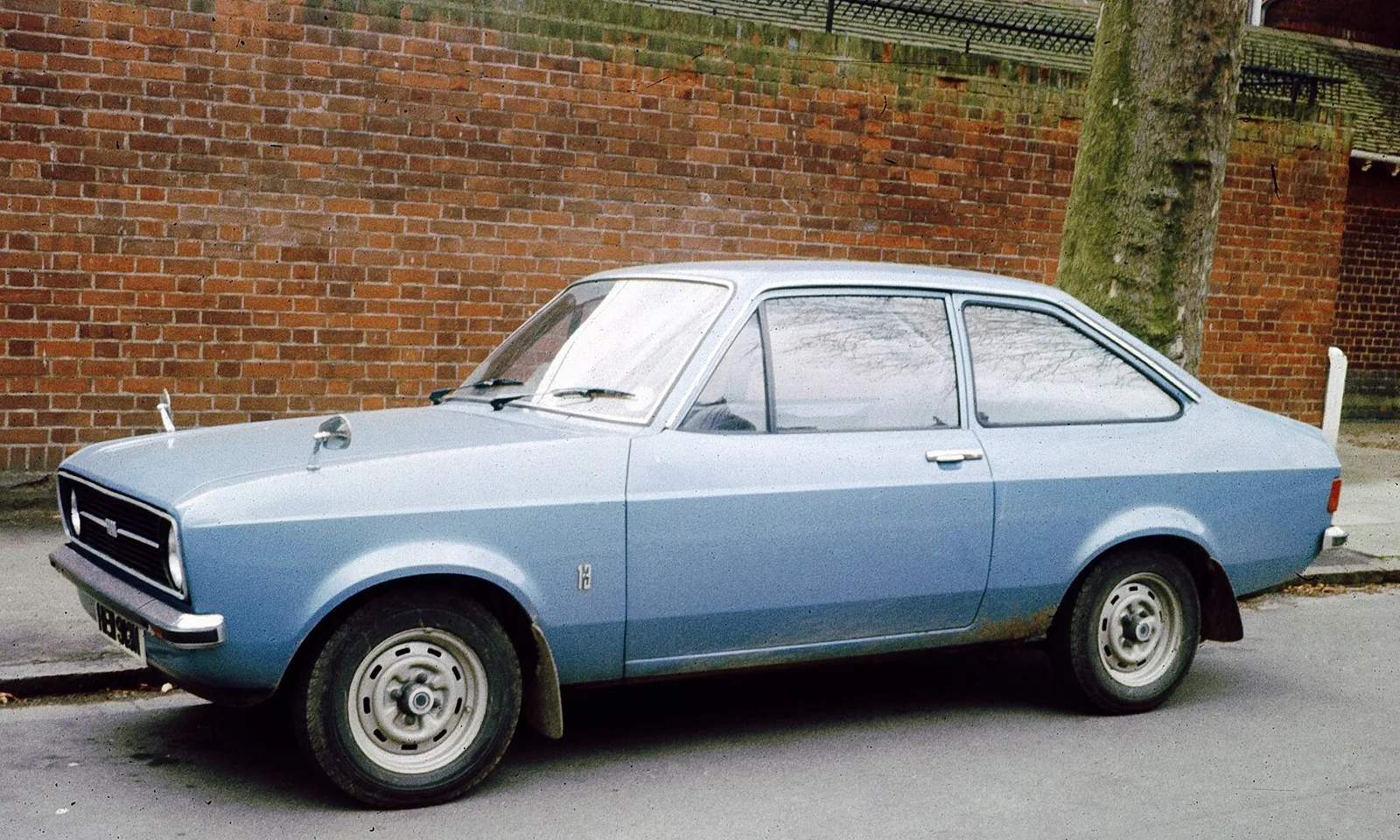
The Mk2 had a more rectilinear body than its predecessor, even though it was built on the same platform. The saloon received an entirely new body, while estate and van versions looked much like the Mark I but used Mark II fronts and interiors.
Rear suspension kept leaf springs, even though contemporary cars such as the Hillman Avenger had moved to coil springs. The car was rarely faulted for lack of room, although its glovebox was fitted only on higher-trim models, and the horn sat on the steering column.
During the final six months of the Mark I, its chassis was reworked several times, and the last of those revisions went into the Mk2.
Which engines did the Mk2 Escort use?
The 1975 Escort Ghia was fitted with a 1.6-litre engine of 1,598 cc (97.5 cu in) producing 84 hp (63 kW) and 125 Nm (92 lbf ft) of torque. The car weighed 955 kg (2,105 lb). In Italy a 940 cc (57.4 cu in) engine stayed on sale because it brought tax advantages.
In the other large European markets, however, the 940 cc engine was no longer available.
What trims and variants did the Mk2 offer?
The Mk2 range was split into market sectors. L and GL models served ordinary private buyers, Sport, RS Mexico and RS2000 served the high-performance market, and Ghia targeted a new niche of small luxury cars. Base and popular versions suited buyers who wanted low running costs, and vans served commercial users.
In 1978 the L model adopted square headlamps that had previously been exclusive to the GL and Ghia. Its interior and exterior equipment was also updated on some models. Three special editions, Linnet, Harrier and Goldcrest, arrived in 1979 and 1980.
The body itself mixed three-box styling with a sloping fastback rear, and later Escorts adopted that design feature. The look soon became characteristic of the model.
How was the Escort built in Australia?
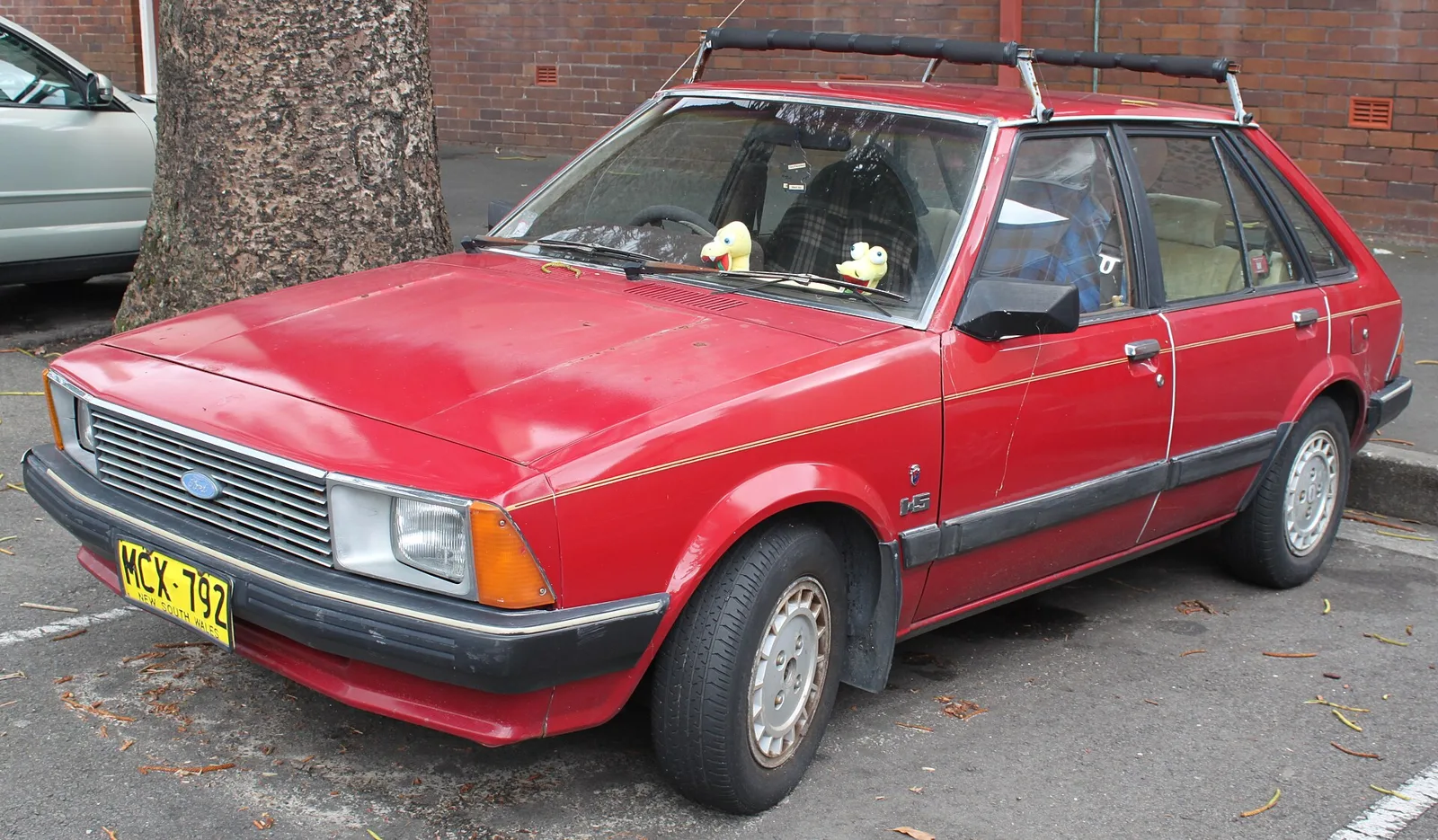
Ford Australia built the Mk2 Escort at Homebush in Sydney from March 1975 until mid-1980. Buyers could choose two-door and four-door saloons and a two-door van, with L, XL (later GL) and Ghia trims. No estate was offered, unlike the previous generation.
The van was offered at a higher trim level than elsewhere, with GL and Sport versions also available. Some accessories were unique to Australia, including steel wheel trims shaped like dog dishes and high-backed front seats.
Early Australian cars used 1.3-litre and 1.6-litre Ford Crossflow OHV engines, paired with a 4-speed manual or a 3-speed automatic. In 1977, to meet new Australian emissions laws, the 1.3 was dropped, and a 2.0-litre SOHC engine from the Ford Cortina and Pinto, slightly revised from the European version, became an option on almost every model. Internally coded BC, the bodies were altered to suit the larger engine and a redesigned fuel tank, which put the filler behind the rear number plate.
In 1978 Ford Australia standardised the blue oval badge across the range, placing it in the grille and on the left side of the boot lid. That year also brought the Escort Sundowner van, sold as a leisure vehicle for young, adventurous buyers, with body decoration and curved side windows, and available with 1.6-litre and 2.0-litre engines.
The 1979 update raised basic equipment and made square headlamps standard on the L and GL, which had been Ghia-only. The RS2000 arrived to attract younger and performance-minded buyers, with a new nose, two-door or four-door bodies (the four-door exclusive to Australia) and five solid paint colours. Under the skin it used the same 2.0-litre Pinto as the rest of the range, with a choice of 4-speed manual or 3-speed automatic. In total, 2,400 Australian RS2000s were produced.
Australian buyers were not keen on the car. Growing competition from Japanese imports and a preference for larger six-cylinder cars held back sales, and production ceased at the end of 1980 with 79,142 units built. Ford Australia turned to Japanese-built models to fill the gap. The front-wheel-drive Mazda 323 range became the Ford Laser hatchback and the Ford Meteor four-door saloon.
What was the New Zealand Escort range like?
New Zealand's Escort was assembled at Ford's Wiri plant in Auckland from 1975, and it followed British specifications, with metric instruments. Every body style was built there, including the estate, which had previously been imported from the United Kingdom.
Engine choice spanned 1.1-litre base cars, 1.3-litre models in L, GL, 1300 Sport, Station Wagon and van forms, and 1.6-litre Ghia and 1600 Sport versions. The 1.1 targeted buyers with less money, while the 1.3 was more popular. The 1.6 units had arrived in 1976 and were reserved for the priciest models. A 3-speed automatic was optional on most 1.3 and 1.6 cars.
Sales were strong. Unlike Australia, the Escort and Cortina often led the monthly sales lists. A 1979 update enlarged the Ghia's share of the range, gave lower-grade cars the GL's square headlamps, added the Ford oval to the grille and fitted sports wheels to the L and GL. Alloy wheels became standard on the Ghia in 1980.
Kit production from the United Kingdom ended at the end of 1980. Dealers cleared the remaining Mk II stock with large price cuts, and the model was replaced in May 1981. As in Australia, Ford imported Mazda 323 models renamed Laser, which finally replaced the Escort and unified the offer in the Oceanian market.
How was the Escort assembled in Uruguay?
The Mk2 reached South America in 1977 and was the first Escort generation to be assembled there. Ford's Montevideo plant received vehicles in CKD form from the United Kingdom, and the version built was the Escort Ghia, with the original 1600 cc (97.6 cu in) engine and a 4-speed manual gearbox.
A nationalist military dictatorship governed Uruguay at the time, and production went ahead only on condition that some parts were replaced with local ones. The plant's output was too small to supply a continent, so Ford weighed moving production and building an Escort with 100% local components in South America.
After British production ended in 1980, Uruguayan sales ended too. Production of the third-generation car moved to Sao Bernardo do Campo in Brazil, where it was built with 100% local production. The Montevideo plant closed in 1985 after 50 years of work, by decision of the local representative, who cited the difficulty of continuing to represent the brand in the country.
Specifications at a glance
| Specification | Detail |
|---|---|
| Production start | 2 December 1974 at Halewood, England |
| Official presentation | January 1975 |
| End of British production | August 1980; other countries until 1981 |
| Engine, 1975 Ghia | 1.6-litre, 1,598 cc (97.5 cu in); 84 hp (63 kW); 125 Nm (92 lbf ft) |
| Weight, 1975 Ghia | 955 kg (2,105 lb) |
| Italian engine | 940 cc (57.4 cu in) |
| Australian engines | 1.3-litre and 1.6-litre Crossflow OHV; 2.0-litre SOHC from 1977 |
| Australian gearboxes | 4-speed manual or 3-speed automatic |
| Australian output | 79,142 units built; Australian RS2000 output 2,400 |
| New Zealand engines | 1.1-litre, 1.3-litre and 1.6-litre |
| Uruguayan Ghia | 1600 cc (97.6 cu in) engine; 4-speed manual |
| Plants | Halewood, Cork, Saarlouis, Homebush, Nazaret, Wiri, Amsterdam (1975 to 1978), Silverton, Montevideo (CKD) |
Why did the Mk2 Escort matter?
The Mk2 mattered because it set the pattern for later Escorts, with a fastback profile that became a defining feature of the model. It also sold well in New Zealand, where the Escort and Cortina often led monthly sales charts.
That fastback shape was not a passing detail. Later Escort generations were developed around the same feature, and the model became known for it.
A single platform travelled a long way. From Halewood it reached Sydney, Auckland and Montevideo, each with its own engines and trims, and each market shaped the car to suit local tastes and rules.
When did the Mk2 leave production?
Production ended in Britain in August 1980, while other countries kept building the car until 1981. Australian production had already ceased at the end of 1980, and New Zealand kit assembly ended that same year, before the car was replaced in May 1981.
The successor generation was split in two. A liftback kept the Escort name, while the saloon became the Ford Orion. In Oceania Ford turned to imported Mazda models. In Australia the imported 323 became the Ford Laser hatchback and Ford Meteor saloon, and New Zealand received the Laser as well.