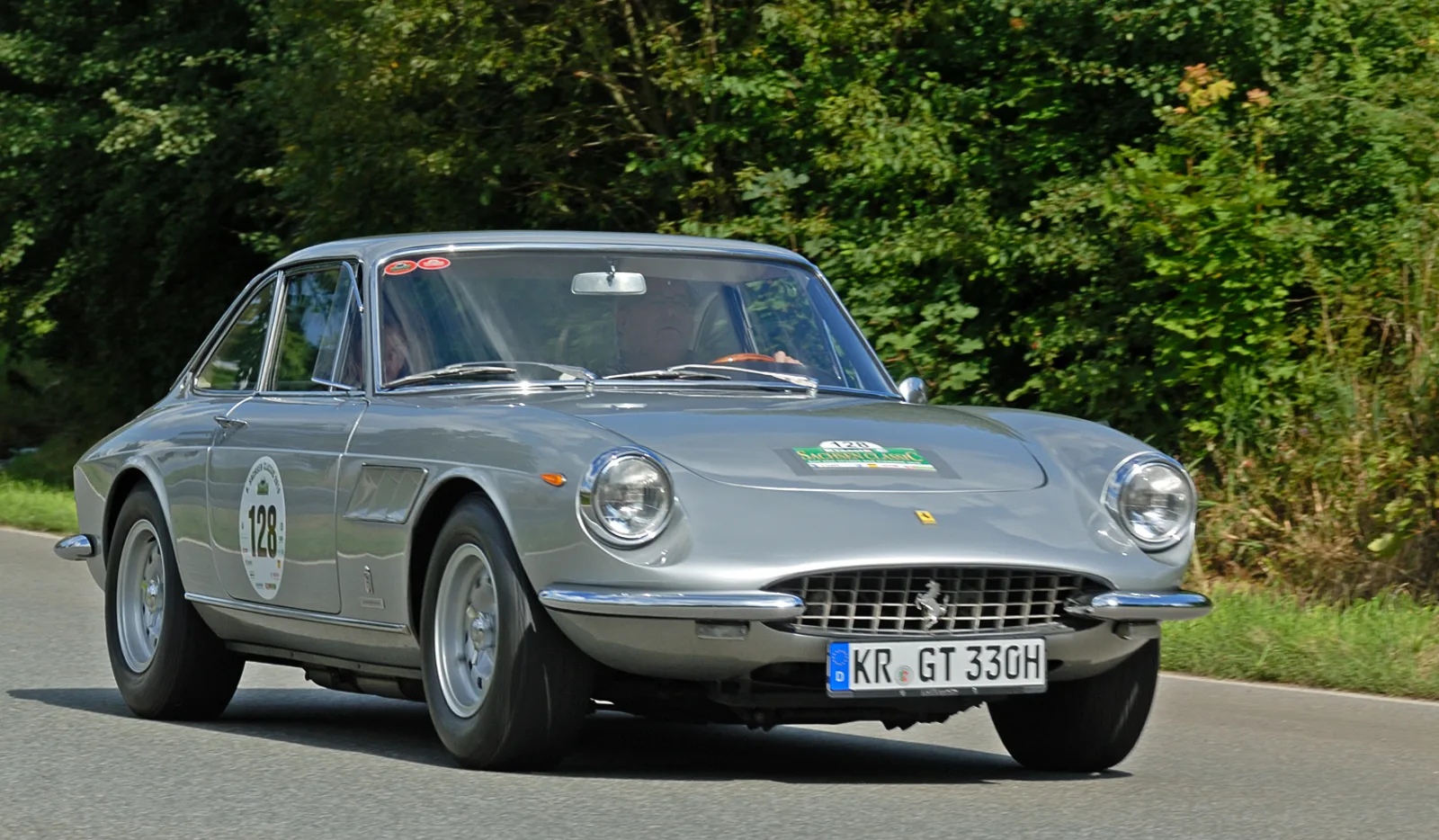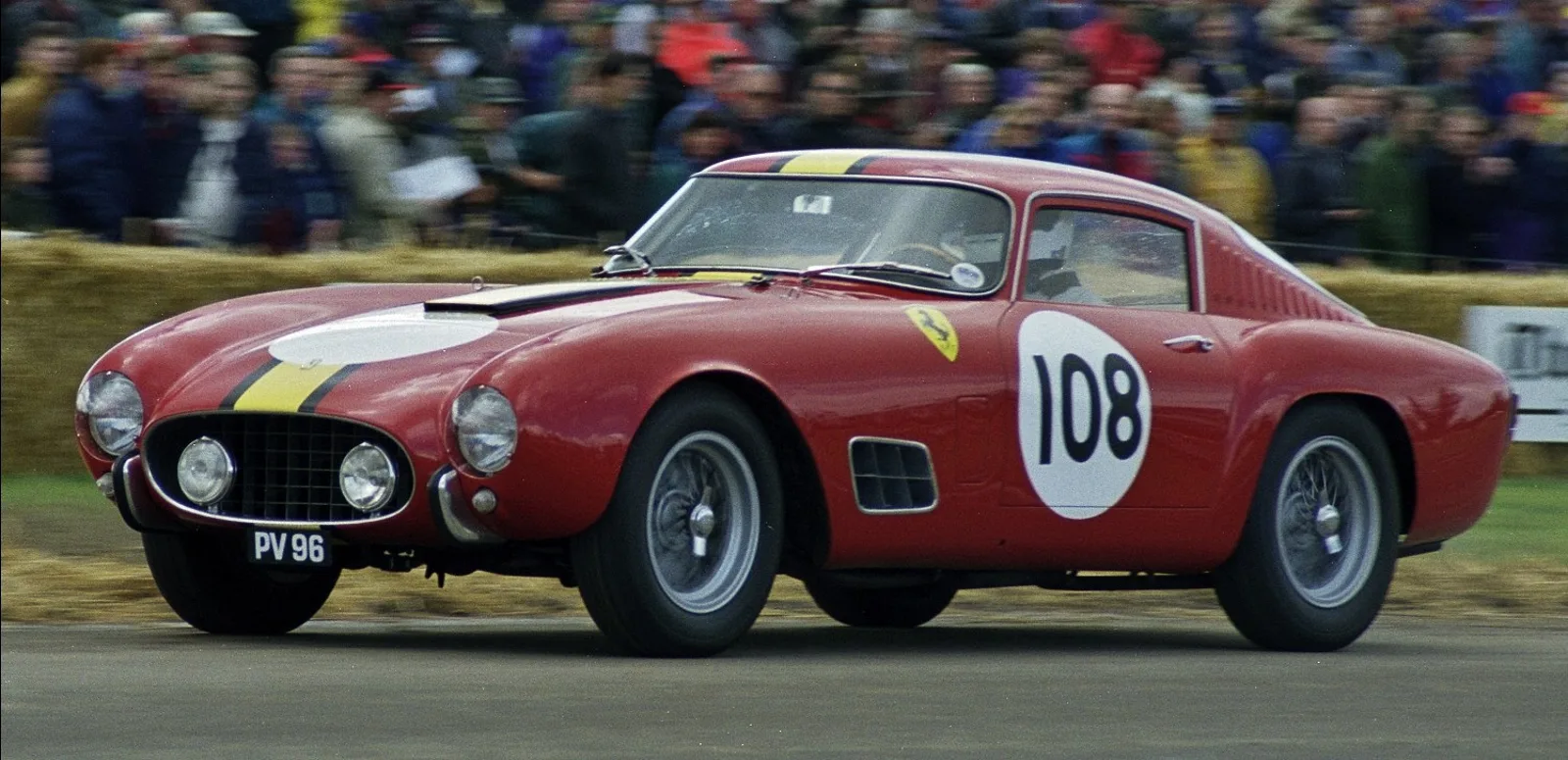
A small-run long-wheelbase Berlinetta from 1955 to 1959, with a 2,953 cc V12, Pininfarina and Zagato bodies, and a Tour de France name.
The Ferrari 250 GT Berlinetta LWB was a long-wheelbase sports car built from 1955 to 1959 in small numbers. Its 2,953 cc V12 and Pininfarina bodies made it a road car that could also race, and it was succeeded by the shorter-wheelbase SWB in 1960.
The Ferrari 250 GT Berlinetta LWB was a sports car from the Italian maker, produced in small numbers from 1955 to 1959. It sat beside the 250 GT touring cars as a road car that could also race, with bodies mostly by Pininfarina and a handful by Zagato. Its V12 made between 260 PS (191 kW; 256 hp) and 280 PS (206 kW; 276 hp), depending on the version.
Where did the 250 GT Berlinetta LWB come from?
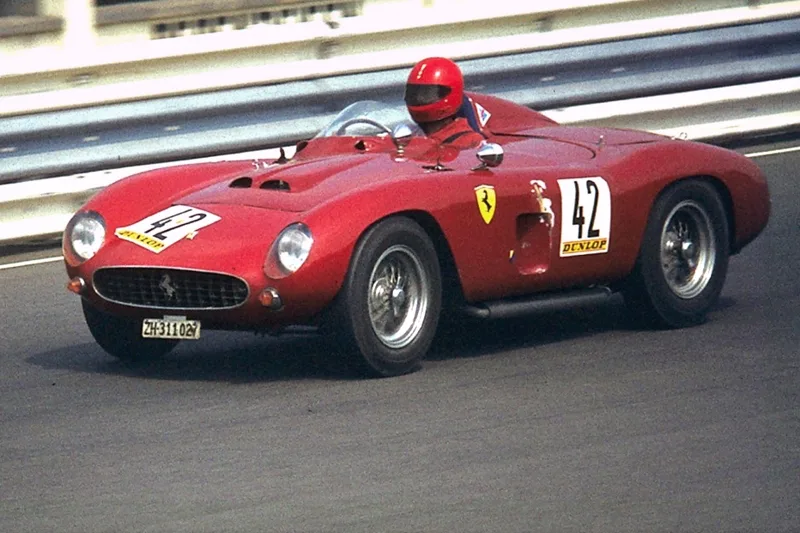
Ferrari began in motor racing and only turned to road sports cars after the Second World War, at first building single pieces. In 1955 the 250 MM racer gave way to the 250 GT Berlinetta LWB, which took its chassis from the current road cars, so one car could serve both public roads and racing.
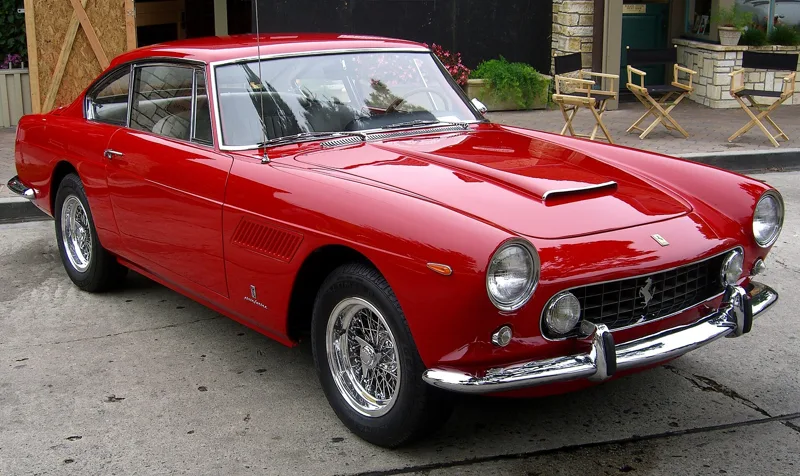
The 250 family started in 1953 with 3.0-litre V12 engines. The 250 Europa and the 250 GT Europa were built only in double-digit numbers, while the 250 GT Boano/Ellena of 1955 reached low three-digit production. Its successor, the 250 GT Coupe, sold 350 cars from 1958 on.
The LWB stayed in the programme for five years and went through four series, plus a handful of special models with Zagato bodies. In 1960 it gave way to the 250 GT Berlinetta SWB, which had a much shorter wheelbase. Between the two lies a small run of interim models used for development.
A road car that could also race, built in small numbers and tested by a driver who called its acceleration tremendous.
What do the LWB and Tour de France names mean?
LWB stands for long wheelbase. The letters were added in hindsight to tell the car apart from its shorter-wheelbase successor, and the coding was never official at the factory. The Tour de France name refers to the 1956 edition of the Tour de France for automobiles, which Alfonso de Portago and Edmont Nelson won in a first-series car.
The three-digit number in the model name describes the engine, where each cylinder displaces roughly 250 cc. Italians spoke of Passo Lungo and Passo Corto, but the English terms LWB and SWB became standard among classic car enthusiasts and are now used by Ferrari too. The Tour de France name stayed with the model until 1959, but not with the Berlinetta SWB.
How was the chassis built?
The chassis, designated Tipo 508, is a frame of oval steel tubes with a wheelbase of 2,600 mm (102.4 in). The front wheels hang on double wishbones with coil springs, Houdaille lever-arm dampers and an anti-roll bar. The rear has a rigid axle with two longitudinal leaf springs, two trailing links and Houdaille shock absorbers.
Every wheel had a hydraulically operated drum brake. The regular 250 GT shared the same 2,600 mm wheelbase.
What did the V12 engine offer?
The Tipo 128 V12 displaced 2,953 cc (180.2 cu in), with a bore of 73 mm and a stroke of 58.8 mm. Its cylinder banks were set at 60 degrees, and each bank had an overhead camshaft driven by a chain. The compression ratio was 9.5:1, a little higher than the 8.8:1 of the regular GT models.
Three double-barrel carburettors of the 36DCL type fed the engine, and the spark plugs sat inside the V formed by the two cylinder rows. Output depended on the version and ran from 260 PS (191 kW; 256 hp) to 280 PS (206 kW; 276 hp). The four-speed gearbox was fully synchronised, which the 250 MM had not offered.
The short-block design went back to a 1947 concept by Gioacchino Colombo, and similar engines appeared across the 250 family. Individual series differed in detail, and the Tipo 128C, with more torque, came in during the second series.
How heavy was the Berlinetta?
Pininfarina-bodied cars weighed roughly 1,050 kg (2,315 lb) dry, rising to 1,160 kg (2,557 lb) with a full tank. Zagato's cars, which used thinner aluminium sheet, were about another 50 kg (110 lb) lighter. Every body was built to keep total weight as low as possible.
The rear window was Perspex, and on some cars the side glazing was too. On some cars the inner door trim and interior soundproofing were left out.
What did the Pininfarina cars look like?
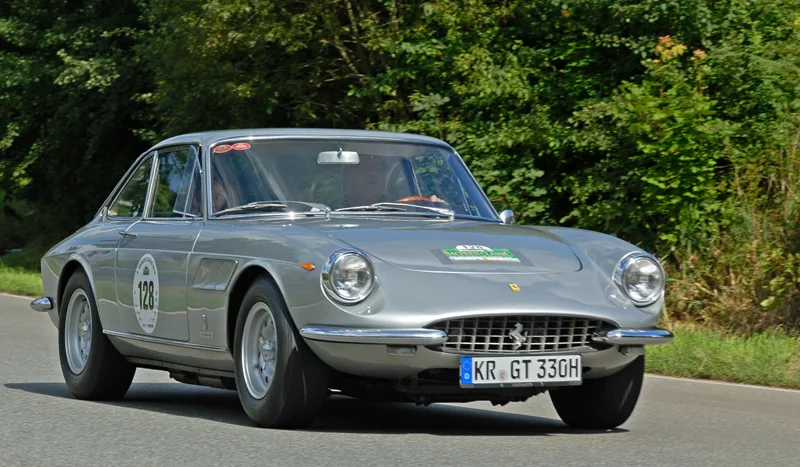
About 77 Pininfarina-bodied cars were built between 1955 and 1959, and they were assembled at the Scaglietti coachworks rather than at Pininfarina. Each had a markedly long bonnet with curved front wings and a round headlamp set into each wing end. The radiator opening was oval, and a large grilled ventilation opening sat behind each front wheel.
The first series, built from 1955 to 1956, comprised eight cars with chassis numbers 0503GT to 0619GT and Tipo 128B engines. Its forward-sloping wings, rear panoramic window and smooth, narrow C-pillar set it apart. The second series, from 1956, had a fully panelled C-pillar with 14 parallel openings, an air scoop on the bonnet and a bonnet that could be removed entirely. Nine cars were built.
The third series, from 1957, had headlamps set back behind a Perspex cover and a C-pillar with three vents. Eighteen cars were built, and a single-plate clutch was introduced. The fourth series, built in 1958 and 1959, was the largest, with 36 cars numbered 0897GT to 1401GT. It had one vent in the C-pillar, no Perspex headlamp cover and the Tipo 128D engine.
Who designed the Zagato versions?
Elio Zagato designed every Zagato body, and the first four shared a similar shape. Zagato made five 250 GT Berlinettas between 1956 and 1959, sometimes called the 250 GTZ Berlinetta. The first four had thin pillars and a Z-shaped kink in the C-pillar, and three of them had the double bulges on the roof known as the Double Bubble.
The first car, chassis 0515GT, went to racing driver Vladimiro Galuzzi. The second, 0537GT, was lighter and went to former fighter pilot Camillo Luglio, who won the 1956 Italian sports car championship with it. The third, 0665GT, also went to Luglio, who won the Italian title again in 1957 and finished second in his class at that year's Mille Miglia. The fourth, 0689GT, had no Double Bubble.
The fifth and last car, 1367GT, was built in 1959 for Galuzzi again. It was made for everyday use rather than competition, with its own body, a rear panoramic window and striking rear wings. It had no Double Bubbles.
What were the 1959 Interim cars?
The 250 GT Berlinetta Interim was a bridge between the Tour de France car and the SWB. Scaglietti built seven Interim cars in 1959, mainly as test vehicles. They kept the long wheelbase of the earlier car but wore the new Pininfarina body style of the SWB.
The Interim cars had an extra side window in the doors, which the production SWB later lacked. They used the Tipo 128D engine from the predecessor, with compression ratios between 9.2:1 and 9.7:1.
How did the car perform on the road and in races?
Motor Revue tested a third-series Pininfarina Berlinetta in 1958 and found the factory figures confirmed. The test car had 250 PS (184 kW; 247 hp) and a 4:1 rear axle. The tester, the Belgian racing driver and journalist Paul Frere, called its acceleration tremendous, and praised the care taken over the smallest details.
On bad roads the car offered no comfort at all, but the chassis could take the strain of hard driving. In racing, the Tour de France victories of 1957, 1958 and 1959 went to Berlinetta drivers Olivier Gendebien and Lucien Bianchi. Gendebien and Paul Frere took the 12-hour races at Reims in 1957 and 1958, and Gendebien finished third at the 1957 Mille Miglia, eight minutes behind Piero Taruffi in the more powerful Ferrari 335S.
Key specifications
| Specification | Detail |
|---|---|
| Chassis | Tipo 508, frame of oval steel tubes |
| Engine | Tipo 128 V12, 2,953 cc (180.2 cu in) |
| Bore x stroke | 73 x 58.8 mm |
| Compression | 9.5:1 (regular GT 8.8:1) |
| Carburettion | Three double-barrel 36DCL units |
| Output | 260 PS (191 kW; 256 hp) to 280 PS (206 kW; 276 hp) |
| Gearbox | Four-speed, fully synchronised |
| Wheelbase | 2,600 mm (102.4 in) |
| Weight, Pininfarina car | 1,050 kg (2,315 lb) dry; 1,160 kg (2,557 lb) with full tank |
| Tested car, 1958 | 250 PS (184 kW; 247 hp), rear axle 4:1 |