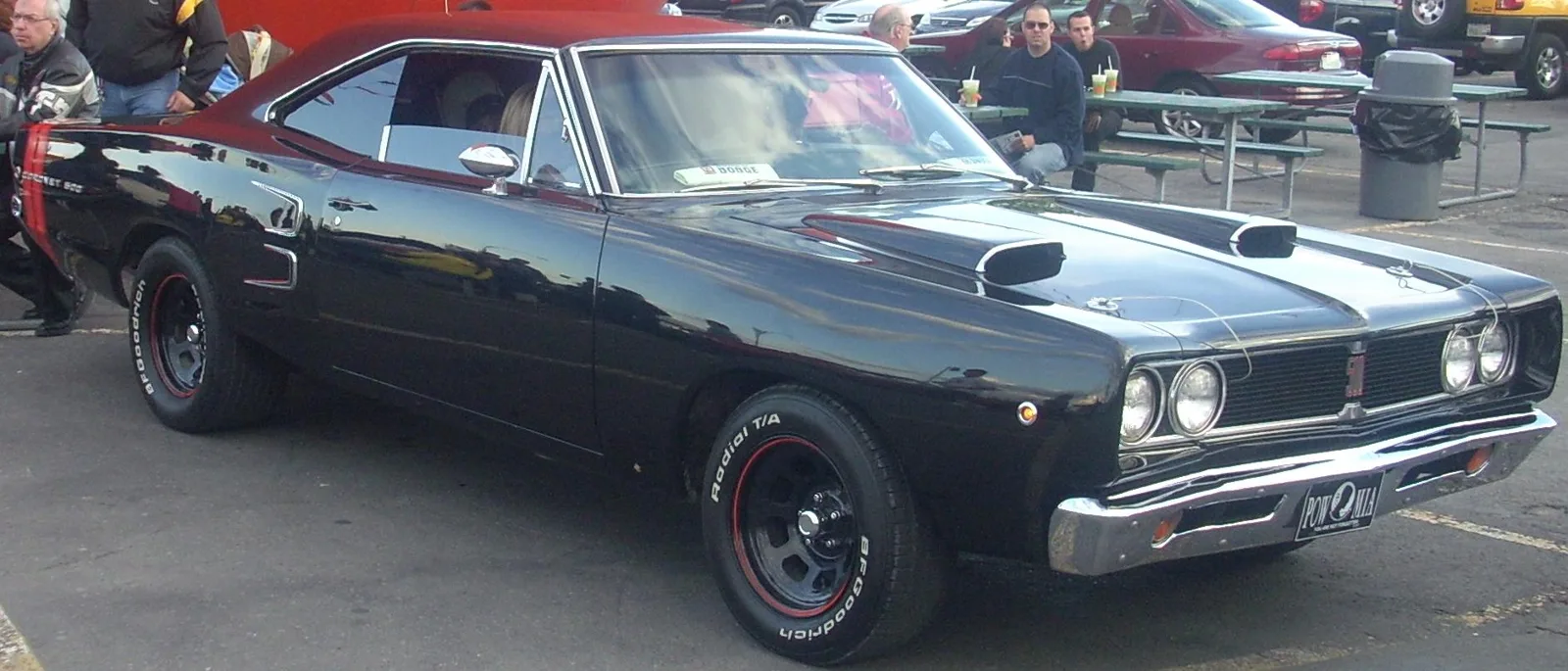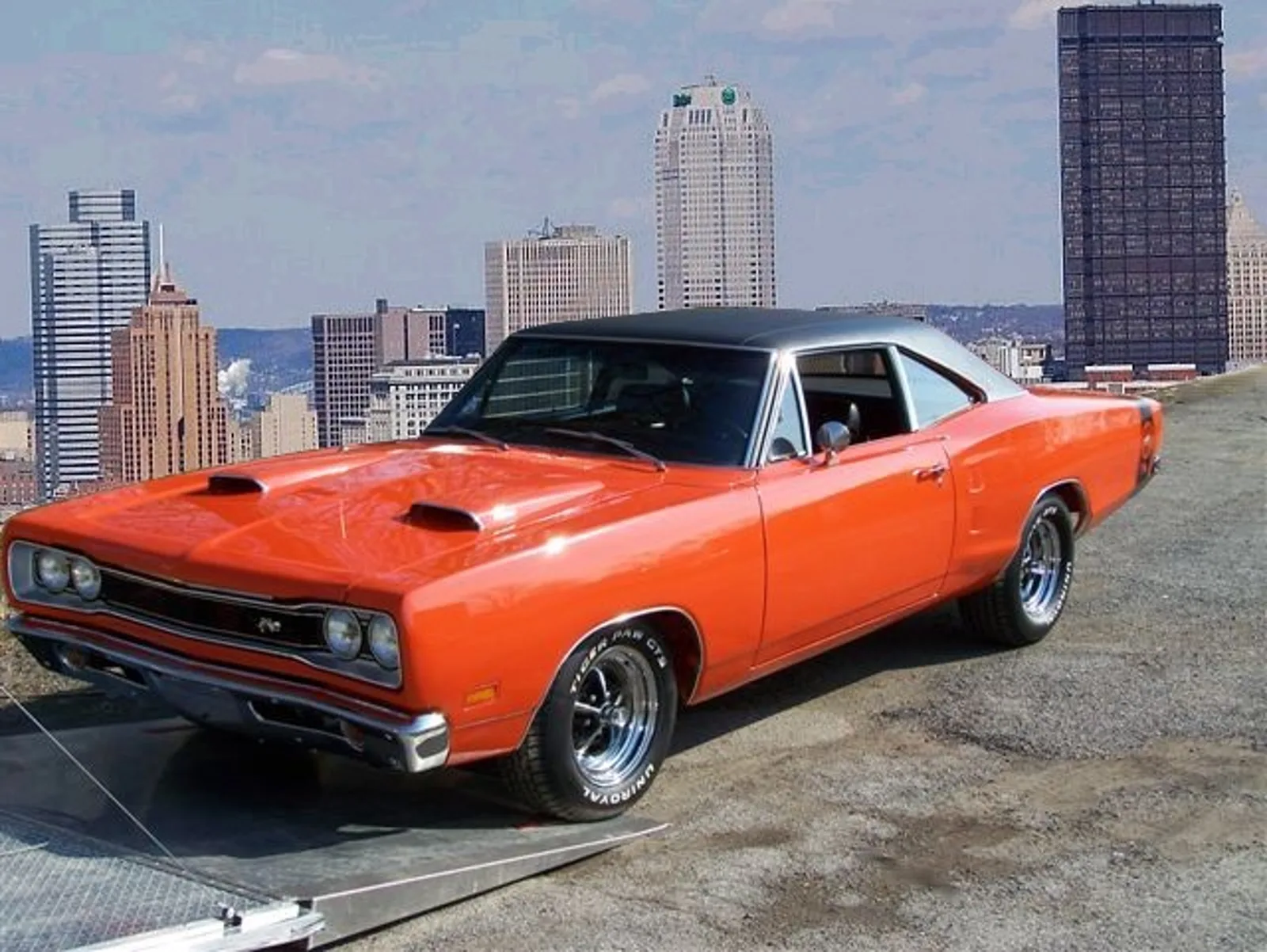
The Coronet-based original from 1968 to 1971, its Mexican relatives and the Charger editions that brought the bee back.
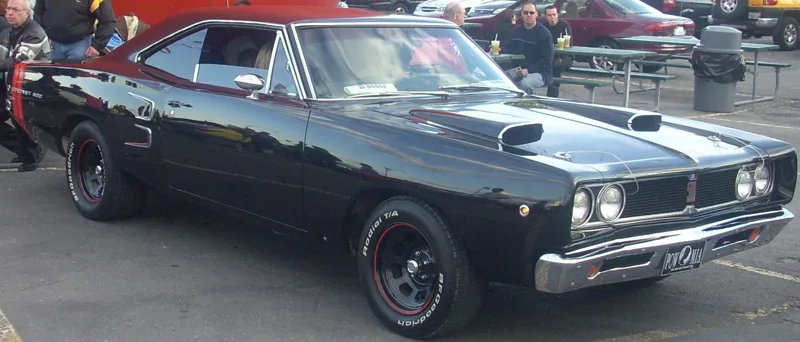
Dodge's Super Bee muscle car, built on the Coronet two-door, ran from 1968 to 1971 as a rival to the Road Runner. Its top engine in 1968 was the 426 Hemi. The name later returned on Mexican models and on several Charger editions, including a 2027 Launch Edition.
The Dodge Super Bee was a mid-sized muscle car that Dodge built for the 1968 to 1971 model years, offering the Plymouth Road Runner formula with a Dodge badge. The name later came back on a Mexican sedan line and on several editions of the Charger.
The original car is best remembered for its big-block engines, its bee-themed trim and a short life at Dodge. Later Super Bee badges reached the Charger SRT8 and, most recently, a 2027 Launch Edition announced in August 2026.
Where did the Super Bee name come from?
The name comes from the B body designation Chrysler used for its midsize models, among them the Road Runner and Charger. Dodge's general manager, Robert McCurry, asked for a model to rival the Road Runner, and a styling contest produced the Super Bee name.
Senior designer Harvey J. Winn won that contest, and the new logo drew on the Scat Pack Bee medallion Dodge already used. The design took cues from the 1968 Coronet convertible, and the Alexander Brothers built the interior of the show car, which debuted at the 1968 Detroit Auto Show.
The show car was the starting point for a production model that sat on the Coronet two-door coupe. Dodge's plan was to offer a low-priced muscle car, and the Super Bee was the answer to the Road Runner that Plymouth already sold.
A four-year muscle car whose name kept coming back, from Mexican sedans to the Charger SRT8 and a 2027 edition.
How did the 1968 Super Bee differ from the Road Runner?
With a 117-inch (2,972 mm) wheelbase, the Super Bee outweighed the Road Runner by approx. 65 lb (29 kg). Dodge added bigger rear wheel openings, a bumblebee tail stripe, a fancier grille and diecast chrome Bee medallions.
The Super Bee used a dash cluster borrowed from the Dodge Charger, and four-speed manual cars received a Hurst Competition-Plus shifter, a costlier unit than the Road Runner's Inland shifter. Those higher-grade parts pushed the Dodge above the Plymouth on price, and sales suffered as a result.
Choosing the Hemi added 33% to the price, and 125 cars were built with it. That year the Super Bee came only as a two-door coupe, with a 383 Magnum rated at 335 hp (250 kW) as the base engine, and the top choice was the 426 Hemi at 425 hp (317 kW).
Heavy-duty suspension, an optional Mopar A833 four-speed manual gearbox and high-performance tyres completed the car, and a stripe with the bee logo wrapped around the tail.
What did the 1969 Super Bee add?
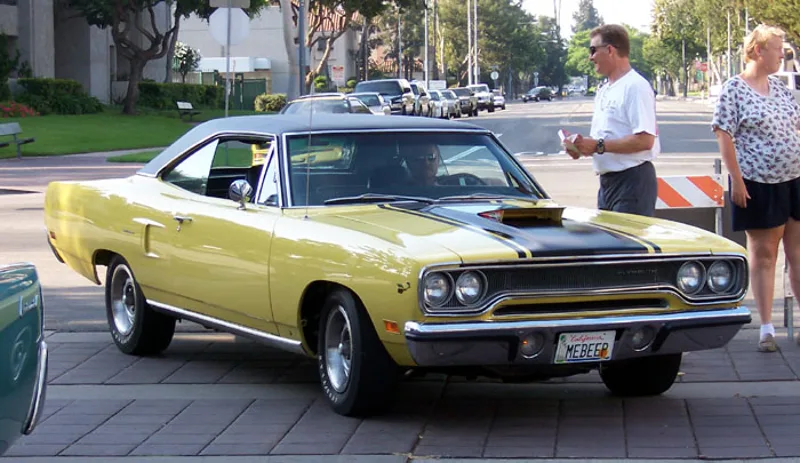
The 1969 model added a hardtop body, a squeezed headlight surround, horizontal tail lights and the Ramcharger twin-scooped hood, coded N96. A mid-year 440 six-pack with three two-barrel carburettors was also offered.
The Ramcharger hood was the counterpart of the Road Runner's Coyote Duster hood, and it used forward-facing scoops. Three Holley carburettors fed a 440 cu in engine, with 490 lb-ft (664 N-m) of torque reached at 3600 rpm and peak output of 390 bhp (395 PS; 291 kW) coming at 4700 rpm.
The option code A12 changed the fifth VIN digit to M, which identifies these 1969 1/2 cars. A12 cars also had a Dana 60 axle geared 4:10, heavy-duty internal parts, black steel wheels and heavy-duty 11-inch drum brakes.
Dodge built 1,907 A12 M-code cars, and the package cost US$463, sitting halfway between the standard engine and the Hemi. The 1969 range offered the 383 Magnum, the 440 six-pack and the 426 Hemi, while the 440 Magnum with a four-barrel carburettor was reserved for the Coronet R/T.
How did the 1970 Super Bee change, and why did sales fall?
The 1970 Super Bee was restyled with a twin-looped front bumper that Dodge's publicists called bumble bee wings. Sales dropped from 15,506 cars in 1970 to 5,054 in 1971, a drop blamed partly on the new look and partly on higher insurance rates for performance cars.
The 1970 car kept the engine choices and the Ramcharger hood, and it added a C-stripe version of the bumble stripe, new high-back bucket seats, a column ignition switch and a pistol-grip Hurst shifter for four-speed cars.
Production in 1968 was 7,842 to 7,717 cars with the 383 and 125 with the 426 Hemi. In 1969 Dodge built 27,800 to 25,727 cars with the 383, 1,907 six-packs and 166 Hemis, before the 1970 total of 15,506.
What engines did the 1971 Super Bee offer?
The 1971 Super Bee moved to the Charger platform, selling at US$3,271 as the lowest-priced model in the range. It was the only year a small-block 340 four-barrel was offered, rated at 275 hp (205 kW). The Super Bee sold 5,054 units that year, 22 of them with the Hemi.
The 1971 engine list ran from the 340 small-block to a 383 big-block rated at 300 hp (224 kW), two 440 big-blocks rated at 370 hp (276 kW) and 385 hp (287 kW), plus the 426 Hemi, which was rated at 317 kW (425 hp).
In 1972 the list shrank to a 400 big-block V8 rated 320 hp (239 kW) at 4800 rpm, with torque of 410 lb-ft (556 N-m) peaking at 3200 rpm. After that the name lapsed at home until the 2007 model arrived.
How did the Mexican Super Bee come about?
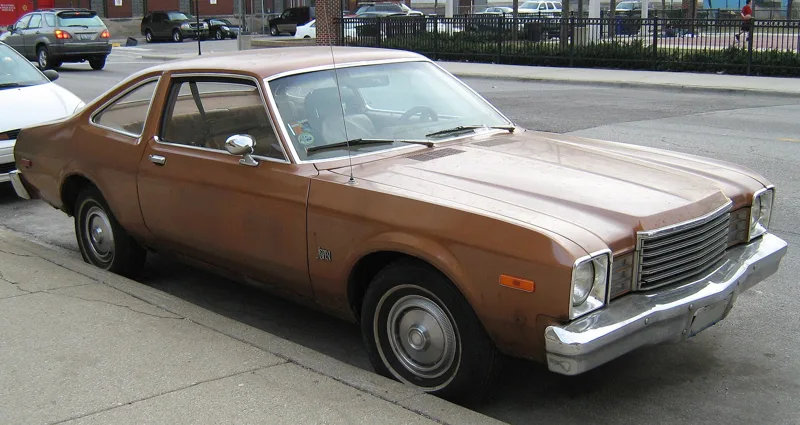
In 1970 Chrysler of Mexico introduced the Super Bee as a replacement for the Plymouth Barracuda, which was too costly to build there. It was based on the semi-fastback A body and came with a 318 V8 rated at 270 hp, with a choice of manual gearboxes, three or four speeds.
The Mexican Super Bee was almost identical to the Plymouth Duster, which Mexico called the Valiant Duster, with side stripes and Super Bee decals. In 1971 Dodge gave it the grille from the American Dodge Demon, and by 1973 the Dart front had become the standard design across the A body range.
The Valiant Super Bee kept its 318 V8 with 270 hp through 1974, then moved to a 360 V8 with the same power in 1975 and 1976. Mexican anti-pollution laws were less strict than those in the United States, so the engines produced more power there.
The first generation ran from 1970 to 1976. In the fall of 1975 the F body Aspen and Volare arrived as 1976 models, which opened the next chapter of Chrysler's Mexican line-up.
What were the Super Bees of 1977 to 1981 in Mexico?
From 1977 Chrysler de Mexico reused older model names, so the Aspen and Volare were sold as the Dart and Valiant Volare. The sporty model was the Dodge Super Bee, with a 360 V8 rated at 270 hp and a choice of a three-speed Torque Flite or four-speed manual.
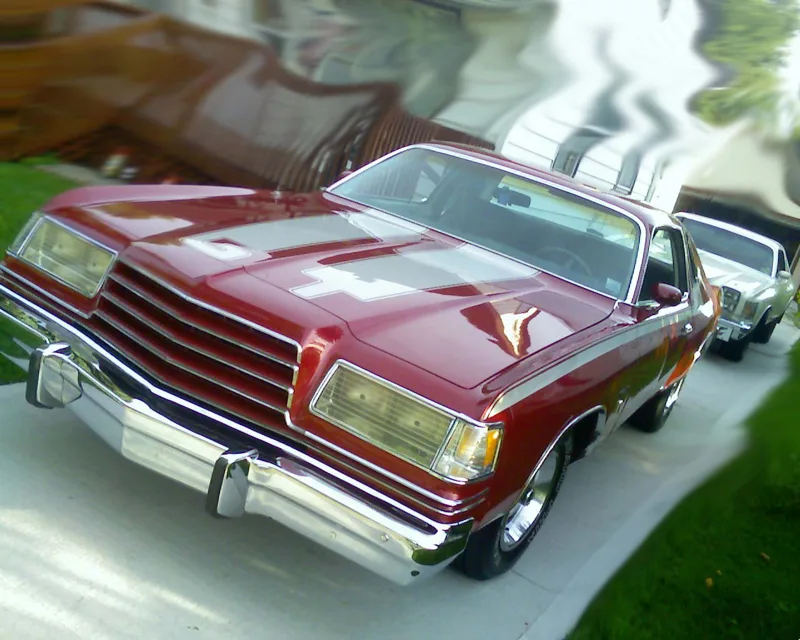
The car of this period had wide sports wheels, a front spoiler, and a rear spoiler marked Trans Am with Super Bee lettering. The federal highway patrol used it as a squad car, and the car gained a new front with rectangular headlamps for 1980.
For 1981 the Diplomat was introduced in Mexico under the Dart name, and a new sports version of the Dart replaced the Super Bee. That sports model was called the Dodge Magnum, and it kept the 360 V8 with 270 hp.
What was the 2007 Super Bee?
The 2007 Super Bee was a limited edition of the Charger SRT8, previewed at the 2006 Detroit show. It came in Detonator Yellow with a flat black hood, and 1,000 were built for the 2007 model year.
The production car carried a hood decal rather than a fully black hood, and its side stripe was a dashed black line at the bottom of the body. The wheels were fully polished, and the interior was black, with yellow stitching on the seats and shift knob.
Cars left Brampton Assembly Plant for Windsor, where decals were applied and a numbered plaque went on the dash's passenger side. The 425 bhp (317 kW; 431 PS) 6.1 L Hemi was the same engine as the SRT8 Charger, Magnum, Challenger and 300C.
How did the 2008 and 2009 Super Bees differ?
The 2008 car was offered only in B5 Blue Pearl Coat, a shade reminiscent of Chrysler blues from the 1960s and 1970s, with blue accent stitching and black painted pockets on its wheels. The 2009 car used Hemi Orange Pearl Coat and was built in 425 units.
Both model years brought a touchscreen navigation system and a dash-mounted DVD unit, and the 2009 model added a hard drive to its player. The 2008 model was built to 1,000 cars and used the 6.1 L engine from the SRT8.
ALCOA wheels were standard on the 2009 car only.
What did the 2012 to 2014 Super Bee offer?
The name came back in 2012 on the redesigned Charger, in SRT8 form, with the 392 Hemi engine of 6.4 L. It came in Stinger Yellow and Pitch Black, with more colours added for 2013 and 2014, and it was a stripped-down, lower-cost SRT model.
The car was described as a budget muscle car that dropped most luxury items while keeping high performance. It returned the name to its roots, offering performance at a lower price than the top SRT versions.
Was there a Super Bee in 2023?
Yes. In March 2023 Dodge confirmed it would end the Charger and Challenger because of emissions standards, and the Super Bee returned as part of the Last Call special editions. It came as a package on the 392 Scat Pack and was capped at 1,000 units.
The Last Call Super Bee marked the first return of the name to the Charger range since 2014.
What is the 2027 Super Bee Launch Edition?
The 2027 Super Bee Launch Edition was announced on 7 August 2026 as a Charger variant. Its High Output Hurricane engine gains 50 hp to reach 600 hp (608 PS; 447 kW), with torque unchanged at 531 lb-ft (720 N-m).
Peak torque now arrives at 3,000 rpm rather than 3,500 rpm. Brakes are upgraded to Brembo units, the dampers are CDC adaptive units with dual valves, and the rear anti-roll bar and front bushings are stiffer. Dodge also credits a redesigned nose with extra downforce.
Dodge's claimed figures are 3.6 seconds from 0 to 60 mph (97 km/h) and an 11.8 second quarter mile. Those numbers position the Launch Edition as the most powerful Super Bee yet.
What are the Dodge Super Bee specifications?
The Super Bee was a mid-sized two-door muscle car in its first form, with a Chrysler B body and a 117-inch wheelbase. The table covers the original 1968 to 1971 cars, along with the Mexican and later Charger versions, and notes the engine for each.
| Specification | Detail |
|---|---|
| Original years | 1968 to 1971 |
| Base car | Dodge Coronet two-door coupe, Chrysler B body |
| Wheelbase | 117 inches (2,972 mm) |
| 1968 engines | 383 Magnum 335 hp (250 kW); 426 Hemi 425 hp (317 kW) |
| 1969 six-pack | 440 cu in, 390 bhp (395 PS; 291 kW) at 4700 rpm, 490 lb-ft (664 N-m) at 3600 rpm |
| 1971 engines | 340 small-block 275 hp (205 kW); 383 300 hp (224 kW); 440 370 hp (276 kW) and 385 hp (287 kW); 426 Hemi |
| 1972 engine | 400 big-block, 320 hp (239 kW) at 4800 rpm |
| Production | 1968: 7,842 with 383; 1969: 27,800 with 383; 1970: 15,506; 1971: 5,054 |
| 1971 price | US$3,271 |
| Mexico 1970 to 1980 | 318 V8 at 270 hp, then 360 V8 at 270 hp from 1975 |
| 2007 Charger edition | 6.1 L Hemi, 425 bhp (317 kW; 431 PS); 1,000 built |
| 2012 to 2014 | 392 Hemi, 6.4 L |
| 2023 Last Call | 392 Scat Pack package, 1,000 units |
| 2027 Launch Edition | 600 hp (608 PS; 447 kW); 531 lb-ft (720 N-m); 3.6 seconds 0 to 60 mph |