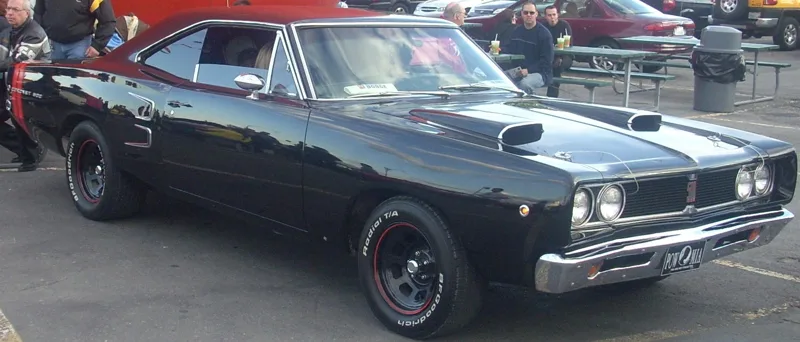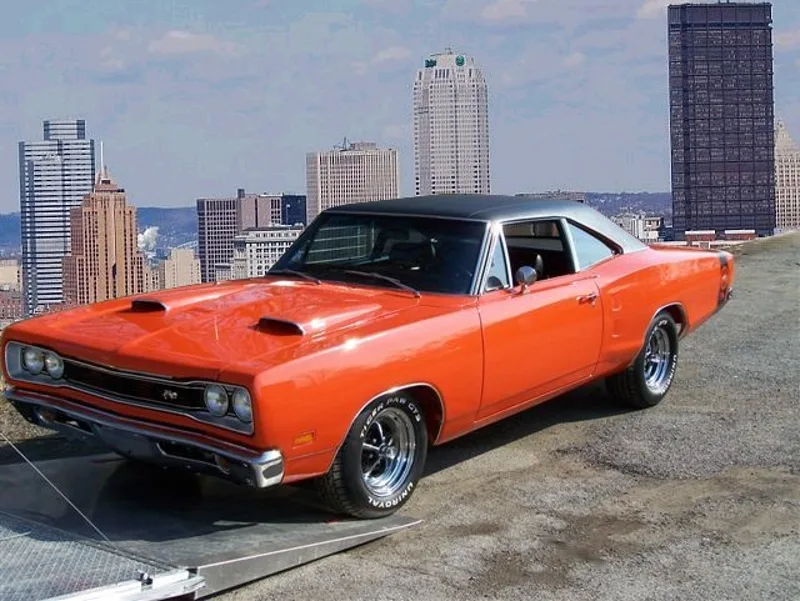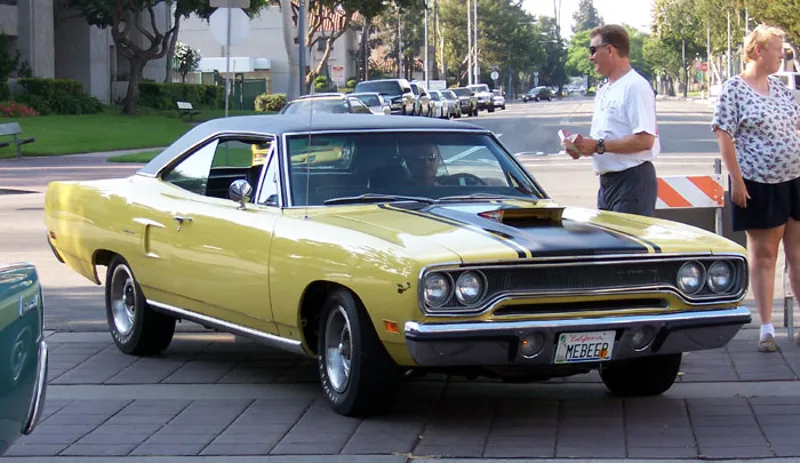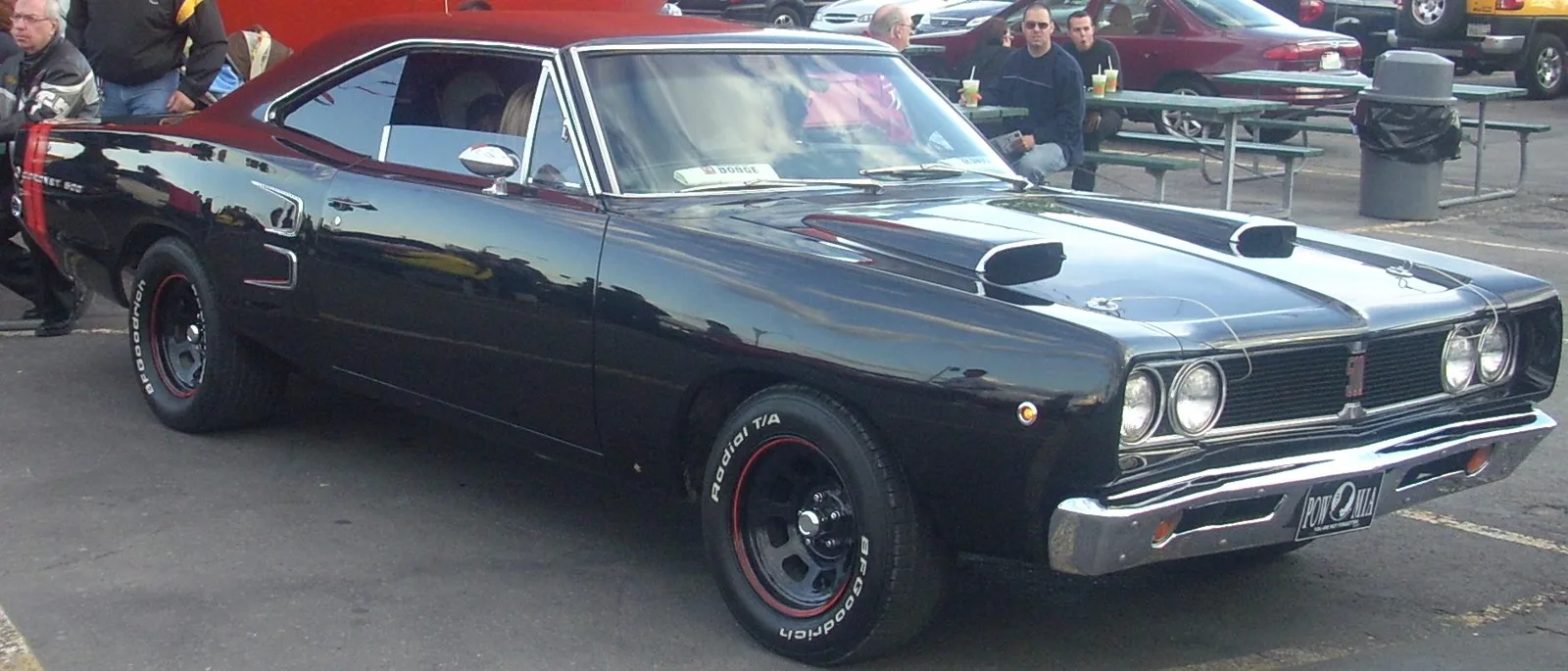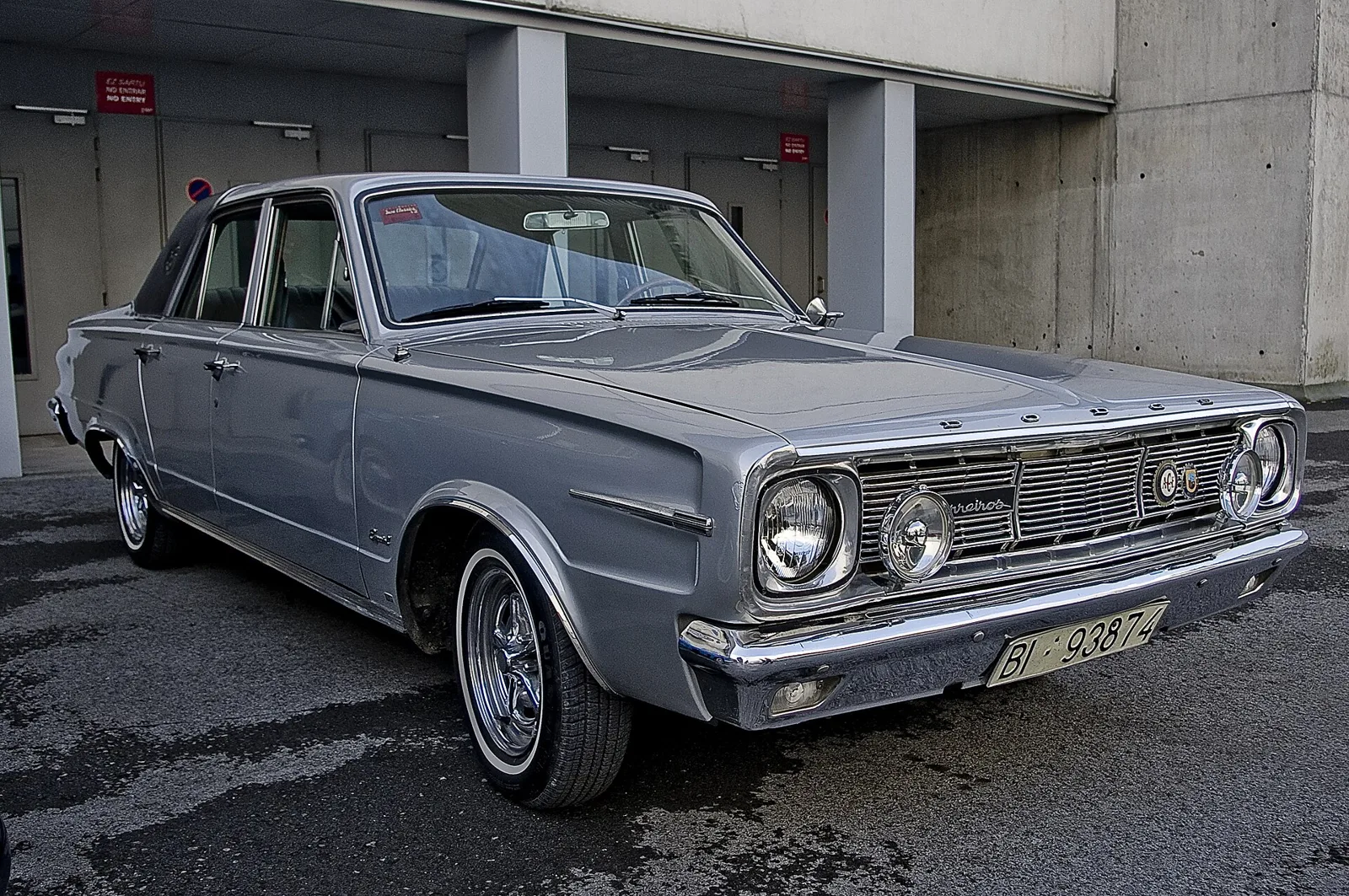
Barreiros of Madrid began by assembling an American design from imported parts, then reworked the car with Spanish details as Chrysler took control of the company.
The Dodge Dart built in Spain was a segment F saloon made by Barreiros between 1965 and 1971. It began with imported American parts, but production became almost completely Spanish within a year, and it offered petrol engines of up to 165 PS plus a diesel version known as the Dodge Diesel.
Built in Spain by Barreiros between 1965 and 1971, the Dodge Dart was an American design adapted to Spanish rules and to a small market. It used Chrysler Slant 6 engines, included a sporty GT and had a diesel version widely used as a taxi.
Why did Barreiros build the Dart in Spain?
In 1963 Eduardo Barreiros reached an agreement with the American Chrysler Corporation to manufacture cars in Spain. The first two cars were the Dodge Dart in 1965, a higher-range vehicle, and the Simca 1000 a year later.
Spanish legislation of the time required cars built in Spain to use materials and components made in the country. For the first units, however, the Franco dictatorship allowed a large and declining share of imported elements, such as chassis and bodies.
The Barreiros factory at Villaverde, in Madrid, was prepared to build the Dart and the Simca 1000 from imported parts. Some 20,000 units of chassis and bodies were brought in from the United States for these models between 1965 and 1966.
Sales were far below what that volume required. In the first year only 742 of the 1,200 Darts built were sold, in the second 6,399 of 8,000 built, and 1967 was the worst year, with just 2,745 units sold.
The poor sales produced heavy losses. In 1967 the company increased its share capital, and Chrysler became the majority shareholder of Barreiros.
An American design, put together in Madrid from imported parts and reworked for Spain.
How did the Dart change in 1969?
In 1969 Mario Gamarra, who ran design and had drawn most of the Barreiros truck cabs, proposed a new car that needed little investment and used existing parts. The result was a Dart that was Spanish at the front and, on the GT, in many other details.
Some exterior parts were changed, including the headlights, the front grille and the vinyl roof on the GT. The changes revived sales enough to use up, between 1969 and 1970, the stock of imported parts from 1965 and 1966.
Barreiros had long lacked strong national bank backing and institutional support. Barreiros was seen as a competitive rival to SEAT and ENASA, which made institutional backing hard to win. Chrysler proposed the capital increase the company needed, took over 100% of the business, and kept the whole group, including the Villaverde plants and the industrial, military and truck divisions.
The company then changed its name to Chrysler Espana S.A. The Barreiros badge disappeared from the front and rear of the Darts from the summer of 1969.
What were the 270, GL and GLE versions like?
The first Spanish Darts appeared from July 1965 as four-door saloons. The 270, or GL (Gran Lujo), was identical to the most luxurious American model, the 1965 Dart 270, and cost 323,000 pesetas. A plainer low-line version was offered for 20,000 pesetas less.
Most 1965 cars were ivory white, a direct copy of the popular Ivory White of Mopar in those years. They could also be black, dark navy blue, or a burgundy shade taken from the cabs of the Barreiros trucks. In January 1966 the front and rear were changed to match the American 1966 Dart, with skirt-type bumpers that were very fashionable in the United States at the time.
Initially all the mechanical groups came from the United States, but production was nationalised almost completely within a year. From 1966 just two American mechanical items remained: the engine blocks and the Holley carburettors. The sheet metal always came from America for every Spanish Dodge, while the bodies were assembled and painted in Spain.
Metallic turquoise and dark blue colours came in two-tone lacquers that year, and the colour range grew. The Spanish 1966 model hardly differed on the outside from the American car, but inside it clearly surpassed it, with better seats whose backrests adjusted and reclined, and with armrests at the front and rear.
The Station Wagon always had GL trim, and almost all of its parts were already made in Spain.
In June 1966 the GLE arrived as a Gran Lujo Especial package. It added air conditioning built into the instrument panel by means of keys, leather upholstery, a four-speed floor gear lever through the fully synchronised Mopar A-833 transmission, and a longer 2.93:1 differential, along with tinted windows and more trim.
The engine was built in Spain: a six-cylinder inline unit with about 150 PS (148 hp; 110 kW). The brakes used a Hydro-vac Bendix servo fitted as an add-on, and although they were drum brakes on all four wheels they bit hard at low speed, which caused several incidents until drivers learned to use them with care. On long descents the engine braking in second gear was unavoidable, though rival brakes of the time were even more precarious.
How did the seating and the Station Wagon work?
The Station Wagon was announced in November 1966 but went on sale only in February or March 1967. It came as standard with a tailgate whose frameless glass could be lowered or raised electrically from a distance, with the car moving or stationary.
The 270 and GL had their gear lever on the steering column, with three synchronised speeds, and the 270, GL and GLE had a bench front seat that could carry three people. With only two travelling, a large folding armrest took the central front place, which allowed up to seven people to be carried legally.
Air conditioning was optional. Ventilation flaps at the side of the front passengers' legs let air into the whole cabin without lowering the windows, a feature that every Dodge model of the period carried, including the later 3700.
To open the Station Wagon's tailgate the glass had to come down first. That could be done from inside with a small lever labelled WINDOW on the dashboard, or from outside by inserting the key and turning the cylinder, which lowered the window electrically.
A beam switch on the floor, to the left of the clutch, was another odd detail. It continued in use even in the early series of the successor, the 3700.
How did the 1969 line and the GT differ?
The 1969 line of GL, GLE, Station Wagon and GT kept the third-generation bodywork but received a noticeable Spanish touch-up, inside and out. The range had a vinyl roof and rectangular headlights from the new 1969 Barreiros truck cab, and the GT stood furthest from its American sibling.
The new GT was the great novelty of the line. A new Carter twin-barrel carburettor and a faster camshaft lifted its output to 165 PS (163 hp; 121 kW). Its braking was also much improved, with two generous ventilated front discs, four-piston Kelsey Haines calipers, a Master-vac Bendix brake servo and a dual-circuit system.
The four-speed floor lever had been optional on the GL and Station Wagon from 1966, and it was standard on the GLE and on the new GT. On the GT the third front seat gave way to a centre console.
The GT also received a new front anti-roll bar and an exclusive black front grille. Inside, bucket seats, a centre console of leather and stitched vinyl with wood, and a sporty dashboard of round dials on a wood panel gave it a clearly grand-touring feel.
The GT came in three colours: a slightly dark bright red called Veronica red, a metallic grey called Almaden silver, and black. Air conditioning remained optional.
The GT 3700 built in 1969 and 1970 kept the 3.7-litre Slant-6 but fitted a Carter BBD 4300 S twin-barrel carburettor, which added about 15 PS (11.0 kW). It came with air conditioning as standard, a fully vinyl-covered roof and front disc brakes. Inside were black leather seats, a wooden centre console and a complete instrument panel.
What was the Dodge Diesel?
The Dart Diesel, sold simply as the Dodge Diesel, launched in 1969 and used the Barreiros C-24 engine of 2,007 cc (2 L; 122.5 cu in) producing 60 PS (59 hp; 44 kW). It was widely used as a professional taxi and cost 229,800 pesetas.
The diesel was distinguished from the rest of the 1966-line cars by using the same rear lights as the first-generation Simca 1000. Its fuel use was 8 L/100 km (12.5 km/L; 29.4 mpg-US) in town and 6 L/100 km (16.7 km/L; 39.2 mpg-US) on the road.
On the flat it reached a maximum of 125 km/h (78 mph). It handled urban and inter-urban traffic well, but it did not cope with steep gradients and was not a version suited to long journeys.
What are the Dodge Dart (Spain) specifications?
Across the range the Dart used a Chrysler Slant 6 petrol engine in the 270, GL, GLE and GT, with about 150 PS in the standard cars and 165 PS in the GT. The Dodge Diesel used a Barreiros C-24 with 60 PS.
| Specification | Detail |
|---|---|
| Production | 1965 to 1971 |
| Maker | Barreiros, Villaverde, Madrid; Chrysler majority shareholder from 1967 |
| Petrol engine | Chrysler Slant 6, 225 cu in (3.7 litres) |
| Standard output | Almost 150 PS (148 hp; 110 kW) |
| GT output | 165 PS (163 hp; 121 kW) |
| Diesel engine | Barreiros C-24, 2,007 cc (2 L; 122.5 cu in) |
| Diesel output | 60 PS (59 hp; 44 kW) |
| Diesel fuel use | 8 L/100 km in town, 6 L/100 km on the road |
| Diesel top speed | 125 km/h (78 mph) on the flat |
| Price, 270 (1965) | 323,000 pesetas |
| Price, Dodge Diesel | 229,800 pesetas |