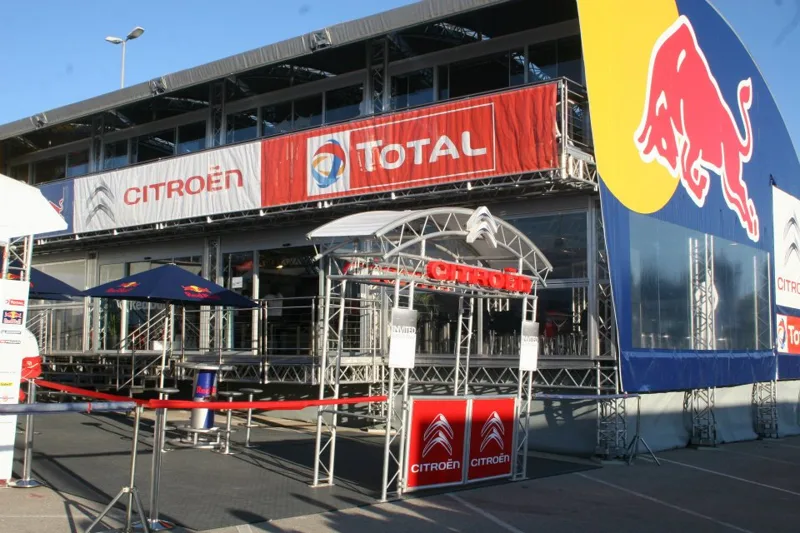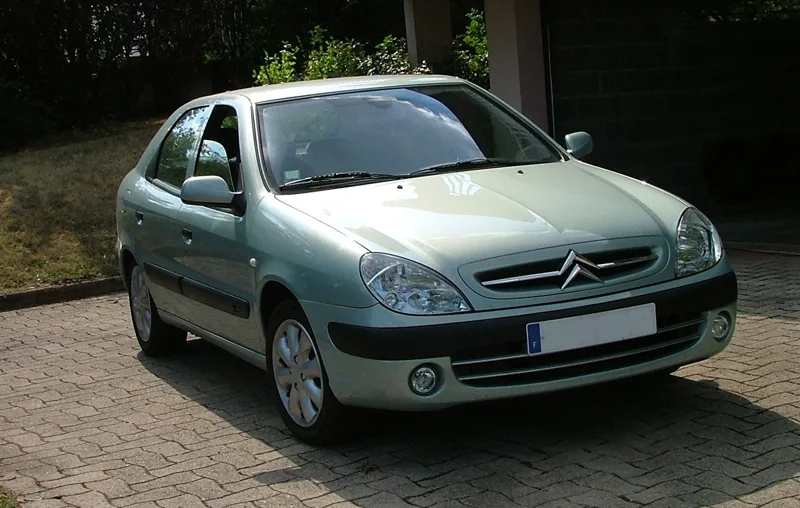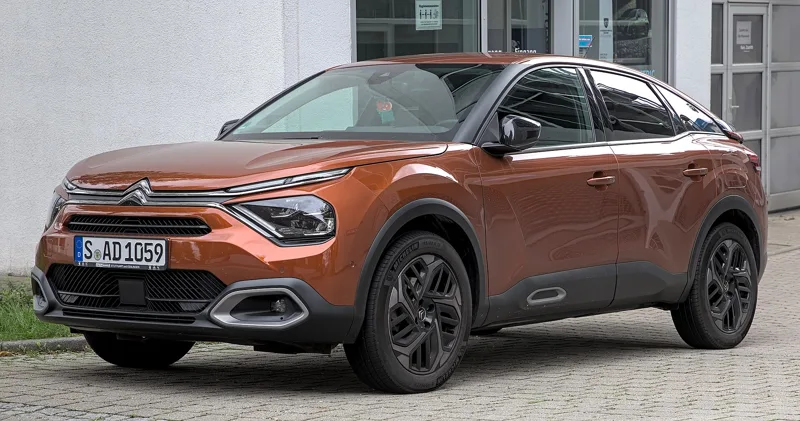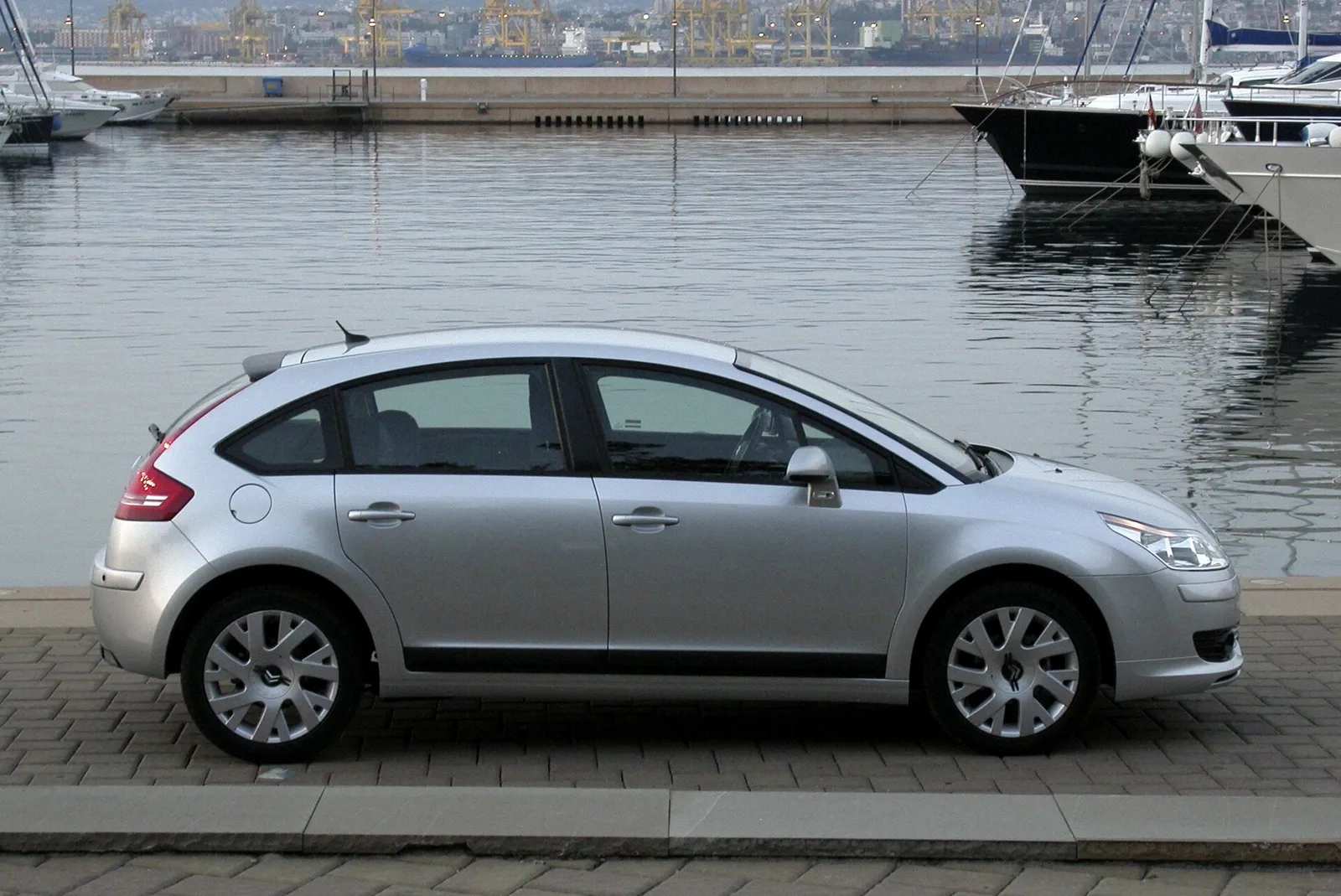
The 2004 Xsara successor, its 2008 facelift and the C4 WRC rally car, which won 37 WRC events.
The Citroen C4 was a compact family car that replaced the Xsara from November 2004. It began as a five-door saloon and three-door coupe, later gained four-door and people-carrier variants, and total production reached 2,300,000 units. Its rally version, the C4 WRC, won 37 events.
Citroen's C4 arrived in late 2004 to replace the Xsara, and it came in five-door, coupe and later saloon and people-carrier forms. Between November 2004 and July 2008 about 900,000 units were sold, and the C4 WRC rally car went on to win 37 events between 2007 and 2010.
Where did the C4 come from?
The C4 project, with the internal code B5, began in 1998 with a mock-up of a concept car called the C4 Volcane, built by Citroen designer Marc Pinson. The concept was due to appear at the Frankfurt show in 1999, but in July 1999 management cancelled the public presentation and used the car as the base for the Xsara's successor.
The Volcane only reached public view in 2009, at a meet for Citroen cars. The production car was drawn by a team of stylists under Jean-Pierre Ploue and presented officially in July 2004 as a five-door saloon and a three-door coupe.
A concept car cancelled at the last minute became the base for a family car built in the millions.
How did the C4 differ from the Xsara and ZX?
The C4 dropped the self-steering rear axle used on its predecessors, which was judged too lively. Its profile was tuned to maximise interior volume, especially at the rear, and the five-door version reached a drag coefficient (Cx) of 0.29.
The dashboard put much of its information in the centre in people-carrier style, which coupe buyers were not keen on. The steering wheel had a fixed hub, and a liquid-crystal speedometer recalled the one in the Citroen BX Digit. The digital rev counter sat in front of the driver and turned red as the engine neared its top speed.
The six-speed automatic was first offered only on petrol versions, including the 1.6-litre VTi 120 PS. It reached HDi diesels during 2006, and the C4 1.6 HDi 110 brought a new automated gearbox, the BMP6. Its sport mode cut the upshift time to 0.4 s, against 0.8 s normally, and it was more efficient than the Sensodrive of the C2 and C3, though less smooth than Volkswagen's two-clutch DSG.
What did the 2008 facelift change?
The facelifted C4 debuted at the Moscow show on 26 August 2008, with changes to the outside, the inside and the engines. A new bumper made the car 15 mm longer and came with a single air intake, a rounded bonnet and pinched chevrons.
Inside, the car gained new upholstery and grained trim on several parts, and the rev counter moved onto the central dashboard. The MyWay navigation system now worked with Bluetooth, and a USB box let portable players connect.
Petrol buyers got new VTi 95 and 120 engines plus a THP 150 developed alongside BMW. The 2-litre (122.0 cu in) HDi diesel introduced the coming Euro 5 standard, and the car switched to very low rolling resistance tyres.
Which engines and trim levels did the C4 offer?
The C4 was offered with eight engines and four trim levels on the saloon, and two on the coupe. Petrol choices ran from a 1.4 16V of 88 PS with variable inlet cam timing up to a 2.0 16V of 138/141 PS, and only the coupe was offered with a 177 PS 2.0 16V.
Engine codes tell the same story. The 1.4 16V carried the code ET3J4 and used variable inlet camshaft timing, the 1.6 16V was TU5JP4, and the 2.0 16V came as EW10J4 or EW10A. The 177 PS version, EW10J4S, was reserved for the coupe.
The saloon's trims were Attraction, Confort, Pack Ambiance and Exclusive, and the coupe's were VTR and VTS. The Exclusive trim brought ESP and a tyre pressure warning, plus front parking help and 17-inch alloys, along with small exterior touches such as chrome strips on the bumpers.
Certain features were restricted to the upper trims: the AFIL seat that buzzes when the car crosses a solid line, the cornering headlamps and the under-inflation sensor. A cartridge air freshener sat in the central vent, and three fragrance cartridges came with each new car.
The saloon's engine line-up grew with the trim. The Attraction and Confort saloons used the 1.4 16V 90 PS, the 1.6 HDi 92 PS and, in Confort, the 1.6 VTi 120 PS. Confort also listed the 1.6 HDi 110 PS with FAP, in both manual and automated forms, and the Ambiance pack added a 2.0 HDi 138 PS with a six-speed manual. The Exclusive trim topped the list with the 2.0 16V 143/138 PS petrol and a 1.6 THP 140/150 PS.
The coupe's VTR trim started with a split rear bench, three folding head restraints, a CD RDS MP3 audio system, front, side and curtain airbags and 16-inch steel wheels. The Bluetooth hands-free pack, ESP and a panoramic glass sunroof were options. The VTS added an opening rear window, a two-tone horn, a luggage net, front and rear parking assistance and 17-inch alloy wheels as standard.
The C4 Bioflex was a flex-fuel version that ran on fuel made from farm produce. Its 1.6-litre engine produced 82 kW (111 PS; 110 hp), and it shared the same trims and equipment as the rest of the range. Compared with a standard C4, it cut CO2 emissions by 5% on the combined cycle.
| Specification | Detail |
|---|---|
| Launch | Official presentation in July 2004; replaced the Xsara from November 2004 |
| Bodies | Five-door saloon and three-door coupe at launch; later saloon and people-carrier forms |
| Drag coefficient | Cx of 0.29 on the five-door version |
| Petrol engines | 1.4 16V 88 PS; 1.6-litre (97.6 cu in) 16V 110 PS; 2.0 16V 138/141 PS; 2.0 16V 177 PS on the coupe |
| Gearbox | Six-speed automatic; BMP6 automated manual on the C4 1.6 HDi 110 |
| Fuel use | 4.4 l/100 km minimum combined (64.2 mpg-imp; 53.5 mpg-US) |
| Bioflex | 1.6-litre engine producing 82 kW (111 PS; 110 hp), CO2 cut by 5% on the combined cycle |
| VTR coupe price | From EUR 18,750 |
| VTS coupe price | From EUR 22,150 |
| Production | 900,000 sold from November 2004 to July 2008; 2,300,000 by the C4 I's retirement in 2016 |
| Facelift | Moscow premiere on 26 August 2008; bumper 15 mm longer |
How did the C-Triomphe and C-Quatre fit in?
In 2003 Pininfarina's design centre was tasked with designing the rear of the four-door, longer-wheelbase version. China received a local version called the C-Triomphe, with a 2.71 m (106.7 in) wheelbase that stretched the length from 4.26 to 4.77 m (14.0 to 15.7 ft) and added 200 l of boot space, taking it to 580 litres.
Production of the C-Triomphe began at the end of April 2006, and the commercial launch followed the next month. The planned 50,000 cars a year was never achieved. The best year was 2007, with 31,314 vehicles, and output stopped in 2012 after fewer than 75,000 vehicles had been built in China.
South America got its own version, the C4 Pallas, which ran from 2007 to 2013 out of the Buenos Aires plant. In Europe, except Hungary, the C4 Pallas was simply renamed the C4 Sedan, and it launched in the southern markets of Spain and Greece only in 2008.
In September 2008 Citroen presented the C-Quatre, a five-door built in China for the local market. The coupe was also sold there, but it was imported from France and kept its name. In April 2009 a four-door C-Quatre Sedan appeared at the Shanghai show. It had a different rear from the C-Triomphe and an ordinary wheelbase, yet it enjoyed far greater commercial success.
A rugged-looking C-Quatre Cross, based on the five-door body, arrived at the end of 2011. A 2012 facelift gave the C-Quatre a new front recalling the C4 II, and from 2014 a VTS with quadruple exhaust outlets carried a 2.0-litre (122.0 cu in) engine with 147 PS. The sedan's production stopped in 2016, one year after the five-door, whose volumes were about ten times lower.
The C4 Sedan was officially sold in the French overseas territories but not in mainland France or Corsica, although private importers brought a few units in. Two petrol engines were offered at launch, a 1.6i 16V of 110 PS and a 2.0i 16V of 143 PS, and the 2010 Sao Paulo show saw a Brazilian show car called the Citroen C4Pallas.com.
Did the C4 sell well?
Between November 2004 and July 2008 about 900,000 C4s were sold. Total production reached 2,300,000 units by the time the C4 I was retired in 2016.
Sales in China were different. The C4 Sega, a 2015 facelift of the C-Quatre Sedan, had 102,597 units built from 2015 to 2019. That number trails the four-door C-Quatre, its predecessor, which outsold it in 2012 alone.
How did the C4 WRC perform?
The C4 WRC was first tested in 2004, but PSA announced the withdrawal of both its teams from the World Rally Championship at the end of 2005, the project became stillborn. Once WRC regulations changed, with lower costs in particular, Citroen could announce a return for 2007 with the C4.
Its engine was a 2-litre (122.0 cu in) turbo, held back by a 34 mm restrictor, and it made 350 PS, with a six-speed sequential gearbox and paddles behind the steering wheel. Sebastien Loeb developed it through 2006, then won on his first outing, the 2007 Monte Carlo, ahead of team-mate Daniel Sordo.
Loeb claimed the 2007 drivers' crown, and by the close of 2008 Citroen had taken the manufacturers' championship. Loeb, who won 11 of the 15 rallies, took a fifth consecutive world title with Daniel Elena as co-driver. BF Goodrich rubber had been seen as an edge for Citroen in 2007, but in 2008 Pirelli was the only supplier, so the wins came on equal terms.
In 2009 the same trio won again. Loeb and Elena took eight rallies in 2010, the final year of the car, while Sebastien Ogier added two more in a C4 WRC. Over 2007 to 2010 the C4 WRC won 37 events, four drivers' and co-drivers' titles and three manufacturers' titles.
What special editions were made?
Citroen launched the C4 by Loeb in 2006 as a limited series celebrating Sebastien Loeb's rally success. Based on the Ambiance Pack and VTS trims, it used engines from 110 to 150 PS and carried design details that hinted at the C4 WRC.
The 2006 series came in Aden red or Obsidian black, with 17-inch Resolven alloys and a body-coloured spoiler and wing. Inside, Alcantara sport seats wore the Citroen badge on their headrests, and dual-zone air conditioning stopped being standard, except on the VTS.
A second C4 by Loeb arrived on 2 February 2009 to mark Loeb's fifth WRC title. It came in Aden red or Perla Nera black, with large door stickers and 17-inch Pastenague alloy wheels in Banquise white with red cabochons and chrome chevrons.
Where did the C4 appear in video games?
The C4 appears in a number of video games, most often in its WRC form. Titles include Forza Motorsport 3 and 4, Gran Turismo 5 and 6, Colin McRae: Dirt, the Dirt series and EA sports WRC.