A rally-winning hatchback, an unlucky number in China, an airbag in the roof and a crossover on a shared platform.
The Citroen ZX (1991-1998), C4 (from 2004), C4 Cactus (2014-2020) and C5 Aircross (from 2017) trace the mainstream Citroen line from small family hatchbacks to compact crossovers, with local variants built for China, Brazil and Argentina along the way, and a shared Stellantis platform for the latest C5 Aircross.
In China, Citroen could not call its big saloon the C4, because four is an unlucky number there. It became the C-Triomphe instead, longer than the European hatchback by more than 500 mm, with a built-in air freshener that let the driver choose the scent. That one detail says a lot about the cars in this story: a family of French hatchbacks and crossovers that spent three decades being adapted to the place where they were sold.
The Citroen ZX of 1991 brought the company back to the small family car class. The C4 followed it into the same territory, the C4 Cactus pushed it towards the crossover, and the C5 Aircross carried it into the compact SUV. Taken together they show how Citroen's mainstream line moved from hatchbacks to crossovers.
What was the Citroen ZX?
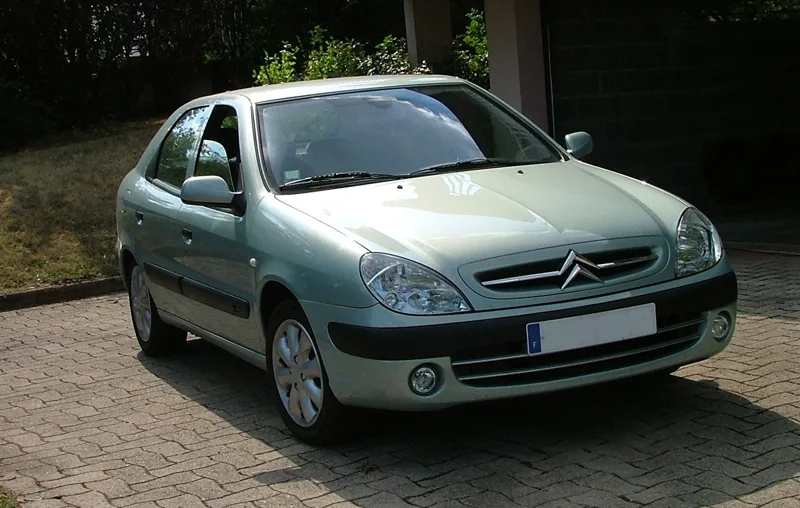
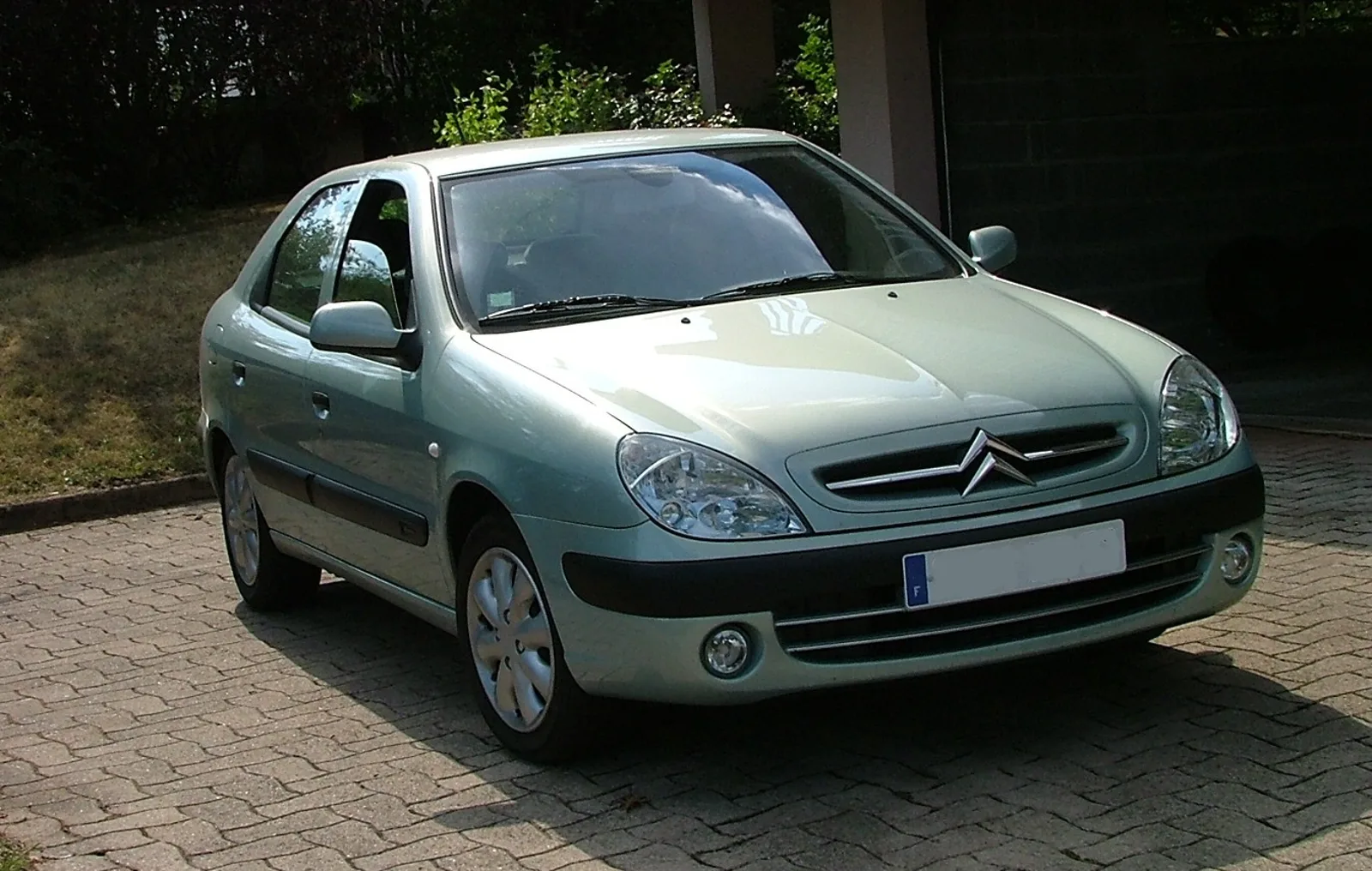
The ZX was a small family car built by Citroen from 1991 to 1998. It took on the Ford Escort and Vauxhall Astra, in a class Citroen had left in 1986 when the GSA ended, and the Xsara took over from it in September 1997.
The gap had a cause. The larger BX had sold so well after its 1982 launch that PSA delayed a replacement for the GSA, the hatchback development of the GS, which had won European Car of the Year on its 1970 launch. Development began on a new hatchback expected to carry the name FX. The ZX reached left-hand-drive markets on 16 March 1991 and Britain in May, a few months ahead of the new Astra. The target was about 230,000 cars a year, with half outside France.
Critics liked its interior space and value. The rear bench sat on a sliding platform that could move back for legroom or forward for luggage, though only the seat backs folded on some models. The chassis was conventional on paper, MacPherson struts at the front and a trailing-arm and torsion-bar rear, but Citroen's engineers added passive rear-wheel steering through specially designed bushes. At high mileages those bushes and the trailing-arm bearings could wear. The diesel and larger petrol engines were canted back to put weight behind the front axle.
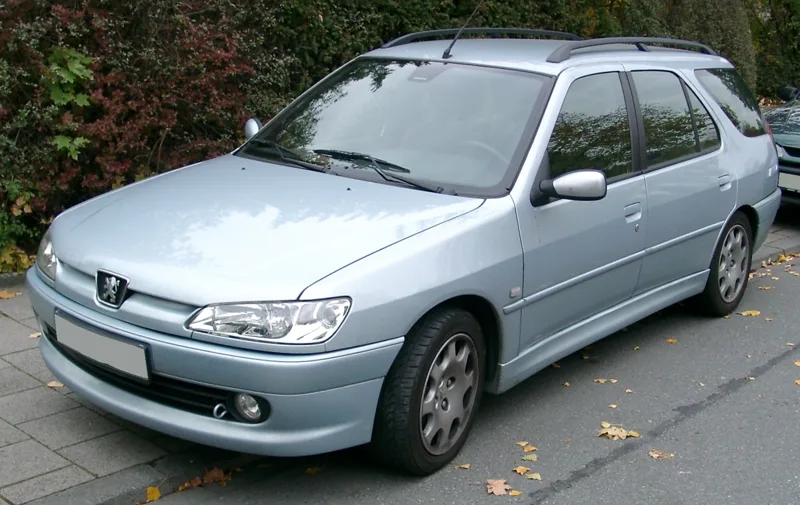
Trims came with names: Reflex for the young, Avantage for families, Aura for luxury and Volcane for the sporty, with lowered suspension. The Volcane TD ranks among the earliest diesel hot hatches. Petrol engines ran from 1.1 to 2.0 litres, with three 1.9-litre diesels, and an estate arrived in January 1994. From 1993 the Peugeot 306 also rode on the ZX chassis, and proved an even bigger success than its twin. In China the ZX was the first Citroen built there, from 1992, and spawned the Fukang and the Elysee saloon.
On the rally stage the ZX was fearsome. It won the Paris-Dakar Rally four times, with Ari Vatanen in 1991 and Pierre Lartigue in 1994, 1995 and 1996, taking 59 stage wins in all. It also took five titles in the FIA World Cup for Cross-Country Rallies, and in rallycross Kenneth Hansen took two European titles in a ZX 16V Turbo, in 1994 and 1996. The ZX Kit Car won the 1997 Spanish rally championship in the hands of Jesus Puras.
Citroen's family line moved from hatchbacks to crossovers, adapting its cars market by market along the way.
What was the first-generation Citroen C4?
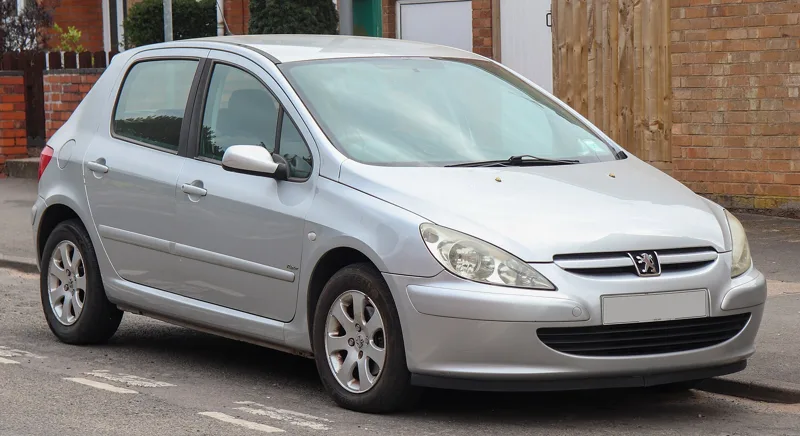
The C4 succeeded the Xsara, with production starting in September 2004. It was a compact hatchback and coupe on the platform of the Peugeot 307, and its first two generations were compact cars before the third became a crossover.
A coupe concept appeared at Geneva in 2004, and the production car was shown at the Paris show and put on sale on 2 September 2004. Donato Coco, Jean Pierre Ploue and Bertrand Rapatel were among its designers. The hatchback was rounded, with a drag coefficient of 0.28, while the coupe was more angular, with a split rear window. Boot space was 352 litres, growing to 1,200 with the rear seat folded.
Technology was the selling point. The steering wheel had a fixed hub, which made possible the first shaped driver airbag fitted to a production car, and a translucent LCD speedometer sat in the middle of the dashboard. The top model had lane departure warning, and there were directional headlights and even a perfume dispenser in the ventilation system. Hydractive suspension was reserved for the larger C5 and C6. A slim facelift at the 2008 Moscow salon brought a new grille, the 1.6-litre Prince petrol engines and an Airdream diesel pack with lower emissions.
Citroen advertised that technology with a television campaign in which the car transformed into a dancing robot under the slogan Alive With Technology. A follow-up showed a robot ice-skating across a frozen lake, and a 2007 commercial for South America was filmed in Sao Paulo. A free racing game, C4 Robot, was released on 21 April 2008.
The Argentine and Chinese saloons
The saloon version was built in Argentina and exported as the C4 Pallas to Brazil and Hungary and as the C4 Sedan to Spain, Turkey and Greece. In China, the C-Triomphe went into production in April 2006 with Dongfeng Peugeot-Citroen. It was 4,770 mm long against 4,260 mm for the hatchback, on a wheelbase of 2,710 mm against 2,610 mm, which put it among large family cars.
In 2009 a smaller and cheaper saloon, the C-Quatre, followed it at 4,588 mm long, and a hatchback C-Quatre and a raised C4 Cross appeared by late 2011. A later saloon simply named C4 was sold from 2015 to 2019 but failed, with 102,597 built over its whole career; more four-door C-Quatres were sold in 2012 alone. The C4 Picasso, from 2006, was the MPV version, in five-seat and seven-seat Grand Picasso forms, and was facelifted in 2010.
How did the second-generation Citroen C4 differ?
The second-generation C4 debuted at the 2010 Paris show and went on sale in Europe a month later. It was slightly bigger than its predecessor and offered only five doors. Citroen dropped the three-door because the old one had sold poorly and because it might have taken sales from the DS3.
The derived DS4 was presented as a more stylish and luxurious alternative. The new design was less eccentric than the old, with less rounded lines, aggressive headlamp clusters and two longitudinal ribs on the bonnet. The steering wheel no longer had a fixed hub. The boot offered 408 litres, up to 1,183 with the seats folded. A facelift followed in 2015.
What is the Citroen C4 Cactus?
The C4 Cactus is a subcompact crossover that Citroen began producing in April 2014 at Villaverde, Madrid, in Spain until May 2020. It sits on the PF1 platform of the smaller C3 and DS3, and its signature feature is a set of AirBump panels that protect the doors from car park damage.
The Cactus Concept appeared at the 2013 Frankfurt show, and the production car at Geneva in 2014. Sales started in France in June 2014, in Touch, Feel and Flair trims, with 1.2-litre three-cylinder petrol and 1.6-litre diesel engines. A planned estate, codename E32, was abandoned. Extra trims arrived in 2016, including an all-white W edition that sold slowly and was dropped. Colour choices changed, with Baltic Blue replacing Lagoon Blue in October 2016 and Platinum Grey replacing the popular Shark Grey in May 2017. In Britain about 30% of Cactus sales were black cars with black Airbumps.
The Cactus found buyers as far apart as Hong Kong, South Africa, Australia, New Zealand and South America, which made it a world car. Euro NCAP awarded it the best pedestrian-protection score in its class, because of its curved front, and it was the first passenger car to carry the front passenger's airbag in the roof lining, which allowed a larger glovebox. Awards included Top Gear magazine's Hatchback of the Year in 2014 and Auto Express's Small SUV of the Year in 2017.
The 2018 facelift added emergency brake assist, lane departure warning, traffic sign recognition and automated parking, and Citroen began to describe the car as a hatchback rather than an SUV, keeping the Airbumps but making them less obtrusive. Brazil took a different path. A version built at Porto Real from 2018 kept its roof bars, has more ground clearance and conventional rear windows that wind down, and is sold as a small SUV. It became Citroen's best-seller in Brazil and Argentina and stayed in production there after Europe stopped.
What is the Citroen C5 Aircross?
The C5 Aircross is a compact crossover SUV that Citroen has built since 2017. The concept was shown at the 2015 Shanghai show, the production version at the 2017 Shanghai show, and Europe saw it at Geneva in 2018. Production in Europe is at the Rennes plant.
It belongs to the company's Advanced Comfort programme, with a panoramic sliding roof and a suspension that uses progressive hydraulic cushions. Engines in Europe were a 1.2-litre PureTech of 96 kW, a 1.6-litre PureTech of 132 kW, and 1.5-litre and 2.0-litre BlueHDi diesels of 96 and 132 kW. In November 2019 it became the first Citroen with a plug-in hybrid system, pairing the 180 PS petrol engine with an 80 kW electric motor for around 50 km of electric range under WLTP testing. India has assembled it from kits since January 2021.
Cars for Europe and China differ mainly in engines, gearboxes and rear seats, with three individual seats in Europe and a fixed 60:40 bench in China. A facelift reached Europe in January 2022, and in China in July 2022 the car was renamed the Tianyi Beyond. CKD kits have been assembled in Russia at the former Kaluga plant since 2023 without the approval of Stellantis, which says it has lost control of its Russian entities.
The second-generation C5 Aircross
The second generation was shown as a concept at the 2024 Paris show on 14 October and unveiled in production form on 29 April 2025, with pre-orders from June and deliveries planned for the final quarter of 2025. It uses the STLA Medium platform, which also serves the Jeep Compass, the Opel Grandland and the Peugeot 3008 and 5008. Product manager Sebastien Moraux said the group chose a shared platform so that the car could offer an electric range of 500 to 680 km, and that Citroen made three trim levels and four powertrains, at a lower price than the previous model.
There is no seven-seat version, because according to Moraux seven seats would have either compromised rear comfort or lengthened the car and hurt aerodynamics. The design, led by Pierre Leclercq, has a closed front end, a 200 mm ground clearance and the first 20-inch wheels on a Citroen. Inside, plastics in the storage areas use 20% vine shoots, the car contains 160 kg of recycled metal parts, and the rear seat is now a fixed bench in place of three sliding seats. Maximum boot space is 1,668 litres. It reached European customers in October 2025 in You, Plus, Business and Max trims, and Argentina in May 2026 in Max trim only.
The four Citroen models side by side
| Model | Years | Type | Platform note |
|---|---|---|---|
| ZX | 1991 to 1998 | Small family hatchback and estate | Chassis shared with Peugeot 306 |
| C4 | From 2004 | Compact hatchback, coupe, saloon; later a coupe SUV | First generation on Peugeot 307 floor |
| C4 Cactus | 2014 to 2020 in Spain | Subcompact crossover | PF1, shared with C3 and DS3 |
| C5 Aircross | From 2017 | Compact crossover SUV | Second generation on STLA Medium |
How do the four fit into Citroen's range?
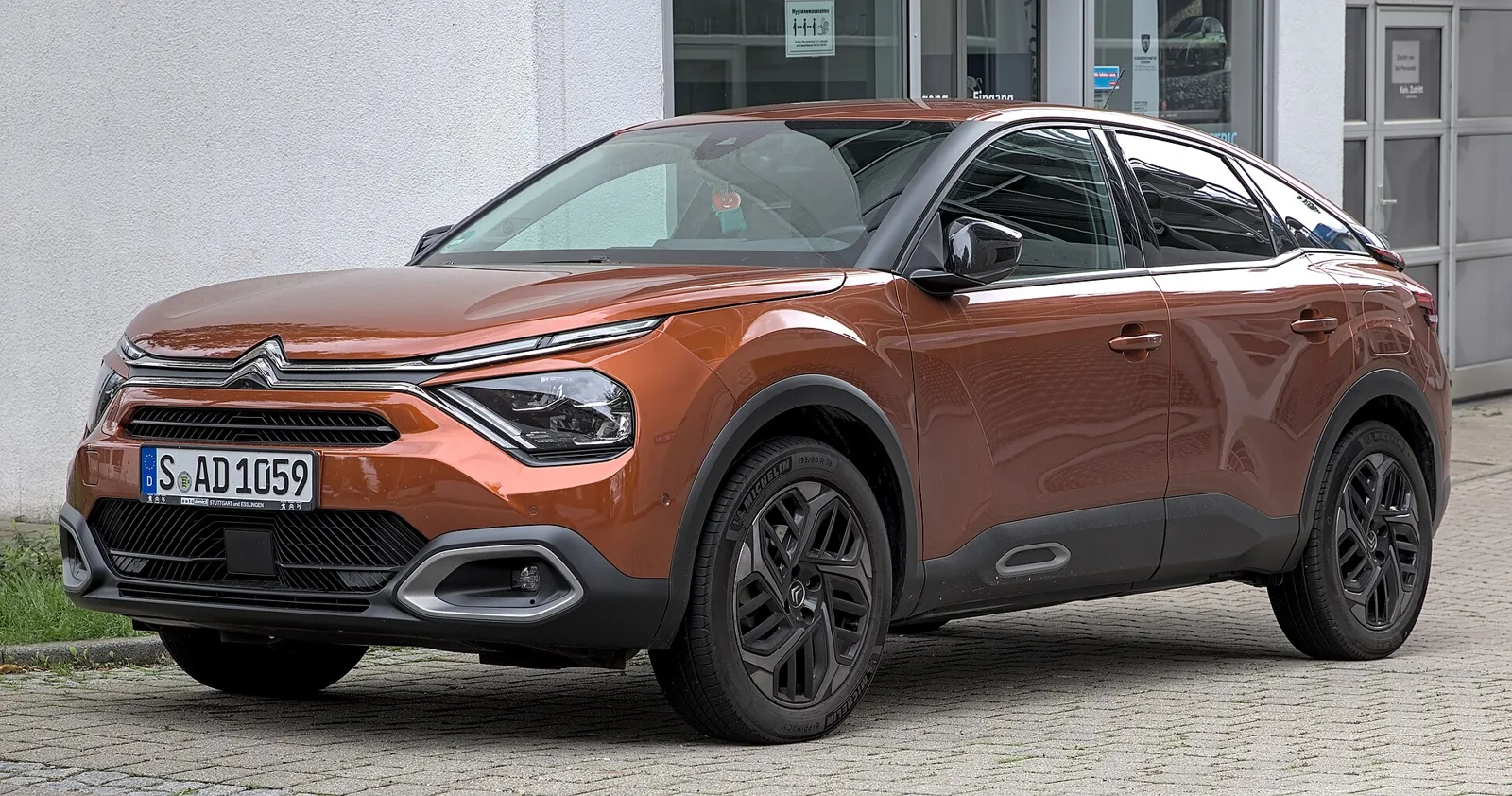
They show the middle of the range shifting from hatchbacks to crossovers. The ZX and C4 were family hatchbacks; the Cactus and C5 Aircross are crossovers. In June 2020 the third-generation C4 itself became a coupe SUV, leaving behind the traditional hatchback and saloon shapes.
The links are direct. The ZX returned Citroen to the C segment, the Xsara replaced it in 1997, and the C4 replaced the Xsara. The Cactus used the C3's platform, and the C5 Aircross moved to a shared Stellantis platform. In both Brazil and China the models also took on local forms, from the Brazilian Cactus to the Chinese C-Triomphe.