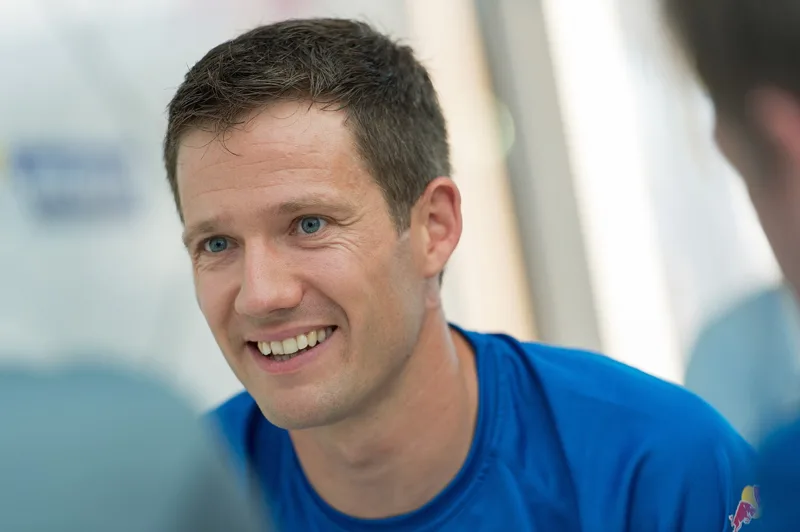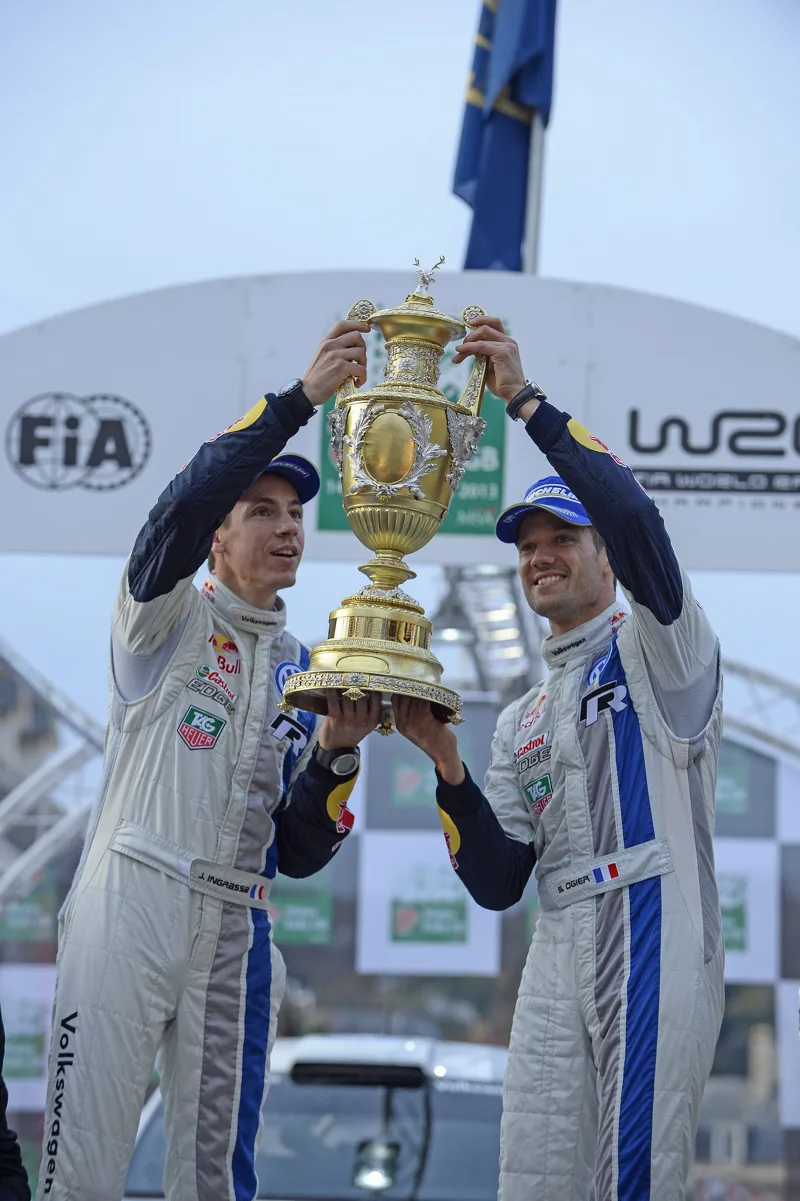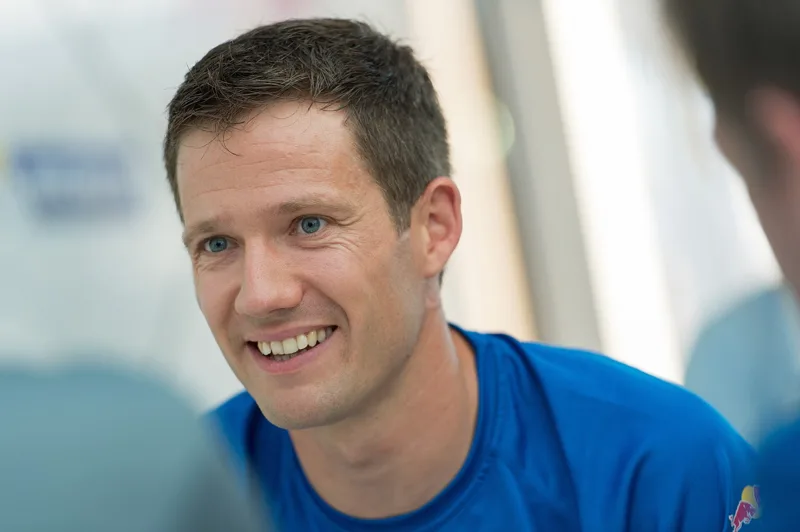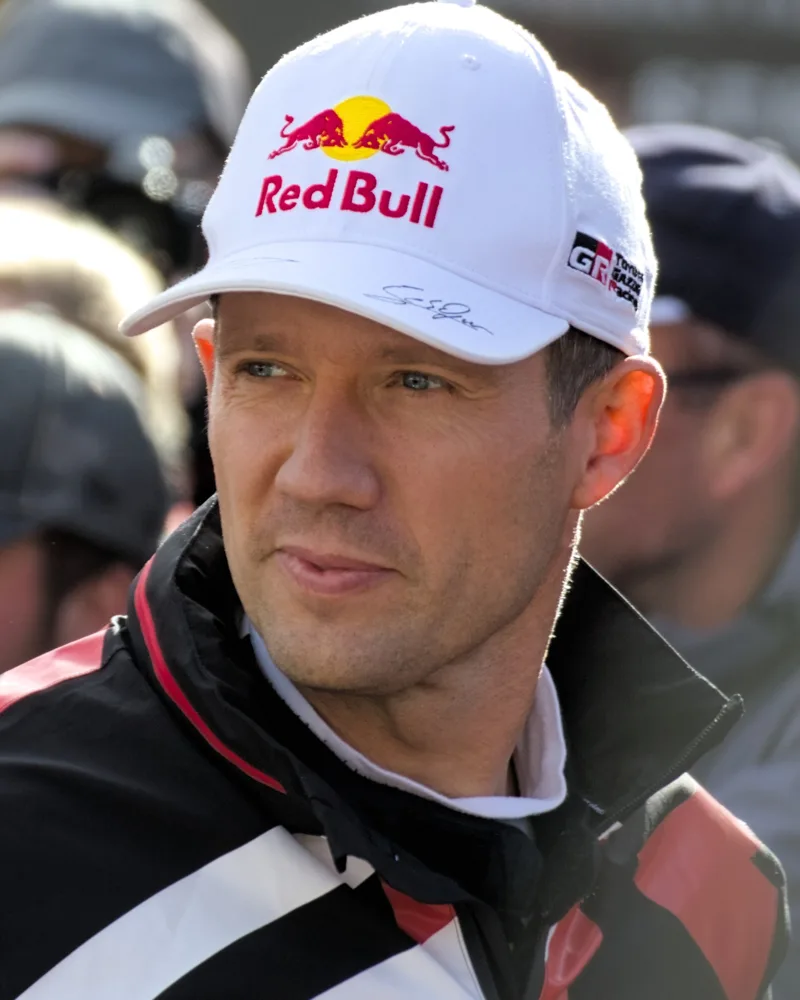
From the Xsara Kit Car of 1998 to the C3 WRC of 2019, Citroen's factory rally team won manufacturers' titles and a run of drivers' crowns with Sebastien Loeb.
Citroen's factory World Rally Championship programme ran from 1998 to 2019, with Sebastien Loeb winning drivers' titles and the team taking several manufacturers' championships. It used Xsara and DS3 cars, and it built its success around a single driver. The programme's cars ranged from the Xsara Kit Car to the C3 WRC.
The Citroen World Rally Team carried the French marque's factory effort in the World Rally Championship for two decades. Its most successful years came with Sebastien Loeb, whose drivers' titles and wins defined the team's run from 2004 to 2011.
What was the Citroen World Rally Team?
The Citroen World Rally Team was the factory-backed entry of Citroen into the World Rally Championship, run by Citroen Racing. Its story runs from the Xsara kit cars of 1998 to the DS3 WRC era and a final season in 2019. The team won several manufacturers' championships and many rounds with drivers including Sebastien Loeb.
Citroen's rally return began in 1998, when Citroen Sport started developing the Xsara Kit Car after its withdrawal from rally raid competition. The car first ran in the French Rally Championship with Philippe Bugalski, who won the drivers' title in 1998 and 1999, while Sebastien Loeb took the French title in 2001.
A factory crew that turned a kit car programme into titles and a decade of Sebastien Loeb wins.
How did the Xsara programme begin in the WRC?
Bugalski made the car's WRC debut at Rally Catalunya in April 1998 and finished fifth. In 1999 he won his class and the overall Catalunya and Corsica rallies, beating the more powerful four-wheel-drive World Rally Cars. The results helped persuade the FIA to ban the two-litre class and cup at the end of that season.
Citroen Sport then converted the kit cars into four-wheel-drive World Rally Cars. The owner of the company, PSA Group, blocked a full manufacturers' bid for 2001, so the Xsara T4 WRC ran only in selected rounds. Jesus Puras won in Corsica that year, and at San Remo Loeb finished second on his first rally in a WRC car.
The Xsara WRC then ran in 2002, when the team contested eight of the fourteen rounds. Loeb and co-driver Daniel Elena won the season-opening Monte Carlo Rally but were demoted to second over an illegal tyre change. Loeb did win his first rally at Rallye Deutschland that year, and the team also finished third on the Safari Rally with Thomas Radstrom.
How did the team win its first manufacturers' title?
The team's first full year in the WRC was 2003, when it signed Colin McRae and Carlos Sainz from Ford to join Loeb. The team won the Monte Carlo Rally with a 1-2-3 finish and took the manufacturers' championship, while Loeb finished second to Petter Solberg in the drivers' standings.
Sainz won the Rally of Turkey that year, while Loeb added Rallye Deutschland and Rallye Sanremo to his tally. Bugalski also drove a fourth car on asphalt rallies, which added depth to the squad. The factory had entered rallies occasionally as Automobiles Citroen before that season, so 2003 marked the start of a full programme rather than a one-off effort.
Which seasons belonged to Sebastien Loeb?
Sebastien Loeb won the drivers' championship in 2004, 2005, 2006, 2007, 2008, 2009, 2010 and 2011 with the team, a run that made him the central figure of the programme. The team also took manufacturers' titles in 2004, 2005, 2008, 2010 and 2011.
For 2004 new WRC rules limited manufacturer teams to two drivers per rally, so McRae was dropped and Loeb and Sainz stayed. Loeb won the Monte Carlo Rally, the Swedish Rally and Rally Australia among others, while Sainz won Rally Argentina and finished fourth in the standings.
In 2005 Francois Duval joined Loeb as a primary driver, but a string of poor results saw Sainz take over for Turkey and Greece. Duval took his debut win at Rally Australia that year, and Loeb went on to take the drivers' crown again.
The 2006 season was a sabbatical for the works team, which backed the semi-privateer Kronos Citroen operation instead. Loeb broke his arm in a mountain biking accident, missed several rounds and still won the drivers' title. He was replaced for some events by Colin McRae and then by Xavier Pons.
The new C4 WRC arrived in 2007 with Loeb and Dani Sordo. Loeb's record-equalling fourth straight drivers' title came at the final event, the Rally GB, after a long duel with Ford's Marcus Gronholm. At the end of that season Guy Frequelin resigned as team principal and Olivier Quesnel took over.
The Red Bull years and the 2008 season
Red Bull joined the team as its main sponsor in 2008, and the season became one of the most dominant in the programme's history. Loeb won eleven rallies, breaking the record of 10 he had set in 2005, and his career total of WRC victories reached 47. Both titles were won ahead of Mikko Hirvonen and Ford.
Sordo, still without a win, finished third in the standings on 65 points. The title battle was closer in 2009, when Loeb won the opening events, lost form in the middle of the year and then took the championship by one point after winning the final two rounds.
Sordo finished third in the 2009 standings with seven podium finishes but still no wins. The team's manufacturers' title came again in 2010, when Loeb won the drivers' crown for the seventh time in a row. Citroen Junior Team driver Sebastien Ogier won in Portugal that year, raising the pressure on Sordo.
How did the team change after 2011?
Ogier moved to Volkswagen Motorsport after 2011, and the team signed Mikko Hirvonen, released by Ford, for 2012. Loeb won the Monte Carlo Rally that year, and Hirvonen was later disqualified in Portugal over his clutch and turbo, which were deemed illegal.
In 2011 Ogier and Loeb had each taken five wins with the brand new DS3 WRC, and Loeb retained his title for an eighth consecutive time. Citroen also took the manufacturers' crown that year, and the DS3 WRC became the team's car for the next few seasons.
In 2013 Red Bull's backing moved to Volkswagen, and Citroen began a long-term partnership with Abu Dhabi Racing. Loeb's season was planned as his final WRC campaign. Sordo finally won his first WRC event in Germany that year, and Citroen was the only team to win the German rally since it joined the championship in 2002.
Kris Meeke was given a chance in Finland after a disappointing first half of the season. He was on the pace of the regulars until a high-speed roll ended his rally, and Sordo's place was under pressure as a result.
Who drove for the team in its final years?
In 2014 Mads Ostberg, Kris Meeke and Khalid Al Qassimi drove the DS3 WRC for Citroen, and the team finished second in the championship with eight podiums. That was the first year in 13 seasons without a win for the works crew.
Meeke took his first WRC victory at Rally Argentina in 2015, with Ostberg second and Al Qassimi scoring his season-best sixth place. Loeb made a guest appearance at Monte Carlo that year and briefly challenged Ogier for the win before a puncture ended his chance. Stephane Lefebvre, a protege of the team, drove for manufacturer points at Rally Australia when Ostberg was injured.
Kubica had also made a WRC car debut for the team, in Wales in 2013, but a series of rolls ended that outing early. The programme's personnel were therefore shaped by a mix of veterans, young drivers from the junior squad and occasional guests.
Why did Citroen leave the championship?
Citroen announced after the 2015 season that it would sit out 2016 to focus its resources on its 2017 car. It returned with the C3 WRC in 2019, with Ogier and Esapekka Lappi, but Ogier left at the end of the year after a performance clause, and Citroen announced it would leave the series.
The 2016 season was a sabbatical while the C3 WRC was developed. Semi-works Abu Dhabi Total WRT ran a series of European rallies with Meeke, Lefebvre, Al Qassimi and Craig Breen, keeping a Citroen presence in the field.
The reason given for the final exit was the lack of top-level drivers available to the team. That ended the brand's involvement in rally racing at the top level, and the works effort that had run since 1998 came to a close.
What cars did the team run?
The team ran the Saxo S1600 and C2 S1600 cars, the ZX and Xsara kit cars, the Xsara T4 and Xsara WRC, the C4 WRC from 2007, the DS3 WRC from 2011 and the C3 WRC for 2019. The table below sets out the main cars and the periods they were used.
| Car | First season | Notes |
|---|---|---|
| Xsara Kit Car | 1998 | Development began; French championship and WRC asphalt rounds |
| Xsara T4 WRC | 2001 | Four-wheel drive, entered in selected WRC rounds |
| Xsara WRC | 2002 | Used in part-season WRC entries, including Rallye Deutschland |
| C4 WRC | 2007 | Driven by Loeb and Sordo; record-equalling fourth straight title |
| DS3 WRC | 2011 | Ogier and Loeb took five wins each |
| C3 WRC | 2019 | Driven by Ogier and Lappi in the final season |
The move from kit cars to four-wheel drive World Rally Cars was the team's defining engineering step. Citroen Sport converted the Xsara Kit Cars in exactly that way, and the Xsara T4 and later cars built on that base.
What is the legacy of the Citroen World Rally Team?
The team's legacy rests on championship years built around one driver, Sebastien Loeb, and on a development path that moved Citroen from kit cars to the DS3 WRC and C3 WRC. Its story shows how a single star partnership can define a manufacturer's presence in rallying for nearly a decade. Loeb's 47 career WRC victories by the end of 2008 remained the marque's most visible record in the sport.
The Citroen Junior Team helped bring young talent into the programme, and the trail runs from Ogier's 2010 Portugal win through to his departure in 2019. The connection between the marque and its drivers remained central until the end.