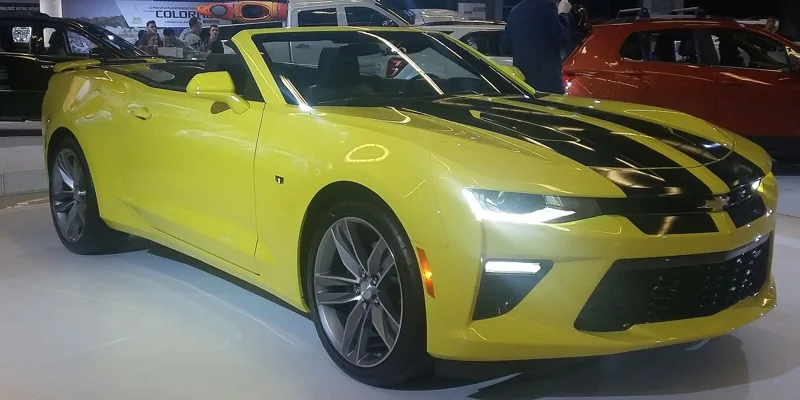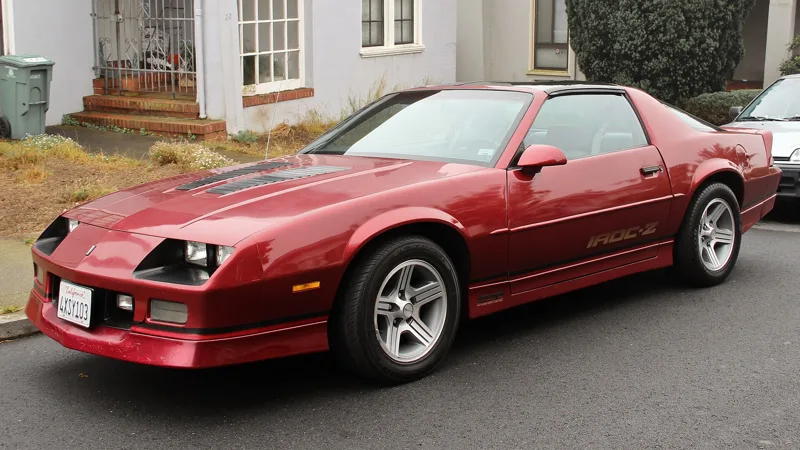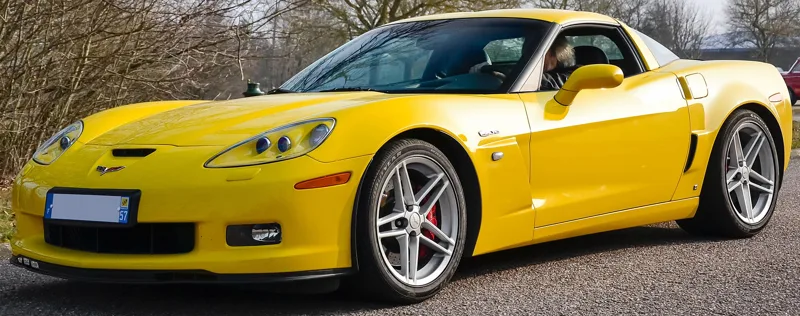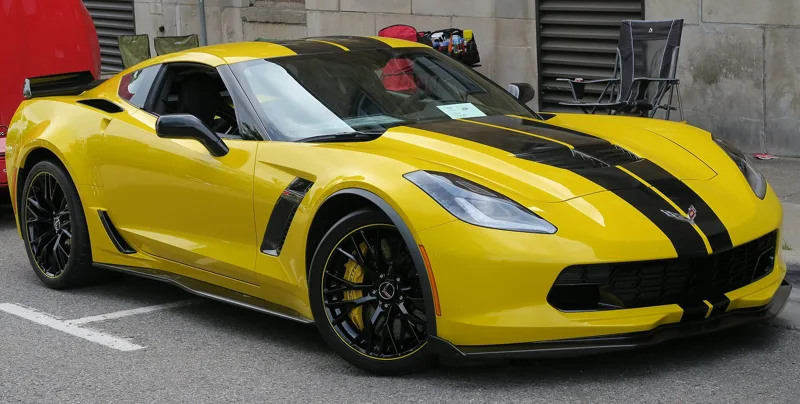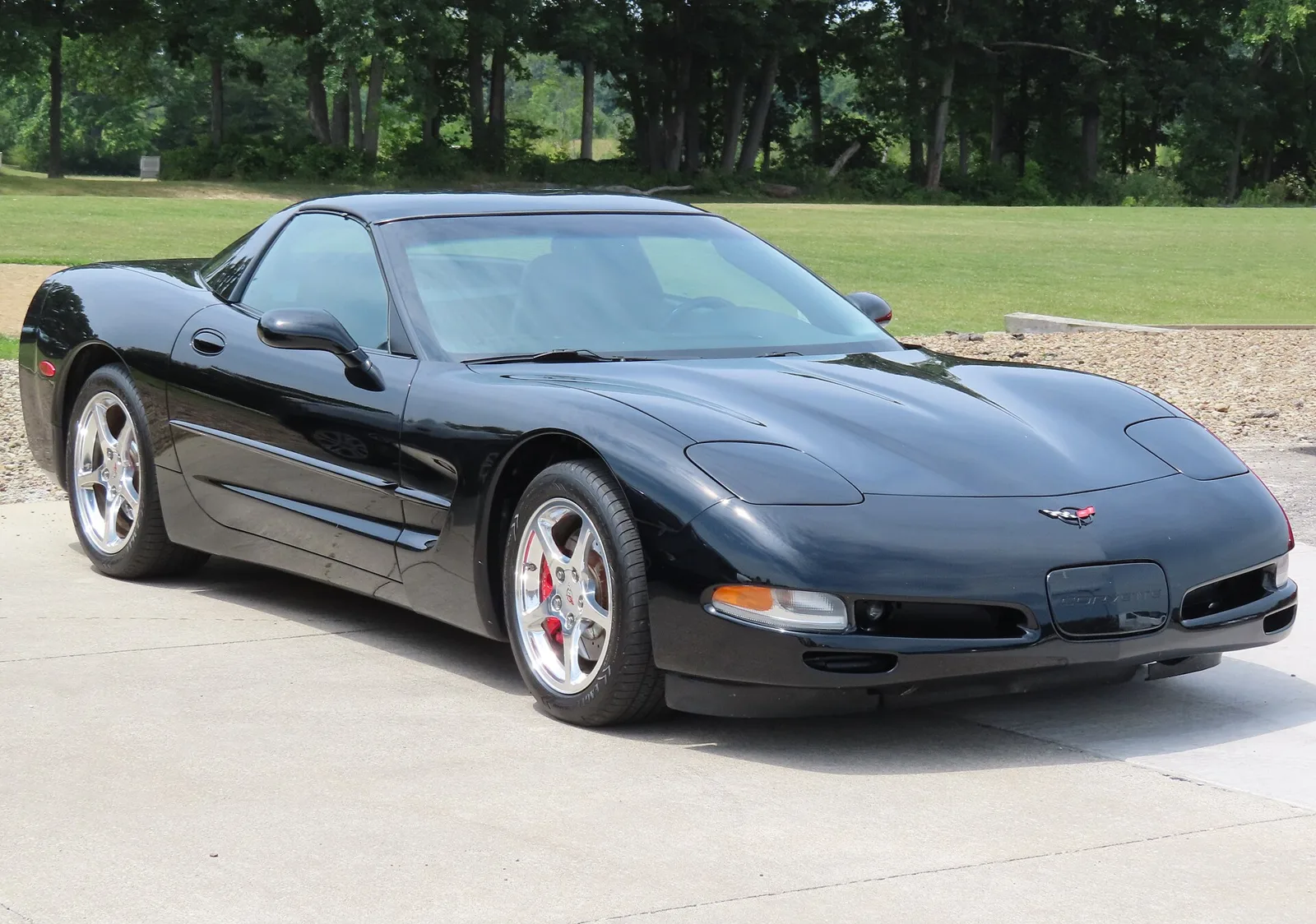
The 1997 to 2004 Corvette with an all-aluminium LS1, a 405 hp Z06 by 2002 and a C5-R that gave Chevrolet two Le Mans class wins in a row.
The Chevrolet Corvette C5 was the fifth generation of the Corvette, built for the 1997 to 2004 model years. It was the first GM vehicle with the third-generation LS engine family, and the last Corvette with pop-up headlamps. Its Z06 variant followed in 2001.
The fifth-generation Corvette was unveiled in Detroit in January 1997, years behind its planned debut. It brought a new frame, a new V8 and, by 2002, a Z06 that beat the ZR-1 in every measure except top speed. The car stayed in production until July 2004.
Why was the C5 so late?
The C5 had been planned for 1993, to mark the Corvette's 40th anniversary. Financial troubles at General Motors and changes of staff pushed the car back, and it was finally unveiled at the North American International Auto Show in Detroit on 6 January 1997.
It was a major departure from the C4. Its hydroformed box frame offered an improved structural platform, which mattered most for the convertible body.
A hydroformed frame, an all-aluminium LS1 and a 405 hp Z06 defined the fifth-generation Corvette.
How was the C5 engineered?
The transmission was relocated to form an integrated rear transaxle. It was joined to the all-new LS1 engine by a torque tube, and the arrangement gave a 50-50 front-to-rear weight distribution. The LS1 made 345 hp (257 kW) at launch, rising to 350 hp (261 kW) in 2001.
The LS1 was an all-aluminium overhead-valve V8, much lighter than the bi-metal LT1 it replaced. Its overhead-valve layout gave a much lower bonnet line than an overhead-cam engine of similar size. The C5 was the first GM vehicle to use the third-generation LS engines.
The 4L60-E automatic carried over from earlier models. The manual was replaced by a Borg-Warner T-56 six-speed, which was matched to a 175 mph (282 km/h) top speed.
The C5 was also the first Corvette with a drive-by-wire throttle and variable-effort steering, which gave more assistance at low speed and less at higher speed. It adopted tandem windscreen wipers, ending the opposed layout that every Corvette had used since 1953.
Which bodystyles did the C5 offer?
The 1997 model year offered only the fastback coupe, which was closer to a hatchback than a classic coupe. The convertible followed in August 1997 for the 1998 model year, and it was the first convertible Corvette with a trunk since 1962. The fixed-roof coupe, known as the FRC, joined the range in the summer of 1998 for 1999.
The FRC had a fixed top, a roofline and trunk space similar to the convertible, and a notchback rear window. It was the most structurally rigid body, which is why Chevrolet chose it for the Z06.
Other options included a head-up display, a popular high-tech extra. The Active Handling System arrived as an option for 1998 and became standard on all 2001 models.
How much fuel did the C5 use?
The automatic was rated by the EPA at 18 mpg-US (13 L/100 km; 22 mpg-imp) in the city and 25 mpg-US (9.4 L/100 km; 30 mpg-imp) on the highway. Manual cars managed 19 mpg-US (12 L/100 km; 23 mpg-imp) and 28 mpg-US (8.4 L/100 km; 34 mpg-imp), which kept them clear of the gas guzzler tax levied on most rivals.
Several factors helped. The curb weight stayed under 3,300 lb (1,500 kg), and Chevrolet left out the spare tire in favour of run-flats. The car had a low drag coefficient and tended to upshift into the higher gears early.
The manual's computer-aided gear shifting could force a shift from first straight to fourth in some conditions. Owners could switch it off with PCM tuning or an aftermarket device.
How did the C5 handle?
The base car had standard suspension, known as FE1, with two upgrades. The FE3 Sport Suspension was autocross-inspired and came with the Z51 package, and it was standard on the 1999 and 2000 FRC. The F45 Selective Ride Control let the driver choose Tour, Sport or Performance.
From the 2003 model year the F55 Magnetic Selective Ride Control replaced the F45. The Z06 used the stiffer FE4 suspension, which was unique to that model and had no option above it.
The suspension itself used independent unequal-length double wishbones, transverse fibreglass mono-leaf springs and optional magnetorheological dampers. The composite leaf springs were lighter and sat lower than coil springs, which helped give the car its smooth ride and low ride height.
How quick was the C5?
A composite of published figures puts the base coupe and convertible at around 4.5 seconds from 0 to 60 mph (97 km/h) with the six-speed manual, and about 13.3 seconds for the standing quarter mile at 108 mph. Top speed was around 175 mph for both transmissions, though many owners reported 180 mph or more.
On acceleration the C5 kept pace with its contemporaries, among them the Aston Martin DB7 Vantage and the Ferrari 355.
What was the C5 body made from?
The modular body panels used Sheet Molded Composite, or SMC, a lightweight material that is a type of fibreglass blended and bonded with resins. SMC is very stiff and resists denting, which gives better protection against direct impacts. Its combination of light weight and stiffness suited a modular body.
The floor boards were SMC sandwiched around balsa wood. Balsa was chosen for its stiffness, light weight and ability to absorb sound.
The European version had extra lighting. The front parking lights sat in the bumper grille beside the optional fog lamps, and the rear light turned amber, lit with the front parking lights. Side turn signals went on the fenders, and the rear fog lights sat on the bumper.
What were the C5's common faults?
Common failure points on every C5 include the hazard switch and the fuel tank level sensors, which need cleaning because of sulphur deposits from petrol. A steering column lock message is also a known problem, and an aftermarket fix exists.
Some parts are no longer made. The Electronic Braking Control Module, for example, is no longer produced by GM. Before 2001 a failing module must be replaced outright, while 2001 and later cars can sometimes have theirs serviced.
Late 2002 to mid 2003 Z06s are known for valve spring failures. The permanent fix is to replace the original yellow valve springs with redesigned GM springs or aftermarket units. Some 2004 cars also had a dual fuel tank system that was labour intensive to repair.
How did the Z06 change the C5?
The Z06 succeeded the ZR-1 in 2001, using a tuned LS1 known as the LS6, rated at 385 hp (390 PS; 287 kW) and raised to 405 hp (411 PS; 302 kW) from 2002. Its output was below the late ZR-1's, but it was lighter and far cheaper. It beat the ZR-1 in every category except top speed.
The Z06 was built only on the hardtop FRC body with the six-speed manual. Its curb weight was 3,118 lb (1,414 kg), and it was 128 lb (58 kg) lighter than a standard hatchback coupe, thanks to a titanium exhaust, thinner glass, lighter wheels and a lighter battery.
From 2002 power rose to 405 hp at 6,000 rpm, with 400 lb ft (542 N m) of torque at 4,800 rpm. The gains came from a larger air intake, stiffer valve springs, sodium-filled valves, more aggressive cam timing and a less restricted exhaust.
GM High-Tech Performance measured 0-60 mph in 3.9 seconds and the quarter mile in 11.9 seconds in October 2004. The top speed was recorded at 171 mph (275 km/h).
Which special editions did the C5 include?
The 1998 convertible was the Indianapolis 500 pace car, and its replica came in Radar Blue with yellow wheels and a black and yellow interior. The 2003 50th Anniversary Edition followed in Anniversary Red Metallic with shale leather, and the 2004 Le Mans edition marked the C5-R's one-two finish.
Pace Car Replica (1998)
The replica package, RPO Z4Z, added the Active Handling System, an electronically tuned radio with CD and Bose speakers, dual-zone air conditioning and leather sport bucket seats. It lacked the light bar and racing harnesses that the real pace car carried.
50th Anniversary Edition (2003)
The RPO Z25 package marked half a century of Corvette production. It came as a convertible or coupe, with Warm Nickel Metallic wheels and the head-up display. The F55 suspension was standard on the 1SC-equipped cars. A slightly modified version paced the Indianapolis 500 in May 2002, and the production car became the centrepiece of a 50th Anniversary Celebration in Nashville, Bowling Green and St. Louis.
Corvette Moray concept (2003)
The Moray was designed by Giorgetto and Fabrizio Giugiaro of Italdesign to mark 50 years of the Corvette. It had a 6.0-litre V8, a half-dome door window and gull-wing windows hinged at the rear pillar. It was unveiled at the 2003 Geneva Motor Show.
24 Hours of Le Mans Commemorative Edition (2004)
The RPO Z15 and Z16 package was offered on all three C5 models in 2004, celebrating the C5-R's one-two finish in class at Le Mans. It had Le Mans Blue Metallic paint and shale leather in the coupes and convertibles, with silver and red stripes optional on the Z06.
The Z06 version, called the Z16, received a carbon fibre hood and polished wheels. A total of 2,025 Z16 Z06s were built in 2004, and the VIN sequence ran from 100013 to 132518.
What did the C5-R achieve?
The C5-R was a racing car built by Pratt and Miller for GM Racing. It used the C5's basic layout but had a longer wheelbase, a wider track, an enlarged 7.0-litre V8 and exposed headlamps. It raced in the American Le Mans Series GTS and later GT1 classes, and in the Rolex Sports Car Series.
In 2001 the car won eight of ten races, among them an overall victory at Daytona's 24 Hours, and it also finished one-two in the GTS class at Le Mans. In 2002 a new transaxle replaced the separate transmission and differential, and the car repeated its Le Mans one-two against the Prodrive Ferrari 550, which led for most of the race before late problems.
In 2003 the Automobile Club de l'Ouest cut Le Mans power by 10%. At Sebring the car finished first in class and eighth overall, and at Le Mans the Prodrive Ferraris spoiled hopes of a third straight class win.
The C5-R came back to win its class at Le Mans in 2004. A Prodrive Ferrari held the lead for most of the race, until both of the team's cars ran into trouble with less than half a day left. The Corvettes finished one-two, with car No. 64 sixteen laps ahead of the lead Ferrari.
In 2005 the C5-R, by then being superseded by the C6-R, still won FIA GT races at Imola and Zhuhai with the Corvette Europe team. In 2006 Luc Alphand's team ran it at Le Mans as a non-factory entry and finished third in GT1. In 2007 Alphand ran it again at Le Mans, paired with a C6-R from Corvette Racing.
C5 specifications at a glance
| Specification | Detail |
|---|---|
| Production | 1997 to 2004 model years; ended 2 July 2004 |
| Unveiled | 6 January 1997, Detroit |
| LS1 engine | All-aluminium V8, 345 hp (257 kW); 350 hp (261 kW) from 2001 |
| Z06 engine | Tuned LS1 (LS6), 385 hp (390 PS; 287 kW); 405 hp (411 PS; 302 kW) from 2002 |
| Transmissions | 4L60-E automatic; Borg-Warner T-56 six-speed manual |
| EPA, automatic | 18 / 25 mpg-US (13 / 9.4 L/100 km; 22 / 30 mpg-imp) |
| EPA, manual | 19 / 28 mpg-US (12 / 8.4 L/100 km; 23 / 34 mpg-imp) |
| Curb weight | Under 3,300 lb (1,500 kg); Z06 3,118 lb (1,414 kg) |
| Base 0-60 mph | About 4.5 seconds, manual |
| Z06 0-60 mph | 3.9 seconds (GM High-Tech Performance, October 2004) |
| Z06 quarter mile | 11.9 seconds |
| Z06 top speed | 171 mph (275 km/h) recorded |
| Z16 production | 2,025 built in 2004 |