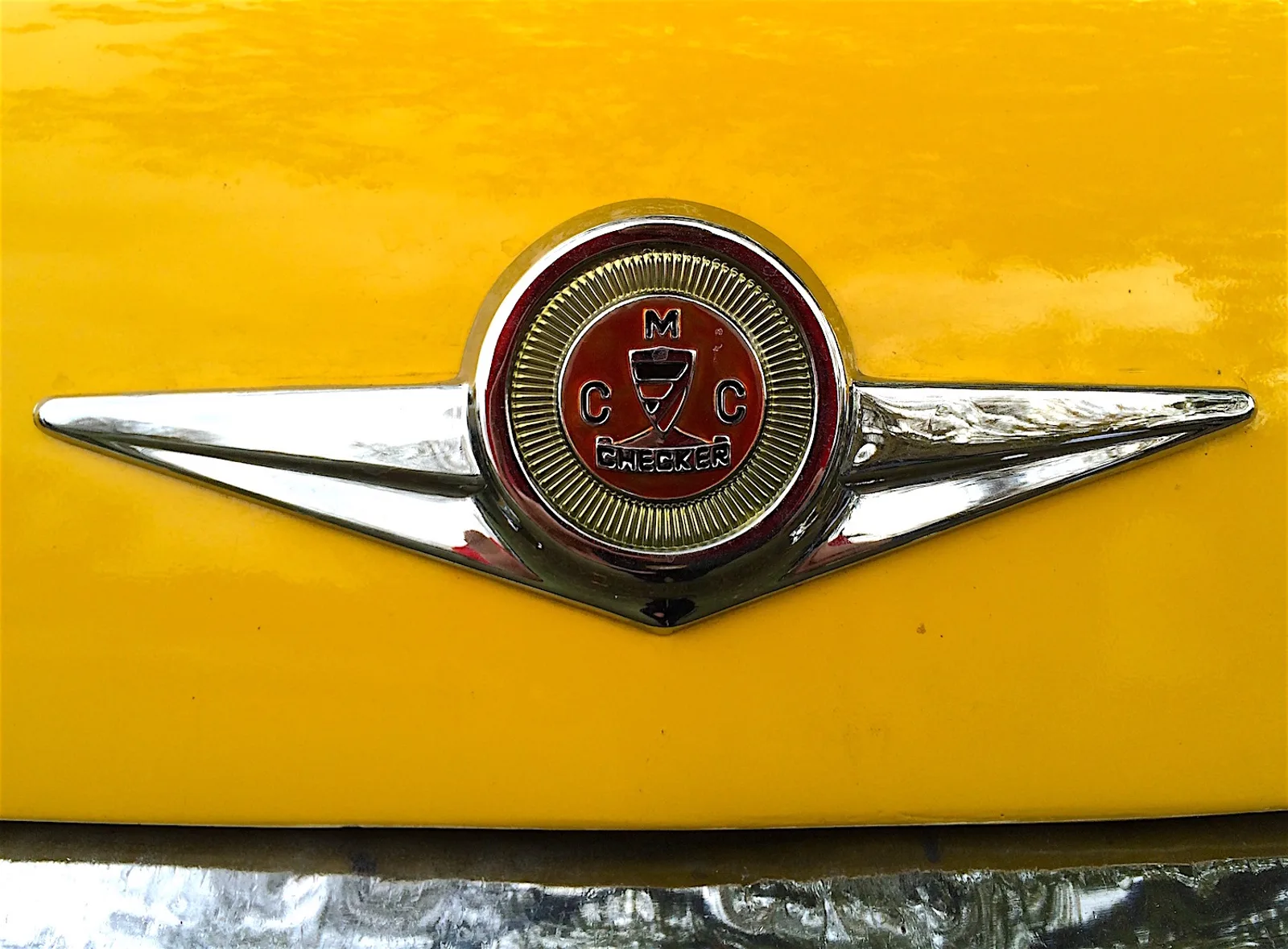
The Kalamazoo taxi maker built its business on tough cabs, fleet sales and a checkerboard livery, and kept its basic car until 1982.
Checker Motors built taxicabs in Kalamazoo, Michigan, from 1922 to 1982, and its durable cabs became a fleet staple. The company later became a parts supplier and filed for Chapter 11 bankruptcy protection in January 2009 after its sales collapsed.
Checker Motors Corporation built taxicabs in Kalamazoo, Michigan, from 1922 until its last car left the line on July 12, 1982. The cabs were prized for toughness in heavy fleet service, and the company later survived as a parts supplier before filing for bankruptcy in January 2009.
How did Checker begin in 1922?
Checker grew out of a 1922 merger between Commonwealth Motors and Markin Automobile Body, the firm controlled by Morris Markin. The new business was first called the Checker Cab Manufacturing Company and was based in Chicago before moving to Kalamazoo in 1923. Its taxis were purpose-built from the start.
The roots ran back to 1919, when Commonwealth Motors introduced the Mogul Taxi. Its body came from Lomberg Auto Body, which defaulted on a $15,000 personal loan from Markin. Commonwealth itself entered bankruptcy in late 1921, and Markin's company absorbed what remained.
Checker began building the Model C on June 18, 1922, and a Mogul variant, the Model H, followed later that year. Markin is credited with the signature checkerboard trim along the beltline, which became the company's visual trademark.
The Kalamazoo factory opened on June 23, 1923, in buildings that had belonged to Dort and Handley-Knight. Bodies were built at the former Dort works and then carried to the old Handley-Knight plant, where chassis were assembled and joined together.
Checker built its business on durable cabs, fleet sales and a checkerboard livery that the streets came to know.
How did the taxi business shape Checker?
Checker's business rested on taxi operators. Markin gradually bought the Chicago operator Checker Taxi during the 1920s, then acquired Yellow Cab from John D. Hertz in 1929. Operators bought Checker cabs in volume, and between 1922 and 1928 the company sold 8,019 taxicabs.
The two operators were merged into the Parmelee Transportation Company, and that arrangement guaranteed a steady demand for Checker's cabs. The factory stayed busy through the Depression, when many carmakers were losing money.
The strategy drew government attention. The federal government brought an antitrust suit under the Sherman Act against Checker and Markin. A lower court dismissed the case, the Supreme Court reversed that decision in 1947, and the defendants won in 1948 by arguing that Checker cabs were simply better suited to taxi work than modified passenger cars. The Supreme Court upheld the verdict in 1949.
Why was the 1928 Model K a turning point?
The Model K arrived on October 4, 1928, and it was Checker's first ground-up design. It used a 127-inch wheelbase and a Buda six-cylinder, and its styling borrowed cues from town cars rather than from a converted passenger car. It was a taxi from the start.
Orders arrived quickly. Checker reported over 4,800 orders within the first month, and by January 1929 it had produced 950 units. At the end of January 1929, over 8,000 Checkers were working the streets of New York City, making Checker one of the two dominant taxi builders in the United States.
The Model M of 1930 pushed the design further. Its front fenders pointed straight ahead, its headlights sat in rectangular bezels, and its wheelbase was 5 in (130 mm) shorter than the K's. The Buda J-214 gave the M a clear step up from the K's Buda CS6, with 61.5 hp (45.9 kW) against 27.3 hp (20.4 kW).
What did the Model T, Model Y and Cord years bring?
Checker moved to eight-cylinder power in 1933 when the Model T adopted a Lycoming straight-eight. Cord acquired control of Checker that year, and the Model Y followed in 1934 with a 148 hp Lycoming inline eight. The Cord group gave the company engineering talent from its sister firms.
The Model Y was produced until 1939 and offered a long-wheelbase version with an integrated body trunk. Its styling took cues from the Auburn, the corporate sister car, although the Checker was an industrial version with taxi equipment.
The Cord era ended in turbulence. Markin's situation was complicated by a Securities and Exchange Commission investigation into Cord and Markin over Checker stock, which rose from US$7 a share in 1935 to $69 in 1936. Cord sold the Cord Corporation in 1937, and Markin bought Cord's interest in Checker that year, restoring his complete control.
Which Checker models came after the war?
After the war Checker introduced the A2 on December 15, 1946, a rear-drive taxi on a 124 in (3,100 mm) wheelbase with a Continental inline six. Its body was adapted from the Model D prototype, a front-drive design that never reached production.
The Model D had been tested hard. Two prototypes ran for more than 100,000 miles, and the taxicab spent time in real taxi service, but the front-drive car cost more to build and maintain than operators would accept. Checker then rushed a modified version of the Model A into production instead.
The A3 followed in August 1947 as Checker's first pleasure car. It added a full-width bench front seat and, for the first time, a standard trunk. Many cities had long banned trunks on taxis, so the A2 had been designed without one.
Checker introduced the A4 and A5 in 1950 and the A6 and A7 in 1953. These were updates to the A2 and A3, with larger windows and a raised roof on the A7 limousine for better rear headroom.
What did the A8 change for Checker?
The A8 of 1956 answered a New York rule that capped taxi wheelbases at 120 inches, and it brought slab-sided, boxy styling that lasted to the end of production. Its exterior panels were bolted on, so they could be replaced without special tools or welding.
Its chassis still followed the older X-frame layout, with a Continental inline six, leaf springs and drum brakes. The A8 was the basis for the consumer car that Checker would sell from 1960.
The A9 of 1958 added dual headlights and a revised egg-crate grille. Checker then began selling to the public as well, and the A10 Superba was a civilian version of the taxi with the taxi equipment removed. A wagon was sold as the A10W.
Which Checker models defined each era?
Checker changed engines and bodies in steps, and each era paired a model code with one engine family and a distinct body. Early cabs used Buda and Lycoming units, postwar cars used Continental sixes, and the company stayed with its basic layout until the end.
| Model | Year | Engine | Remarks |
|---|---|---|---|
| Model K | 1928 | Buda six-cylinder | 127-inch wheelbase |
| Model M | 1930 | Buda J-214, 61.5 hp (45.9 kW) | Wheelbase 5 in (130 mm) shorter than the K |
| Model T | 1933 | Lycoming straight-eight | Derived from the Model M |
| Model Y | 1934 | Lycoming 148 hp inline eight | Integrated body trunk |
| A2 | 1946 | Continental inline six | 124 in (3,100 mm) wheelbase |
| A8 | 1956 | Continental inline six | Built to a 120-inch taxi limit |
| A11 | 1961 to 1982 | Chevrolet 230 cu in (3.8 L) six or 283 cu in (4.64 L) V8 | Last car built July 12, 1982 |
Why did Checker stop building cars?
Checker stopped car production because the body stamping dies were wearing out, the big manufacturers were winning fleet contracts, and the company refused to fund a costly replacement. The last car left the Kalamazoo line on July 12, 1982, an A11 taxi in Chicago green and ivory livery.
Consumer sales had never been large. Individual buyers took almost 3,000 cars, or 20 percent of production, in 1962, but that share fell to 10 percent during the 1970s. Public output stayed near 1,000 vehicles a year from 1960 to 1968 and dropped to 760 in 1969.
The mechanical story followed the same arc. Continental had been losing money on each engine it sold to Checker, so Checker dropped the Continental six in 1964 and moved to Chevrolet engines. Later sedans received the Turbo-Hydramatic 400 transmission.
What were the failed replacement projects?
Checker tried to replace the design several times. The Galva project of 1974 proposed a new taxi with US Steel and Autodynamics, but it never got past the drawing board. The Volkswagen project of 1977 involved Ed Cole and Victor Potamkin, who wanted to lengthen Rabbits into taxis.
Cole died when his plane crashed near Kalamazoo in May 1977, less than 90 days after joining the company. The VW plan was dropped once the car proved unsuitable for taxi service, and a prototype was found in a former Kalamazoo dealership in 2019.
The X-body project of the early 1980s paired Checker with GM's Fisher Body division. It would have used Chevrolet Citation bodies in white, and the project produced one prototype test mule before it was dropped.
Galva II came in early 1981 with plans for front-drive hatchbacks in several wheelbase lengths, and its target weight was about 30 percent below the A11. The project was killed as well.
What happened to Checker after car production ended?
Checker became an automotive subcontractor, supplying body stampings and parts to Detroit manufacturers. Its sales reached US$61 million in 2008, but the market turned sharply, and the company filed for Chapter 11 protection on January 16, 2009.
The company had been part of a larger group for years. In 1989 the Checker group took part in a reverse acquisition involving International Controls Corporation, which owned Great Dane Trailers.
The 2008 collapse hit hard. Projected 2009 sales fell to US$34.5 million, a 43 percent drop, and the company employed about 340 workers that summer. A bankruptcy court approved a sale on June 9, 2009.
Narmco Group bought the stamping business for US$650,000, and Van-Rob bought some of the manufacturing equipment for US$950,000. The Kalamazoo headquarters sold on January 14, 2010, for just under $3 million, which marked the company's formal end.
How many Checkers survive today?
Few Checkers survive, and most of the survivors are later A11 and A12 cabs that spent their working lives in taxi service. Their numbers have thinned with every decade, which is no surprise for vehicles that spent their lives on city streets. Pre-1960 survivors are rare, with a handful held in museums.
The best-known survivor is Janie, a 1978 A11 that ran 994,972 mi (1,601,252 km) in New York City before she was retired on July 26, 1999. Janie sold at auction in 1999 for US$134,500. A sister car, Cab 804, appeared in the television show Taxi.
The Gilmore Car Museum holds the last Checker built, a 1982 A11 with under 10 miles on its odometer, and the National Auto & Truck Museum in Auburn, Indiana, acquired six cars as a donation in 2012. In Finland about a dozen Model A2 cabs survive, from 500 ex-Chicago taxicabs that the country imported for the 1952 Olympics in Helsinki.
Checker's own brochure told operators to see themselves as sellers of a commodity, and that plain pitch explains the company well. The cars were durable, unglamorous and built to run another shift the next day. Their survival owes more to ordinary toughness than to any design meant to last.