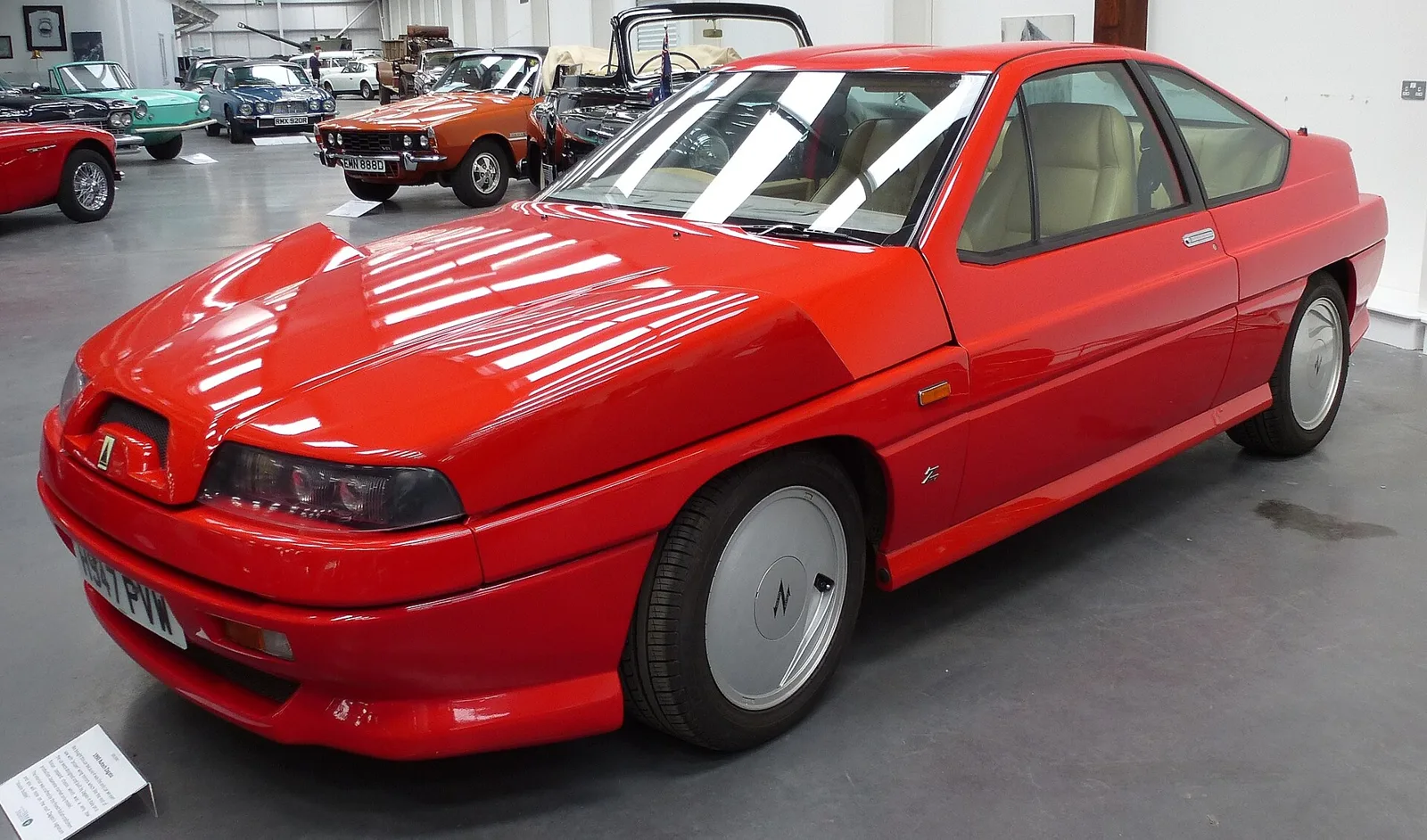
A Zagato-bodied coupe on Nissan Leopard running gear, launched into Japan's bubble economy and ended in 1990 well short of its planned volume.
The Autech Zagato Stelvio AZ1 was a two-door coupe built from 1989 to 1990 by Nissan's Autech brand. It used Nissan Leopard mechanicals with a 2,960 cc V6, and its body was styled by the Italian studio Zagato. About 100 cars were made, against a plan of 200.
Japan's bubble economy produced some odd luxury cars, and the Stelvio was among the oddest. Nissan's tuning arm wanted a prestige sports car with its own badge, and it turned to an Italian coachbuilder for a body that would stand apart from anything at home.
Why did Autech build a car with an Italian body?
Autech was founded in 1986 as a tuning business for Nissan vehicles, and it wanted a prestige model under its own name. Nissan chose a cooperation with an Italian design studio to add exclusivity, following American examples such as Cadillac's Allante and the Chrysler TC.
The choice fell on Zagato, which had repeatedly produced special models for makers such as Aston Martin and Bristol. The cooperation agreement was signed in May 1987, and after almost two years of development the Stelvio debuted before 800 journalists in Japan in early 1989.
Zagato showed the prototype at the Geneva Motor Show in March 1989, beside the Alfa Romeo RZ coupe, which it had also built. Series production followed.
Meant to give a tuning firm prestige, the Stelvio became, in one writer's words, one of the strangest cars in the world.
How did the bubble economy hit the Stelvio?
The Stelvio went on sale in the last stage of Japan's asset bubble, when property and luxury goods, including exclusive cars, were treated as speculative assets. The bubble peaked in December 1989 and burst early in 1990, and sales of expensive cars collapsed.
Production ended in 1990, long before the planned quota was reached. The price was steep from the start. At its 1989 presentation the car cost 18 million yen, which made it, apart from the Toyota Century prestige saloon, the most expensive Japanese car of its time.
Where did the Stelvio's running gear come from?
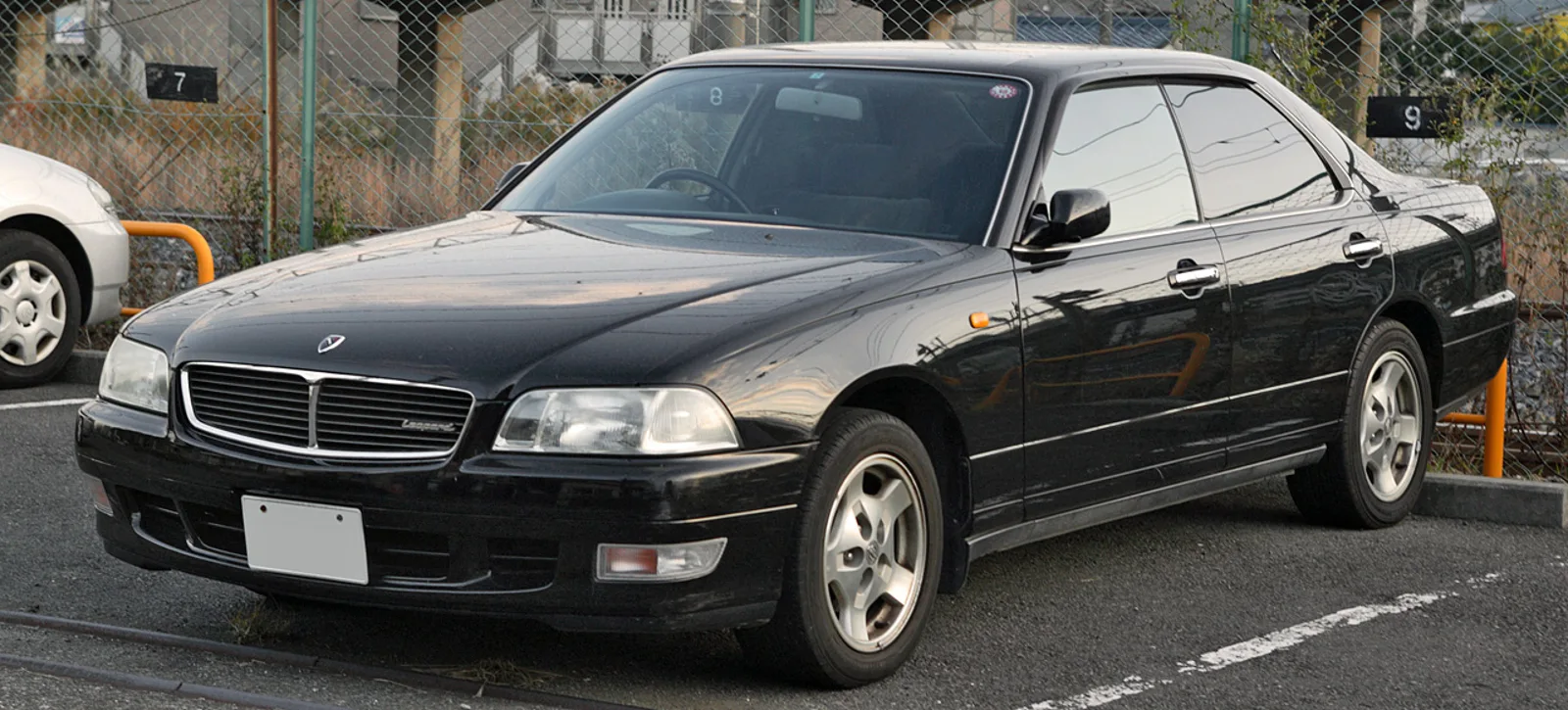
The Stelvio used the technology of the Nissan Leopard F31, a conservatively styled upper-midrange notchback that had reached Japan in February 1986. Its floor assembly was taken over unchanged, so the wheelbase matches the Leopard at 2,615 mm (103 in). A shorter rear overhang makes the Autech about 30 cm shorter overall.
The 2,960 cc (180.6 cu in) V6 of the VG30DET series had two overhead camshafts per bank, four valves per cylinder and a Garrett turbocharger, which the Leopard did not offer. It was essentially the engine of the 300ZX, with more output. The official figure of 280 PS (206 kW; 276 hp) reached the ceiling set by a voluntary agreement among Japanese carmakers, but several writers believe the real output was higher, and more than 300 PS (220 kW; 296 hp) is generally considered realistic.
A four-speed automatic sent the power to the rear wheels. The front and rear wheels were suspended individually, and disc brakes were fitted at every wheel.
Who designed the body, and how was it built?
Zagato drew the body, while OPAC of Turin handled the structural build. Autech adapted Nissan's parts programme for the mechanical components. Gianni Zagato is credited with the body design. The body is made of hand-formed aluminium panels fixed to a steel frame.
The passenger cell bears clear similarities to the Aston Martin V8 Zagato, which Zagato's chief designer Giuseppe Mittino drew in 1985. Production of that car began in 1986 in tiny numbers at Terrazzano di Rho. Its styling, in turn, followed an earlier Bertone study.
The thin A and C pillars are steeply raked. Japanese rules then required the mirrors to sit at the height of the front wheels, and most cars mounted them on stalks on the front wings. On the Stelvio the mirrors were, supposedly for aerodynamic reasons, built into a cover that runs into the bonnet. The bonnet's centre extension takes up the theme of the Knudsen nose, and the front intake takes the form of a stylised letter A.
A wide light band crosses the flanks and carries on over the tail. The upper body is narrower than the lower part, which led one author to feel that one car had been pushed into another. Each wheel has a small NACA opening, and the doors carry narrow pull-out handles. The roof shows, in part, the double-bubble hollow that has been characteristic of Zagato since the 1950s, and the wheels are fully enclosed. The cabin uses Italian leather and a real wood instrument carrier.
Specifications at a glance
| Item | Detail |
|---|---|
| Body | Two-door coupe with notchback |
| Wheelbase | 2,615 mm (103 in) |
| Engine | 2,960 cc (180.6 cu in) V6, VG30DET, turbocharged |
| Official output | 280 PS (206 kW; 276 hp) |
| Possible real output | More than 300 PS (220 kW; 296 hp), per some authors |
| Transmission | Four-speed automatic, rear-wheel drive |
| Price in 1989 | 18 million yen |
| Built | About 100 cars |
How did the Stelvio sell?
In the speculative mood of the time, the Stelvio was easy to sell at first. Buyers were willing to pay for exclusive cars in a market where luxury goods had become objects of speculation. Its prices were very high, and nearly all sales took place in Japan. When the bubble collapsed, demand for expensive cars fell away, and the Stelvio went with it.
Production ended in 1990 with the car far short of its planned quota. That left the Stelvio as a short-lived model, built only between 1989 and 1990.
How many were built?
Plans called for 200 production cars plus three prototypes, but about 100 were built in total. Sources differ on the exact count, with figures of 88 and 104 cars, and claims of 80 to 100 cars. Every account agrees that the target was far from reached.
Production was split across sites. Technical parts were built in Japan and shipped to Italy, and at Zagato in Milan the cars were assembled by hand.
What is the name Stelvio AZ1 about?
The full designation is Autech Zagato Stelvio AZ1. AZ stands for Autech Zagato, and the 1 suggests that more models from both companies were once planned. Stelvio refers to the Stelvio Pass, known in Italian as Passo dello Stelvio, a mountain road in the Italian part of the Ortler Alps.
Timeline of the Stelvio project
- 1986: Autech founded as a tuning business for Nissan vehicles
- May 1987: cooperation agreement between Nissan and Zagato
- Early 1989: Stelvio debuts before 800 journalists in Japan
- March 1989: prototype shown at the Geneva Motor Show
- December 1989: bubble economy reaches its peak
- Early 1990: bubble bursts and sales of expensive cars collapse
- 1990: production ends, well short of the planned quota
- 1992: Zagato shows the Nissan Bambu and Nissan Seta
- Mid-1990s: Autech Gavia Zagato built in a small series
The 1990s follow-up: the Gavia
In the 1990s the three companies cooperated again. Zagato showed the show cars Nissan Bambu and Nissan Seta in 1992, and the Autech Gavia Zagato followed in the mid-1990s. Walter de Silva took part in its styling, and it was built in a small series.
The cooperation between Autech, Nissan and Zagato was renewed several times in the 1990s, so the Stelvio was not the last joint project. The Gavia was built on chassis that had originally been intended for the Stelvio. Some sources speak of 16 cars built, while Andrea Zagato speaks of 30 or 40.
Why was the car so divisive?
The body polarised opinion, and over the decades the criticism was marked by rejection, and often by ridicule. Andrea Zagato says the Japanese journalists at the early 1989 showing were dumbfounded, and that the room fell into icy silence. Critics later called the design bizarre and crazy, and one writer counted it among the strangest cars in the world.
Zagato himself said in 2019 that the car was so ugly he still tried to hide it. Another writer felt that the designers had stopped halfway, gone to lunch and left the rest of the work to the caretaker.