Audi's third-generation luxury saloon from 2010 to 2017, with a longer aluminium body, networked driver aids and the emissions recall that followed.
The Audi A8 D4 was the third-generation A8 luxury saloon, built from 2010 to 2017 with an aluminium body and petrol, diesel and hybrid engines up to the S8's 4.0-litre twin-turbo V8. In November 2017 its Euro 6 4.2-litre V8 diesels were recalled over defeat devices in the engine software.
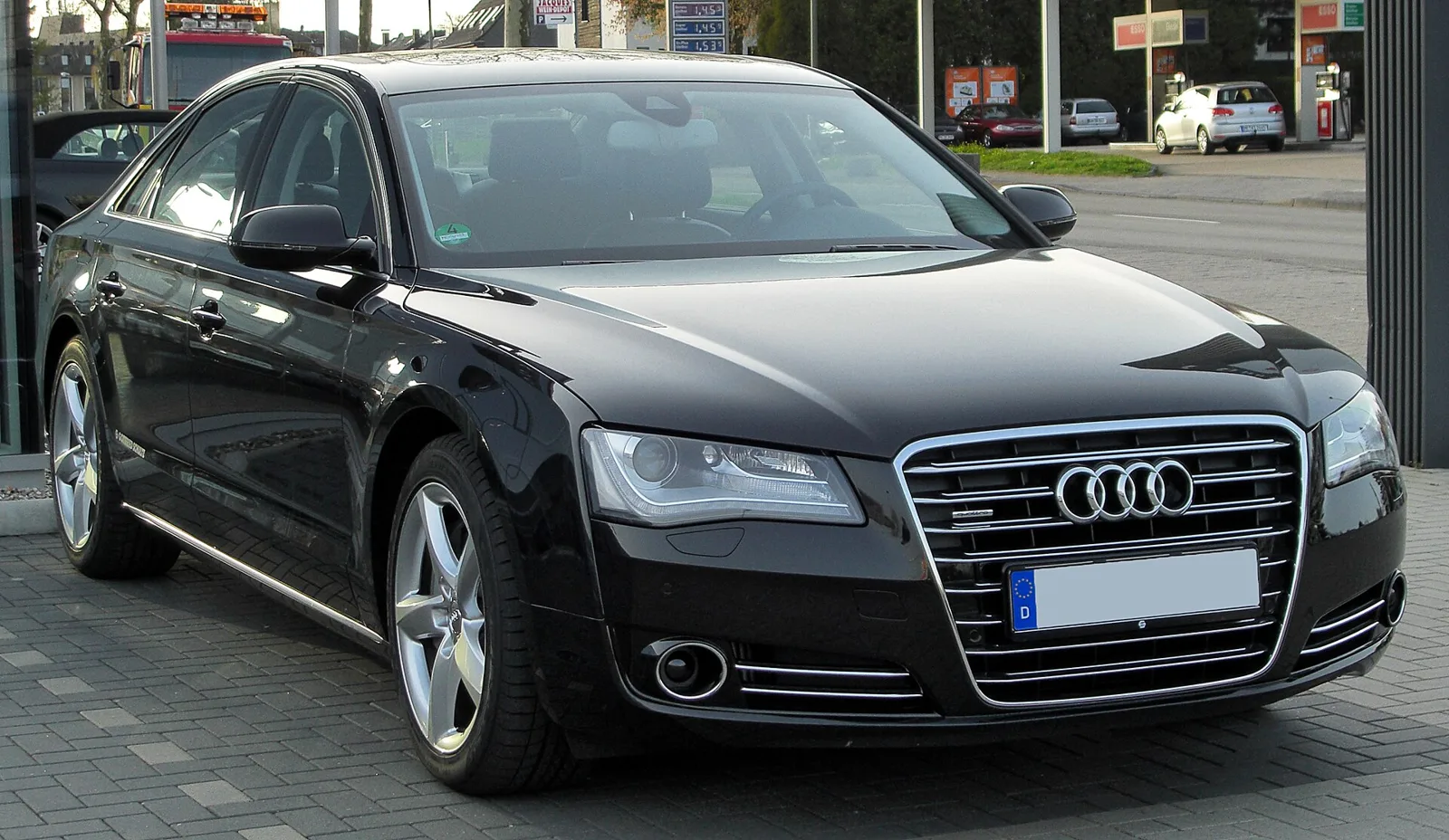
The Audi A8 D4, internal type 4H, was the third generation of Audi's luxury saloon. Audi built it from 2010 to 2017 as the successor to the A8 D3, and it combined a longer aluminium body with networked driver aids and a modular platform of its own.
When was the Audi A8 D4 first shown and sold?
Audi revealed the third-generation A8 in Miami on 30 November 2009, local time, at Design Miami. The 2010 North American International Auto Show gave it its first formal public showing, and the car reached the German market about three months after its presentation.
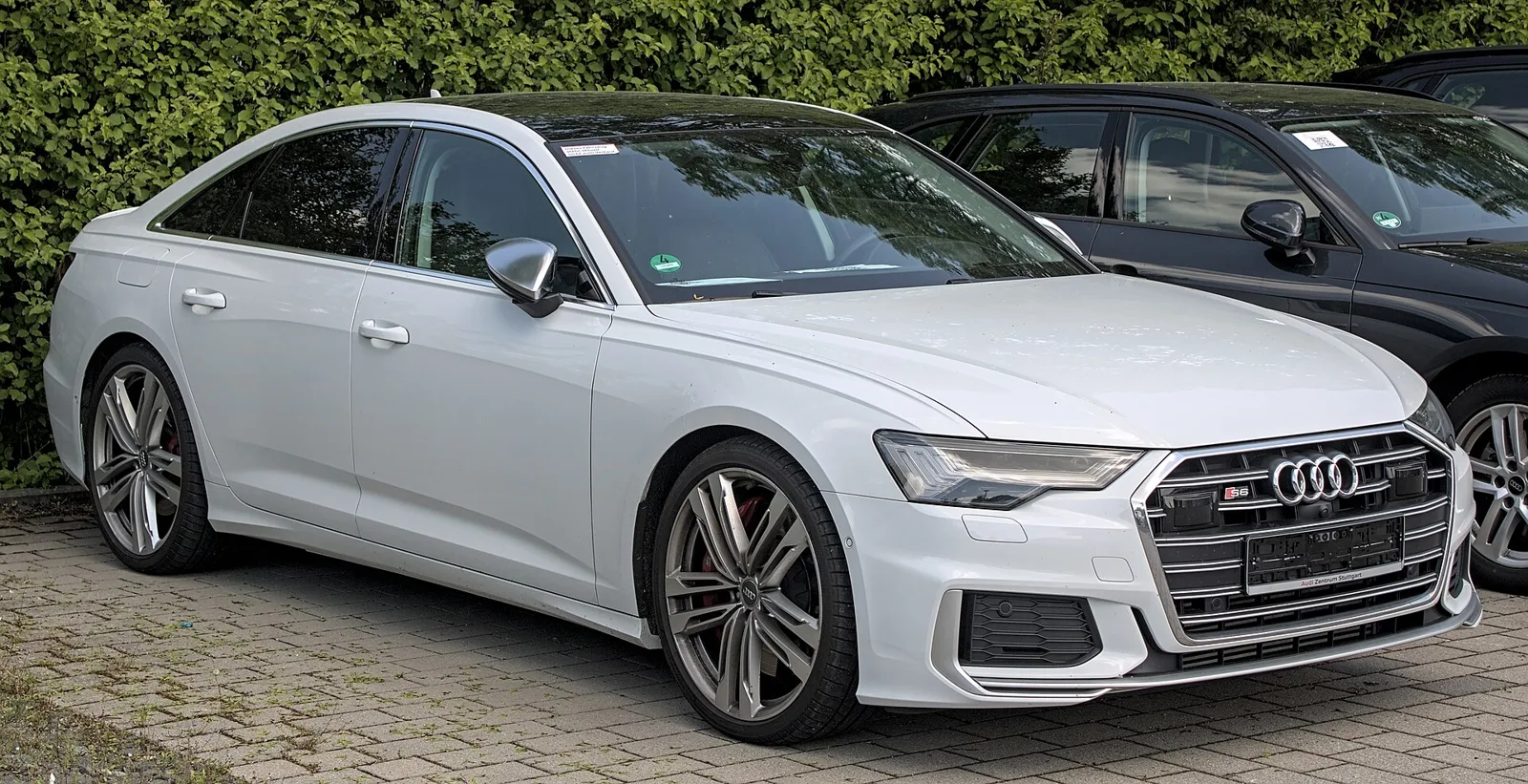
The sporty S8 followed in 2011 and made its formal trade-fair debut at that year's IAA. A revised A8 was presented at the IAA in September 2013, with a slightly changed bonnet, grille and front bumper, and the more powerful S8 plus was formally presented at the 2015 IAA. The successor, the A8 D5, was shown at the International Motor Show in September 2017 and went on sale that autumn.
In 2019 a prototype Audi RS8, built in 2013, was displayed at the Audi Forum Neckarsulm as part of a special exhibition marking 25 years of RS.
A luxury saloon with an aluminium body and networked driver aids, later at the centre of a diesel recall.
What changed in the body and chassis?
The aluminium body was eight centimetres longer than that of its predecessor. The short-wheelbase car measured about 5.14 m (16.9 ft), while the long-wheelbase version stretched to about 5.27 m (17.3 ft). Although heavier than its predecessor, the car weighed between 1,905 and 2,120 kg (4,200 to 4,674 lb), which kept it among the lightest models in its class. Only the Jaguar XJ was lighter.
The D4 gave up the D platform it had shared with the VW Phaeton and the Bentley models. Audi used its own modular longitudinal kit instead, which allowed a more compact layout. The front axle sat 15 cm (5.9 in) further forward, and the change improved the weight distribution.
The drag coefficient was 0.26 with the 4.2-litre petrol saloon, against a frontal area of 2.41 sq m (25.9 sq ft). Visually the car changed little from its predecessor, and the pronounced side tornado line was the main new styling feature. Audi offered the A8 D4 only as a notchback saloon, with no estate version.
Which engines did the A8 D4 offer?
Launch engines were a 4.2-litre V8 in petrol and turbo diesel form. Rivals in the class had moved to more economical V6 twin-turbo engines, which made the V8 diesel the last of its kind there. A 3.0-litre supercharged V6 petrol engine followed later. The base petrol model used a 2.8-litre six-cylinder engine with direct petrol injection (FSI) and a CVT gearbox from 2010, while an entry-level 3.0-litre TDI diesel rated 150 kW (204 PS; 201 hp) followed in August 2011.
The sporting S8 used a 4.0-litre twin-turbo V8 that produced 382 kW (512 hp) and 650 Nm (479 lb ft). Audi's other two sports models with this engine, the S6 and S7, made 309 kW (414 hp) and 550 Nm (406 lb ft). The S8 was said to reach 100 km/h from rest in 4.1 seconds.
The S8 plus arrived in 2015 with 445 kW (597 hp) and 750 Nm (553 lb ft), and it reached 100 km/h in 3.8 seconds. Cylinder deactivation let the V8 run on four of its eight cylinders at part load, which helped economy.
A hybrid version arrived in April 2012 and was the first A8 to use a two-litre four-cylinder engine. The 2013 update raised the turbocharged 3.0-litre TFSI to 228 kW (310 PS; 306 hp) and the four-litre petrol engine to 320 kW (435 PS; 429 hp).
How did the electronics and gearbox work?
FlexRay linked the car's electronic systems, so the adaptive cruise control and the adaptive headlights could share navigation and camera data. The eight-speed Tiptronic gearbox used shift-by-wire, which sends the selector command electronically to the main control unit. Gears are picked by tipping the selector lever, which returns to its starting position by itself.
Motorway lighting could switch on at the slip road, and the cornering light could come on before the bend was reached. In countries with left-hand traffic the matching lighting group activated on arrival, even with the navigation switched off. A camera under the rear-view mirror detected oncoming and leading vehicles at night and adjusted the high beam smoothly.
The adaptive cruise control worked from 0 to 250 km/h, with a stop-and-go function and automatic emergency braking. It used several radar sensors, a video camera, which was a first for a German manufacturer, and the parking aid sensors. When a collision could not be avoided it began a fully autonomous deceleration to soften the impact.
Quattro was optional, with a sport differential on the rear axle that sends power to the outside rear wheel through a bend. Adaptive Air Suspension was standard, as was Audi drive select, which lets some driving dynamics control systems be influenced electronically. The aluminium body was called the Audi Space Frame.
Why did the A8 D4 face an emissions recall?
Federal Transport Minister Alexander Dobrindt announced during the emissions scandal that A8 V6 and V8 diesels built from 2009 to 2013 had carried an illegal defeat device. Audi blamed a technical fault for the raised nitrogen oxide values and promised a retrofit campaign. Separately, a November 2017 recall covered the V8 4.2 TDI with Euro 6 engines.
The defeat devices reduced or switched off exhaust treatment during normal road use. Together with the A7 model, these devices had been installed in around 24,000 vehicles.
The November 2017 recall covered V8 diesels built from September 2013 to August 2017, with about 5,000 vehicles affected across Europe. Measurements by Deutsche Umwelthilfe in summer 2017 had found the A8 4.2 TDI to be the highest polluter among the vehicles tested, emitting up to 1,938 mg NOx/km.
On 10 June 2020 the KBA published notice 10.001 for the A8 4.2 TDI V8 Euro 5 with the AL951 gearbox, model years 2009 to 2014, which remained under investigation. The notice listed 10,908 affected vehicles worldwide and an estimated 5,442 in Germany.
Audi A8 D4 specifications
| Item | Detail |
|---|---|
| Type code | 4H, D4 generation |
| Production | 2010 to 2013, facelift 2013 to 2017 |
| Body | Saloon only, notchback, aluminium |
| Weight | 1,905 to 2,120 kg (4,200 to 4,674 lb) |
| Drag coefficient | 0.26 with the 4.2-litre petrol saloon |
| Entry diesel | 3.0-litre TDI, 150 kW (204 PS; 201 hp), 6.0 litres per 100 km |
| S8 | 4.0-litre twin-turbo V8, 382 kW (512 hp), 650 Nm (479 lb ft) |
| S8 plus | 445 kW (597 hp), 750 Nm (553 lb ft), from 2015 |
| Gearbox | Eight-speed Tiptronic with shift-by-wire |
| Emissions recall | About 5,000 vehicles in Europe, November 2017 |
What special versions of the A8 D4 were built?
Audi offered the A8 L Security on request, up to protection class VR9. In 2016 it also built a one-off stretched car, the A8 L extended, for the Norwegian royal family. It had six seats, a kerb weight of 2,418 kg (5,331 lb) and a wheelbase of 4.22 m (13.8 ft), and it was built to a customer's request.
At 6.36 m (20.9 ft) long, the A8 L extended was 1.09 m (3.6 ft) longer than the standard long-wheelbase A8 L. Its 228 kW (310 PS; 306 hp) turbocharged 3.0-litre petrol engine accelerated it from 0 to 100 km/h in 7.1 seconds.
A prototype Audi RS8 was also built on the S8, with the same twin-turbo 4.0-litre V8 and a maximum output of 382 kW (512 hp). Its design differed from the S8 it was based on.
How did the A8 appear in films and public life?
An Audi A8 or S8 appeared in The Matrix Reloaded, Ronin, Transporter - The Mission, Transporter 3 and Transporter Refueled. In public life Gerhard Schroder was the first to use the A8 as a state car, and Angela Merkel also used one.