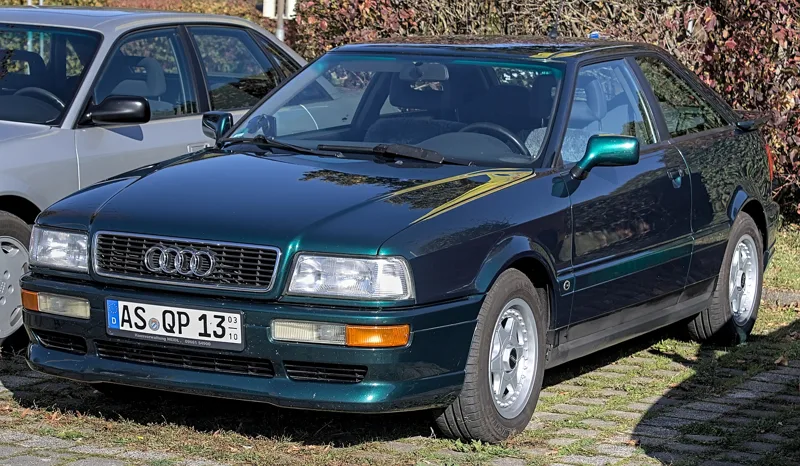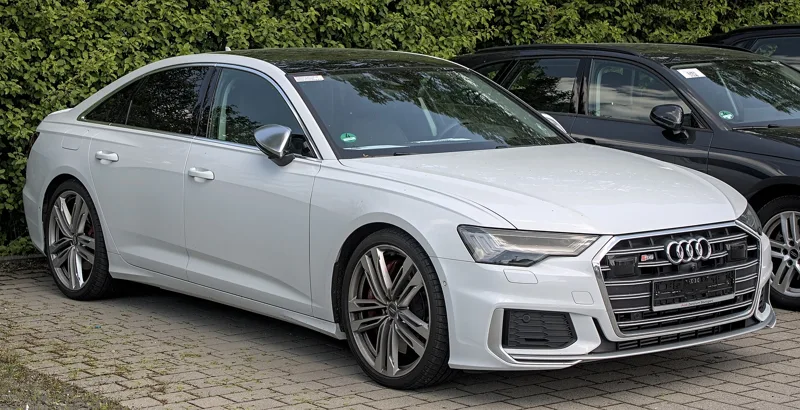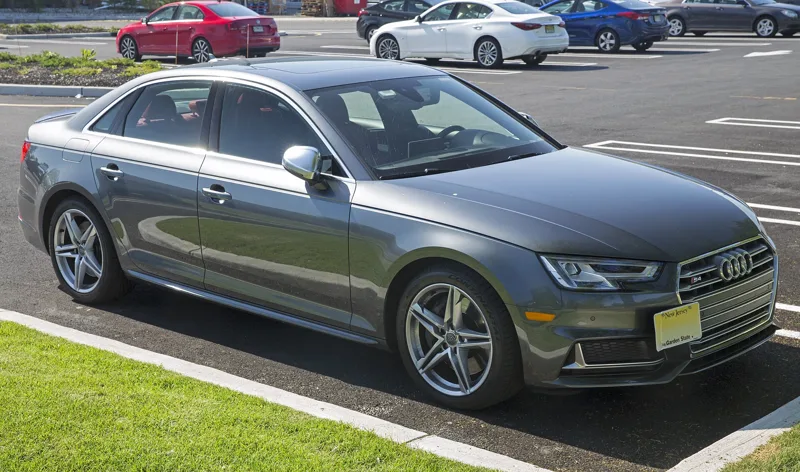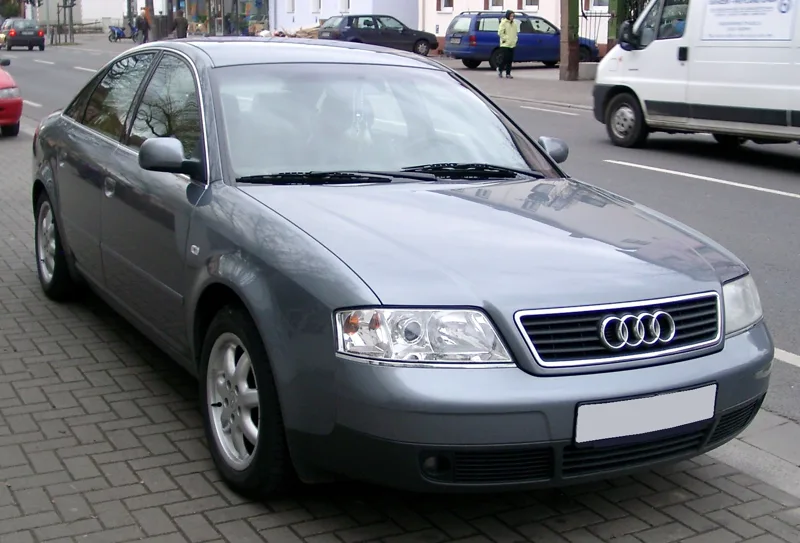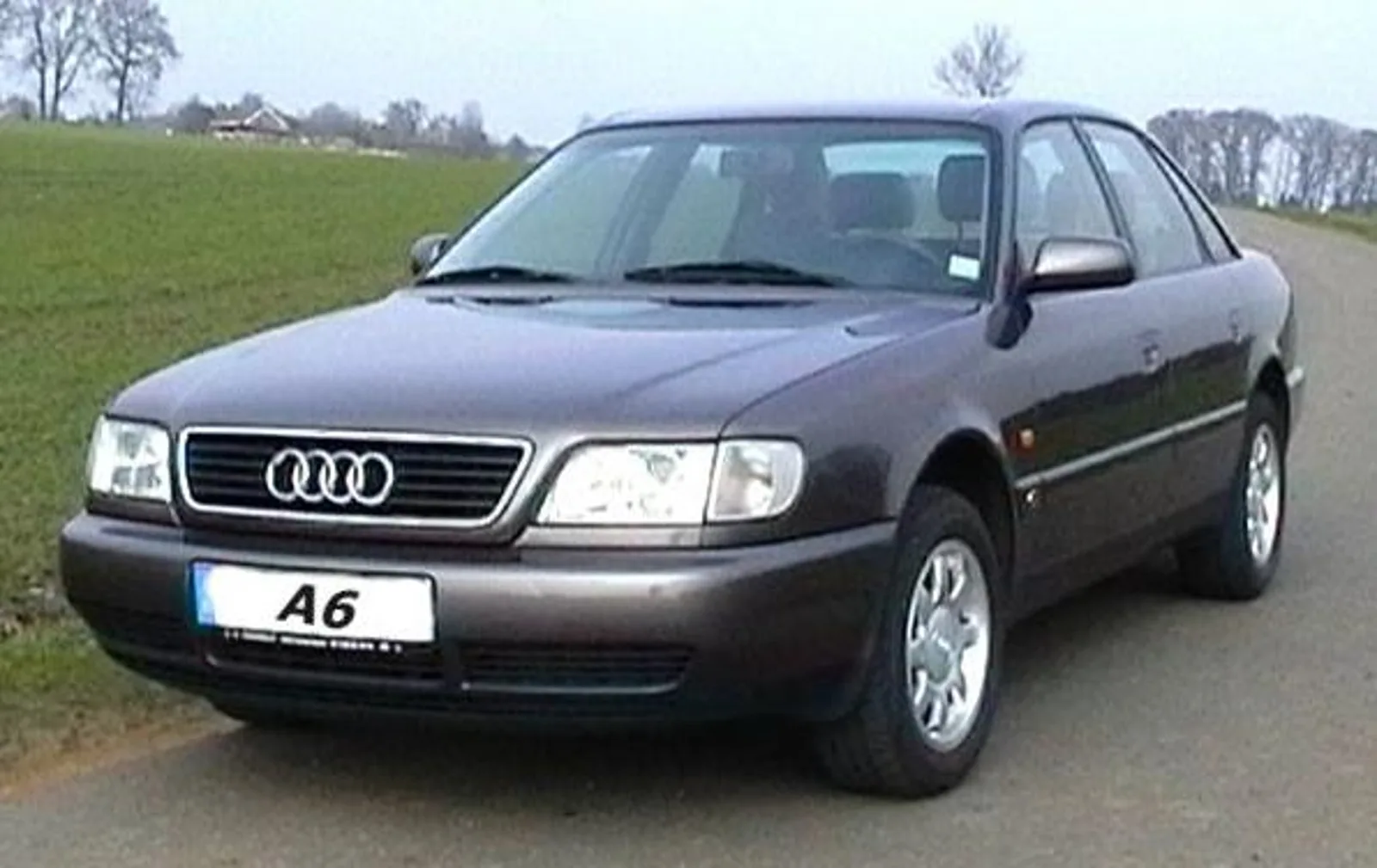
The first A6 was a restyled Audi 100 with a new name, a wide engine line-up and a short-lived S6 flagship that could send power to all four wheels.
The Audi A6 C4 is the first generation of the A6, a restyle of the Audi 100 built from 1994 to 1997. At launch it offered petrol engines from 101 PS to a 230 PS turbo five-cylinder S6 and a diesel, and a V8 S6 later topped the range.
Few model histories show a naming change as clearly as the first A6. Built from 1994 to 1997, the C4 was a restyle of the Audi 100 rather than a clean-sheet car, yet it was among the first models to carry Audi's new naming system. Its engines ran from a 90 PS diesel up to a 326 PS V8 by 1996.
Where did the A6 C4 come from?
The A6 appeared in mid-1994 as a facelift of the last Audi 100, a model launched in 1990 that was roughly halfway through its life by then. The same change brought a new way of naming Audi's cars. The A6 and the flagship A8, whose first generation had appeared in March of that year, were the first to use the new system.
A few months later the compact A4 would follow, heir to the last Audi 80, and a couple of years on the range would be extended downwards with the first A3.
From the start the range had two body styles: the saloon and the estate, the latter called Avant as usual. The S6 was offered in both forms as well.
The underlying car stayed close to the 100, with its mechanical architecture and platform carried over.
A restyled Audi 100 that carried a new name, a launch engine line-up from 101 PS and a four-wheel-drive S6 flagship.
How did the A6 C4 look?
In outline the A6 C4 is essentially the outgoing 100. Audi reworked the front with a new bonnet, a different grille and headlights with white indicators. The bumpers lost their rubber strip and were painted in body colour, and the rear gained light clusters of a different design. The range of alloy wheels was also renewed.
The cabin stayed close to the previous car. Some dashboard details, the seats and the trim were updated, but the basic layout remained familiar. The seat and trim changes were matters of detail rather than structure. New features included a digital odometer, a new steering wheel and a new gear lever.
What engines did the A6 C4 offer at launch?
The launch range covered a wide span of power. The base 2.0 produced 101 PS (74 kW; 100 hp) from 1984 cc (121.1 cu in) with single-point injection, while the 2.0 E raised output to 115 PS (85 kW; 113 hp) with multipoint injection. A 2.0 E 16V with four valves per cylinder gave 140 PS (103 kW; 138 hp).
The V6 family came in two sizes. The 2.6 displaced 2598 cc (158.5 cu in) and made 150 PS (110 kW; 148 hp), while the 2.8 was 2771 cc (169.1 cu in) with 174 PS (128 kW; 172 hp). On the diesel side, the 2.5 TDI was a five-cylinder direct-injection unit of 2461 cc (150.2 cu in) producing 115 PS (85 kW; 113 hp).
A naturally aspirated 2.3 five-cylinder with 133 PS (98 kW; 131 hp) was also planned for some markets, and it could be had with four-wheel drive. The two-litre with 140 PS and the two V6 engines were the other engines offered with front-wheel or four-wheel drive, while the S6 was sold only with four-wheel drive.
Of the two-litre petrol engines, the 2.0 E 16V was the strongest at launch, which makes the gap between it and the 101 PS base car easy to see. Every engine was paired with a five-speed manual gearbox, and a four-speed automatic could be specified as an option.
What set the S6 apart?
The S6 was the flagship of the launch range. It replaced the Audi 100 S4 and took the new S6 name, and it came as both a saloon and an estate. In its first three months on sale it used only a 2226 cc (135.8 cu in) five-cylinder producing 230 PS (169 kW; 227 hp).
That engine was the latest development of the five-cylinder that powered the Audi quattro. In the S6 it used a titanium turbocharger with enlarged ports and a maximum boost pressure of up to 2.3 bar. Four valves per cylinder gave it 20 valves in all, and hydraulic tappets replaced mechanical ones.
Several features had previously appeared only in motorsport. A knock sensor sat in the cylinder head, and an early form of overboost was triggered by a sensor under the accelerator pedal, which helped the petrol ignite more quickly by advancing the spark. A cut-off device and a liquid-cooled turbocharger with an intercooler completed the package.
Buyers could replace the standard five-speed manual with a sportier six-speed manual, or pick a four-speed automatic.
How did the S6 send power to all four wheels?
The first S6 was the only model in the launch range offered exclusively with four-wheel drive. Its system used three Torsen differentials, one in the centre and one at each axle, which let the two axles turn at slightly different speeds. The centre unit could be locked, so drive torque could be split evenly, with 50% going to each axle.
The car rode on 16-inch wheels with 225/50-ZR 16 tyres, and 17-inch wheels were available on request. The interior was offered in cloth or, at extra cost, leather. Electric windows, infrared central locking, air conditioning, a radio and a sports leather steering wheel bearing the S6 logo were standard, and xenon headlight preparation was fitted as well.
On request buyers could add heated seats, a telephone and an electric sunroof. Two retractable child seats in the boot raised the seat count to seven.
The S6 gained two siblings. Three months after launch a second S6 arrived with a 4172 cc (254.6 cu in) V8 producing 290 PS (213 kW; 286 hp). In March 1996 a third variant, the S6 Plus, kept the same V8 but raised its output to 326 PS (240 kW; 322 hp).
What was under the skin of the A6 C4?
Because the A6 was a restyle, its mechanical architecture changed very little. It kept a front-mounted longitudinal engine driving the front wheels, or all four wheels depending on the engine chosen. The roof was bonded to the body shell, and the shell itself was galvanised against rust. Those choices were carried over from the 100 as well, so the mechanical story is as much about continuity as about change.
The suspension layout was also carried over. The front used MacPherson struts, and the rear retained an older solid axle with a Panhard bar. The most significant engineering change came in the electronics, where the ABS controller was revised to manage the car's stability and act on each wheel individually when required. Discs were fitted on all four wheels.
The rear axle is the clearest example of carry-over. A solid axle with a Panhard bar was already an outdated layout by 1994, and the car kept it because the restyle left the underlying chassis alone.
How did the A6 C4 range develop after 1994?
Updates arrived quickly. In July 1994, a month after launch, a 1.9 TDI with 90 PS (66 kW; 89 hp) extended the range downwards. In September 1994 a second S6 joined the first, with a naturally aspirated 4.2-litre V8 producing 290 PS (213 kW; 286 hp) and taking over the top slot.
October 1994 brought a more powerful 2.5 TDI with 140 PS (103 kW; 138 hp). In October 1995 two more engines followed: a 2.8-litre V6 with five valves per cylinder and 193 PS (142 kW; 190 hp), and a new base 1.8 20V with 125 PS (92 kW; 123 hp). The new 1.8 overshadowed the two base engines, the two-litre units, whose sales fell sharply, although the 101 and 115 PS units stayed listed until June 1996.
Each new engine widened the choice of outputs open to buyers, from the 90 PS diesel at one end to the 326 PS V8 at the other. In June 1996 the 2.3 left the list in the markets where it had been offered, and the 1.9 TDI was revised to meet Euro 2 rules. These were the last updates to the A6 C4 range.
When did the A6 C4 leave production?
The saloon left the price lists in March 1997, while the estate was taken out of production in October 1997. The S6 C4 ended production definitively in October 1997.
The Avant estate stayed on sale for a few months after its production ended, so that remaining stock could be cleared. It disappeared from price lists in March 1998, when it was replaced by the new A6 Avant C5.
Audi A6 C4 specifications
| Specification | Detail |
|---|---|
| Type | Upper-class saloon and estate |
| Built | 1994 to 1997 |
| Internal code | Typ 4A |
| Launch base engine | 2.0, 1984 cc (121.1 cu in), 101 PS (74 kW; 100 hp) |
| V6 engine | 2.6, 2598 cc (158.5 cu in), 150 PS (110 kW; 148 hp); 2.8, 2771 cc (169.1 cu in), 174 PS (128 kW; 172 hp) |
| S6 engine | 2226 cc (135.8 cu in) five-cylinder turbo, 230 PS (169 kW; 227 hp) |
| V8 engines | 4172 cc (254.6 cu in), 290 PS (213 kW; 286 hp) and 326 PS (240 kW; 322 hp) |
| Diesel | 2.5 TDI, 2461 cc (150.2 cu in), 115 PS (85 kW; 113 hp) |
| Gearbox | Five-speed manual; four-speed automatic option; six-speed manual on the S6 |
| S6 wheels | 16-inch standard, 17-inch on request |
| Drive | Front-wheel or four-wheel drive; S6 four-wheel drive only |