How a Polo-based World Rally Car won titles on its debut, kept the record books busy for four seasons and was cancelled in 2016 when Volkswagen left the sport.
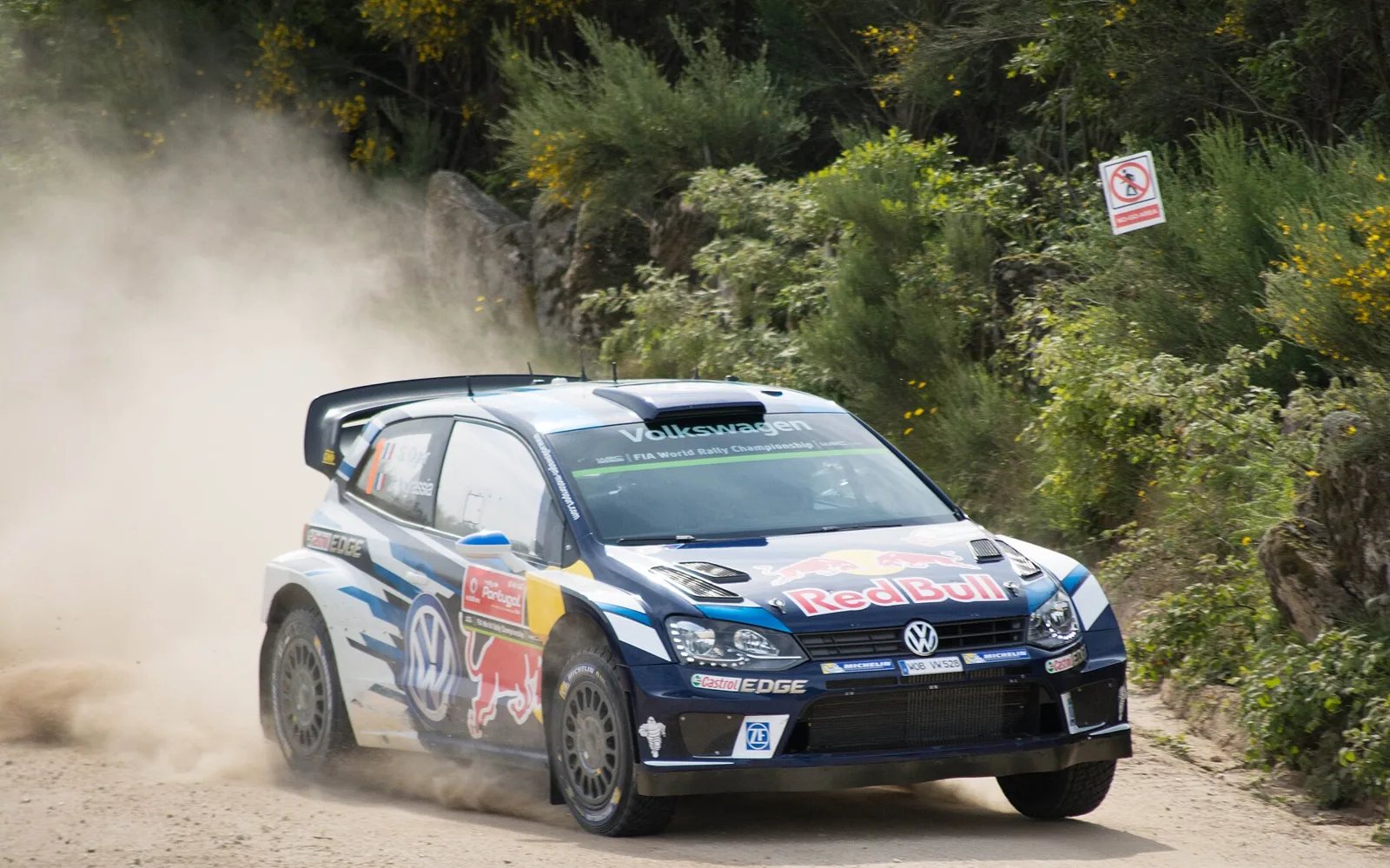
The Volkswagen Polo R WRC was a Polo-based World Rally Car that debuted at the start of 2013. It won 43 of the 53 rallies it entered, gave Sebastien Ogier four straight drivers' titles, and was retired when Volkswagen withdrew at the end of 2016.
The Volkswagen Polo R WRC was a World Rally Car built and run by Volkswagen Motorsport for the World Rally Championship. It made its debut at the start of the 2013 season and was retired after the 2016 season, by which time it had won 43 of the 53 rallies it entered.
Why did Volkswagen build the Polo R WRC?
Volkswagen built the Polo R WRC as its second manufacturer entry in the World Rally Championship. Its earlier effort had been the Golf GTI and GTI 16V, which rallied between 1983 and 1988. The company also sold Golf Mk3 and Mk4 kit cars to privateers in the Group A era, from 1993 to 1997.
The Polo was designed to the second generation of World Rally Car regulations, which had been introduced in 2011. That gave Volkswagen a platform that could compete with the best cars across the championship's varied stages.
A Polo-based rally car that won titles on debut and kept winning for four seasons before Volkswagen walked away.
How was the Polo R WRC tested before its debut?
The car was officially unveiled in May 2011 and then spent eighteen months in testing. Two-time World Rally Champion Carlos Sainz, Sebastien Ogier and Volkswagen's development driver Dieter Depping worked on the car in Norway, Finland, Germany, Spain and Mexico. Ogier had been recruited from Citroen at the end of 2011.
Testing was not without incident. Volkswagen added Ford's Jari-Matti Latvala in October 2012. His first test in Mexico ended early, after a collision with a passenger car on public roads between stages. Nobody was seriously hurt, but the car was too damaged to continue testing. Further work took place in Provence to prepare for the snow and tarmac roads of the Monte Carlo Rally.
The car was first meant to debut at the 2012 Rally d'Italia Sardegna, but that plan was dropped in favour of more development. Volkswagen sent its homologation papers to the FIA in November 2012. Meanwhile it had run two Skoda Fabia Super 2000 cars in twelve rounds of the 2012 season, with a third at the Rallye Deutschland, to gain experience running a World Championship team. Those cars were not eligible for championship points. The final build was launched in Monaco in December 2012.
How did the Polo R WRC start in 2013?
In its debut season the car won six of its first eight rallies. Ogier and Latvala contested the full championship, and Andreas Mikkelsen ran part-time in a third car entered as Volkswagen Motorsport II. After a second place in Monte Carlo, Ogier won the rallies of Sweden, Mexico and Portugal, while Latvala scored his first win for Volkswagen in Greece.
Volkswagen also lobbied to keep the 2013 specification for 2014, after concerns that a new specification would drive Ford and Citroen out of the category.
Ogier's season had a rough moment in Germany. A mistake on the first leg forced him out, and when he restarted the next day under Rally-2 rules he took an automatic five-minute penalty and finished seventeenth. He still won the power stage there, which kept him scoring points in every round. He then won in Italy, Finland and France.
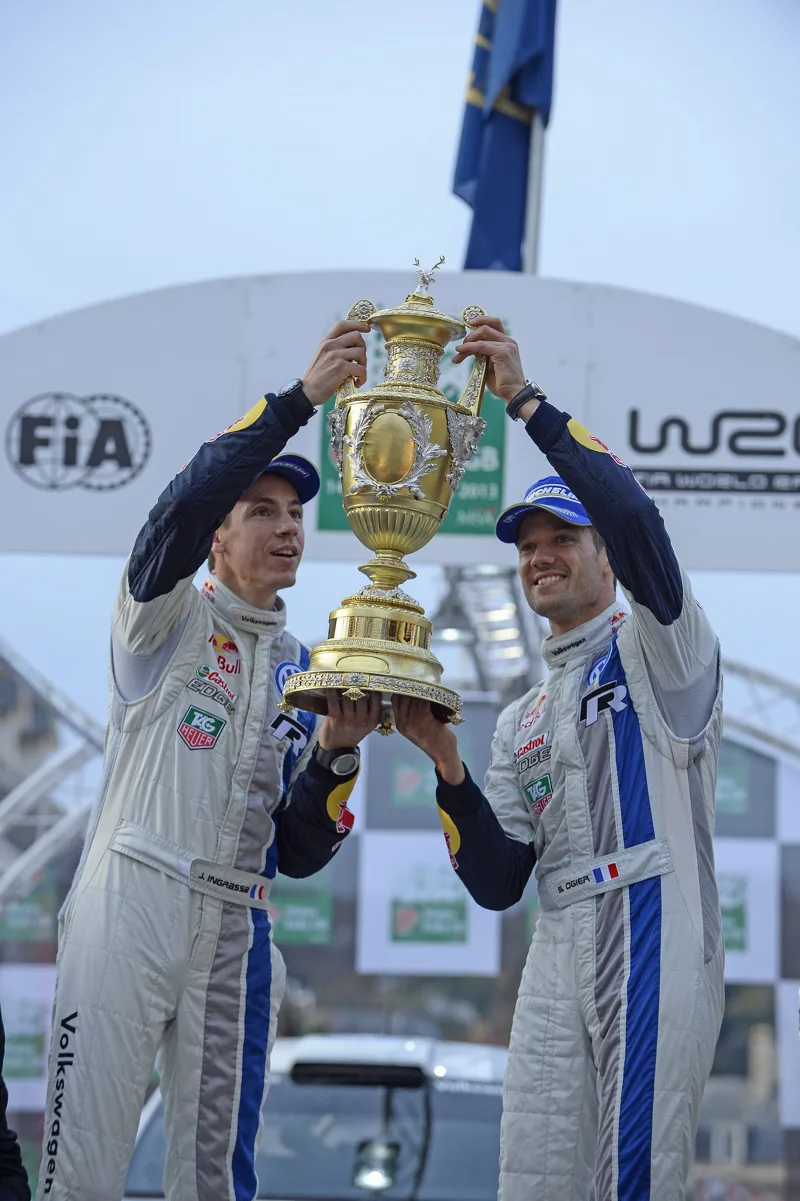
Ogier needed only one point over Thierry Neuville to take the title. The title was not settled in Australia, where Neuville finished second, so the fight went on to the next round in France. Ogier secured the title on the first stage of that rally, which was run as the power stage in a break with tradition. He won in France and then took two more wins in Spain and Wales.
In Spain a second place for Latvala was enough to secure the manufacturers' title for Volkswagen. By the end of the season the Polo R WRC had won ten of its thirteen rallies, finished on the podium eight more times, and secured both titles at the first attempt. Ogier and Volkswagen had ended Sebastien Loeb and Citroen's run of nine straight drivers' and manufacturers' championships.
Could Volkswagen defend its titles in 2014?
Volkswagen defended successfully. Performance updates arrived before the Monte Carlo Rally, and Ogier and Latvala stayed with the team, with Mikkelsen's programme expanded to every round. The car won the first six rallies of the season, with Ogier winning Monte Carlo by over a minute and Latvala taking Sweden, Argentina and Finland.
Latvala's win in Argentina was the ninth consecutive victory for the Polo R WRC, breaking the record of eight set by the Citroen DS3 WRC in 2011. Mikkelsen scored his first World Championship podium in Sweden and another in Poland. Ogier and Latvala then both crashed out of Rally Germany, when a chance to clinch the manufacturers' title went begging, and the winning run ended after twelve rounds.
Mikkelsen finished third in Germany, behind the Hyundai i20 WRCs of Neuville and Sordo. The team recovered in Australia with a clean sweep of the podium, with Ogier ahead of Latvala, and that secured the manufacturers' title. In France Ogier lost nine minutes on the first day with a faulty gear selector and a time penalty, and finished eleventh. Latvala cut 25 points from Ogier's lead with a win that was his first on tarmac, but Ogier still entered Spain with a twenty-seven-point advantage and took his second straight title there.
How did the second-generation Polo perform in 2015?
Development of the second-generation Polo began in early 2014 for a 2015 debut. Marcus Gronholm joined the testing programme, and the car gained a brand-new gearbox, a revised hydraulic system, a larger rear wing and considerable weight reduction. Over seventy-five percent of the car was developed in the off-season.
The season opened with a clean sweep of the podium in Monte Carlo, where Ogier beat nine-time world champion Loeb after an early battle, and Loeb's one-off guest drive in a Citroen DS3 WRC ended when he crashed on the second leg. Ogier also won in Sweden and Mexico, and Volkswagen took another podium sweep in Portugal. Ogier then won Italy and Poland, while Latvala claimed Finland, where he set a record average of 125.44 km/h (77.94 mph) for the event. The previous record, set by Loeb in 2012, stood at 122.89 km/h (76.36 mph).
The championship returned to Corsica for the first time in seven years, where several stages were cancelled. Ogier retired from the first leg with a gearbox problem, and Latvala caught Elfyn Evans to win.
Volkswagen secured its third one-two-three finish of the year in Germany and finally won its home event on the third attempt. Ogier went on to win his third consecutive drivers' title in Australia. Mikkelsen took his maiden World Rally Championship victory in Spain, and Volkswagen finished the season with twelve wins from thirteen rallies, including Mikkelsen's one, and 183 points in front of Citroen.
What happened to the Polo in its final season?
Volkswagen made only minor changes for 2016, despite the departure of team principal Jost Capito to McLaren. Ogier won the first two rounds, in Monte Carlo and Sweden, and Latvala won Mexico, while Ogier finished second despite being first on the road and sweeping loose gravel off the surface.
Mikkelsen partnered Anders Jaeger that year, and the pair started with a podium in Monte Carlo.
The Volkswagens struggled to match Thierry Neuville's pace in Sardinia, where the loose surface cost time as drivers swept the road. Latvala and Ogier still finished second and third behind Neuville.
Latvala's season was then disrupted by a suspension failure at high speed in Argentina, which promoted Ogier to second and Mikkelsen to third. In Portugal Kris Meeke won, but because Meeke was not nominated for manufacturer points, Mikkelsen and Volkswagen Motorsport II were awarded the full 25 points for first place.
In Finland Latvala finished second behind Meeke, but Ogier spun into a ditch and lost sixteen minutes on the first day. Ogier won in Germany, his first win since Sweden. Later in the year he took Corsica, and then Catalunya, where he won the rally and his fourth consecutive World Drivers' Championship. Ogier became only the fourth driver to win four titles, after Juha Kankkunen, Tommi Makinen and Loeb. In Great Britain he held off Ott Tanak to secure Volkswagen's fourth manufacturer title. Mikkelsen took his third rally win of the year in Australia.
Why was the Polo's successor cancelled?
With the sport changing its technical regulations for 2017, Volkswagen developed a 2017-specification car through the 2016 season, again with Gronholm. It was called the Volkswagen Polo GTI WRC, and it had a larger turbo restrictor, larger bumpers, larger door sills and a bigger rear wing. Its overall width increased.
The shell lost 25 kg (55.1 lb), and the car gained a centre differential, a first for the Polo.
Volkswagen had tested the car extensively, but it formally cancelled the project in November 2016 when it withdrew from the sport. The decision followed the Volkswagen emissions scandal. The company later kept a presence in rallying through a customer-oriented Polo built to Group R5 specifications.
| Season | Highlight | Detail |
|---|---|---|
| 2013 | Debut titles | Ogier champion by a single point; Volkswagen won the manufacturers' title |
| 2014 | Winning run | Ninth consecutive win in Argentina, breaking a record of eight |
| 2015 | Record speed | Latvala averaged 125.44 km/h (77.94 mph) in Finland |
| 2016 | Fourth title | Ogier's fourth consecutive drivers' title, with Volkswagen's fourth manufacturer title |
What happened to the Polo R WRC after the works team left?
Although the car left the World Rally Championship after 2016, Volkswagen offered it to privateers on a limited basis from 2017, when the car no longer ran in the championship. Raimund Baumschlager was the first privateer to enter a Polo R WRC, competing in rounds of the Austrian national championship.
Several chassis from 2013 and 2014 went back into service with PSRX Volkswagen Sweden, a factory-supported team in the FIA World Rallycross Championship. Chassis changed hands between programmes over the years, and one that Petter Solberg drove in 2018 had first run with Ogier at Rally Catalunya in 2013.