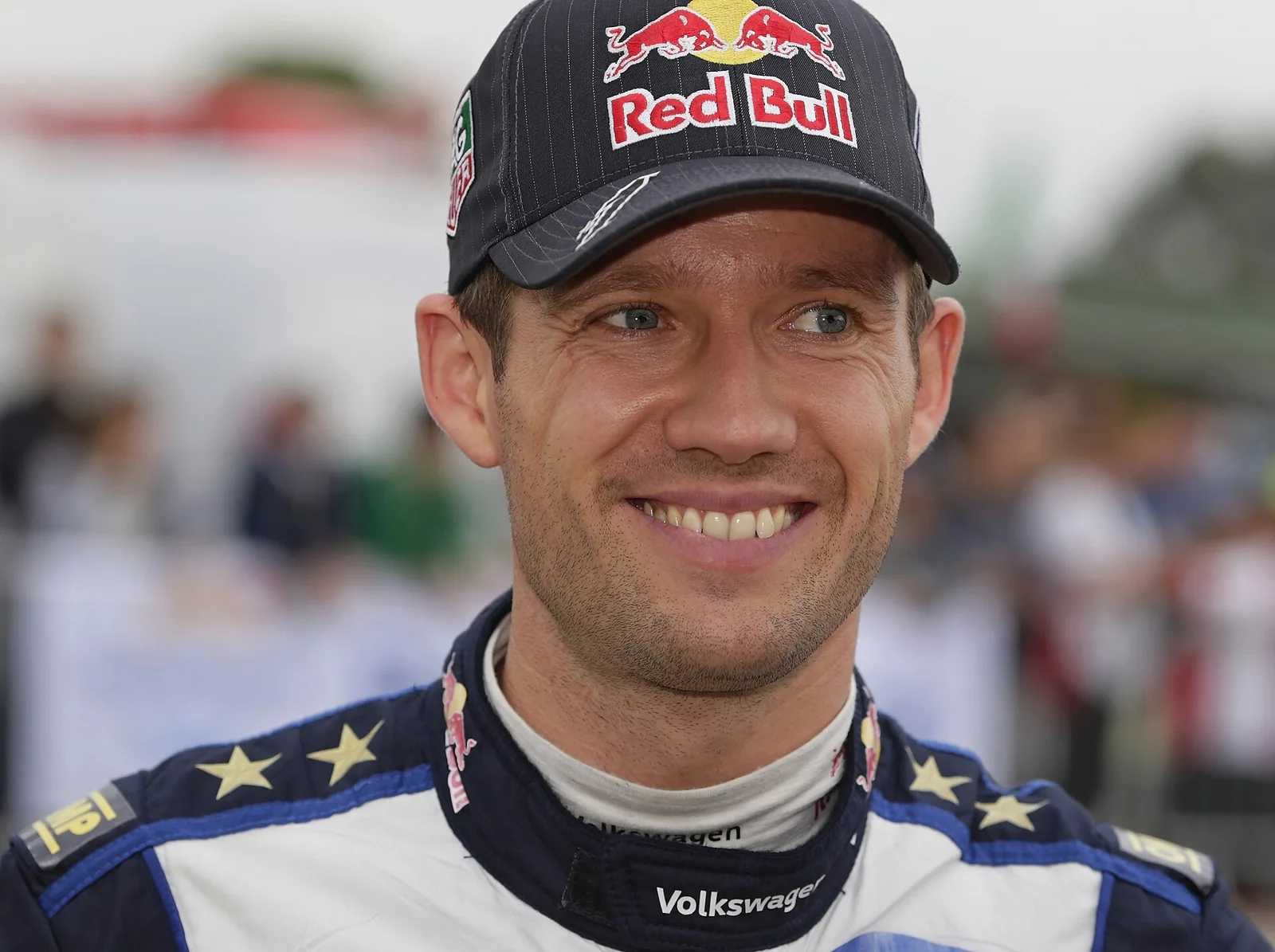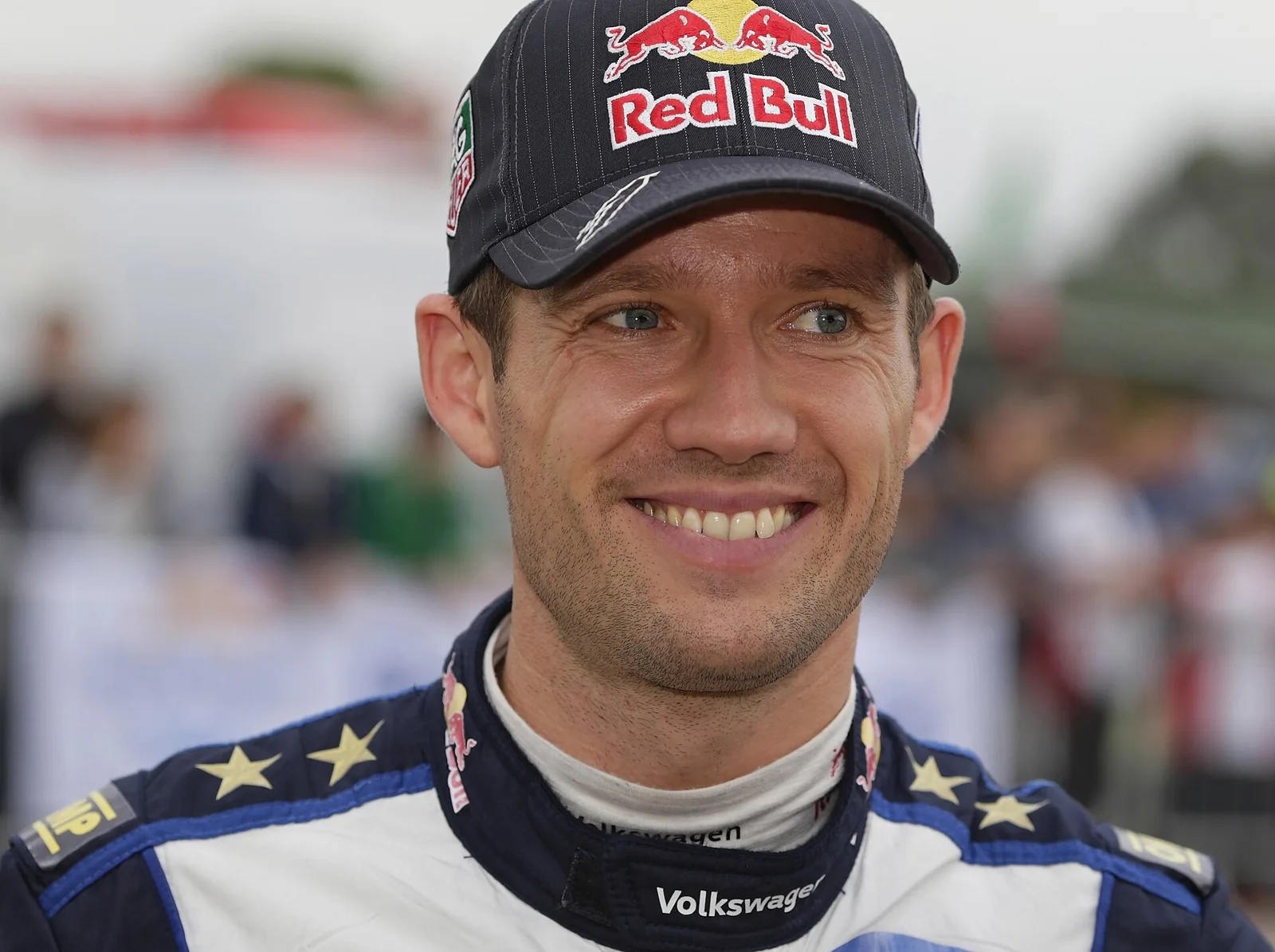
Thirteen rallies, Kris Meeke's first win, Volkswagen's third straight manufacturers' crown and a championship settled in Australia.
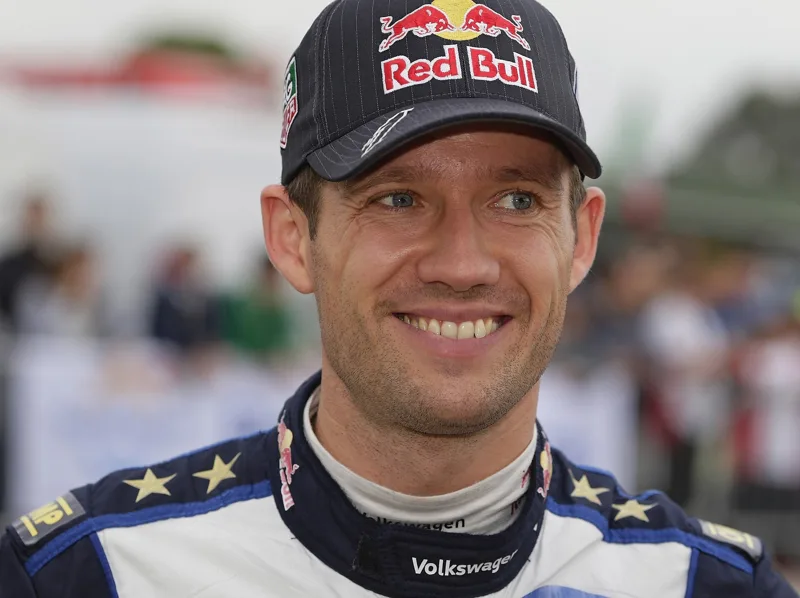
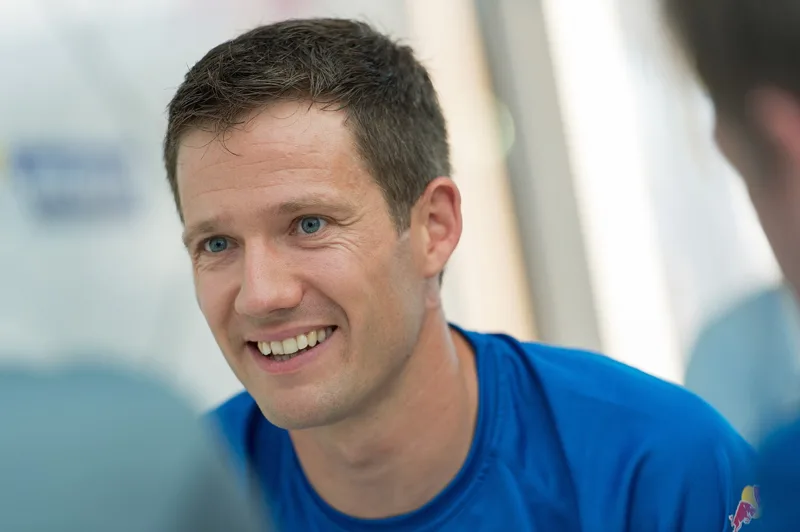
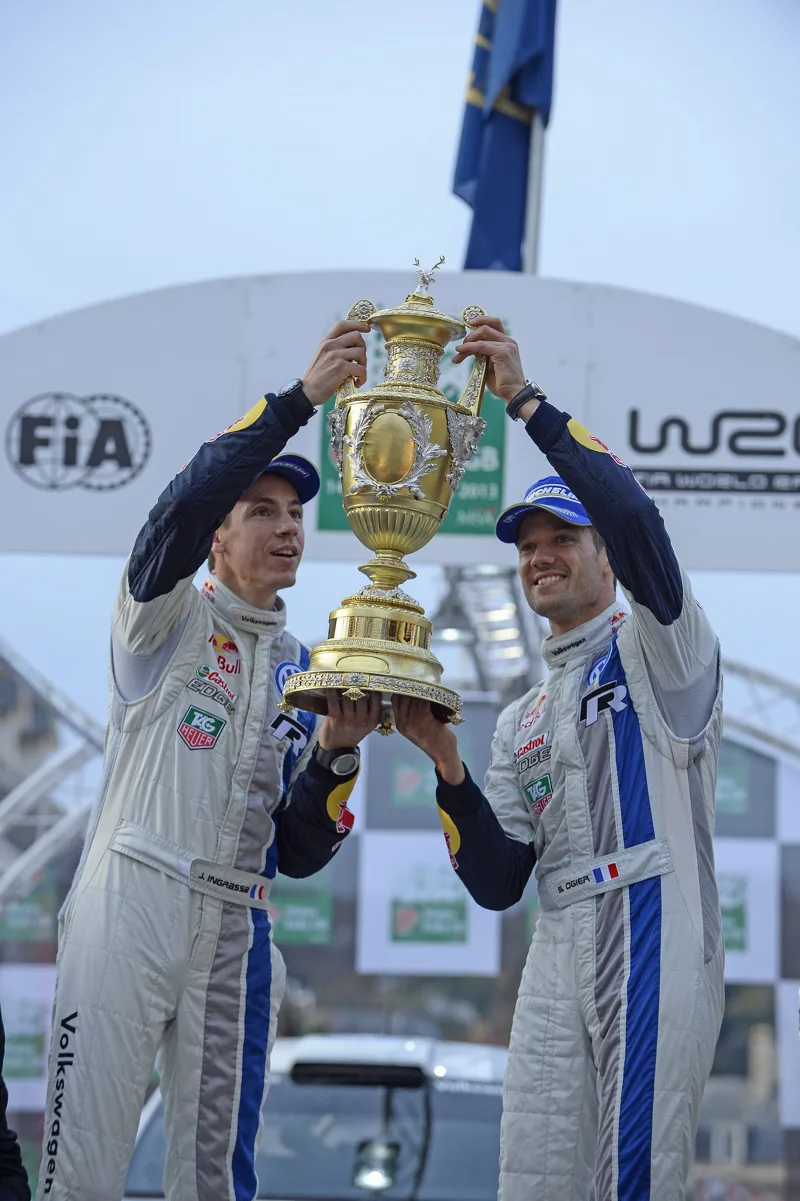
Sebastien Ogier won the 2015 FIA World Rally Championship for the third year running, sealing the drivers' title in Australia with three rounds left. Volkswagen Motorsport also took the manufacturers' title, and Meeke earned his first WRC win in Argentina.
Thirteen rallies across Europe, the Americas and Oceania made up the 2015 season, the 43rd campaign for the World Rally Championship. Sebastien Ogier claimed his third consecutive drivers' title, and Volkswagen Motorsport secured the manufacturers' crown for a third year running. Both championships were sealed with three rounds to spare in Australia.
How were the rules and calendar different in 2015?
Monte Carlo adopted Rally-2 regulations this year, so a crew that retired could restart with a time penalty. Before 2015 it was the one event still run without those rules. Skipping a special stage without a valid reason cost a competitor seven minutes.
The Portuguese and Argentinian rounds swapped places on the calendar. Portugal also gave up its Faro base, which it had used between 2007 and 2014, and moved north instead.
The Tour de Corse took the place of the Rallye de France Alsace. The French federation put the switch down to financial reasons when it made the announcement on 6 February 2015.
On the final leg of each rally, the P1 and P2 crews ran in reverse classification order rather than in championship order. The rules also banned sending performance data to cars during special stages, unless the data related to safety.
A competitor whose car had not left the start line within 20 seconds was classed as retired, and could restart the following day under Rally 2 rules.
A third straight title sealed with three rounds to spare, and a first win for Kris Meeke in Argentina.
Who was driving for each team in 2015?
Ogier began the year as the defending champion, and his Volkswagen Motorsport squad were the defending manufacturers' champions. Mikko Hirvonen retired at the end of 2014, and Ott Tanak came back to the top tier after a season in WRC2.
Nine-time World Champion Sebastien Loeb returned for Monte Carlo, racing a Citroen DS3 WRC for the Citroen World Rally Team. Mads Ostberg, meanwhile, ran a non-manufacturer DS3 in Monte Carlo and would later take over from Loeb.
Robert Kubica also drove the new Ford Fiesta RS WRC in Portugal.
How did the season open in Monte Carlo?
The season began in Monte Carlo, where Ogier claimed his second straight victory and the 25th win of his WRC career. Loeb set the early pace, yet a spin on the seventh stage handed the lead to Ogier, and a rock strike on the eighth stage cost Loeb six minutes.
Ogier could not see his rivals' split times under the new rules, so he controlled his pace and chose safe tyres. He finished almost two minutes ahead of his Volkswagen teammate Jari-Matti Latvala, who took second place and a single power-stage point.
Loeb retired in the liaison section that followed. Andreas Mikkelsen completed a Volkswagen one-two-three by taking third.
Mads Ostberg was fourth for Citroen. Thierry Neuville and Dani Sordo took fifth and sixth, only 0.8 seconds apart, while Elfyn Evans dropped to seventh after damaging his rear suspension against a wall.
Kris Meeke won the power stage for three points, and Martin Prokop was also in the top ten. The ninth stage was cancelled because of overcrowding, which shortened the rally.
What decided the rallies in Sweden and Mexico?
Sweden was settled on the final stage. Mikkelsen moved ahead on the ninth stage when Ogier and Latvala each found a snow bank. Ogier took the rally on the last stage, which also carried the power-stage points, and that finish settled the outcome.
Before that, Tidemand had won the Thursday night super special in Karlstad in a WRC2 Ford Fiesta. Neuville took the lead on Saturday after fitting new tyres, with Mikkelsen 1.5 seconds behind and Ogier 9.6 seconds back.
Mikkelsen hit a snow bank on that final stage and lost 40 seconds, which dropped him behind Neuville.
Ott Tanak took fourth, his best WRC result since 2012, and Hayden Paddon took fifth, his best WRC finish, after stepping in for the injured Sordo.
Yuriy Protasov won his first WRC stage on the Kirkenaer stage. Latvala recovered to 12th, but Volkswagen retired his car after the rally, citing a rules loophole linked to Rally Mexico.
Mexico opened with Ogier winning the shakedown, and the rally proper began with a night stage through the tunnels of Guanajuato, a UNESCO World Heritage Site. Neuville won that opening stage ahead of Lorenzo Bertelli, and Latvala had moved up to second overall by the end of the second day.
The third stage brought the most dramatic moment of the rally. Tanak left the road, and his car fell into a reservoir, but he and co-driver Raigo Molder got out before it submerged.
Meeke crashed out one stage later, causing irreparable damage to his Citroen DS3 WRC. Neuville crashed on stage eight while running second, and Kubica and Paddon both retired that morning.
Tanak's car was recovered and repaired, but it failed just after leaving service, and he finished 22nd overall. Latvala finished 15th after broken suspension damaged a rear wheel.
Ogier won in Mexico with a power-stage win, which gave him maximum points. Ostberg finished second, 6.3 seconds clear of Mikkelsen, while Evans came fourth, equalling his best WRC result.
What made Argentina stand out?
Kris Meeke won his first WRC rally in Argentina, the first British winner since the 2002 Safari Rally, which Colin McRae took. The win was dedicated to McRae, his mentor, and it stood out in a rally full of retirements.
The Citroen win was its first since the 2013 Rallye Deutschland. It also gave Citroen its first one-two since the 2012 Rally Finland, because Ostberg finished second. Elfyn Evans took the first podium of his career in third, driving a Ford Fiesta WRC.
Attrition was severe. Only five cars finished without mechanical problems. Ogier stopped with an injector problem on stage two, and Lorenzo Bertelli retired on the same stage.
Mikkelsen and Paddon had technical problems and restarted the next day, and Tanak lost a wheel on stage four but also came back. Sordo stopped with power steering trouble on stage ten, and Neuville and Mikkelsen crashed at the same spot on the final stage.
Paddon crashed out on stage nine, and six spectators were injured, so the rally was shortened. Latvala suffered an engine failure on stage 11, and Volkswagen's run of podium finishes since its return came to an end.
Ogier took the power stage on his way to 17th overall. Sordo, meanwhile, finished second on that stage and recovered to fifth overall.
How did the Portugal rally decide the lead?
The rally returned to the north of Portugal after 14 years, and the Lousada stage drew 15,000 spectators. Mikkelsen was quickest in the shakedown, ahead of Ogier and Latvala, and the opening day was watched by a huge crowd.
The second day was hard going. The Caminha section caused several dropouts and breakdowns, and Ogier had a flat tyre on stage two. Sordo won the first special of the day but was only fifth overall after it.
By the end of stage five Latvala led Meeke by 11.1 seconds, and Mikkelsen was 16 seconds behind Latvala at that point. A forest fire then led to the cancellation of stage five.
Ogier finished the third day 9.5 seconds behind Latvala. Meeke won two stages on the Saturday, and Mikkelsen won another, but Evans left the rally after electrical problems.
The title decision came on the Sunday, with the two passes through Fafe and the Cabreira stage. On the first pass through Fafe Ogier gained 1.7 seconds on Latvala, but Latvala responded on Cabreira.
Cabreira is the longest stage of the rally at 32 km, and it now carries the name Vieira do Minho. Latvala's lead grew to 10.4 seconds there. Ogier recovered 2.2 seconds in the power stage, which was not enough to stop Latvala winning.
Latvala won the rally, Ogier finished second and Mikkelsen completed the podium in third.
What happened in Sardinia, Poland and Finland?
Italy's rally began with a surprise. Martin Prokop won the Cagliari super special stage, and Dani Sordo was penalised for a false start, while Paddon led after stage four by 25.3 seconds with Ogier 27.5 seconds further back.
By the end of the third day Ogier led Paddon by 2 minutes 13 seconds, and Neuville was fourth at 3 minutes fifty-seven seconds. Neuville had already taken a 40-second penalty, and he finished sixth after turbo and handbrake problems.
Sordo was forced out after booting a wheel. On the last day Ostberg dropped to fifth, which handed third place to Neuville. The power stage was taken by Ogier, Latvala and Mikkelsen, all Volkswagen drivers.
In Poland Meeke crashed during the shakedown and had to walk to the start ceremony. Ogier won the opening super special ahead of Kubica and Prokop, and he was leading at the end of stage seven.
Tanak passed Latvala late in the rally to take the final podium place, behind Mikkelsen. Evans retired with a water pump problem, and four Hyundai cars retired on the last day. Paddon was the best-placed Hyundai.
Finland went to Latvala, who drove away from his teammate Ogier to take a third home victory, following wins in 2010 and 2014. Meeke held third until a puncture on the fifteenth stage, and Mikkelsen and Paddon both retired after crashes.
How did Ogier seal the drivers' title?
Germany gave Ogier another victory, with Latvala and Mikkelsen behind him, and Volkswagen completed its third clean podium sweep of the year. The result left him commanding the standings and well clear of his rivals on points, with the title race effectively in his hands.
In Australia he won his seventh rally of the year and clinched the title with three rounds to spare. It was his third consecutive drivers' title, following earlier crowns in 2013 and 2014.
Volkswagen Motorsport also took its third straight manufacturers' championship in Australia.
Which driver won each rally?
Ogier won most of the rallies in the table, and Volkswagen was the team behind most of the winning cars. The Argentina round was the only Citroen victory on the list, while Latvala won in Portugal and Finland, both for Volkswagen.
| Rally | Winner | Team |
|---|---|---|
| Monte Carlo | Sebastien Ogier | Volkswagen Motorsport |
| Sweden | Sebastien Ogier | Volkswagen Motorsport |
| Mexico | Sebastien Ogier | Volkswagen Motorsport |
| Argentina | Kris Meeke | Citroen |
| Portugal | Jari-Matti Latvala | Volkswagen Motorsport |
| Finland | Jari-Matti Latvala | Volkswagen Motorsport |
| Germany | Sebastien Ogier | Volkswagen Motorsport |
| Australia | Sebastien Ogier | Volkswagen Motorsport |