A Cup Series team that raced in the early 1990s, suspended operations in 1997, returned in 2010 with leased charters and start-and-park cars, then shut down.
Founded by Mark Smith, the team raced in the Cup Series mainly in the early 1990s, suspended operations in 1997 and returned in 2010. Its engine arm, Pro Motor Engines, saw PME-powered teams win three Camping World Truck Series championships.
TriStar Motorsports was a stock car racing team that competed in the Monster Energy NASCAR Cup Series, known for most of its early years as the Winston Cup Series. It raced mainly in the early and mid 1990s, suspended racing operations in 1997 and carried on under the names Tri-Star Motors and later Pro Motor Engines. The team returned to competition in 2010 and was shut down by 2019.
Who founded TriStar and who owned it later?
Mark Smith founded the team. He died of cancer on July 22, 2017, and his son Bryan took over ownership of TriStar Motorsports. Bryan Smith also runs Pro Motor Engines, so the engine business and the race team sit side by side in the team's history.
A Cup Series team that raced in the early 1990s, returned in 2010 with leased charters and start-and-park cars, then closed in 2019.
The first seasons, from 1989 to 1993
The team made its debut in 1989 at Talladega Superspeedway, where Ron Esau finished 38th after wrecking the No. 18 Pontiac. Brad Teague made the second start at Charlotte Motor Speedway, sponsored by Mello Yello, but an engine failure left him at the back of the results. Barn Animals backed Hut Stricklin in the No. 68 for the 1990 Daytona 500, and Interstate Batteries later sponsored the same number at Talladega.
The first race at Michigan ended with Mike Chase in 24th place. Country Time Lemonade put its name on the No. 68 that year, and Bobby Hamilton drove it in two races with a best finish of 28th.
In 1991 the team ran full-time with Hamilton, and Country Time returned as the sponsor of the Oldsmobile. Hamilton scored four top-ten finishes, finished 22nd in points and won Rookie of the Year. The 1992 season began with no top-ten finishes, so the team switched to Ford Thunderbirds. Hamilton added two top tens that year and finished 25th in points.
Hamilton was released after the team failed to finish better than 15th in the first eight races of 1993. Greg Sacks took the wheel for the remainder of 1993. Dorsey Schroeder covered the road-course races, and Loy Allen handled the event at Phoenix International Raceway.
Loy Allen and the No. 19 in the mid-1990s
Allen became the full-time driver for 1994, and the team moved to the No. 19 with Hooters on the car. He won the pole for the Daytona 500, becoming the first rookie to do so, and he also took poles at Atlanta and Michigan. The team failed to make the field for twelve races that season, ending 39th in points. Allen and Hooters parted ways with the team at year end.
Phil Parsons drove the first five races of 1995 with Ultra Custom Wheels as sponsor. After that the team cut back and did not run again until the Winston Select 500, when Allen came back with Healthsource on the car. In that race the pair qualified second and finished tenth, the best result of Allen's career. Ron Fellows took the No. 68 to Watkins Glen, and Allen ran the No. 19 for the rest of 1995.
Healthsource signed for a full season in 1996, but Allen suffered a severe neck injury at North Carolina Speedway in the second race and missed ten races. Dick Trickle filled in and placed eighth at the Food City 500. When Allen returned, the team went back to a part-time schedule and its best finish was 21st. Healthsource left at the end of the year, and Child Support Recovery took its place for 1997.
Allen was released after two races in 1997, and Gary Bradberry took the seat. Once the team failed to qualify for the Miller 400, Child Support Recovery's money ran out, the sponsor was dropped and the team suspended operations again.
The shop lease and the 2000 Daytona 500
In 1999 TriStar leased its shop to SBIII Motorsports and built engines for that team. When SBIII closed near the end of the season, TriStar took its equipment back. For the 2000 Daytona 500 it fielded the No. 48 FansTeam Ford for Stanton Barrett, but the car did not make the field.
The 2010 return with the No. 35
TriStar came back to the Cup Series in 2010 at Watkins Glen, with Tony Ave in a No. 35 Chevrolet Impala bought from Front Row Motorsports. Smoke and fluid trailed from the car during qualifying, and the team did not make the race. It was the only Cup start TriStar attempted that year.
Humphrey Smith Racing, 2012 and 2013
Mark Smith returned to the Cup Series in 2012 in partnership with Randy Humphrey, a former co-owner of HP Racing. The No. 19 Toyota Camry was driven by Jason Leffler, Chris Cook, Jeff Green and Mike Bliss, and the No. 91 was added from Indianapolis onward with Reed Sorenson and Leffler at the wheel. Both cars ran a mix of Ford, Toyota and Chevrolet equipment recycled from other teams.
In 2013 Bliss returned to the No. 19 for the full season, with G-Oil and Tweaker Energy Shot on the car. The team tried to make the full Daytona 500 but did not get in. Leffler raced the car at the Party in the Poconos 400, and three days later he died in a sprint car crash at Bridgeport Speedway in New Jersey. Afterwards teams across the racing community ran LEFTURN logos above their driver doors in his honor.
Alex Kennedy drove the road courses, crashing at Sonoma, parking at Pocono and finishing 29th at Watkins Glen. Smith closed the team before the Chase, and Humphrey left in 2014 to start his own Cup operation, which ran a Ford Fusion numbered 77 with Dave Blaney at the wheel. Smith had no Sprint Cup entry that year, and Joe Gibbs Racing took the No. 19 number for Carl Edwards in 2015.
The No. 72 and the final Cup seasons
In 2017 TriStar announced one full-time entry, the No. 72 Chevrolet SS driven by Whitt. The team leased the No. 35 charter from Front Row Motorsports to secure a place in every race. Whitt's best finish was 12th, and he ended the season 33rd in driver and owner standings.
For 2018 TriStar leased another charter from Front Row. Whitt asked for a ten-race schedule so he could focus on family, and Corey LaJoie drove the No. 72 in the 26 races Whitt did not run. LaJoie ended the year 34th in driver standings, with a top result of 16th. Whitt later stepped away from stock car racing, and LaJoie moved to the No. 32 team, which left TriStar without a driver for 2019.
The team could not secure a charter for 2019 and had not attempted a race since Homestead-Miami. In a September 2019 interview, former crew chief Frank Kerr confirmed the team had shut down. The charter went back to Front Row and was sold to Rick Ware Racing for the No. 52, and some equipment and a hauler were sold to Tommy Joe Martins' team.
The Xfinity Series years
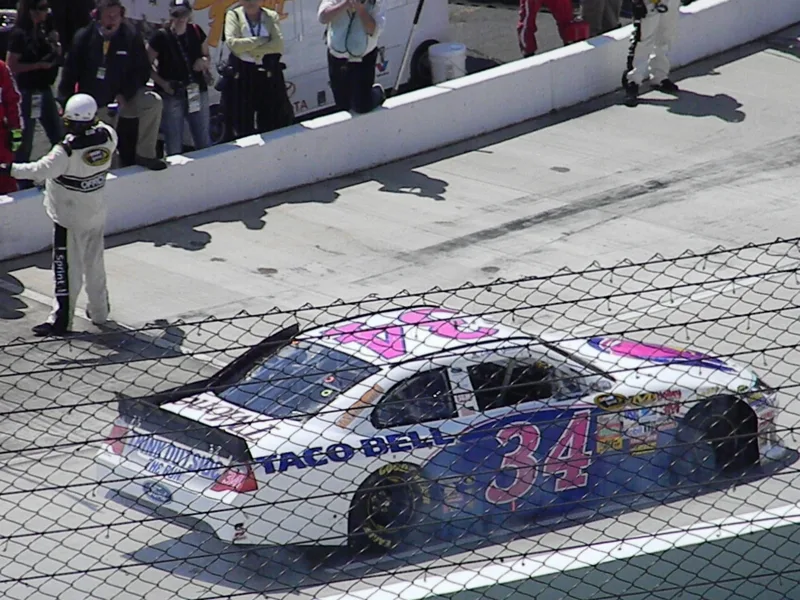
The team had spent nine years away from fielding race teams when it bought Front Row Motorsports' Nationwide operation. For 2010 it had three entries: the former Front Row No. 34 for Tony Raines, a new No. 35 for Jason Keller, and the No. 36 on a part-time basis. The cars used the team's own PME Motors engines.
Blake Koch drove the No. 8 full-time in 2015 with LeafFilter Gutter Protection as primary sponsor and Bruce Cook as crew chief. In 2016 Koch and LeafFilter moved to Kaulig Racing and took the No. 8 owner points, leaving the TriStar No. 8 team to be shut down.
Start-and-park cars: the No. 10, No. 14 and No. 44
The No. 10 began as the No. 36, a third car in 2010 with Tony Ave and Jeff Green behind the wheel and a start-and-park approach. Its prize money helped fund the No. 34 and No. 35 teams. For 2012 it returned as the No. 10. Cole Whitt ran a full race in it at Bristol in August 2013 and finished tenth with Gold Bond sponsorship.
In July 2014 a sudden downpour at Daytona caused a pack of TriStar cars to spin in qualifying. Four of them wrecked, and Blake Koch missed the race along with the No. 91 of Benny Gordon. The No. 10 was renumbered No. 19 in 2015 after Eric McClure returned, and it was revived as the No. 10 for 2016 with Jeff Green and Matt DiBenedetto running it as start-and-park entries.
The No. 14 started life as the No. 35 Chevrolet Impala in 2010, with Jason Keller driving and Bryan Berry on the pit box. It missed the first Daytona race because it was outside the top 35 in points and could not qualify on time. Keller's fourth place at Talladega was the team's first top 10. Eric McClure and his sponsor Hefty came to the No. 14 in 2011 from Team Rensi Motorsports, and he ran all 34 races that year, with a best finish of 18th at Chicago.
In 2015 Cale Conley drove the No. 14 for the full season, but he was released with three races to go for lack of sponsorship. J. J. Yeley returned in 2017 and finished 14th in points, and the team sold its cars and equipment to JP Motorsports in 2018.
The No. 44 first ran in 2011 with Jeff Green as a start-and-park entry at Daytona. Cole Whitt ran most of the 2013 races in it, and he left for Swan Racing at the end of that season. David Starr signed a three-year contract with TriStar and Zachry Group for 2015, and he finished 16th in points that year.
TriStar sometimes ran a fifth car, the No. 91, usually at restrictor-plate races or as a start-and-park entry when its four main cars were fully sponsored. In 2014 Jeff Green finished last in it at both Daytona and Auto Club.
Pro Motor Engines
Bryan Smith operates Pro Motor Engines, an independent engine builder that works across NASCAR, ARCA and SCCA. The company mainly builds and leases Chevrolet engines, along with the Toyota engines TriStar used. PME-powered teams won three Camping World Truck Series championships, in 2002, 2003 and 2009.
Engine builders Dennis Borem and Darrell Hoffman won three consecutive MAHLE Clevite Engine Builder of the Year awards from 2007 to 2009, Their awards were earned in competition with builders from some of the sport's best-known organizations, including Team Penske and Hendrick Motorsports.
Selected results
| Season | Entry | Driver | Result |
|---|---|---|---|
| 1989 | No. 18 Pontiac | Ron Esau | 38th after a wreck at Talladega |
| 1991 | Oldsmobile | Bobby Hamilton | 22nd in points, Rookie of the Year |
| 1994 | No. 19 | Loy Allen | 39th in points, pole at the Daytona 500 |
| 1996 | No. 19 | Loy Allen | Best finish 21st |
| 2017 | No. 72 Chevrolet SS | Whitt | Best finish 12th, 33rd in standings |
| 2018 | No. 72 | Corey LaJoie | 34th in driver standings, best finish 16th |