A Honda-powered car that started badly, lost a driver mid-season and only came alive for Verstappen in the final flyaway races, leaving the title two points away from Norris.
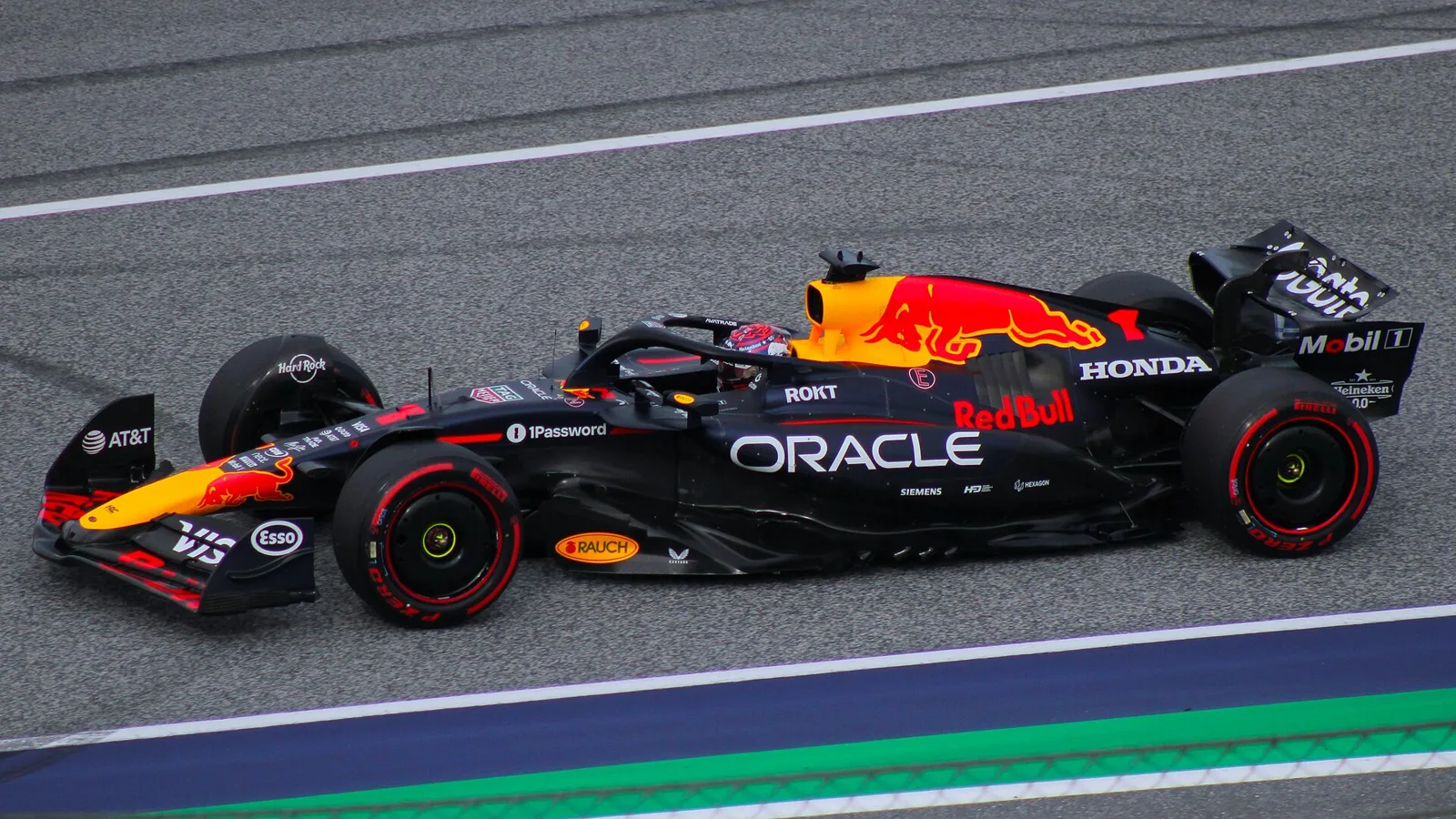
The RB21 was Red Bull's 2025 car, the first in years not designed by Adrian Newey. Powered by Honda, it was driven by Max Verstappen with Liam Lawson and then Yuki Tsunoda alongside him, and it carried Verstappen to eight wins.
The Red Bull Racing RB21 was the team's car for the 2025 Formula One season, the first Red Bull design not drawn by Adrian Newey since the RB2 and the last to carry Honda RBPT-badged power. Max Verstappen drove it throughout, and Liam Lawson and then Yuki Tsunoda partnered him in the second seat. The car started badly, was off the pace of McLaren's MCL39, and only came back into contention for Verstappen in the closing stretch, when he won the United States, Las Vegas, Qatar and Abu Dhabi Grands Prix. He still finished two points behind Lando Norris.
What was the Red Bull RB21?
The RB21 was Red Bull Racing's Formula One car for 2025, powered by the Honda RBPTH003 power unit. It followed the RB20, the car that had delivered the previous drivers' title. Its designer was Pierre Wache, the team's Technical Director.
The car was first shown at the F1 75 event at The O2 Arena on 18 February 2025, where all the teams unveiled their liveries. Its livery was similar to earlier Red Bull schemes, with minor sponsorship changes.
A Honda-powered car that Verstappen dragged into the final flyaway races, with the title lost by two points.
Who designed the RB21 and what changed?
The RB21 was the first Red Bull car since the RB2 not to be designed by Adrian Newey. It was also the first car designed by Technical Director Pierre Wache, who now leads the work on every future Red Bull challenger, from drawing board to production line. The RB21 was the first car for which he handled both processes.
The engine partnership was changing too. The RB21 was the last Red Bull car to use Honda RBPT-badged engines, because Honda returned in a fully fledged capacity for the new power unit rules and moved to supply Aston Martin from 2026. From the 2026 season Red Bull and its sister team Racing Bulls run Red Bull Powertrains Ford engines.
How did the RB21 start the 2025 season?
Pre-season testing at Bahrain gave an early warning. Red Bull completed 304 laps, the lowest total of the ten teams, and Verstappen said the team had work to do. Lawson described teething gremlins with the new car, and the car was off the pace of McLaren's MCL39 from the first race.
Lawson had raced part-time in 2023 and 2024 for two Red Bull sister teams, replacing Daniel Ricciardo each time. In Australia McLaren locked out the front row, and Verstappen started third and moved into second when Oscar Piastri spun. Lawson started from the pit lane after setup changes under parc ferme and then hit the wall on the formation lap, which ended his race before it began.
The Chinese Grand Prix sprint weekend was a poor one. Verstappen qualified second and finished third in the sprint, then qualified fourth for the race and finished just off the podium. Lawson took two last-place qualifying results, finished twelfth after three post-race disqualifications, and Red Bull opened talks about replacing him.
Why did Red Bull replace Lawson with Tsunoda?
Red Bull made the change at the Japanese Grand Prix, when Yuki Tsunoda replaced Lawson, who dropped back to Racing Bulls. Tsunoda qualified fifteenth and finished twelfth on his Red Bull debut, while Verstappen took Red Bull's first pole position and first win of the season in Japan.
The second seat was a constant problem for the rest of the year. Tsunoda struggled for pace, and Red Bull's results depended on Verstappen far more than on the car's balance. Persistent problems with the car, combined with Tsunoda's underperformance, meant Red Bull was knocked out of contention after the Azerbaijan Grand Prix.
How did the RB21 perform in the middle of the season?
The middle of the season was a mix of good and bad results. Verstappen won in Japan and at Imola, but Bahrain was weak, with slow pit stops that left him sixth. Tsunoda struck Carlos Sainz's Williams in Bahrain and finished ninth. In Saudi Arabia Verstappen took pole but lost the lead to Piastri after a move at turn one that exceeded track limits, and he was penalised.
Miami brought the first major upgrades. Verstappen was released unsafely into Kimi Antonelli in the sprint, which broke his front wing and brought a penalty he could not serve. A safety car after Fernando Alonso was hit by Lawson then left him last in the sprint, the first time he had finished out of the points in any race format since the 2016 Belgian Grand Prix.
At Imola the car found pace again. Tsunoda crashed heavily into the wall at turn six in qualifying, which destroyed both sides of his car and sent him to the pit lane for a full rebuild. Verstappen, who started second, won after a move into turn one. Tsunoda made up ten places on his spare chassis to score a single point, but that spare car lacked the upgrades and the effects were felt as late as Belgium.
Monaco was more controlled. Verstappen led most of the race, but a late second stop released Lando Norris, and he finished fourth. Tsunoda fell to seventeenth, two laps down. In Spain a collision with George Russell earned Verstappen a ten-second penalty that dropped him to tenth, and Red Bull fell to fourth in the constructors' championship behind Mercedes.
What happened at Austria, Britain and Hungary?
Austria was a disaster. Verstappen was seventh after qualifying and his race ended on lap one after Kimi Antonelli locked his brakes and sent himself into Verstappen's path. Tsunoda finished last of the finishers, two laps down, and Red Bull scored no points at its home race, the first time that had happened since the 2022 Bahrain Grand Prix.
Britain began well. Verstappen took pole in the dry qualifying session after a low-downforce set-up, with Tsunoda down in twelfth. The race was run in the rain, and Verstappen struggled with ride imbalance on quickly overheating intermediates. He spun at Stowe, dropped to tenth, and recovered to fifth, while Tsunoda finished last of the finishers in fifteenth.
Hungary was another weak weekend. Tsunoda was knocked out in Q1 again, and Verstappen qualified eighth behind the Sauber of Gabriel Bortoleto. He finished ninth behind Lawson, and Tsunoda scored no points. Belgium had a sprint win for Verstappen, though he finished fourth in the Grand Prix. Tsunoda was eleventh in qualifying for the sprint and twelfth in it, and his best race start was seventh on the grid, from which he finished thirteenth. Red Bull left the Hungaroring with mediocre results.
How did the closing rounds turn Verstappen's way?
The closing rounds were a different story for Verstappen. He won in Italy from pole, his third win of the season, and that victory came under the new team principal Laurent Mekies. Red Bull's constructors' hopes had faded by the Azerbaijan Grand Prix, but Verstappen kept his own title hopes alive.
Verstappen converted pole at Azerbaijan into his second straight win, and Tsunoda finished sixth. In Singapore Verstappen started and finished second behind George Russell, holding off Norris for the place. The United States Grand Prix was the turning point, as Verstappen won both the sprint and the main race from pole with Tsunoda seventh in both.
Mexico brought a third-place finish, after Verstappen was forced into the grass by a turn-one incident. Sao Paulo was a weekend of setbacks. Verstappen qualified sixteenth in the main race, Red Bull's first Q1 exit since 2006. He started from the pit lane, survived an early puncture and recovered to third, while Tsunoda finished seventeenth.
Verstappen then won at Las Vegas from second and at Qatar from third. He took pole and the win in Abu Dhabi as well, but Norris finished ahead of him on points and won the drivers' title by two points.
How did Tsunoda's season compare with Verstappen's?
Tsunoda's results were mostly in the lower half of the field. His best Grand Prix finish was sixth in Azerbaijan, and at Imola he scored only one point after a rebuild. He retired in Saudi Arabia after a collision on the opening lap, and he finished last of the finishers in Austria and Britain.
Verstappen's season was far stronger by comparison. He won in Japan, Imola, Italy and Azerbaijan, then added wins in the United States and at Las Vegas, Qatar and Abu Dhabi. The gap between the two drivers was wide, and it made the second-seat problem impossible to ignore.
What did the RB21's special liveries look like?
The RB21 ran two special schemes. The Japanese Grand Prix car carried a variation of the White Bull design used at the 2021 Turkish Grand Prix, marking the final year of the Honda partnership. At Emilia Romagna both cars wore numbers in the style of the 2005 to 2013 Red Bull cars for the team's 400th Grand Prix.
The Japanese design had a matte white finish with satin red logos, which drew on the racing colours of Japan. Red Bull unveiled it in the week before the race. The Emilia Romagna numbers paid tribute to the team's earlier liveries, and they were used only for that weekend.
What were the RB21's key results?
| Event | Verstappen | Tsunoda or Lawson |
|---|---|---|
| Australia | 2nd after Piastri spun | Lawson retired |
| Japan | 1st, Red Bull's first win | Tsunoda 12th |
| Bahrain | 6th | Tsunoda 9th |
| Saudi Arabia | Penalised after taking pole | Tsunoda retired |
| Miami | Last after sprint | Tsunoda 10th |
| Emilia Romagna | 1st | Tsunoda one point |
| Monaco | 4th | Tsunoda 17th |
| Spain | Tenth after penalty | Tsunoda 13th |
| Austria | Retired | Last of the finishers |
| Britain | 5th | Tsunoda 15th |
| Italy | 1st from pole | Tsunoda 13th |
| Azerbaijan | 1st from pole | Tsunoda 6th |
| United States | 1st from pole | Tsunoda 7th |
| Qatar | 1st from third | Not in the table |
| Abu Dhabi | 1st from pole | Not in the table |