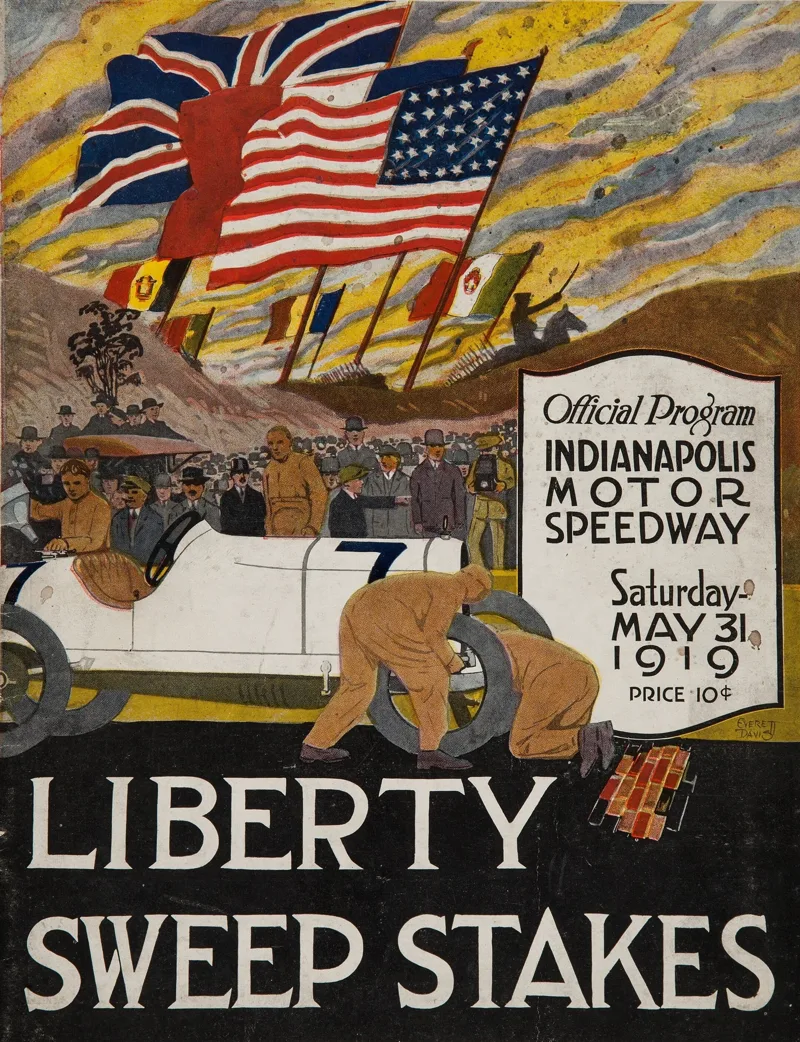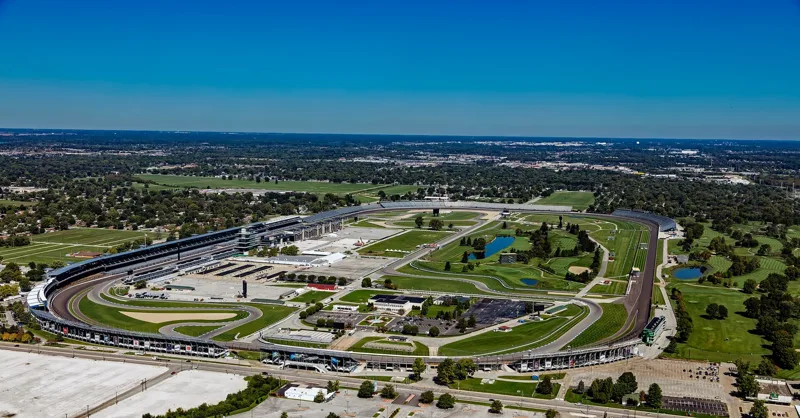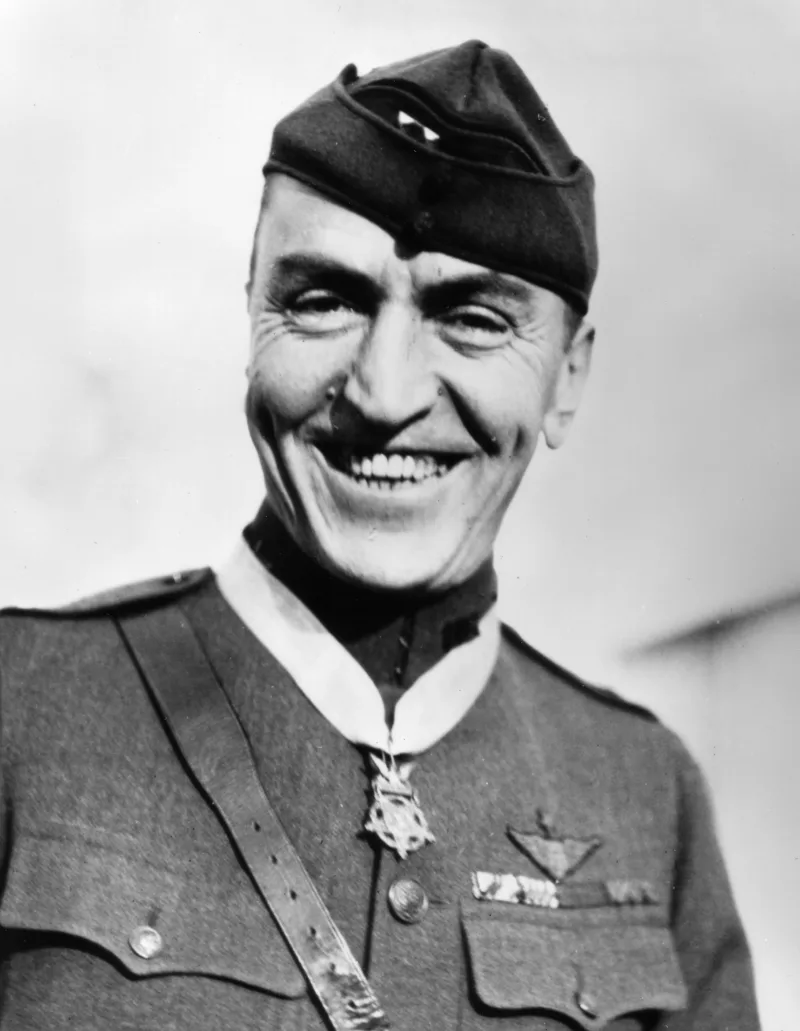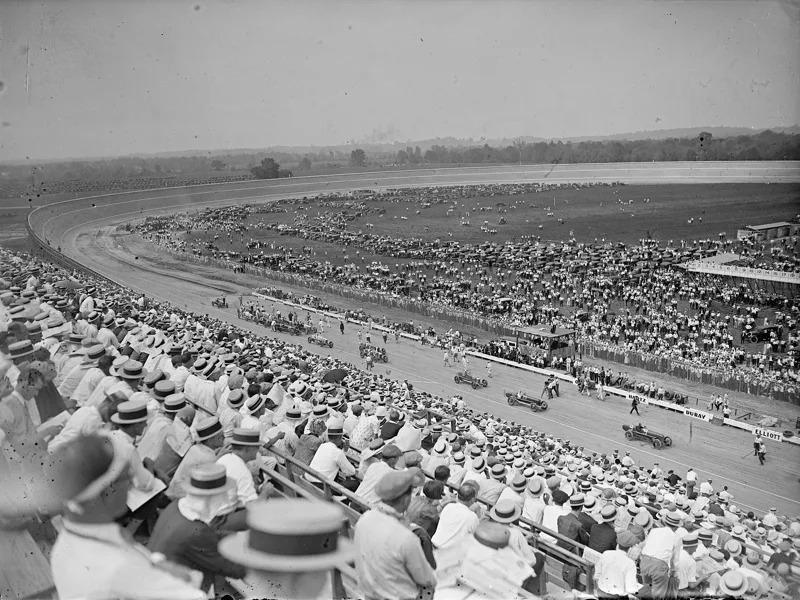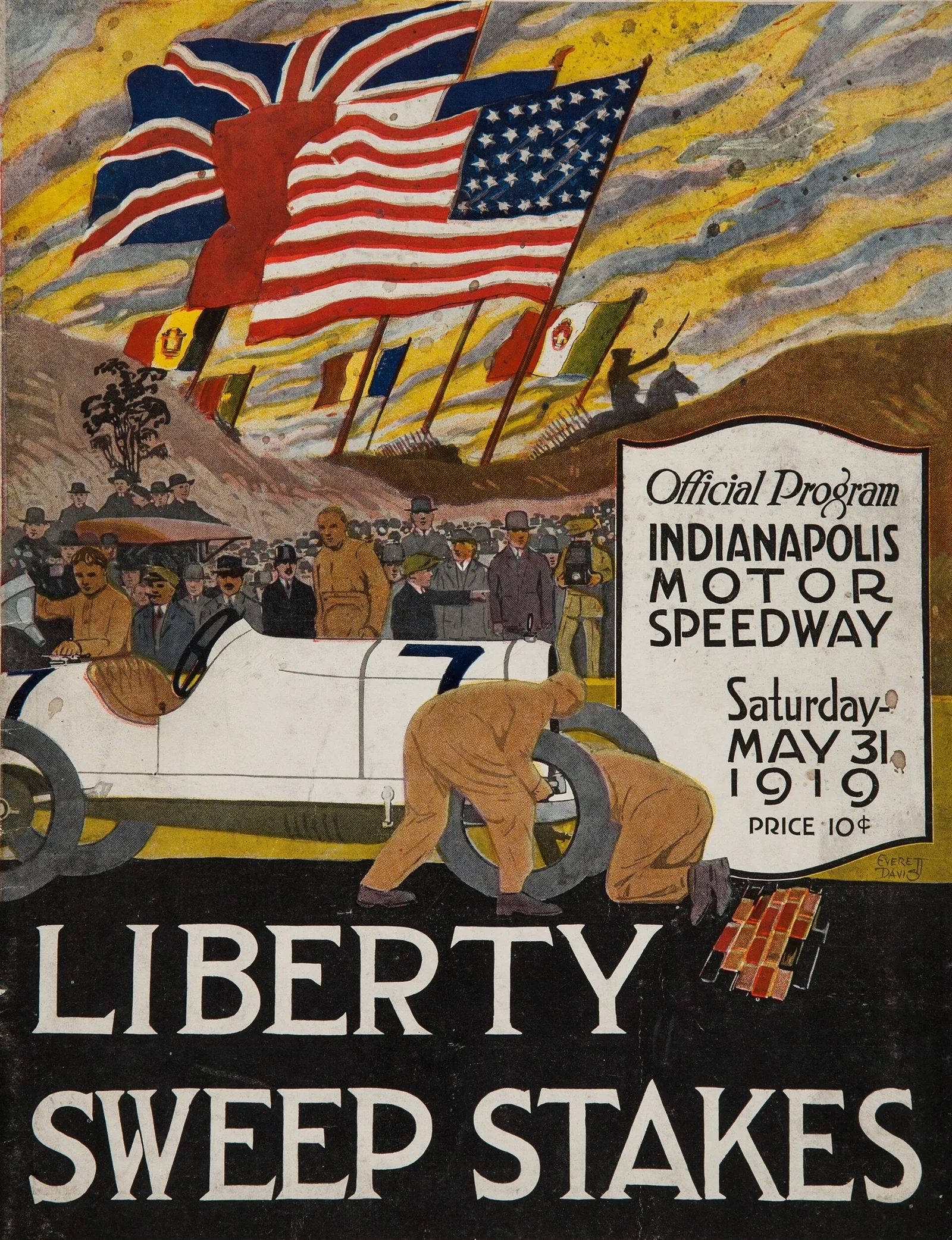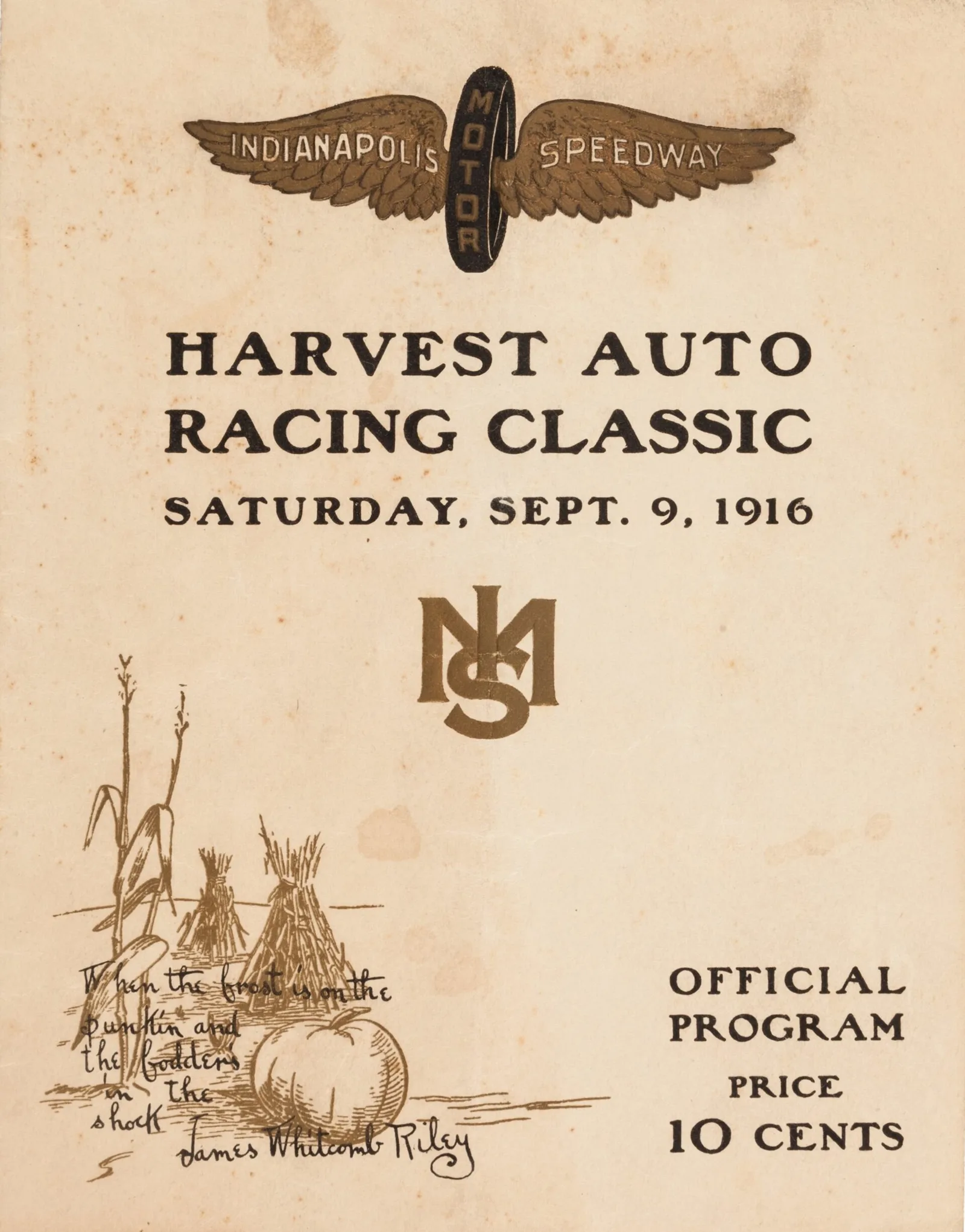
On one September afternoon in 1916 Johnny Aitken won all three races at Indianapolis, in the only meet held at the track between 1911 and 1993 besides the 500.
Johnny Aitken swept the three races at Indianapolis in September 1916. It was the only event other than the 500 held at the track from 1911 to 1993, and the last before the United States entered the First World War.
The Harvest Auto Racing Classic was a three-race meet at the Indianapolis Motor Speedway on Saturday, 9 September 1916, four months after the Indianapolis 500. Johnny Aitken won all three races, two of them by less than a car length, and the 100-mile event paid points toward the 1916 AAA National Championship.
Why did Indianapolis stage a second race meet in 1916?
Speedway president Carl G. Fisher wanted gate revenue, and the track had already been at odds with local hoteliers. A second meet gave the Brickyard its first race other than the 500 in five years, and it was named for the harvest season of late summer and early autumn.
The 1916 Indianapolis 500 had been cut to 300 miles because Fisher believed fans would enjoy a shorter event. The reception was poor, and the distance was reversed to 500 miles for the 1917 race, which was later cancelled as the United States moved towards war.
The date was also a matter of scheduling. Labor Day belonged to a new board track in Cincinnati, so Indianapolis moved its meet to the following Saturday, which fell after the Indiana State Fair closed. The track was therefore free to attract a stronger field.
Johnny Aitken won every race on the card, and the track did not run another Classic.
How were the three races organised?
The card had three events, a 20-mile sprint, a 50-mile race and a 100-mile championship event, each scored separately with its own cash prizes. All three ran under the AAA Contest Board, used the same cars as the Indianapolis 500 and carried riding mechanics.
The first two races were non-points events, while the 100-mile race paid AAA championship points. The short races began with a rolling start about 50 yards north of the line, and the 100-mile race used a pace car for one unscored warm-up lap before a flying start.
No elimination trials were held, because every car had already practised above 95 mph. As many as 25 entries had been expected, but the final list ran to 20 cars, and some of those later withdrew after damage at Cincinnati.
Who was on the entry list?
Johnny Aitken was the favourite, having taken pole for the 1916 Indianapolis 500 and won on the Monday at Cincinnati. Dario Resta, who had won the 500 in May, did not enter after blowing an engine at Cincinnati. Ralph DePalma had skipped the 500 over a dispute about appearance fees, and he reconciled with the track to enter this meet.
Eddie Rickenbacker and Tommy Milton chose to race only the 100-mile event. Louis Chevrolet, George Buzane, Hughie Hughes and Howdy Wilcox were among the other names on the list, and Jack Gable could not arrive from Chicago to drive the Burman Special.
Practice was lively and fragile. Johnny Aitken set the speed chart at 98.9 mph on Friday, 8 September, and returned on Saturday morning with a lap of 1 minute 31 seconds. Josef Christiaens' Sunbeam suffered a broken crankshaft, and he sat out all three races.
Who chose to race all three events?
Johnny Aitken and Ralph DePalma were among those who elected to attempt all three races, while other drivers picked their events individually. Practice was open on Thursday, 6 September, and Friday, 7 September, as well as on the Saturday morning.
How did the 20-mile race unfold?
Johnny Aitken led from the outside of the front row, with Louis Chevrolet and Howdy Wilcox behind him. Wilcox passed Chevrolet for second on lap two, and on the final lap Aitken held off Wilcox to win by 0.33 seconds, about one car length.
The posted purse was $1,000 for the 8-lap race, and ten cars lined up. The crowd was disappointing, with between 10,000 and 12,000 people on a sunny afternoon. Aitken collected $400 for first place, Wilcox took $300, Chevrolet $200 and Hughes $100.
What happened in the 50-mile race?
Howdy Wilcox led the first six laps of the 50-mile race, but a pit stop to change two tires cost him minutes. Aitken took the lead and held off Hughie Hughes by 0.28 seconds, a margin of about four feet at the line.
Two cars, Ralph DePalma and Art Klein, dropped out after seven laps with dirty spark plugs. The 50-mile purse was $2,000, and Aitken collected $700 for the win, Hughes $500 and Louis Chevrolet $400 for third.
How did the 100-mile championship race play out?
The 100-mile race carried $9,000 in total prize money, with George Buzane on pole. Aitken led the first 23 laps, but Eddie Rickenbacker took the lead and held it for much of the middle of the race before both leaders faced trouble near the finish.
On lap 36 the steering arm on Aitken's right wheel broke, leaving the car almost undriveable. Rickenbacker moved out to a near half-lap lead, but with two laps to go his right rear wheel collapsed in turn four, and the car slid across the inside of the track. He and his riding mechanic George Henderson were uninjured.
Aitken limped the damaged car home with just one wheel still attached to the steering linkage. He crossed the line 19 seconds ahead of Hughie Hughes, sweeping all three events that afternoon.
How much did the drivers win?
Johnny Aitken won $3500 for the 100-mile race, which lifted his earnings for the day to $4600. Hughie Hughes took $2000 and Wilbur D'Alene $1200 for third, while polesitter George Buzane collected $1000 for fourth place. Aitken's total for the day was the largest of any driver in the meet.
| Race | Distance | Winner | Winner's prize | Margin |
|---|---|---|---|---|
| First race | 20 miles, 8 laps | Johnny Aitken | $400 | 0.33 seconds |
| Second race | 50 miles, 20 laps | Johnny Aitken | $700 | 0.28 seconds |
| Championship race | 100 miles, 40 laps | Johnny Aitken | $3500 | 19 seconds |
What was the 1916 Indianapolis 500 like?
Dario Resta won the 1916 Indianapolis 500 on 30 May, four months before the Classic. Many of the cars and drivers from that race came back for the September meet, which reused the same machinery and the same pit area.
Ralph DePalma had won the 1915 edition, so his absence from the 1916 race was a notable gap.
Why did 1916 matter for the national championship?
The AAA Contest Board set up an official points-paying national championship of drivers for 1916. Between 1904 and 1919 the AAA sanctioned many races, but an official national championship had been awarded only in 1905 and 1916, which gave the Classic's 100-mile race extra weight.
Why was the Saturday start time moved?
Ticket sales were light all week, and the Speedway feared that locals would not come so soon after the state fair. On Friday the general manager, Theodore E. Pop Myers, moved the start from 1:30 pm to 2 pm, so that people who had to work on Saturday morning could still reach the track.
A final practice session and a band contest on Saturday morning entertained the early arrivals. Only as few as 14 cars were ready in the garage area, because Jack Gable could not reach Indianapolis from Chicago to drive the Burman Special.
Which driver took the first practice laps?
Wilbur D'Alene was the first to take the circuit, on the Thursday, 7 September, for a handful of practice laps. Nobody else ran that day, and the quicker times arrived on the Friday. The fastest laps of the week came on that Friday.
How did the Classic compare with the Indianapolis 500?
The Classic used the same cars and drivers as the 500, but it was the only race other than the 500 held at the track between 1911 and 1993. Starting in 1911 the 500 became the only race held there each year, after several race meets in 1909 and 1910.
What did the 100-mile race start look like?
Buzane started from the front, with the field arranged four abreast. A pace car circulated for a single lap that did not count, and then the race was started on the move, as at the 500. Johnny Aitken led the first 23 laps from that start.
Johnny Aitken took the lead on the first lap. Eddie Rickenbacker, who had skipped the two shorter races, began farther back but was up to second by lap four, and Tommy Milton dropped out on lap eight with ignition trouble.
Which entrants were hit by mechanical failures?
William Muller withdrew from the meet after an engine failure at Cincinnati, and Art Klein was finished for the day after the 50-mile race. Josef Christiaens' Sunbeam had suffered a broken crankshaft in practice, and he sat out all three races.
Lower down the 100-mile order, Hughie Hughes and Wilbur D'Alene ran close together for much of the race, while Omar Toft, Pete Henderson and Ralph DePalma traded seventh to ninth. Toft finished sixth, 2.65 seconds ahead of Henderson.
Who finished in the money in the 100-mile race?
Johnny Aitken won the 100-mile race ahead of Hughie Hughes and Wilbur D'Alene. George Buzane took fourth, Dave Lewis fifth, Omar Toft sixth and Pete Henderson seventh, each collecting a share of the $9,000 purse. Each place paid, so the whole field below the leaders had a stake in the finish.
Toft beat Henderson to the line for sixth place by 2.65 seconds, while Ralph DePalma finished eighth, 29.17 seconds behind Henderson, and was out of the money in all three races that day.
What was the Speedway's role during the war?
After racing stopped in 1917, the Speedway took on a military role as a landing strip and maintenance stop for aircraft moving between Wilbur Wright Field and Chanute Air Force Base. During that period it was known as the Speedway Aviation Repair Depot, and an aero repair squadron was based there.
The AAA National Championship was suspended in 1917 and 1918, although AAA races continued at other tracks during the war years. Racing returned to Indianapolis with the 500 in 1919, but the Classic was never held again.
What happened to the track after 1916?
The 1917 Indianapolis 500 was cancelled on 23 March 1917, and racing was halted at the track through 1917 and 1918. The Speedway served as a landing strip and repair depot for military aircraft, and the Harvest Classic was never run again.
Aitken's place in the record books is long. He held an all-time track record of 15 race wins at Indianapolis, a record that still stood as of 2022. He died in 1918 of bronchopneumonia linked to the influenza pandemic.
The 2018 and 2019 September editions of the Brickyard 400 each included an Xfinity and a Cup race, along with a dirt race called the Bryan Clauson Classic. All four races moved to July in 2020. In 2020 the IndyCar Harvest GP was named in tribute to the meet, and the 8 Hours of Indianapolis was set to return in 2021.
The 100-mile race was Aitken's final start at Indianapolis, which made the Classic his last appearance on the track.
The IndyCar Harvest GP, a road course race, was first scheduled as a single event on 3 October. It was changed to a doubleheader, with races on 2 and 3 October, and it served as a support event for the 8 Hours of Indianapolis.
The three races were a short footnote in the track's history, but they still show how one driver's speed could carry an entire card in 1916.