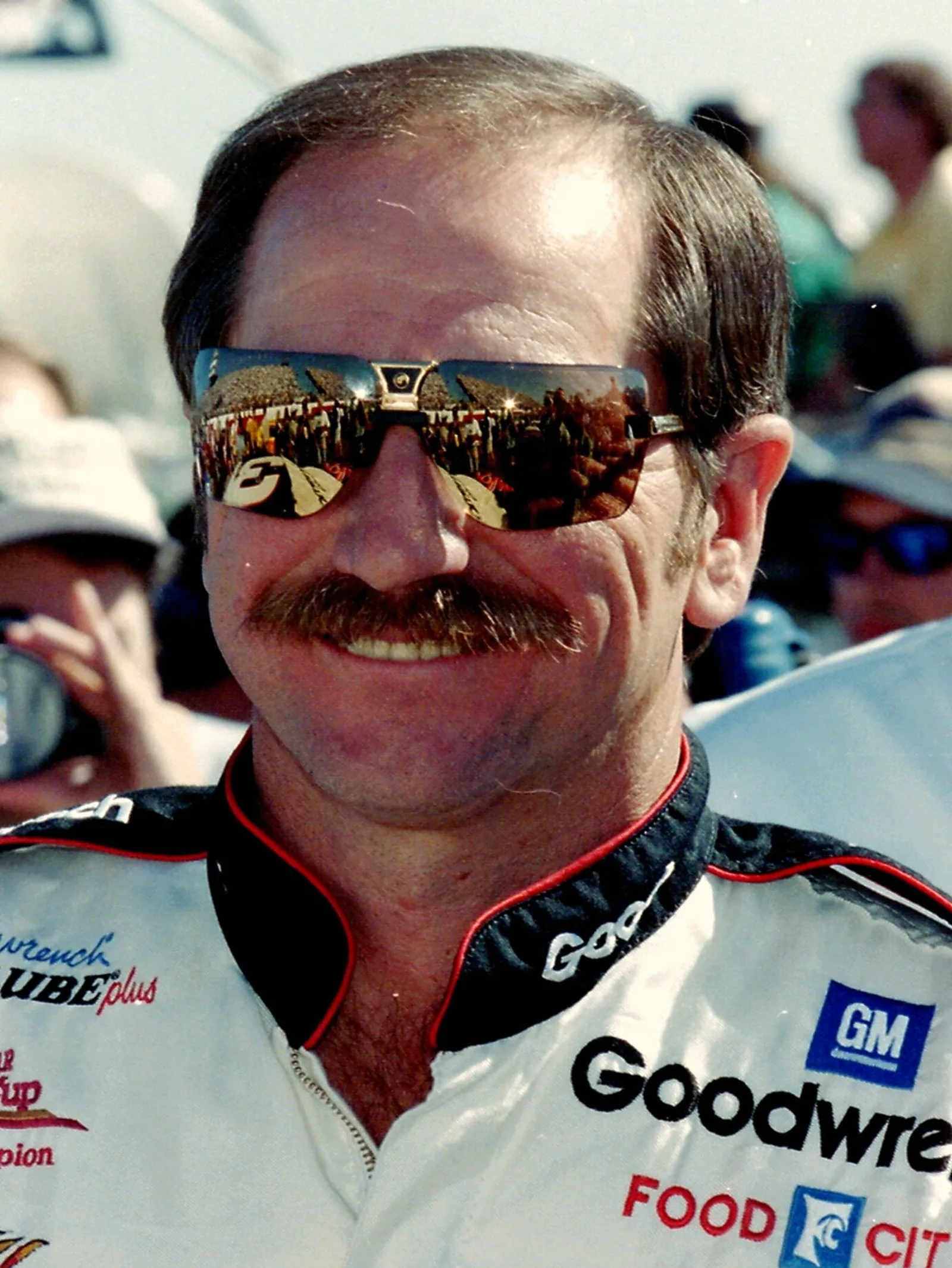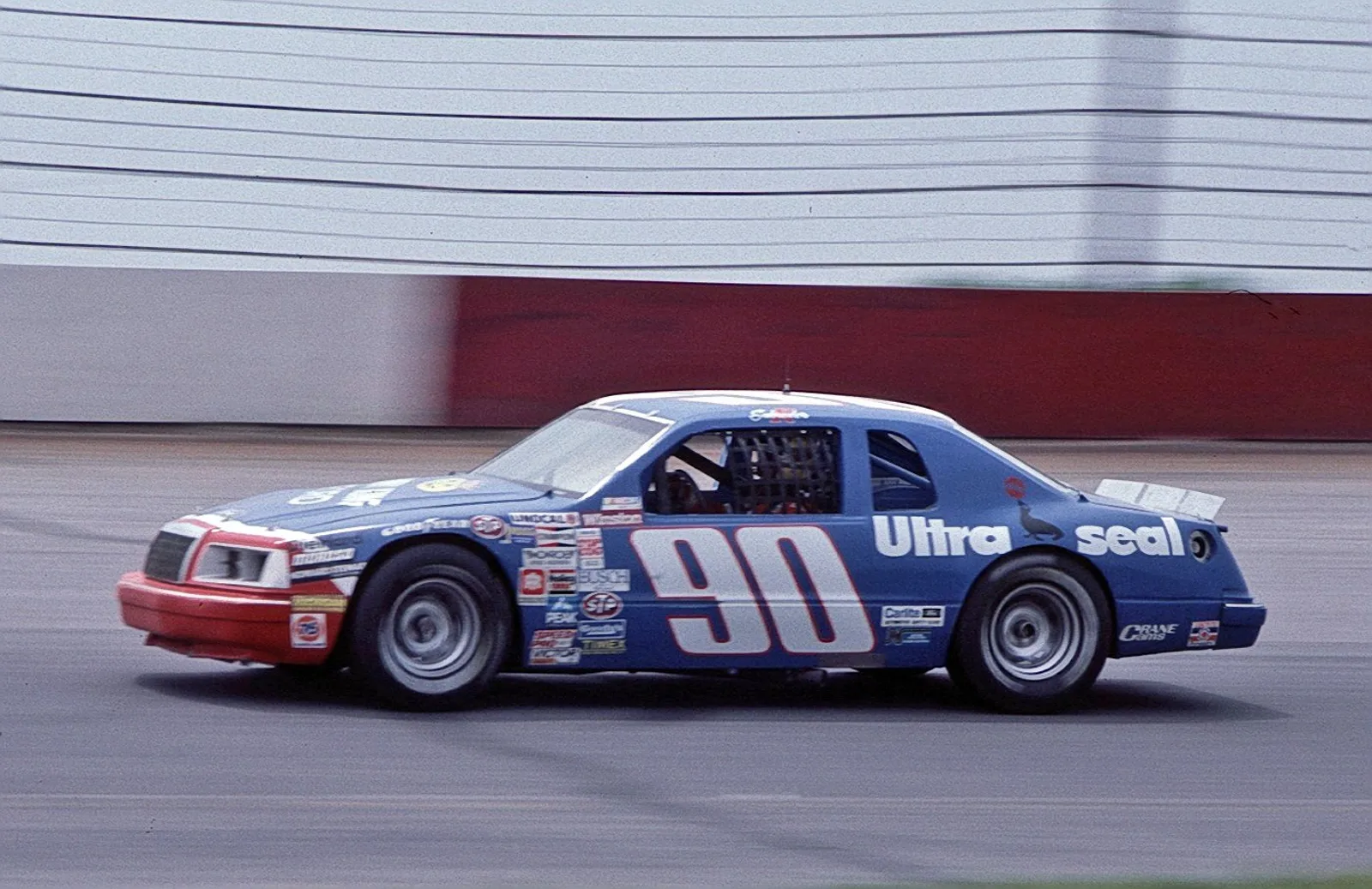
Junie Donlavey's team raced from 1950 to 2004, with one points win in 1981, two pole positions and a No. 90 Ford that became its signature.
Donlavey Racing was a NASCAR Winston Cup team owned by Junie Donlavey, which competed from 1950 until 2004. It ran 863 races, used many makes and numbers, and became best known for its No. 90 Ford. Its only points win came in 1981, when Jody Ridley took the Mason-Dixon 500.
From its first entry in 1950 until its last in 2004, Junie Donlavey's team raced in NASCAR's top division. Its No. 90 Ford became the car it is best known for, and its only points win came with Jody Ridley at the 1981 Mason-Dixon 500.
Who ran Donlavey Racing and how long did it last?
Junie Donlavey owned the team, which competed in the NASCAR Winston Cup Series from 1950 until 2004. It ran 863 races, used a number of makes and numbers, and was best known for its No. 90 Ford. Sixty-seven different drivers ran at least one race for it.
The team's record has gaps. Donlavey made his debut as an owner in 1950, ran a car again in 1952, and then did not field one until 1957. He ran only one race in 1959, and Sonny Hutchins returned to the grid for the team in 1965.
A Winston Cup team with one points win, three Rookie of the Year drivers and a long-running No. 90 Ford.
How did the team start out in the 1950s?
Donlavey's first race as an owner came in 1950 at Martinsville Speedway, where Runt Harris drove the Oldsmobile to a nineteenth-place finish after mechanical failures. In 1952 Joe Weatherly drove the No. 53 Hudson Hornet at the Southern 500, starting 38th and finishing 16th. Emanuel Zervakis then drove the No. 90 Ford at Raleigh Speedway in 1957, finishing 24th.
Zervakis ran two more races that year, at Langhorne Speedway and Martinsville, finishing 26th and 22nd. Harris added a 39th at the Southern 500, and Zervakis came back the next season to run Donlavey's Chevys without finishing a race. The 1959 entry was a single race at the Capital City 200, where Harris finished fifth.
What did Sonny Hutchins achieve in the 1960s?
Donlavey returned to the grid in 1965, when Sonny Hutchins took over the ride. Hutchins made ten starts that year, and scored a fifth at Moyock and a tenth at Martinsville. After a 1966 season without a top ten, he had two top-ten finishes in 1967 and finished 34th in points.
The 1968 season was harder, with four starts that all ended in DNFs. In 1969 Hutchins made eight starts and had two second-place finishes, at Dover and Richmond. He returned in 1970 with a fifth at Richmond before being removed from the ride.
Earlier in the decade the team had been more scattered. Tiny Lund finished 36th at the Atlanta 500 after an early engine failure, and Johnny Roberts finished 21st at Richmond in 1961 after a blown head gasket. Speedy Thompson took over for three races, with a best finish of 12th at the Dixie 300.
What did the team achieve in the 1970s?
Bill Dennis won Rookie of the Year honours in 1970, and in his first full season that followed he had ten top-ten finishes and finished eighteenth in points. LeeRoy Yarbrough made one start for the team at Trenton Speedway, but his engine expired several laps in.
In 1973 Donlavey secured its first full-time sponsor, Truxmore Industries. In 1975 the owner decided to run full time and hired Dick Brooks, who took 25 starts, collected six top-fives and ended up 10th in points. A second car, the No. 93, ran that year for Kenny Brightbill, Dick May, Earl Ross and Jody Ridley.
The team also entered endurance racing. In 1976 the No. 90 Ford Torino ran the 24 Hours of Le Mans for Dick Brooks, Dick Hutcherson and Marcel Mignot, but it retired with transmission failure after 11 hours. Brooks finished tenth in points again that season and had eighteen top-tens.
Who were the main drivers in the 1980s?
Ricky Rudd signed to drive the No. 90 in 1979, competing in 28 races with 17 top-ten finishes and ninth place in points. When Rudd left at the end of that season, Jody Ridley took over the car for a full year, with eighteen top tens and seventh in points in 1980 when he was named Rookie of the Year.
Ridley finished fifth in points the next season and won the Mason-Dixon 500, the only points win the team recorded. After losing the Truxmore sponsorship, J. D. Stacy backed the car in 1982, but without a top five Ridley left the team. Brooks returned in 1983 with two top fives and 14th in points, backed by Chameleon Sunglasses.
Ken Schrader was signed as a rookie in 1985 with new sponsorship from Ultra Seal, and he finished sixteenth in points. Red Baron Frozen Pizza became the primary sponsor in 1986. In 1987 Schrader took one of the two Daytona 500 qualifying races, picked up a pole at Darlington Raceway and finished tenth in championship points.
When Schrader left, Benny Parsons drove with Bull's Eye Barbecue Sauce as sponsor. Parsons made 27 starts in what turned out to be his last season, with an eighth-place finish at Phoenix International Raceway. After the season Bull's Eye left, and Donlavey signed rookie Chad Little. Little struggled and was released after the Coca-Cola 600, and Donlavey cut back to a part-time schedule, with Stan Barrett and Lennie Pond running selected races.
How did the team fare in the 1990s?
In 1990 Donlavey signed True Cure as sponsor and Ernie Irvan as driver. True Cure did not meet its financial expectations, and the contract was cancelled. Robby Gordon ran the first two races of 1991, finishing 18th and 26th, and Wally Dallenbach Jr. ran eleven races for the team that season.
A second entry, the No. 91, ran at the GM Goodwrench 500 with J. T. Hayes sharing the team with Irvan. After three races Irvan left for Morgan-McClure Motorsports, and Buddy Baker and Charlie Glotzbach ran nine races between them for the rest of the season. Dorsey Schroeder had started 1992 with the team before Charlie Glotzbach took over for two races. Todd Bodine made his first Cup start at Watkins Glen in a Donlavey Ford renumbered No. 34, and Bobby Hillin Jr. came back for a full season with Heilig-Meyers sponsorship.
Mike Wallace made 22 starts in 1994 and finished fifth at the Hooters 500 that closed the season. Wallace came back in 1995 and slipped to 34th in points. After ten starts in 1996 he was released in favour of Dick Trickle, whose best that season was a thirteenth at Michigan.
Trickle posted two top-fives and finished 31st in points in 1997, then improved to 29th in 1998. At the end of that year he left the team, along with a sponsor and the crew chief Tommy Baldwin Jr.
What happened to the No. 90 in 1999?
Donlavey announced that rookie Mike Harmon would drive the No. 90 Big Daddy's BBQ Sauce Ford Taurus in 1999. Sponsorship payments were late, and Harmon was fired before the Daytona 500, with Mike Wallace taking over. The Big Daddy's contract was then cancelled, and the team ran that race on sponsorship from Accu-turn and Kodiak.
Morgan Shepherd took the ride at Rockingham the following week, and Stanton Barrett drove at Las Vegas Motor Speedway. Stricklin and Ed Berrier later split the remaining races with the two of them, keeping the car on track through the rest of the year.
How did the team wind down between 2000 and 2004?
Ed Berrier signed for the No. 90 in 2000 with Hills Brothers Coffee as sponsor, but he failed to qualify nine times and was released. Hut Stricklin drove the car full time in 2001, earning a sixth-place run at Michigan, but results did not improve much.
Late that season Sara Lee, the parent company of Hills Brothers, asked Donlavey to move the team from Richmond to North Carolina. When he refused, the sponsorship was withdrawn and Sara Lee signed Bill Davis Racing to sponsor a new car with Stricklin as its driver. Rick Mast took the No. 90 permanently and ran it for the rest of the year without sponsor decals.
Mast later had a best finish of 24th at Darlington before he was diagnosed with carbon monoxide poisoning and forced to leave racing. C.F. Sauer, whose Duke's Mayonnaise had sponsored the earlier car, then pulled its backing from the No. 90. In 2003 Kirk Shelmerdine drove the car at the Daytona 500 but missed the field.
Donlavey planned a limited 2004 schedule with Kevin Ray and Boudreaux's Butt Paste as sponsor, but that deal ended up running only one ARCA race at Pocono. The team was absent from the grid in 2005. In September 2006, at a gathering at Richmond, he said he still had several cars in his shop but had no plans to return to racing.
What were the team's main eras?
| Era | Key drivers | Notable result |
|---|---|---|
| 1950 to 1961 | Runt Harris, Joe Weatherly, Emanuel Zervakis | Nineteenth-place finish on the 1950 debut at Martinsville |
| 1965 to 1970 | Sonny Hutchins | Two second-place finishes in 1969, at Dover and Richmond |
| 1970 to 1972 | Bill Dennis | Rookie of the Year in 1970 |
| 1975 to 1978 | Dick Brooks | Tenth in points in 1975 with six top-fives |
| 1979 to 1982 | Ricky Rudd, Jody Ridley | Ridley won the 1981 Mason-Dixon 500 |
| 1985 to 1987 | Ken Schrader | Tenth in championship points in 1987 |
| 1990 to 1998 | Ernie Irvan, Mike Wallace, Dick Trickle | Fifth at the 1994 Hooters 500 |
| 1999 to 2002 | Mike Harmon, Hut Stricklin, Rick Mast | Best finish of 24th at Darlington for Mast |
| 2004 | Kevin Ray | One ARCA race at Pocono |
What is Donlavey Racing's legacy?
Donlavey Racing's record rests on its length and its people. It ran 863 races between 1950 and 2004, and Sixty-seven different drivers took the wheel at least once. Three of those drivers won Rookie of the Year honours, and several former and future NASCAR race winners raced for the team.
The team's signature was the No. 90 Ford, and Donlavey himself stayed involved in NASCAR after the team closed. He died in 2014, more than a decade after the team stopped running. The driver history also lists figures such as Fred Lorenzen and Johnny Rutherford, who both drove for the team in 1972.