A postponed opener at Daytona where a fuel fire stopped the race for more than two hours before Matt Kenseth took the win.
The 2012 Daytona 500 was the first race of the 2012 NASCAR Sprint Cup season, run on 27 and 28 February at Daytona International Speedway. Matt Kenseth won the 202-lap race for Roush Fenway Racing after a rain delay and a two-hour stoppage caused by a fire.
The 2012 Daytona 500 opened the 2012 NASCAR Sprint Cup Series season and was the 54th running of the event. Matt Kenseth won it for Roush Fenway Racing after a rain postponement, a long stoppage caused by a fire on the track and a closing stint that held off Dale Earnhardt Jr. and Greg Biffle.
When and where was the 2012 Daytona 500 held?
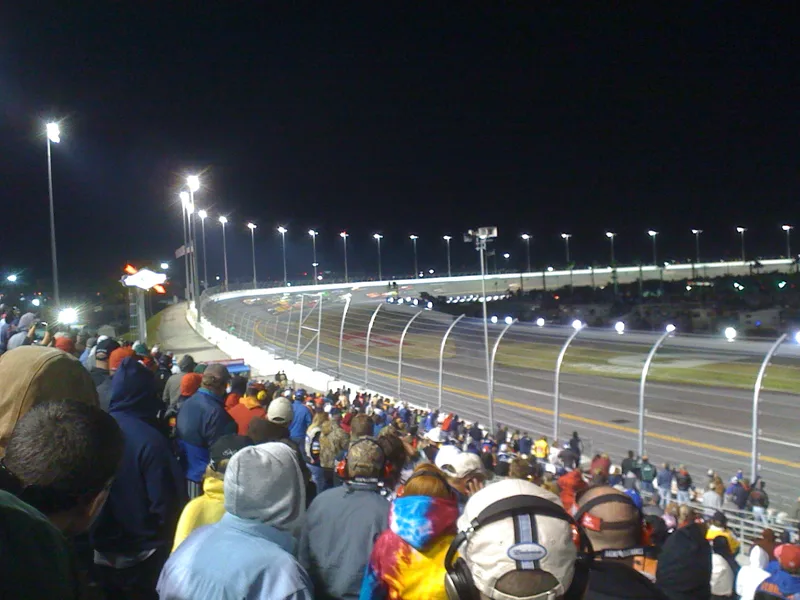
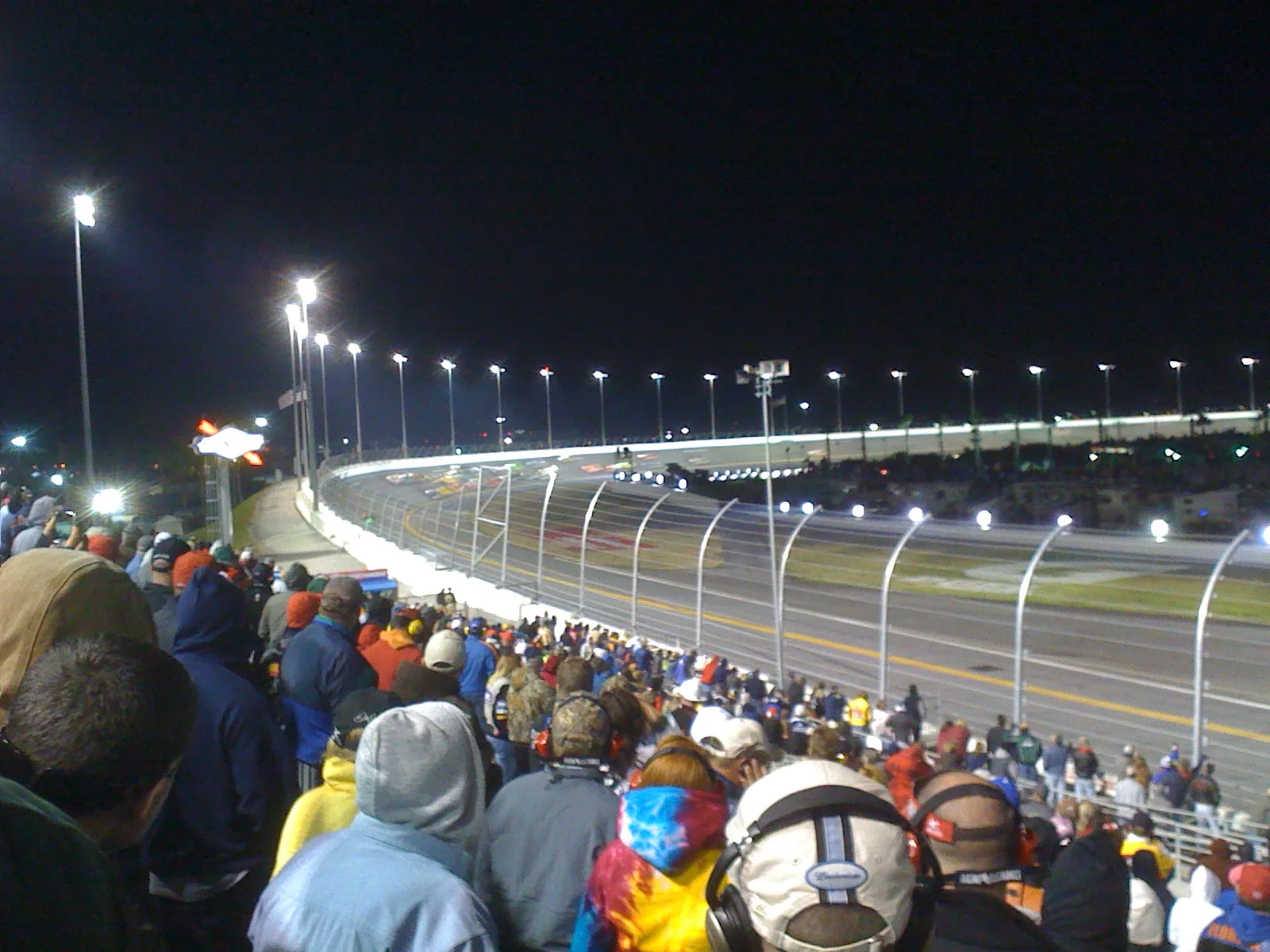
The race ran on 27 and 28 February 2012 at Daytona International Speedway in Daytona Beach, Florida, before 140,000 spectators. Rain pushed the original 26 February date aside, and the start moved to 7:02 p.m. EST on the 27th, which made it the first Daytona 500 ever postponed.
The circuit is a four-turn superspeedway 2.5 miles (4.0 km) long. Its turns are banked at 31 degrees and the front straight at 18 degrees, and the finish line sits on that front straight. Fox carried the race in the United States and TSN2 covered it in Canada, with Mike Joy calling the action from the booth.
A rain-delayed opener where a jet dryer fire, not the finish, became the defining story of the afternoon.
Why is the Daytona 500 so important?
NASCAR founder Bill France Sr. conceived the race and staged it at the speedway he owned. The first running took place in 1959, and it replaced a series of shorter contests held on the beaches around Daytona Beach. The race has opened the NASCAR season since 1982.
From 1988 the race was one of four events run with restrictor plates, alongside the summer 400-mile race at Daytona and two races at Talladega Superspeedway. The plates limit engine power, which encourages drivers to race in tight packs. The Daytona 500 also offers the largest purse of any auto race held in the United States, which keeps it at the top of the calendar.
Why was the 2012 race moved to the last Sunday of February?
The race had usually been held on Presidents' Day weekend, but NASCAR shifted it to the final Sunday of February. The decision was announced on 20 February 2011, and it was designed to avoid a possible clash with the Super Bowl, which could follow an extended National Football League schedule.
The change shortened the NASCAR season by one week. NASCAR said it wanted to keep momentum going through the early part of the year, and it judged the trade-off to be worth making.
What car changes were made before the 2012 race?
Two-car tandem drafting, which had dominated restrictor-plate races during 2011, was the main target. NASCAR cut radiator capacity from five litres to two and moved the air intakes toward the front of the car. The restrictor plate was also reduced by 0.4 mm, and the cars ran softer springs with a smaller rear spoiler.
The aim was to take away the advantage of drafting in pairs and to make the cars harder to turn. The Sprint Cup Series director, John Darby, said the goal was to give teams more options when it came to drafting, and to narrow the speed gap between tandem racing and the pack racing that fans were used to seeing.
Tests from 12 to 14 January showed that more adjustment was needed. NASCAR widened the restrictor-plate opening by 0.79 mm to 2.4 cm and cut the pressure release valve from 30 psi (2.1 bar) to 25 psi (1.7 bar). Kyle Busch set the fastest test speed, 325.734 km/h (202.402 mph), during the afternoon session.
The Budweiser Shootout that preceded the race exposed engine overheating in packs, so the valve was raised again, from 25 psi (1.7 bar) to 28 psi (1.9 bar), to bring temperatures down.
What happened during Speedweeks practice?
Speedweeks featured seven practice sessions before the race, beginning on 18 February. Greg Biffle set the fastest time in that opening session at 46.537 seconds, only 0.011 seconds ahead of Marcos Ambrose.
Matt Kenseth led the third session at 44.809 seconds, and Aric Almirola led the fourth at 45.065 seconds, with 25 drivers taking part in that run. In another session Juan Pablo Montoya made contact with Kasey Kahne, who spun into the grass and lost parts of his nose, so he needed a back-up car for the rest of Speedweeks.
Kurt Busch hit a bird during the final session, and the impact tore a small hole in his radiator and drained the car. The damage could not be repaired, so his team changed the engine. Several other drivers also ran back-up cars after wrecks in the duels, including Danica Patrick, David Gilliland, Montoya and Paul Menard.
How fast were the cars in qualifying?
Carl Edwards claimed his eleventh career pole with a lap of 46.216 seconds, his first on the Daytona 500 grid. It was the fastest average speed recorded there since Jeff Gordon's pole lap in 1999, and Greg Biffle joined him on the front row.
Forty-nine cars entered qualifying, but only forty-three could race. The rest of the grid was settled by two Gatorade Duels, and Tony Stewart and Matt Kenseth won those heats to start third and fourth. Ford cars held the top two spots for the first time since the 2007 race.
Bowyer recorded the 22nd fastest qualifying time, but his car failed the post-race height inspection twice. That penalty sent him to the rear of the field for the second Gatorade Duel. Six drivers missed the race entirely, including Michael Waltrip and J. J. Yeley.
How did the race unfold on the track?
The race was originally due on 26 February, but rain pushed it to 27 February and to 7:02 p.m. EST, the first Daytona 500 to start in primetime. Cloud kept the air temperature at 21 degrees Celsius (69 degrees Fahrenheit) at the start. Biffle was quicker off the line than his teammate Edwards and led into the first turn.
A five-car crash on lap 2 began when Elliott Sadler made contact with Jimmie Johnson in the tri-oval. Johnson's car spun sideways into Danica Patrick, Kurt Busch, David Ragan and Trevor Bayne. Johnson and Ragan were out, while Patrick, Bayne and Busch drove back to their garages. None of the drivers involved were hurt.
Regan Smith took the lead on lap 11, but Biffle regained it a lap later with help from Edwards. On lap 13 Ryan Newman looped his car on the backstretch, and a second caution followed as his loose left-front tyre struck Allmendinger on pit road.
Denny Hamlin, who had stayed out, led the field back to speed on lap 17 and pulled away with Menard tucked into his tow. By lap 25 Hamlin still led Menard, Ragan, Logano, Jeff Burton, Ambrose and Truex, who had climbed from 26th to eighth since the start.
Burton inherited the lead on lap 44 with help from Biffle, and Jeff Gordon went ahead on lap 61. A debris caution three laps later brought the leaders in, and Gordon ran out front during the stops. Kenseth's car developed a water pressure fault during his stop on lap 66, and he rejoined the race in 33rd place.
Truex passed Biffle to lead on lap 76 and collected $200,000 as the halfway leader. A few laps later Gordon's engine failed in turn three, bringing out the fourth caution. Ambrose made contact with Terry Labonte on lap 88 to produce the fifth, and Edwards was running 21st by lap 110 while reporting fluctuations in his fuel pressure.
Bowyer ran out of fuel on lap 127 and coasted to a stop in turn two, which brought out the sixth caution of the race. Kenseth moved to the front on lap 146, and Dale Earnhardt Jr. went second two laps later after passing Joey Logano.
Why did the 2012 race stop for more than two hours?
On lap 160 Juan Pablo Montoya's car lost a rear trailing arm at turn three, where two jet dryers were clearing debris. He skidded up the banking and struck a trailer-mounted jet engine carrying 200 US gallons (760 litres; 170 imperial gallons) of kerosene, which ruptured the fuel tank and spilled fuel across the track.
The fuel ignited about a minute later and created a wall of fire, and the red flag came out. Officials spent two hours and five minutes putting the fire out, repatching the surface and drying the oil with a quick-dry product. Montoya climbed out unaided, but safety truck driver Duane Barnes, aged 52, needed help down the banking.
Montoya and Barnes were examined at Halifax Medical Center. The jet dryer and its truck were removed by two forklifts. Brad Keselowski photographed the scene through his windscreen with an iPhone and posted the picture online while the race was stopped. NASCAR did not penalise him and let him keep the phone for the rest of the season.
How did the race finish?
The race restarted under caution at 11:57 p.m. EST. Mears ran dry at turn two and had to be pushed to pit road, and a group of cars that had not pitted under caution, including Dave Blaney and Gilliland, took on fuel, which let Kenseth lead the lap 166 restart ahead of Biffle and Earnhardt.
An eighth caution came out on lap 176, after Mears touched Aric Almirola and then struck the side of Ambrose in turn one. Five laps after the restart, Jamie McMurray cut a tyre, veered into Kahne and set off an eleven-car chain reaction on the frontstretch that involved Edwards, Stewart, Almirola, Keselowski and Smith.
The race restarted on lap 194 with Kenseth out front. A second big pile-up at the entry to turn one took in 18 cars, among them Stewart and Ryan Newman, and it brought out the final caution. At the lap 201 restart the field took a green-white-checkered finish, which extended the race to 202 laps.
Kenseth held off Biffle and Earnhardt over the last two laps. Biffle moved to block Earnhardt on the backstretch, but Earnhardt drove past him for second leaving turn four. Hamlin finished fourth, and Burton took fifth. The race lasted three hours and thirty-six minutes, and the winning margin was 0.210 seconds.
What did the result mean for the standings?
Kenseth's win gave him the Drivers' Championship lead with 47 points, five clear of Earnhardt, Biffle and Hamlin, who were tied on 42. Jeff Burton was fifth on 40 points after the opening round of the season.
In the Manufacturers' Championship Ford took the lead with nine points, three ahead of Chevrolet. Toyota had four points and Dodge was one point behind them in fourth. Kenseth's victory was the 300th for Roush Fenway Racing across NASCAR's three national series, and it paid him $1,589,390.
| Finish | Driver | Notes |
|---|---|---|
| First | Matt Kenseth | Roush Fenway Racing; first win of 2012 and second Daytona 500 |
| Second | Dale Earnhardt Jr. | Hendrick Motorsports; passed Biffle leaving turn four on the last lap |
| Third | Greg Biffle | Roush Fenway; led early and fought for the lead through the closing laps |
| Fourth | Denny Hamlin | Led 57 laps during the race |
| Fifth | Jeff Burton | Finished in the top five after leading briefly on lap 44 |
What penalties followed the race?
Two days after the race NASCAR penalised Hendrick Motorsports over Jimmie Johnson's car. Crew chief Chad Knaus was fined $100,000 and, with car chief Ron Malec, suspended for six races. Jeff Gordon and Johnson each lost 25 owner and driver points.
Some observers, including former driver Kyle Petty, felt the sanctions went too far because the car had never been raced. Hendrick appealed, and the first appeal was lost on 13 March. The final appeal, heard by National Commissioner John Middlebrook on 20 March, lifted the six-race suspension and restored the points, but the fine remained.
How did the track and TV figures look afterwards?
Track officials found the damage in turn three worse than first thought, and a second patch was laid before Daytona Bike Week in March. Lane Construction, the firm that had resurfaced the whole circuit before 2011, later stripped out the damaged section and laid new asphalt before the summer race.
From a later race that season, NASCAR required a second pace car to trail the final jet dryer in each of its three national divisions. Jet dryer drivers were also allowed to wear helmets and fire suits for extra protection, and several media groups called the incident one of the most bizarre events in the sport's history.
Television figures were strong. The race averaged 13.69 million viewers, and 36.5 million people watched all or part of it, a rise of 22 percent on the previous year. It was Fox's most-watched NASCAR race and its best-rated Monday night broadcast in sixteen months, and it was the second-most-watched Daytona 500 behind the 2006 race.