A stolen Ferrari dossier, a record fine and a title race that ran alongside a dispute over emails and fuel data.
The 2007 Formula One espionage controversy began with Ferrari's complaint against Nigel Stepney and a McLaren engineer over stolen technical documents. The FIA excluded McLaren from the 2007 Constructors' Championship in September 2007 and fined the team a record US$100 million.
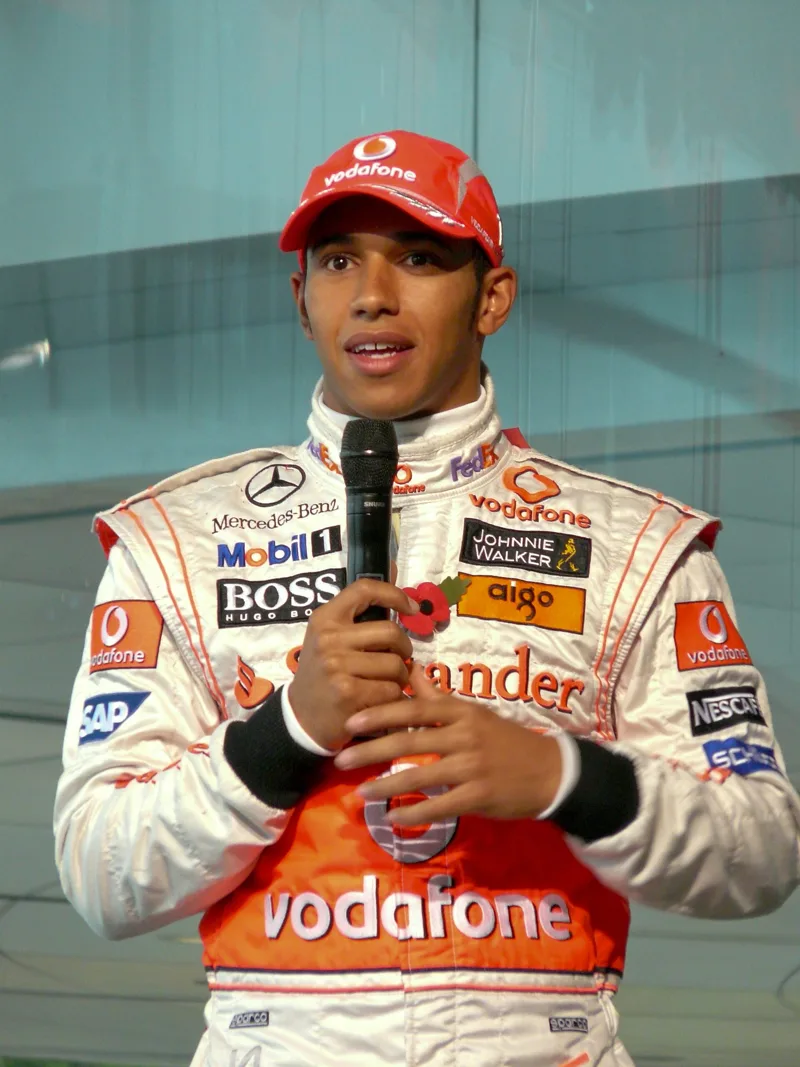
A record US$100 million fine followed a case that began with confidential Ferrari documents turning up at a McLaren engineer's home. McLaren also lost every constructors' point it had scored in 2007. The affair later reached Renault and ran alongside the drivers' title fight until the final race.
What was the 2007 Formula One espionage controversy?
The 2007 Formula One espionage controversy, also known as Spygate and Stepneygate, centred on confidential Ferrari technical information that passed between teams. It involved McLaren, Ferrari and Renault F1, and the case began with Ferrari's complaint against a former employee and a McLaren engineer.
Nigel Stepney had been part of the group that brought Ferrari back to the front in the late nineties, alongside Michael Schumacher, Jean Todt, Ross Brawn and Rory Byrne. In February 2007 he publicly said he was unhappy after Brawn's departure, and Ferrari later gave him a role as head of Team Performance Development that took him away from the races.
Stepney himself had said he was looking at spending a year away from Ferrari and wanted to move forward with his career. He added that he would consider a move to another team if an opportunity arose.
Ferrari lodged a formal complaint against Stepney in the week beginning 17 June 2007, around the United States Grand Prix. On 3 July 2007 it announced that its internal investigation had led to his dismissal, and the same day it acted against a McLaren engineer, later named as Mike Coughlan.
A stolen dossier and a record fine turned a dispute between two garages into a case for the FIA.
How did Stepney and Coughlan become involved?
Ferrari said it had presented its case to the Modena tribunal and that legal action had been started in England. A search warrant related to Coughlan's home produced what Ferrari said were documents from its Maranello factory. McLaren suspended Coughlan while the matter was investigated.
Ferrari's spokesman, Luca Colajanni, told ITV Sport that the action against Stepney related to irregularities found at the Ferrari factory before the Monaco Grand Prix.
On 10 July 2007 a High Court hearing opened and was adjourned until the following day, so that Coughlan could submit an affidavit. Ferrari alleged he held 780 pages of its documentation, and that his wife had taken them to a photocopy shop near Woking. Ferrari only learned the material had gone missing after a member of the shop's staff noticed the papers were confidential and contacted the team's headquarters in Italy.
Coughlan did not submit the affidavit, because it could have been used against him in an Italian court case. Late on 10 July Ferrari reached an agreement with the Coughlans, dropping its High Court case in return for full disclosure and a promise of future cooperation.
On 16 July McLaren said its own investigation had found no Ferrari materials in the hands of any employee other than the one Ferrari had sued. The team said the unsolicited material held at his home had not been known to anyone else before 3 July.
Why did the first FIA hearing end without a penalty?
McLaren responded on 4 July 2007 by saying its investigation had found no Ferrari intellectual property passed to other team members or built into its cars. It invited the FIA to inspect the cars, and it later supplied drawings and development documents for every chassis update made since the end of April.
On 12 July the FIA summoned McLaren to an extraordinary meeting of its World Motor Sport Council. At the hearing on 26 July 2007 the council found that Vodafone McLaren-Mercedes possessed confidential Ferrari information and had therefore breached the code. With no evidence that the information had been used, no punishment was imposed, although the FIA reserved the right to reconvene if such evidence emerged.
Ferrari called the decision incomprehensible, while Autosport described the team as furious. McLaren welcomed the ruling as fair, and the case moved to the FIA International Court of Appeal, where a hearing had been set for 13 September 2007.
Key dates in the McLaren case
| Date | Event |
|---|---|
| 3 July 2007 | Ferrari dismisses Nigel Stepney after its internal investigation |
| 10 July 2007 | Ferrari drops its High Court case in return for cooperation |
| 26 July 2007 | FIA finds McLaren held Ferrari information but imposes no penalty |
| 13 September 2007 | Points withdrawn and US$100 million fine imposed |
| 6 December 2007 | Renault found guilty but escapes penalty |
| 23 February 2009 | Legal proceedings in Italy dropped |
What penalties did McLaren receive in September?
On 5 September the FIA said it had received new evidence and would reopen the investigation on 13 September, replacing the planned appeal. The evidence turned out to be emails sent by a driver to Bernie Ecclestone, the sport's commercial rights holder, who passed them to the FIA.
The hearing on 13 September imposed the penalty: exclusion from the 2007 Constructors' Championship, withdrawal of all points McLaren had been awarded in every round, a record fine of US$100 million less the TV and travel income lost, and an obligation to submit the 2008 chassis for scrutiny. The team was not banned from the sport.
McLaren expected its real cost to be closer to $31 million. The fine remains the largest in sporting history, as of 2025.
Alonso and Lewis Hamilton kept their points, since McLaren's drivers had been offered immunity in exchange for their cooperation. Any win by a McLaren driver from then on was to be followed by a podium with no team representative on it except the driver.
The FIA asked Alonso, Hamilton and de la Rosa to help its inquiry. In return it gave an assurance that the information they supplied would not lead to proceedings against them personally, although a driver found to have withheld relevant information could face serious consequences.
Did the affair involve Renault as well?
Renault was drawn in when, on 8 November 2007, the FIA announced it would summon the team to answer a charge of possessing confidential information about the 2006 and 2007 McLaren cars. The material covered the layout and critical dimensions of the McLaren car, along with its fuelling system, gear assembly, oil cooling, hydraulic controls and a J-damper suspension component.
According to FIA President Max Mosley, the link ran through an employee, Philip Mackereth, who had moved from McLaren to Renault and taken the information with him. The hearing was set for 6 December 2007, and on that day the council found Renault guilty of breaching the code but it escaped any penalty.
McLaren had approached the FIA on 11 September with questions about Renault and possibly other teams. Its argument was that if McLaren was guilty, other teams might be as well.
What role did the Hungarian weekend and Alonso's emails play?
The 2007 Hungarian Grand Prix was a difficult weekend for McLaren. Hamilton disobeyed a team instruction that disadvantaged Alonso, and in qualifying Alonso held Hamilton up in the pit lane, denying him a final lap. Television showed Ron Dennis throwing his headphones down, and afterwards he was seen in a tense exchange with Alonso's trainer.
On the morning of the race, 5 August, Alonso reportedly met Dennis in his motorhome and threatened to send his email exchanges with the test driver Pedro de la Rosa and Coughlan to the FIA. Dennis told Max Mosley about the conversation and said the threat was an empty one, and Mosley later withdrew his suggestion that Dennis had lied.
Earlier, on 1 August 2007, Dennis had written an open letter to the president of the Italian motorsport authority, accusing Ferrari of a false and dishonest version of events. The same letter claimed the car that won the 2007 Australian Grand Prix had been illegal.
How did the matter finally end?
On 14 September Dennis said he had alerted the FIA to further evidence. On 15 September Mosley disputed that account, saying Dennis had told him Alonso had decided to send the emails himself.
On 21 October, at the final race in Brazil, both McLaren drivers lost the championship to Kimi Raikkonen, so the team's penalty and the title fight ended on the same weekend.
On 13 December McLaren issued a press release detailing a letter from its chief operating officer, Martin Whitmarsh. The letter accepted that a number of McLaren employees had access to Ferrari technical information, apologised for the time it took for the matter to come to light, and offered a moratorium on the use of the systems. The FIA then asked its council to cancel the hearing set for 14 February 2008 and to treat the matter as closed.
Legal proceedings against McLaren employees in Italy were dropped on 23 February 2009. Coughlan paid EUR 180,000, and three McLaren employees, Paddy Lowe, Jonathan Neale and Rob Taylor, paid EUR 150,000 between them.
Why does the McLaren fine still matter?
The headline figure of US$100 million was reduced by the TV and travel income McLaren lost as a result of the point deduction, which is why the team expected a lower payment than the headline suggested. The points were the other half of the sanction, and they were removed from the Constructors' table in full.