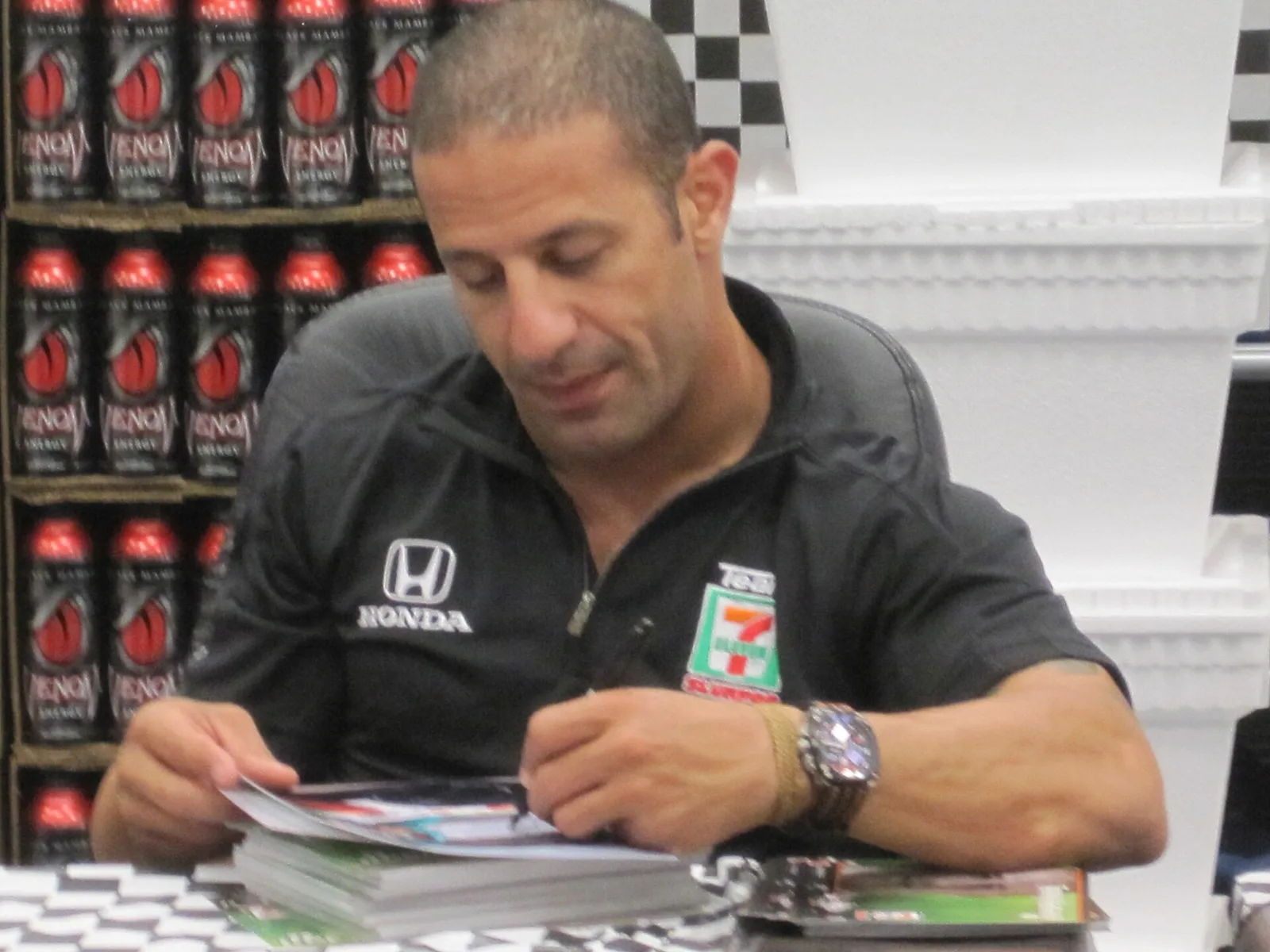
Fourteen straight wins for Honda, a championship for Tony Kanaan and a rain-shortened Indianapolis 500 in the last oval-only season.
The 2004 season was the ninth for the IRL IndyCar Series, run over 16 races. Honda won fourteen straight races, Tony Kanaan took the Drivers' Championship and Buddy Rice won a rain-shortened Indianapolis 500.
The 2004 IndyCar Series belonged to Honda and to Andretti Green Racing. Tony Kanaan took the Drivers' Championship at California, while Buddy Rice won the Indianapolis 500 in a race cut short by rain.
What was the 2004 IndyCar Series?
The 2004 IndyCar Series was the ninth season of the IRL's top-level American open-wheel formula. It ran 16 races from February 29 at Homestead to October 17 at Texas, and it was the last season without road courses before they arrived in 2005.
Four championships were decided: the drivers', entrants', engine manufacturers' and chassis manufacturers' titles. Points rules changed for the year, so cars finishing nineteenth to twenty-fourth earned twelve points, and the bonus for leading the most laps rose from two to three points.
Private testing was banned except for official open tests. Engine capacity was also reduced from 3.5 litres to 3.0 litres from the Indianapolis 500 onwards, and fuel capacity dropped from 35 gallons to 30 gallons, roughly one stop every 60 miles.
The 2004 schedule was unveiled on September 17, 2003, with oval tracks only. The Milwaukee Mile joined the calendar in 2004, and Gateway International Raceway was dropped after three years on the schedule.
Honda won fourteen straight races, and the championship went to the driver who finished every lap of the season.
Who changed teams and drivers before the season?
Sam Hornish Jr. replaced Gil de Ferran, who retired after the 2003 season, and Tony Renna's death in a testing crash led Darren Manning to drive for Chip Ganassi Racing. Dixon changed his car number to 1, and Buddy Rice took over from the injured Kenny Brack at Rahal Letterman Racing.
Brack was badly hurt in a crash at the 2003 Chevy 500. Rice was meant to be a temporary stand-in, but he stayed with the team for the whole season as it became clear Brack would not return to the series soon.
Dario Franchitti returned after back injuries, with Bryan Herta filling in for most of the season. Adrian Fernandez left Champ Car for the IndyCar Series from Phoenix, and Bobby Rahal withdrew his team from Champ Car to run two full-time cars and a part-timer.
Rumours circulated that Fernandez and Rahal had each been paid $6 million to switch allegiance, with the money coming from Honda or from IRL chief executive Tony George. Roth Racing bought the assets of Panther's Infiniti Pro Series programme, and Marty Roth became the oldest Indianapolis 500 rookie since Jack Hewitt in 1998.
Mark Taylor was replaced by Townsend Bell at Panther Racing after a string of early crashes, and Al Unser Jr. retired after twenty-three seasons.
Why did Honda dominate the 2004 season?
Honda won fourteen consecutive races and took its first Engine Manufacturers' Championship at the Belterra Casino Indy 300 in Kentucky. Andretti Green Racing won half the season's races, which made the team the best of the Honda operations. It was Honda's second year in the series.
Honda's edge over Chevrolet and Toyota left Panther Racing and Chip Ganassi Racing without a win, despite their earlier success. Scott Dixon, the reigning champion, could not win a race and finished tenth in the standings.
Honda's run ended at Texas, when Helio Castroneves won the season-ending Chevy 500 and ended the streak of fourteen wins.
How did Tony Kanaan win the title?
Kanaan finished no worse than fifth after a poor start, and he completed all 3,305 race laps of the season. He clinched his only Drivers' Championship at the Toyota Indy 400 in California, where he finished second behind Fernandez by 0.0183 seconds.
Kanaan's consistency was the story of the year. Journalists noted that he completed every lap, a feat believed to be a first in top-level racing, and he set a series record of 889 laps led in a season.
He took the championship lead with his win at Texas, and his advantage over Buddy Rice and Wheldon was built race by race. At Kansas his lead over Wheldon grew from fifteen to twenty-eight points, and after his Nashville win it reached sixty-one points.
Kanaan's title was not an easy one. At California an engine problem stopped him from qualifying, but he worked his way from the back to second in the early laps. Rice and Wheldon had each still been in contention before the final rounds.
Who won the Indianapolis 500?
Buddy Rice won the 88th Indianapolis 500 after a rain-shortened race that ended on lap 180. He was the first American to win the race since Eddie Cheever in 1998, and the first winner in the race to use a Honda engine.
Opening day practice began on May 9. Rice took pole on Pole Day at 222.024 mph (357.313 km/h), a four-lap average, ahead of Wheldon and Franchitti, and and Honda-powered cars filled the front of the grid.
Rain held up the start for two hours and eleven minutes, and the first stoppage came on lap 27. Robby Gordon, who was headed to the Coca-Cola race that day, handed his car to Jaques Lazier when the race resumed.
Rice stalled on a pit stop late in the race and still went on to win. Rain returned, and the race ended on lap 180, twenty laps short of its full distance. It was the first rain-shortened Indianapolis 500 since 1976.
Kanaan, Wheldon and Herta finished behind Rice. Both A. J. Foyt cars had crashed within the first fifty-six laps, and Matsuura won the Rookie of the Year award.
How did the mid-season rounds play out?
Kanaan won at Texas, Rice won at Kansas by a scant margin, and Dario Franchitti took the Milwaukee race. Honda took the top six at Kansas, while Chevrolet's Barron finished third at Texas after starting 22nd.
Texas was the first race there since Kenny Brack's crash in October 2003, and the Bombardier 500 saw eleven collisions. Kanaan overtook Wheldon during a restart on lap 188, and Franchitti finished second for a one-two for Andretti Green Racing.
Barron had started 22nd because of a faulty gearbox, but he recovered to third, Chevrolet's first podium finish of the season. Hornish finished fourth after bending suspension pieces while avoiding two cars.
Rice's runner-up finish moved him up to second in the championship, ahead of Wheldon.
Who won at Richmond and Kansas?
Wheldon won at Richmond after taking the lead for good late on, and Rice won at Kansas by 0.0051 seconds over Meira. Both Rice and Meira drove for Rahal Letterman Racing at Kansas.
At Richmond, Castroneves described the new repaved surface as extremely smooth. He and Hornish dominated the first half, but Wheldon, who had started far back, saved fuel and avoided pit stops for the closing laps.
Kansas was decided over the final laps, with Rice and Meira trading the lead several times. The race was the second-closest finish in series history, and Kanaan finished third to widen his advantage from fifteen to twenty-eight points over Wheldon.
At Nashville, Kanaan held the lead for the closing laps and beat off Hornish's last-lap charge, extending his championship lead to sixty-one points over Wheldon.
What happened at Milwaukee and Michigan?
Franchitti won his first IndyCar race at Milwaukee, and Rice finished second to him after a hard battle. At Michigan Rice beat Kanaan by 0.0796 seconds, cutting Kanaan's lead to fifty-seven points. Michigan's average race speed was 293.099 km/h (182.123 mph).
At Milwaukee, Franchitti pitted under a caution to change tyres and then held off Rice for the rest of the race. It was Franchitti's first IndyCar Series victory.
Kanaan led 184 laps at Michigan, but the team told him to let Rice pass in the late stages, because it believed Rice would run out of fuel. Rice made it to the flag and held off Kanaan, who tried a late move on the outside but came up short.
The only crashes at Michigan happened on pit road, when Scheckter hit his mechanic and fractured his leg.
Who won at Kentucky and Pikes Peak?
Adrian Fernandez won at Kentucky by 0.0581 seconds over Rice, the closest finish in the history of Kentucky Speedway. At Pikes Peak, Franchitti led 128 laps to win the Honda Indy 225, while Rice was left sixty-eight points behind Kanaan in the title race.
Kentucky was Fernandez's first IndyCar win. He had reclaimed the lead from Rice shortly after a restart, and it was Honda's tenth consecutive win, earning the Engine Manufacturers' Championship in its second year in the series.
Franchitti's win at Pikes Peak came from the front for much of the race, and he led the final laps. Rice's title hopes were hurt on the opening lap when he bumped into Scheckter and hit the inside wall.
How did Nazareth and Chicagoland finish?
Wheldon won the Firestone Indy 225 at Nazareth, the 100th IndyCar race, and Kanaan and Franchitti finished second and third for the first one-two-three team sweep in series history. Fernandez won at Chicagoland Speedway, his second race of the season.
Nazareth Speedway shut down at the end of the year because of poor attendance, so the race was its final event. Michael Andretti said it was the biggest win of his career as a team owner.
At Chicagoland, Rice crashed on lap 186 after Manning's tyre clipped his left-rear, sending him airborne and upside-down on the back stretch. He escaped with scorch marks on his helmet and no injuries.
Fernandez had a broken air jack at his first stop, but he used an alternate strategy to stay in contention and held off Herta on the final restart.
How did the title race finish at California and Texas?
Kanaan needed fourth or better at California to clinch the title, and Fernandez won the race by 0.0183 seconds ahead of him. Castroneves won the season finale at Texas, but Kanaan finished 0.0018 seconds ahead of Wheldon for second place.
At California, Fernandez used Kanaan's slipstream on the final lap to gain momentum on the outside line in turn three. Kanaan's second place was enough to secure his first Drivers' Championship, and it was the first title for Michael Andretti as a team owner.
Wheldon was handed a drive-through penalty late in the California race for blocking Hornish, and he later called it a bad call. He still charged to third on the last lap, and Rice finished fifth.
At Texas, Castroneves took a record-tying fourth consecutive pole and won the Chevy 500. After the race he was penalised for jumping the restart, with a $50,000 fine and a loss of fifteen points, and the results stood.
Who won each of the 16 races?
| Race | Winner | Team |
|---|---|---|
| Toyota Indy 300, Homestead | Sam Hornish Jr. | Team Penske |
| Copper World Indy 200, Phoenix | Tony Kanaan | Andretti Green Racing |
| Indy Japan 300, Motegi | Dan Wheldon | Andretti Green Racing |
| 88th Indianapolis 500 | Buddy Rice | Rahal Letterman Racing |
| Bombardier 500, Texas | Tony Kanaan | Andretti Green Racing |
| SunTrust Indy Challenge, Richmond | Dan Wheldon | Andretti Green Racing |
| Argent Mortgage 300, Kansas | Buddy Rice | Rahal Letterman Racing |
| Firestone Indy 200, Nashville | Tony Kanaan | Andretti Green Racing |
| Menards A. J. Foyt Indy 225, Milwaukee | Dario Franchitti | Andretti Green Racing |
| Indy 400, Michigan | Buddy Rice | Rahal Letterman Racing |
| Belterra Casino Indy 300, Kentucky | Adrian Fernandez | Fernandez Racing |
| Honda Indy 225, Pikes Peak | Dario Franchitti | Andretti Green Racing |
| Firestone Indy 225, Nazareth | Dan Wheldon | Andretti Green Racing |
| Delphi Indy 300, Chicagoland | Adrian Fernandez | Fernandez Racing |
| Toyota Indy 400, California | Adrian Fernandez | Fernandez Racing |
| Chevy 500, Texas | Helio Castroneves | Team Penske |