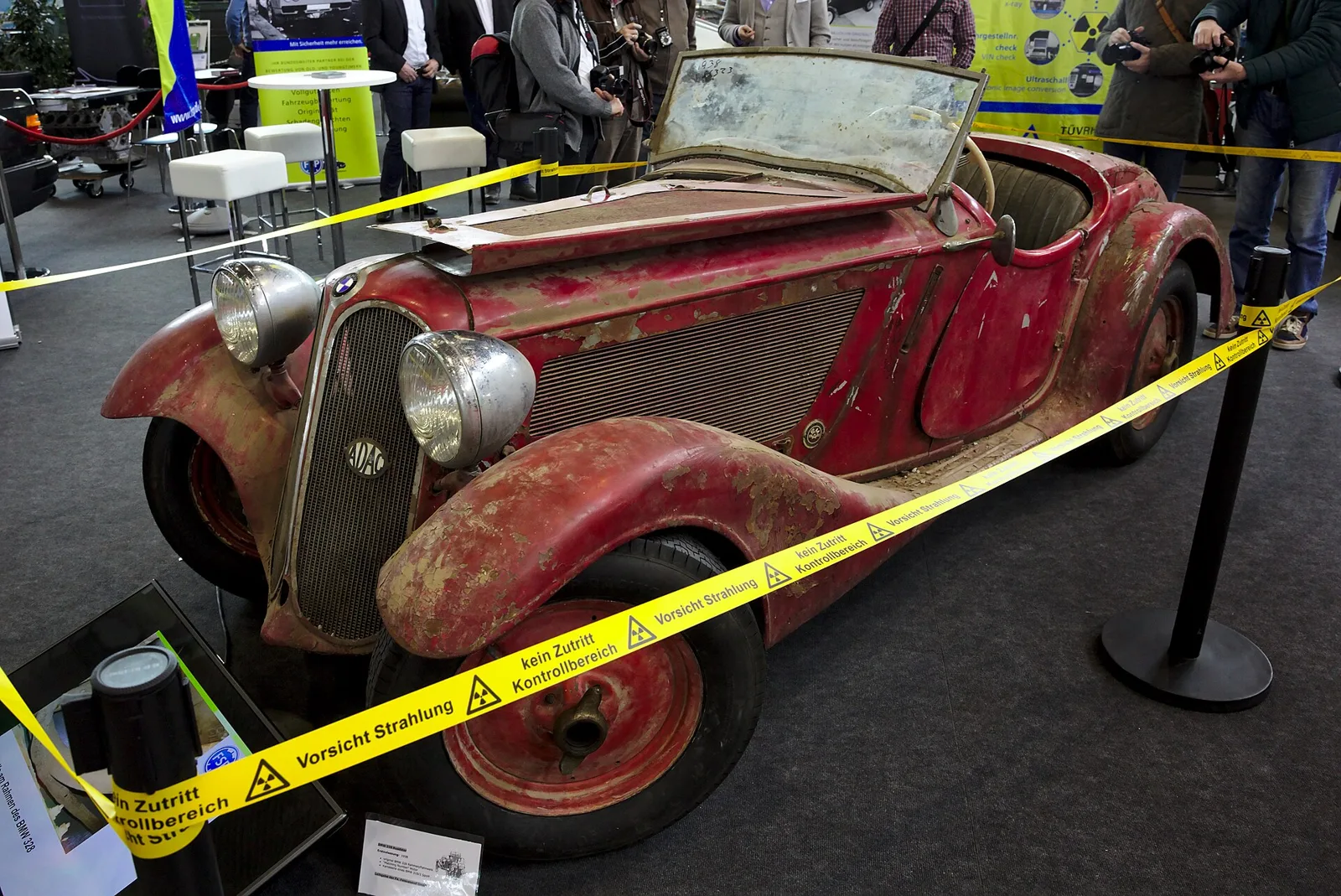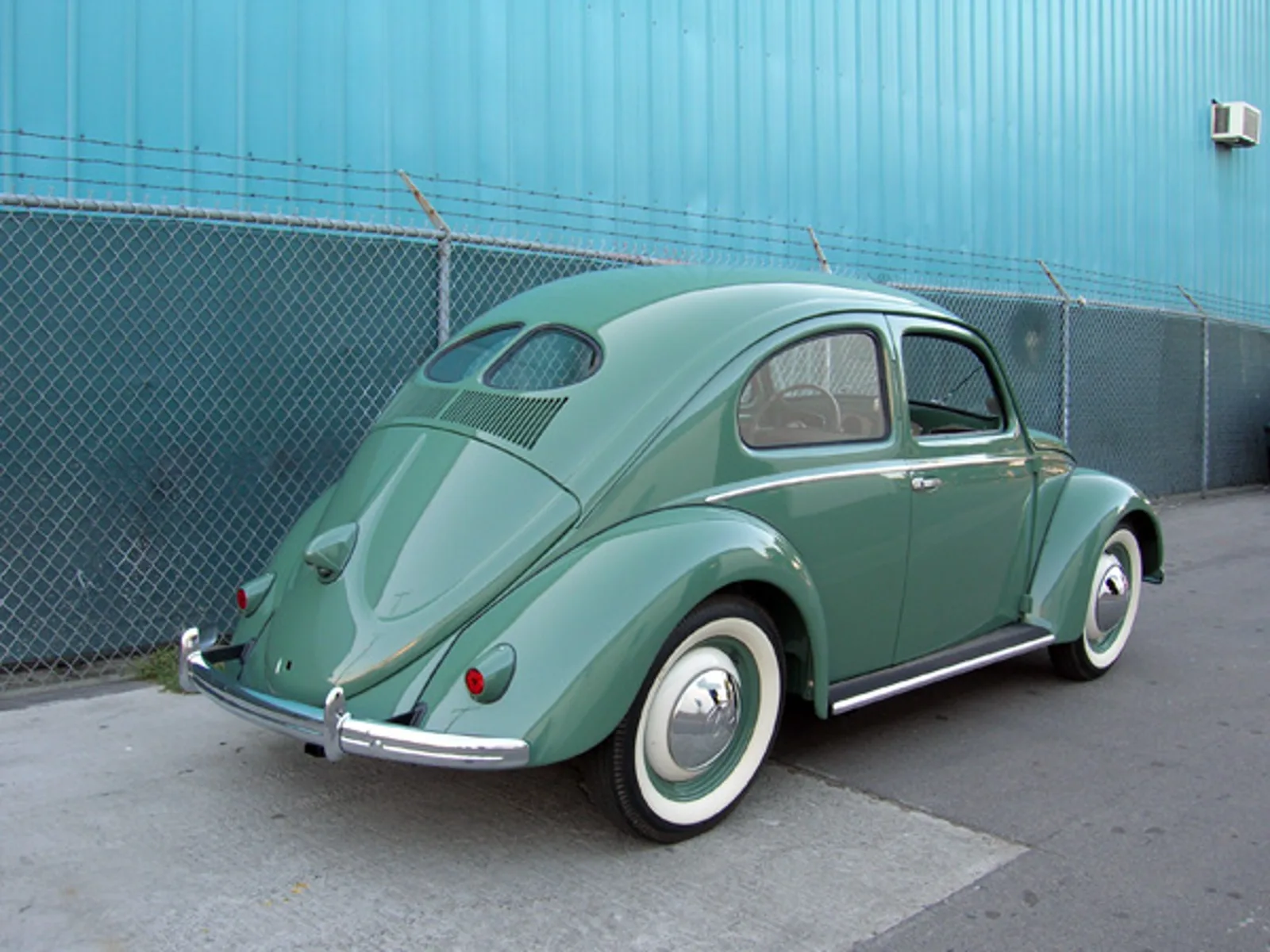
A restomod keeps an old car's shape and swaps in modern engineering. Done by a specialist, it can cost more than a new supercar.
A restomod is an old car updated with a modern engine, suspension, brakes, tyres or electronics, ideally in a way that can be reversed. A restoration returns the car to as-sold condition. Specialist builds such as Singer's Porsche 911s start above US$475,000 and have sold for over US$1 million.
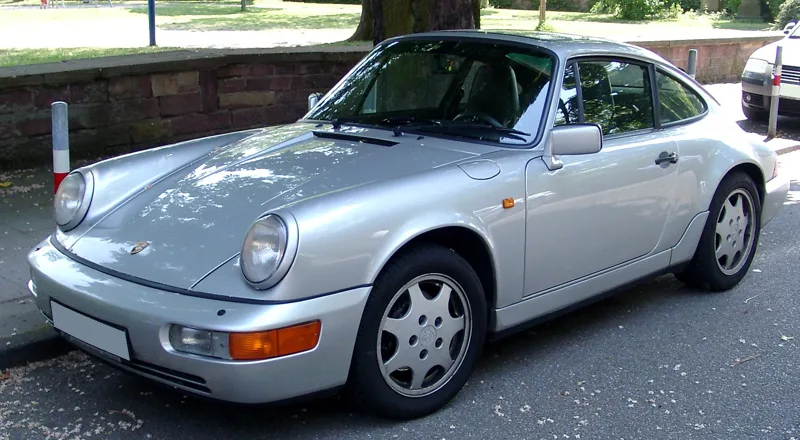
A Porsche 911 rebuilt by Singer Vehicle Design starts at over US$475,000, and examples have changed hands at auction for well over US$1 million. Underneath is a Porsche 964. That is the restomod business in one number: a classic shape, rebuilt with modern engineering, priced above many new cars.
What is a restomod?
A restomod, short for resto-modification, is an old car modernised with an updated engine, suspension, brakes, tyres or electronics. A common test of whether it was done properly is that it can be put back to stock at any time. Stock simply means untouched, exactly as the factory built it.
The reasons are practical. Owners want modern conveniences, better safety and reliability, or sharper road and track performance. Convenience upgrades include air conditioning, power windows, power steering, power brakes, seat belts and a stereo that the car never came with. Usability upgrades include intermittent wipers, an alternator in place of a dynamo, and electronic ignition in place of contact points. Emissions work can mean hardened valve seats so the engine can drink standard unleaded fuel, or a retrofitted catalytic converter.
A restoration returns a car to the day it was sold. A restomod asks what the car would be if it were built today.
What is the difference between a restomod and a restoration?
A restoration returns the car to the condition in which it was first sold. Restoration means removing, replacing or repairing parts, while preservation means keeping the original components. A car counts as restored only when it is fully back to its as-sold state, which is why a purist will say that anything else is repair or resto-mod.
Restoration itself comes in styles. The highest is Concours d'Elegance level, which is generally out of reach for an amateur and produces cars that often travel no further than from the trailer to the show field. Traditional restoration returns a vehicle to original or better condition using original or reproduction parts. Some owners take a preservation approach instead, and the market has noticed: preservation-focused cars, such as a 1972 Pontiac Trans Am 455 H.O. and a 1969 Ford Mustang Boss 429, have recently accrued more value at auction than some fully restored cars.
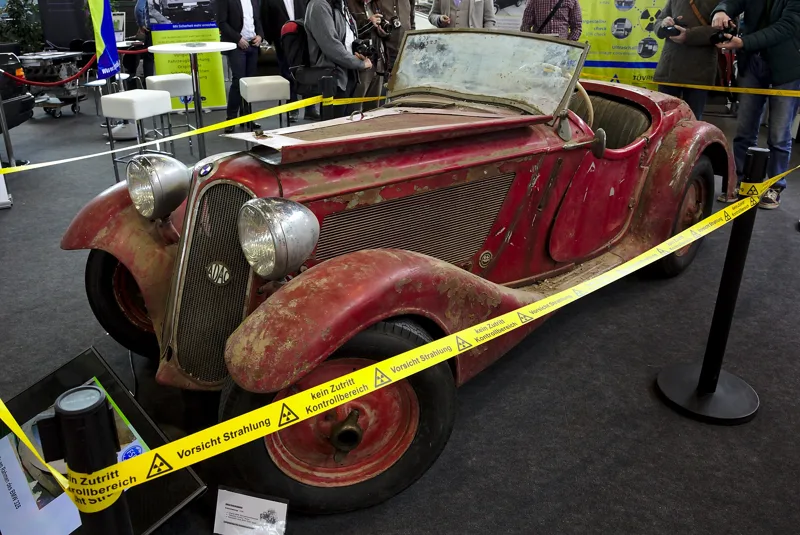
At the far end of the spectrum sits patina. Leaving a car's body and paint in as-found condition keeps what the maker and the owners have left on it. David Gooding, who founded the Gooding & Company auction house, argues that restoring a car with great patina strips away its personality. Steven Henderson's 1928 Ford Model A, bought with 80 years of body and paint wear, was brought back to running order and left alone for that reason.
Restomod vs restoration vs replica
| Approach | Goal | Typical work | Main trade-off |
|---|---|---|---|
| Concours restoration | Better than new, as sold | Detailed handcrafting, minimal filler | Generally out of reach for amateurs; cars are rarely driven |
| Traditional restoration | Original or better condition | Original or reproduction parts | Can take years and cost more than the finished car is worth |
| Preservation or patina | Keep original components and finish | Make it run, leave the surface | Can accrue more value at auction than some full restorations |
| Restomod | Classic look, modern behaviour | Engine, suspension, brakes, tyres, electronics | Depends on how the market views the upgrades |
| Replica or tribute | Look like a rarer or more desirable car | Modified to look like another car | Disapproved of where sold as the genuine rarer model |
| Hot rod | Speed and individuality | Bigger engines, pared-back bodies | A culture of its own; engine swaps sit closer here |
Where is the line between a restomod and a hot rod?
Blurry, but real. A hot rod is typically an American car rebuilt or modified with a larger or more powerful engine, a car pared back and tuned to go much faster. The first ones turned up in the late 1930s around Los Angeles, where drivers raced altered Fords across dry lake beds, and the National Hot Rod Association followed in 1951 to take drag racing off the streets.
Hot rodding waned in the 1960s, when muscle cars put performance in the showroom, then came back after the 1973 oil crisis. Modified cars became known as street rods, and by the 1970s the 350 cu in (5.7 L) Chevrolet small-block was the most common engine choice. Regulators have their own view: Ontario's emissions rules treat a hot rod as any vehicle with a replacement engine that differs from the factory original.
The classic market draws its line in similar places. Changes that are easy to reverse, or that were available options when the car was new, are less contentious. Major alterations such as engine swaps and gearbox transplants are less acceptable and sound more like hot rodding. Jay Leno, the television personality and collector, takes the other side: if a change makes a car better, safer, more reliable and faster, and can be undone, he sees no reason not to make it.
How do classic-car rules treat modified cars?
There is no universal definition of a classic. The common yardstick is a car 25 years or older, but jurisdictions and insurers vary, and age is not the only test: historical significance, rarity and condition also count. In Australia the Historic and Classic vehicle schemes waive the usual registration fee but restrict how much the car can be used in each registration term. In the United States the Classic Car Club of America keeps a list of unmodified classics built between 1915 and 1948, which shows how a body of collectors can set a stricter bar than the law does.
Do restomods hurt a classic's value?
Sometimes. Whether upgrades reduce or enhance value depends on how other owners of the same model judge them. A car that is driven regularly can usually carry non-original upgrades more easily, whereas a stored collector's piece is judged on originality. The sensible rule is to know what the potential buyer for the finished car will accept before you start.
Kevin Young's 1970 Ford Torino Brougham 429 Cobra Jet shows the argument. When it developed valvetrain noise, he rebuilt the engine to be reliable on pump fuel and quick on street tyres, while keeping a factory-restored look. Many enthusiasts were unhappy, feeling he had compromised the originality of an extremely rare car, one of three built. Others, as Leno shows, endorse that kind of work.
Replicas are a separate case. A tribute car is a vehicle modified to look like a different car, or a more desirable version of itself. One owner built a 1970 Pontiac LeMans to resemble a GTO Judge, which has sold for well over $300,000, because he did not want to put miles on an original or feel guilty about depreciating a piece of history. Some enthusiasts disapprove of replicas, because certain ones have been sold fraudulently as the rarer, higher-priced model.
Why are restomods selling for new-car money?
The clearest case is Singer, an American company based in Los Angeles that restores and modifies Porsche 911s. Rob Dickinson, formerly the frontman of the rock band Catherine Wheel, founded it in 2009, and the name pays homage to Porsche engineer Norbert Singer. Its main product is a heavily modified coupe or targa based on the Porsche 964, which was the company's sole model for nine years and is now called the Classic Study.
What does the money buy? Much of the bodywork is replaced with carbon fibre panels, and engine builders such as Cosworth, Ed Pink Racing Engines and Williams rework the engine for significantly more power. Many components are bespoke or motorsport grade. The redline is 7,200 rpm with a 7,300 rpm limiter, and the tachometer is often finished in Singer Orange and marked up to 11. A full restoration, by contrast, can take years and cost tens of thousands of dollars, often more than the finished car is worth.
Later models pushed the price higher. The Dynamics & Lightweighting Study arrived in 2018, built with Williams Advanced Engineering around an all-carbon body, widened fenders and tuned chassis. The All-terrain Competition Study followed in January 2021 with a twin-turbocharged 3.6-litre flat-six rated at 450 hp, a five-speed sequential gearbox and all-wheel drive, priced over US$1 million. In March 2021 Porsche objected to Singer using Porsche branding on it, as the maker had no involvement, and Singer removed the car from its website and social media.
The Turbo Study, unveiled in June 2022, uses a twin-turbo 3.8L flat-six making either 450 or 510 hp, with a six-speed manual gearbox and carbon-ceramic brakes. First deliveries came in 2024, and a slant-nose version was capped at 25 cars. The DLS Turbo, shown in June 2023, is limited to 99 cars and makes over 700 hp at more than 9000 rpm. Singer also sells wrist watches.
What are the safety and practical arguments?
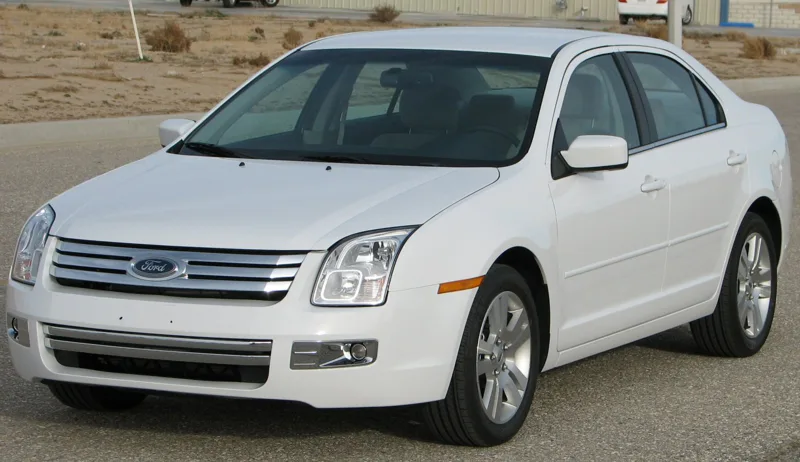
They are strong. Classic cars often lack seat belts, crumple zones and rollover protection, and their steering, suspension and brakes fall short of current standards. In September 2009 an Insurance Institute for Highway Safety test put a 2009 Chevrolet Malibu into an offset head-on crash with a 1959 Chevrolet Bel Air, and showed how much better a rigid safety cell and crumple zones protect occupants.
Upgrades have catches, however. Retrofitting seat belts to a car from before the late 1960s is problematic, since such bodies lacked reinforced mounting points, and some owners hold back because it costs originality; cars have lost show points for it. Modern tyres are wider and lower in profile, may foul the suspension, and need more steering effort when the car has no power steering. Brake conversions, such as moving from drums to discs or adding a vacuum servo, are an effective way to improve safety.
What should you check before you buy or build?
Start with legal status. Rules for classic cars differ by country, and modifications can cost you a concession. In the United Kingdom, cars over 40 years old escape road tax and the MOT test, provided no substantial changes have been made. Germany offers an Oldtimer plate for vehicles registered at least 30 years ago, on a flat tax of 190 euros a year, and accepts safety and environmental upgrades while limiting other changes to ones contemporary with the car. Maryland requires a historic vehicle to be 20 years old and not substantially altered.
Next, look at provenance. Classic cars face provenance fraud, where documents and serial numbers are falsified, and inflated valuations; court proceedings involving JD Classics, one of the UK's best-known dealers before its collapse in 2018, referred to inflated resale valuations. With an unfinished project, make sure every part is there, since orphan and rare cars can need parts made from scratch. Judge any restomod builder by the same questions about reversibility, documentation and who did the engine work.