From Susanna Raganelli's 1966 title and two future F1 champions to a harbourside kart cup and 135 student teams racing arrive-and-drive karts in Britain.
The Karting World Championship has run since 1964 and produced F1 champions Max Verstappen and Lando Norris. The Monaco Kart Cup ran from 1995 to 2010 around the Monaco harbour. The British Universities Karting Championship, founded in 1997, has student teams racing Rotax karts.
Of all the FIA world championships, only one has ever been won by a woman, and it was a karting title: Italian driver Susanna Raganelli took the 1966 Karting World Championship. Karting reaches from two future Formula One champions at one end to student teams racing arrive-and-drive karts in Britain at the other. The Karting World Championship, the defunct Monaco Kart Cup and the British Universities Karting Championship show how wide that range is.
The Karting World Championship: where F1 champions began
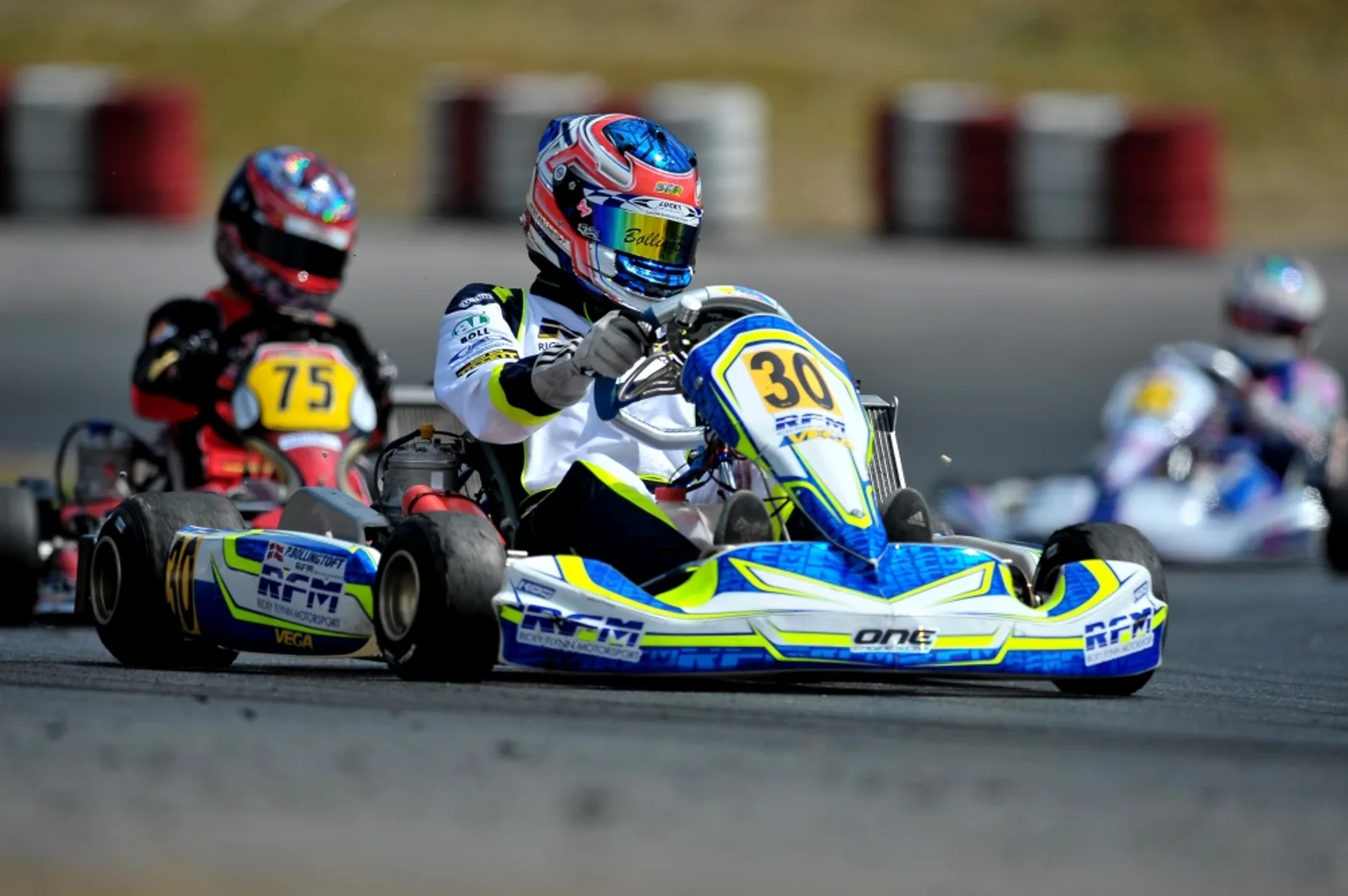
The CIK-FIA organises the FIA Karting World Championship, which carries the Mondokart.com name for sponsorship purposes. It has been held every year since 1964 and is widely regarded as the most prestigious competition in karting. Together with the Karting European Championship it forms the FIA's pair of major karting titles. Lately the World Championship has been a single event, while the European title is contested over a whole season.
Two past world champions have gone on to win the Formula One World Drivers' Championship: Max Verstappen, who won the KZ class in 2013, and Lando Norris, who won KF in 2014. It was the second FIA world championship to be established, after Formula One itself.
Before 1964 and the early years
Before the CIK-FIA began sanctioning a world championship in 1964, the Grand Prix Kart Club of America held its own. In December 1959 it organised a one-week international meeting in Nassau, Bahamas, with substantial prize money, and American Jim Yamane became the first winner. Later editions used a multi-round format and visited circuits such as Shenington in the United Kingdom and Pista Rossi in Italy.
The CIK-FIA's own championships in 1964 and 1965 were decided in a single final round. Afterwards the best drivers competed over an extended weekend from Thursday to Saturday, with free and qualifying practice, qualification heats, a pre-final and a final.
The format kept shifting. From 2011 the championship was contested over five rounds, each in a different country. From 2014 it returned to a single event: one venue hosts the OK and OK Junior World Championships in a weekend, and a different one stages the KZ World Championship alongside the KZ2 Super Cup and the closing round of the CIK-FIA Karting Academy Trophy. A separate Endurance Championship is normally held at Le Mans, and continental events include the European and Asia Pacific Championships. In 1968 the CIK-FIA launched the first World Cup for Juniors.
Classes and engines
The rules have changed with the engines. From 1981 to 1987 the championship was raced only with 135 cc Formula K engines. After a short return to 100 cc in 1988 and 1989 with Formula SuperCent, 100 cc direct-drive karts were the usual standard. In 2007 the KF1 category arrived, with 125 cc karts that had electric starters, a clutch and a limiter at 16000 rpm, replacing Formula A. The 2010 event used KF2 karts with the limit lowered to 15000 rpm.
Today's classes fall into three families: direct-drive karts, gearbox karts and Superkarts, all with two-stroke engines. Since 2016, the Original Karts (OK) class has replaced the old KF engines. The top OK category is open to drivers from 14 years old, while OK Junior is for drivers aged between 12 and 14. In the gearbox classes, KZ and KZ2 follow the same rules, except that KZ leaves the chassis and brakes open. As of 2024 the World Championship runs three direct-drive and three gearbox classes, with OK and KZ the primary ones.
Superkarts are the most unusual discipline because they need long circuits to show what they can do. They have full bodywork and twin-cylinder 250 cc engines developing nearly 100 hp (75 kW).
A junior class has existed since 2010, when it began as the CIK-FIA U18 World Championship, and KF-Junior joined the senior KF class in 2013. For many years the secondary events were held as the World Cup, historically a separate event at Suzuka from 1991 to 2000, or as the International Super Cup. In 2013 the CIK-FIA appointed a promoter for the first time, WSK Promotion, and the Swiss RGMMC Group took over for 2018 to 2020. From 2022 the website Mondokart.com has sponsored the events and given the championship its official name.
Of all the FIA world championships, only one has ever been won by a woman.
The Monaco Kart Cup: racing round the harbour
The CIK-FIA Monaco Kart Cup was a karting competition organised by the Automobile Club de Monaco on the Circuit de Monaco in La Condamine. Founded in 1995, it ran for junior and senior classes until 2010. The kart circuit used the harbour section of the Formula One track, including Tabac, La Piscine and La Rascasse, along with the Formula One pit lane, which was linked to the port by a ramp and a hairpin. The 1,075 m (3,527 ft) layout had over 2,400 Tecpro barrier modules, 120 marshals, eight cameras and four jumbotrons.
The winners list is a who's who of future Grand Prix drivers. It includes Formula One World Champions Michael Schumacher and Sebastian Vettel, as well as Robert Kubica, Carlos Sainz Jr. and Charles Leclerc.
1995 to 2002
The first edition in 1995 ran in the direct-drive Formula A and Junior Intercontinental A classes, plus the gearbox Intercontinental C class. Nicola Gianniberti won Formula A, Eric Salignon the junior event and Portuguese driver Jaime Correia the gearbox race. In 1996 Schumacher, then the reigning two-time Formula One World Champion, entered the senior class and dominated the final. A year later Salignon won the senior class, becoming the only driver to win in both junior and senior classes.
Kubica took back-to-back junior titles in 1998 and 1999, the only driver to win more than one Junior Monaco Kart Cup. Jerome d'Ambrosio ended Kubica's run in 2000 by beating Michael Ammermuller and Carlo van Dam. In 2001, Vettel won the junior event in the year he also took his European Championship. The Monaco Stars Cup, an all-star race, was run in 2001 and 2002 and won by Formula One drivers Gianni Morbidelli and Giorgio Pantano. The 2002 edition introduced the 6 Hours of Monte Carlo, an endurance race that ran until 2010, and was the last year of the senior direct-drive class, with Benjamin Horstman defending his 2001 title and Alexander Sims winning the junior crown.
Cancellations and the final years
Development work on the harbour at Port Hercules cancelled the event in 2003 and 2004. When it returned in 2005 it added the Monaco Four-Stroke Contest, which used 250cc four-stroke engines, and the one-off Monaco Rok Up, won by Swiss driver Antonio Ruggiero. In 2006 the junior race was revived as the Junior Monaco Grand Prix and became the main class. Scott Jenkins beat his fellow countryman Oliver Rowland, who was driving for Intrepid.
The all-star race came back in 2007 in electric karts as the Monaco Elec-Kart Trophy, won by 1998 Le Mans winner Stephane Ortelli, the first Monegasque driver to win an individual event at the Cup. In 2009 the senior gearbox class returned under KZ2 rules in place of the four-stroke event, and Anthony Abbasse won it while Sainz Jr. won the Junior Monaco Grand Prix.
The last event, in 2010, saw hometown driver Charles Leclerc win the KF3 class ahead of Dennis Olsen and Pierre Gasly, while Norman Nato won the KZ2 race for CRG. The 2011 edition was cancelled for unspecified technical reasons, which ended the Monaco Kart Cup.
The British Universities Karting Championship: student racing at scale
The British Universities Karting Championship, known as BUKC and formerly the Inter University Karting Championship, is a university-based kart competition in the United Kingdom, operated by Club100 and licensed by Motorsport UK. It began in 1997 as the National University Karting Competition. In 2026, 135 teams from 45 universities entered qualifiers, and the championship has more than 1,300 licensed drivers, which makes it one of the largest karting competitions in the world.
It stands out among collegiate karting for using two-stroke engines. Since 2019 it has run Rotax Junior Max engines on a Birel ART chassis, having used TKM engines from 2002. Each season has five main rounds across three classes, followed by the annual Drivers' Championship and a 24 Hour Race. Loughborough and Oxford Brookes hold the record for most national titles, each having won the premier championship six times. Southampton are the reigning champions, having beaten Bath on count-back in 2026.
Former entrants have included Emanuele Pirro, a Formula One driver, and two FIA World Endurance vice-champions, alongside national karting champions and drivers from Formula Two, Formula Three, touring cars, GT3 and GT4. Alumni have won major titles including the 24 Hours of Le Mans, the 12 Hours of Sebring, the Nurburgring 24 Hours and the 24 Hours of Spa.
From Milton Keynes to Club100
The University of Nottingham organised the first competition in 1997, with three 40-minute endurance races at the Daytona circuit in Milton Keynes. Fourteen teams from seven universities took part, and the University of Warwick won. From 1998 to 2001, under the name Inter University Karting Championship and run by Cardiff University, events used hire karts at indoor and outdoor tracks around the country.
In 2002 the championship began its association with Club100, which supplied a fleet of two-stroke Formula TKM karts, making it the first university karting series to use two-stroke engines. Thirty-two teams raced over four rounds, and Loughborough won. A fifth round and the BUKC name arrived in 2003, when Batho and Tew founded 3T Racing Ltd as an independent governing body. Between 2004 and 2006 Oxford Brookes won three consecutive titles under James Gornall, and as of 2024 it remains the only university to complete a three-peat.
Pirro entered the first round of the 2015 season at Rye House as an independent, becoming the first Formula One driver to race in the BUKC, in a season contested by 90 teams. In 2018, the last year of the TKM era, Oxford Brookes became the only team to take a 1-2 finish in the Premier class standings. Across nine rounds its A and B teams won six rounds with 12 podiums.
For 2019 Club100 replaced its TKM fleet with Rotax karts, ending a 17-year run, and the classes were re-divided as Premier, Clubman and Intermediate. Coventry University won back-to-back titles in 2019 and 2020, Loughborough took a record sixth Premier title in 2021, and Oxford Brookes equalled it a year later.
How a BUKC round works
Teams of four drivers compete across rounds throughout the academic year at kart circuits around the UK. The 2026 calendar has five rounds, at Whilton Mill, Buckmore Park, Warden Law, Dunkeswell and Silverstone, with the 24 Hour Race at Teesside Autodrome. A qualifying round determines which teams go into each class: 26 into Premier, 28 into Clubman and 54 into Intermediate. It consists of 14 qualifying sessions followed by 14 sprint races, and the results count towards the championship.
In the Premier and Clubman championships, known as mains, each round is six back-to-back races with random grids, run as either sprint or endurance. In a sprint round the races alternate between lightweight (75 kg) and heavyweight (82 kg) categories, each driver races alone for 25 minutes with no fuel stops or driver changes, and a team's score is its best three results from four. In an endurance round each team splits into pairs, each pair races for an hour, and each must make two fuel stops and at least one driver change.
The winner of each race receives 60 points, and the allocation drops in steps of one. No points go to pole position or fastest lap. A mains team's best seven rounds count, including qualifiers, as do the best four for Intermediate teams. Ties are settled on count-back.
Like Club100, the BUKC uses position penalties rather than time penalties, for driving infringements and for track limits, kart contact and hitting cones. Disqualification and points deductions are kept for serious offences such as modifying a kart. The system is strict enough that several championships have been decided on clean, penalty-free driving, and a video assistant referee system debuted at Silverstone in 2026.
Karts, circuits and coverage
Club100 operates the largest arrive-and-drive fleet in Europe. Its two-stroke 125cc Rotax engines produce over 20 hp and are capable of more than 70 mph. The karts wear slick Dunlop tyres in all weather, since changing tyres on more than 50 karts would be a logistical challenge.
Since the switch to an outdoor two-stroke format in 2002, the BUKC has raced at 15 venues, 13 in England and two in Wales. PF International and Rye House have also hosted the CIK-FIA World Championship. It has yet to race in Scotland or Northern Ireland, although Edinburgh became the first Scottish university to enter in 2009. TU Dublin, then DIT, was the first Irish university to compete in 2014 and won the 24 Hour Race in 2022 and 2023.
The Premier and Clubman races are broadcast live on YouTube by Alpha Live, with commentary by John Ratcliffe and Reeve Taylor. The opening race of 2024 at PF International had a record audience of over 11 thousand viewers, and the season averaged 10.1 thousand, against 8.73 thousand for BUCS Super Rugby in 2023-24.
Three karting events compared
| Event | First held | Organiser | Status |
|---|---|---|---|
| Karting World Championship | 1964 | CIK-FIA | Held annually; OK and KZ primary classes |
| Monaco Kart Cup | 1995 | Automobile Club de Monaco | Final edition 2010; 2011 cancelled |
| British Universities Karting Championship | 1997 | Club100, licensed by Motorsport UK | Five rounds, 24 Hour Race and Drivers' Championship |