A motor in every wheel removes gearboxes and axles, but it adds unsprung weight.
An in-wheel motor is an electric motor built into a wheel hub, removing the need for transmissions, differentials and axles. Its drawback is added unsprung weight, which can hurt handling and durability. Early versions date to 1897, and BMW and Renault have in-wheel models planned for 2026 and 2027.
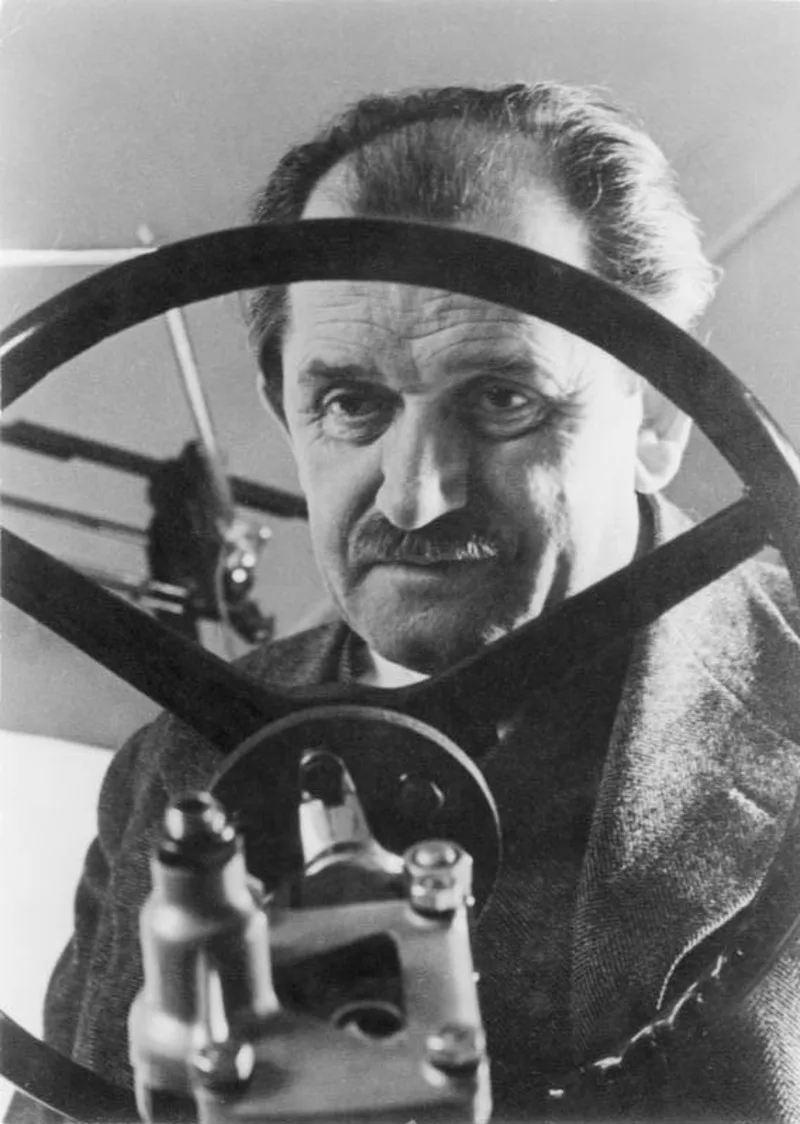
Ferdinand Porsche raced an electric car with wheel hub motors in Vienna in 1897. More than a century on, almost no car you can buy has an in-wheel motor, and the two makers that briefly put them into production in 2022 both went bankrupt.
What is an in-wheel motor?
An in-wheel motor, also called a wheel hub motor or hub motor, is a brushless DC electric motor built into the hub of the wheel itself. There is no driveshaft, no gearbox and no differential between the motor and the tyre. The motor is the hub.
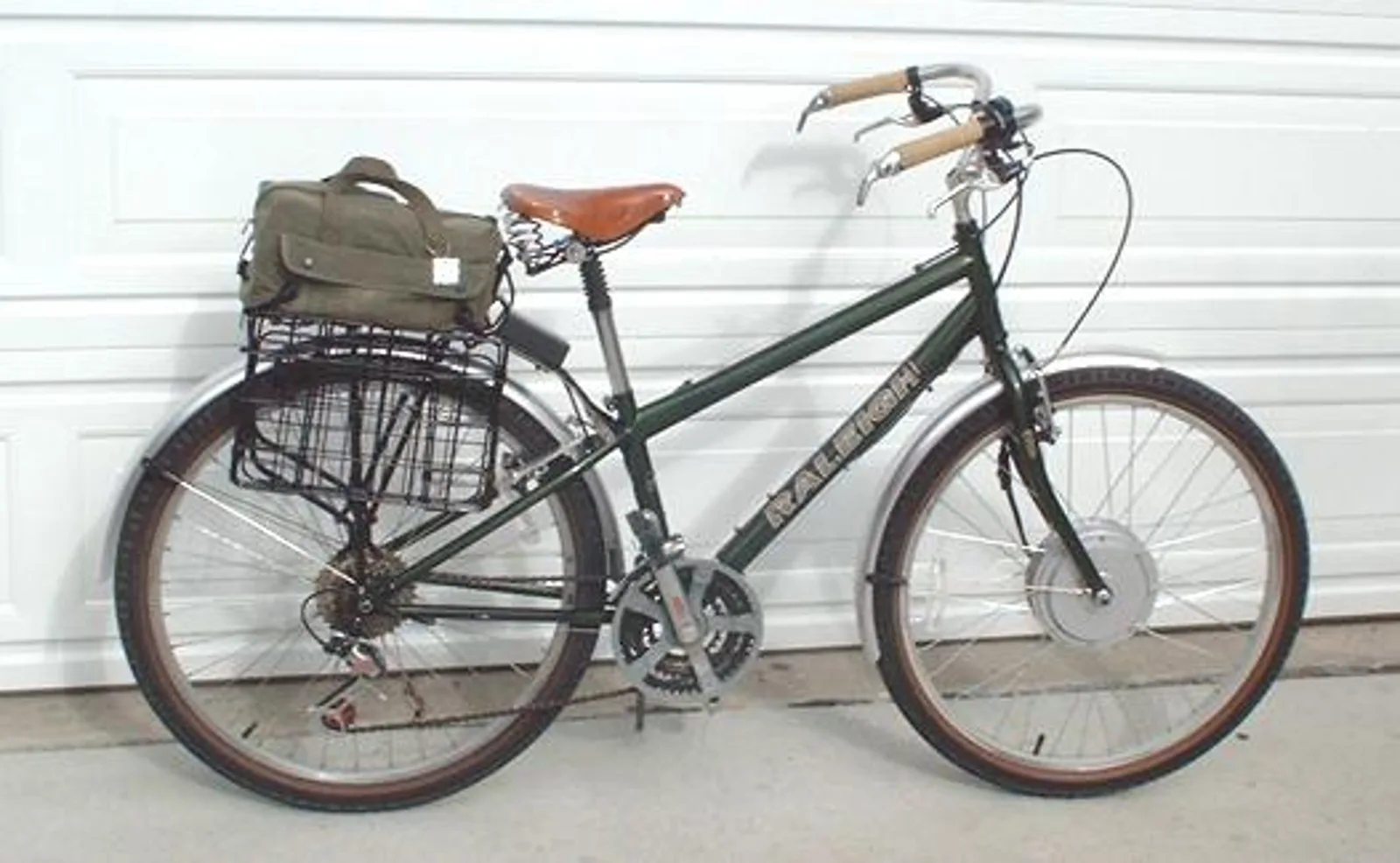
You already know the idea if you have seen an electric bicycle. Patents for hub-motor bicycles go back to 1895, and these motors are simple, durable and affordable, though less suited to high speeds. They rose in popularity in the late 2000s and 2010s.
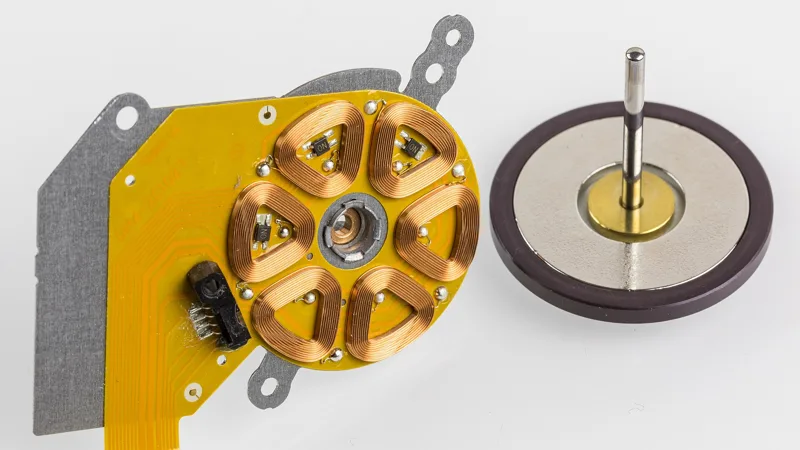
Inside, the machinery is the same as in any electric motor. A moving part, the rotor, spins around a fixed part, the stator, and a magnetic field working on current in a coil of wire produces the turning force. A narrow air gap separates them: the smaller it is kept, the better the motor performs, although a gap that is too tight creates friction and noise. A wheel hub motor can turn the wheel directly or through planetary gears, and its rotor can be of an axial, inrunner or outrunner design.
Electric motors can also run in reverse as generators. That is how regenerative braking recovers energy that would otherwise be lost as heat and friction.
A hub motor puts its whole weight on the wrong side of the suspension, and that single fact kept it off the road for a century.
Why put a motor in every wheel?
Engineers like the hub motor because it gives them freedom. A car can be driven at the front, at the rear or at each wheel individually, using the same basic component. The motors are compact, which frees up room for passengers, luggage and other parts. Weight distribution is better than with a single large motor, because the mass is spread out rather than concentrated in one place.
The biggest prize is what disappears. With motors in the wheels, a car no longer needs most of the drive components of a conventional layout: transmissions, differentials and axles. Fewer parts means less wear and fewer mechanical losses.
Precise control comes as a bonus. Each wheel can be given its own torque, a trick called torque vectoring, and the ability to steer a car by feeding more or less turning force to individual corners has real value for handling.
Unsprung weight and electric motors
If hub motors are so good, why has it taken so long? The answer is a number that most drivers have never thought about: unsprung weight.
A car has two kinds of mass. The sprung mass is everything the springs and shock absorbers carry: the body, the cabin and what is bolted to them. The unsprung mass is everything on the other side of the springs: the wheels, hubs, bearings, tyres, and a share of the driveshafts, springs, dampers and suspension links.
Picture running in two pairs of shoes, one light and one heavy. A light shoe snaps back off the ground with every step. A heavy one keeps moving after it should have stopped, and you feel it all the way up your legs. A wheel behaves the same way. A lighter wheel rebounds quickly from a bump and holds the road more consistently, which is why lighter wheels are chased in high-performance cars. A heavier one absorbs more energy over longer bumps and makes the ride worse. Under hard acceleration or braking, high unsprung mass can also contribute to wheel hop that wrecks traction and steering control.
A hub motor puts its entire weight on the wrong side of the suspension. That raises the unsprung weight and the dynamic load on the wheel, which hurts handling and ride. The same placement leaves the motor less shielded from shocks and road debris, so it is more prone to damage and its durability suffers. Makers can lighten the motor with a coreless design or with Litz wire coil windings, but those weight savings may also reduce durability. And the high-voltage cables and components out at the wheel must be robust enough to survive.
How bad is the handling penalty?
Not as bad as it sounds, according to engineers who tested it. Protean Electric and Lotus found that stiffer suspension damping could cancel out most of the harm done by the extra unsprung mass. The ability to use accurate torque vectoring then improved the car's handling so much that the overall effect was positive. Even with its penalty, ride quality with electric hub motors is still described as better than in equivalent combustion cars, though handling is affected by the higher dynamic wheel load.
In-wheel motors vs near-wheel motors
There is a second route that keeps most of the benefit and sheds much of the risk. A near-wheel motor, sometimes called a wheel-end motor, sits close to the wheel but inside the chassis, where the suspension supports it.
| Feature | In-wheel motor | Near-wheel motor |
|---|---|---|
| Position | Inside the wheel hub | Beside the wheel, inside the chassis |
| Unsprung weight | Added to the wheel | Avoided, supported by the suspension |
| Exposure to shocks and debris | High | Low |
| Compactness | More compact | Less compact |
| Reliability and cost, as of 2022 | Less reliable, less cost-effective | More reliable, more cost-effective |
| High-voltage parts outside the chassis | Yes | No |
American Axle has developed wheel-end motors of 100 kW and 150 kW in a project the United States Department of Energy paid for. Costs came down by merging the motor, inverter and gear reduction into one unit and by steering clear of heavy rare earth elements. The 100 kW unit was intended for REE Automotive. Production was planned for 2025 but stopped when REE failed to line up major carmakers or large institutional customers.
How the century-old idea began
The idea is older than the car as we know it. Electric, combustion and steam in-wheel designs were all patented in the 1880s and 1890s. Wellington Adams was awarded a patent in 1884, and Charles Theryc followed in 1896, pointing out that without classic transmission rods from engine to wheels there would be no transmission losses. In the same year C F Goddard described a piston hub motor for horseless carriages, and W C Smith followed in 1897 with an explosive gas motor inside a hub.
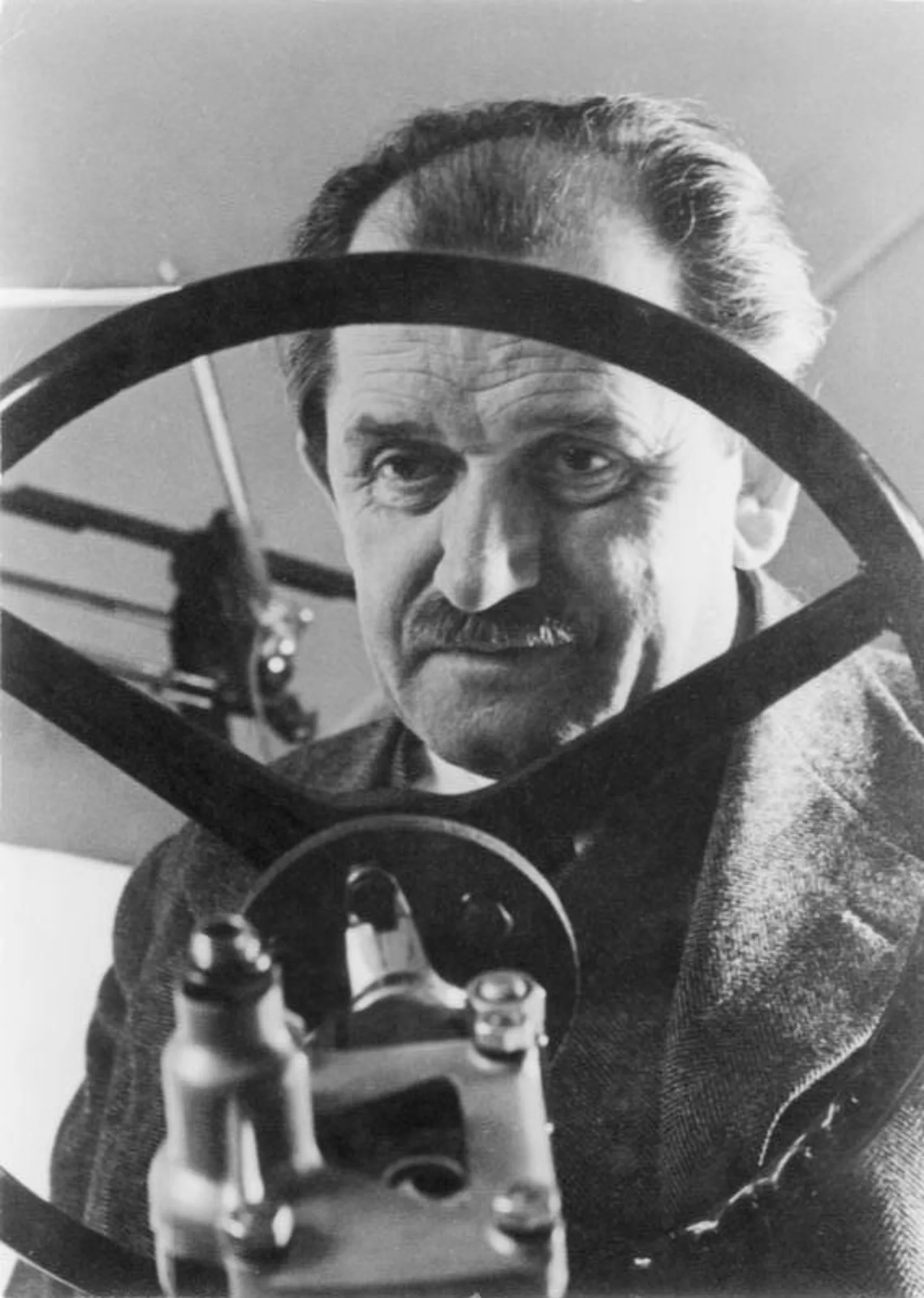
Ferdinand Porsche made it real. His first cars were electric, with hub motors running off batteries. A Lohner-Porsche racing car with a hub motor at each of its four wheels appeared at the 1900 World Exhibition in Paris, and next to it stood a commercial model, the Lohner-Porsche Chaise, with two front hub motors. It was well received, and models based on the design were built by Lohner and other makers until the 1920s.
Then the idea faded. Hub motors were popular in the earliest electric cars, yet they have not succeeded commercially in modern production cars, because of the handling effects of heavier wheels and because their position leaves them prone to damage.
Who is building a hub motor EV now?
A long parade of concept cars has shown what is possible. The IZA, presented at an IEEE conference in 1997, had four 25 kW (34 hp) motors. Auto shows later brought the Chevrolet Sequel and Honda FCX concept in 2005, the Mitsubishi MIEV in 2005, the Citroen C-Metisse in 2006, and a Ford F-150 built with Protean Electric motors in 2008. In 2012 the Hiriko Fold, a folding urban car limited to 50 km/h (31 mph), integrated a motor, steering actuator, suspension and brake into each wheel and was controlled by a drive-by-wire system.
More recent names include a six-wheeled autonomous truck chassis called FlatFormer in 2019, vehicles from Indigo Technologies since 2019 and, in 2025, the Italdesign Quintessenza, which uses Sonic in-wheel motors from Elaphe. An Aptera prototype shown in 2022 used the idea, although the prototypes from 2024 did not.
Real production has been brief. The Lightyear 0 and the Lordstown Endurance both used Elaphe in-wheel motors and both were produced only briefly in 2022 before their makers filed for bankruptcy.
How designers have always fought unsprung weight
The problem is not new, and neither are the tricks. The phrase itself comes from Albert Healey, a mathematician at the tyre maker Dunlop, who used it in a November 1924 lecture to the engineers of the Institution of Automobile Engineers. Since then, chassis designers have gone to great lengths to shave mass from the wrong side of the springs.
A beam axle, which ties the wheels on opposite sides together as a rigid unit, generally carries more unsprung mass than independent suspension. A heavy differential can be bolted to the body instead, the approach taken with the de Dion tube rear suspension. Aluminium, plastic, carbon fibre and hollow components cut weight further, at the price of greater cost or fragility. Brakes mounted inboard count as sprung mass, although they load the half axles and joints more heavily, need space and can overheat a neighbouring differential in hard use.
Some of the neatest answers re-use parts. In the Chapman strut, the driveshafts double as suspension arms, so one component does the work of two, and Jaguar's independent rear suspension replaced the upper wishbones with the driveshafts, in some versions with inboard brakes as well.
A hub motor cuts across all of this, because it deliberately puts the heaviest single component of the drivetrain into the wheel. That explains why engineers who like the layout talk constantly about damping and lightweight windings.
A short history of the motor in the hub
The electric motor itself was not ready for cars until the nineteenth century had run well into its second half. Michael Faraday gave the first demonstration of rotary motion from an electric current on 3 September 1821. William Sturgeon built the first commutator DC motor able to turn machinery in 1832. In 1886 Frank Julian Sprague produced what is regarded as the first practical DC motor, a machine that did not spark and kept a fairly steady speed as the load changed.
Efficiency took longer still. Motors of acceptable efficiency arrived several decades late, because designers missed how much a small air gap between rotor and stator matters. By the time Porsche was racing in Vienna in 1897, Sprague's practical DC motor was barely a decade old.
What it means if you drive an EV
For a buyer, the practical message is that the technology is real but not yet something you can choose. Most electric cars keep their motors inside the chassis rather than in the wheels. A car with motors in the wheels would, in theory, offer more interior space and a simpler drivetrain, and would bring precise torque control to every corner. In practice it asks the buyer to accept a more exposed motor and the engineering work needed to tame the extra unsprung weight.
Hub motors win on packaging and control, and near-wheel motors win on durability and simplicity. Which suits a given car depends on how the maker balances the two.
Where this goes next
Two plans stand out, and both are plans, not products on sale. BMW plans to build the Neue Klasse in 2026 using in-wheel motors from DeepDrive. Renault has the 5 Turbo 3E planned for 2027 with two 200 kW in-wheel motors at the rear.
Production planned by REE for 2025 was halted for lack of partners and buyers, a reminder that a promising design still has to win customers.