From a drop of fuel to a turning crankshaft: the four strokes, the parts that make them happen and the choices that set engines apart.
A car engine burns fuel and air inside cylinders. The hot gas pushes a piston down, and a connecting rod and crankshaft turn that push into rotation. A four-stroke engine repeats intake, compression, power and exhaust, so the crankshaft turns twice for every power stroke.
A four-stroke engine delivers a push to its crankshaft only once in every two turns. Of the four strokes a piston makes, only the power stroke produces mechanical work; the other three set it up or clear up afterwards. The whole machine is a clever arrangement for making that one push count.
Everything else under the bonnet, from valves and camshafts to turbochargers, exists to feed, time and survive that single push, and designers have turned the idea into engines with anything from one cylinder to sixteen.
What is an internal combustion engine?
An internal combustion engine is a heat engine in which fuel burns with an oxidiser, usually air, inside a combustion chamber that forms part of the engine's working circuit. The burning produces hot, high-pressure gas, and that gas pushes directly on a component of the engine. In a car the component is a piston.
The push moves the piston over a distance, and in doing so turns chemical energy in the fuel into movement. Most such engines go into vehicles, and the fuels are hydrocarbon-based: petrol, diesel, natural gas or ethanol. Renewable options exist too, with biodiesel for diesels and bioethanol for spark-ignition engines, and Rudolf Diesel was running engines on peanut oil as early as 1900.
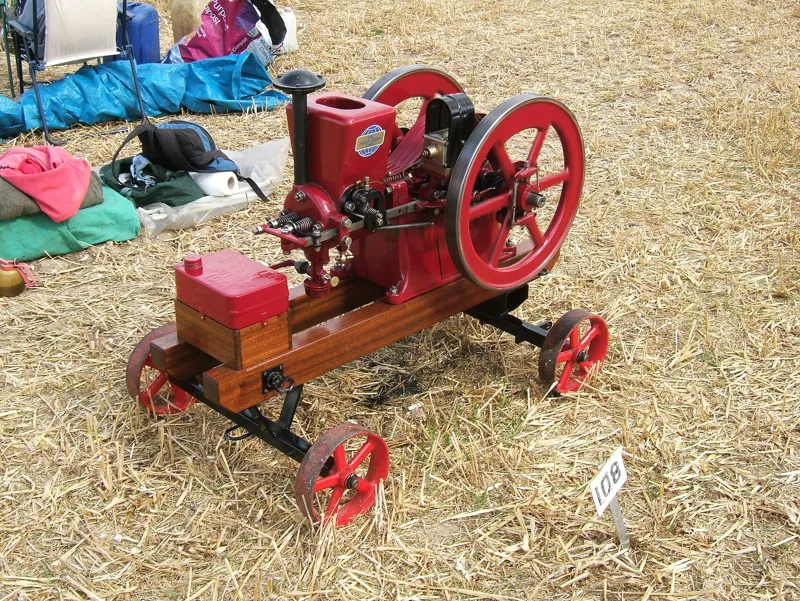
Not every internal combustion engine has pistons. Gas turbines, jet engines and the Wankel rotary also fit the definition. The piston type, known as a reciprocating engine, dominates land and water transport, and it is the one under the bonnet of nearly every car.
Only one of a piston's four strokes produces mechanical work.
How does a car engine work?
A reciprocating engine moves a piston up and down inside a cylinder. Hot, expanding gas shoves the piston to the bottom of its travel, a point known as bottom dead centre, and something then drives it back up to top dead centre. The distance between those two points is the stroke.
Think of a cyclist's legs. Each leg pushes down in a straight line, but the crank on the pedals turns that straight push into a circle. An engine's crankshaft does the same job for the pistons, converting their back-and-forth motion into rotation that eventually reaches the wheels.
The four strokes
Most petrol and diesel car engines run on a four-stroke cycle, and each stroke has a name.
- Intake. The piston starts at the top and moves down with the intake valve open, creating a vacuum that draws the air-fuel mixture into the cylinder.
- Compression. The piston rises from the bottom with both valves shut, squeezing the mixture in readiness for ignition.
- Power. By the start of this stroke the crankshaft has completed one full 360-degree turn, so it opens the second revolution of the cycle. With the piston at the top, a spark plug in a petrol engine, or the heat of compression in a diesel, ignites the charge and drives the piston back down, turning the crankshaft.
- Exhaust. The piston rises again with the exhaust valve open and pushes the spent gas out.
Two-stroke engines compress the same job into fewer movements, and use ports in the cylinder wall that the piston covers and uncovers rather than valves. Six-stroke variants also exist.
What are the main parts of an engine?
The base of a reciprocating engine is the block, typically cast iron for its wear resistance and low cost, or aluminium. An aluminium block usually carries iron or steel liners, or a hard coating, in its bores. Cylinders may be arranged in one row, as in a straight engine, or in two, as in a V or a boxer. Passages cast into the block carry coolant in a water-cooled engine, and some small engines skip the water and use fins to shed heat to the air around them. The bore surfaces are honed to a cross-hatch finish that holds oil, because a surface that is too rough wears the piston quickly.
The pistons are short cylindrical parts that seal one end of the cylinder against the high pressure of combustion while sliding in and out of it constantly. Smaller engines have aluminium pistons, larger ones cast iron, and performance engines may use titanium or forged steel. Gas pressure on the piston crown is passed through the piston to a gudgeon pin. Rings round the circumference stop gas leaking into the crankcase and oil entering the combustion chamber. A ventilation system removes the small amount of gas that slips past, known as blow-by, so it does not contaminate the oil and cause corrosion.
The cylinder head bolts to the block and seals the other end of each cylinder. It holds the ports and valves that let fresh air in and exhaust gas out, the spark plug in a petrol engine, and the injector in a direct-injection engine. A head gasket seals the joint against leaks between head and block. Camshafts and springs open and close the valves, though a desmodromic system does the job without springs, and the camshaft can press on the valve stem directly or through a rocker arm and pushrod.
Below the cylinders sits the crankcase, closed by a sump that collects oil to be used again. The crankshaft turns in main bearings and receives the thrust of each piston through a connecting rod. The small end of the rod attaches to the gudgeon pin and the big end to the crankpin, and the big end splits so it can be assembled around the crankshaft.
How do fuel and air get into the cylinders?
Fuel burns faster and more efficiently when it presents a large surface to the oxygen in air, so liquid fuel must be atomised into a mist. Traditionally, petrol engines did this with a carburettor and diesels with fuel injection. Carburettors reached great sophistication, but from the mid-1980s they lost out to injection on cost and flexibility, and most larger petrol car engines now use injection. Simple carburettors survive in small engines such as lawn mowers.
Diesels have always used injection because the timing of the squirt starts and controls the burn. A diesel pump is all-mechanical and precise, delivering fuel straight into the chamber at high pressure to beat the pressure inside. Petrol injection squirts into the inlet tract at atmospheric pressure or lower, so its pump is normally electric and exact timing is not needed, though petrol's lack of lubricity means the injectors have to be more sophisticated.
Naturally aspirated, supercharged or turbocharged
An engine that simply sucks in air as the piston descends is naturally aspirated. That gives a maximum pressure difference across the inlet valves of 1 atmosphere, and at high revs the airflow can limit output.
A supercharger gets round the limit with a compressor driven from the engine's own shaft, forcing air through the valves so that inlet pressure typically reaches around 2 times atmospheric or more. A turbocharger does the same with a compressor driven by a turbine in the exhaust flow.
Spark or squeeze: how the fuel is lit
Petrol engines are generally ignited by a precisely timed spark. Diesels are lit by the heat of compressing air beyond the fuel's autoignition temperature, and because the fuel only meets the air once it is hot, timing comes from the injection system.
Ignition timing matters. The best efficiency comes when most of the burning happens at high temperature near top dead centre, and the flame travels at a speed that depends on compression ratio, mixture temperature and the octane or cetane rating of the fuel. Lean mixtures burn more slowly, so they need the spark earlier. The aim is for the flame front to spread smoothly, because if combustion travels as a shock wave the result is detonation, also called knocking or pinging.
For petrol engines that makes timing a compromise: a later spark gives better efficiency with high-octane fuel, while an earlier spark avoids detonation with the fuel in the tank. Gale Banks, a champion of high-performance diesels, argues that a petrol engine can take only modest boost before octane becomes the problem, whereas diesel boost is essentially unlimited until the engine physically fails.
Cooling and exhaust
Combustion creates a lot of heat, and some of it soaks into the engine's walls. Let the metal get too hot and either the engine fails physically or the lubricant degrades until it no longer protects. Dirty lubricant can also build up sludge. Cooling is usually by air or by liquid, normally water.
The exhaust system has to cope with the cooled combustion gas. It frequently carries devices to limit chemical and noise pollution, and in cyclic engines it is often tuned so the chamber empties more effectively. Most exhausts also include measures to stop heat reaching components that could be damaged by it.
How many cylinders does an engine need?
Engine designers have chosen anything from one to twelve cylinders as normal, and as many as 36 have been used in an aircraft engine that never entered production. More cylinders have two benefits. For a given displacement each piston can be smaller and lighter, which smooths out the vibration caused by pistons going up and down, and a larger number of same-size cylinders adds torque and power.
The penalty is weight and internal friction, which cut fuel efficiency and rob some power. In high-performance petrol engines with current materials, the gains seem to run out at around 10 or 12 cylinders, although Volkswagen's W16 is an exception.
| Application | Typical cylinders |
|---|---|
| Very small cars and trucks | Two or three |
| Most car engines | Four to eight |
| Some high-performance cars | Ten, 12 or even 16 |
| Motorcycles | One to four, a few high-performance models six |
| Freight diesel locomotives | Around 12 to 20 |
Reading an engine's specifications
Engines are classified by the number and layout of their cylinders and by total displacement, the volume swept by all the pistons, normally measured in litres or cubic centimetres. All else being equal, a bigger engine is more powerful and thirstier, but many other factors play a part.
The compression ratio compares the cylinder volume with the piston at the bottom of its stroke to the volume with it at the top, and it affects the performance of most reciprocating engines. The bore-to-stroke ratio compares the width of the piston to its travel. Around 1 is described as square, more than 1 as oversquare and less than 1 as undersquare.
Specific power, usually quoted in kilowatts per litre, gives a rough idea of an engine's peak output relative to its size. A modern high-performance car engine makes more than 75 kW/L (1.65 hp/in3). That is not the same as efficiency, because efficient running often needs a lean mixture, which gives less power for the same size.
A short history
Many people contributed before the car engine took shape. A gas engine was patented in 1794, and in 1807 Francois Isaac de Rivaz built a hydrogen-fuelled engine with electric spark ignition, which he fitted in 1808 to a primitive vehicle. In 1860 the Belgian engineer Jean Joseph Etienne Lenoir built an engine that ran on gas, and in 1872 George Brayton built the first commercial liquid-fuelled one.
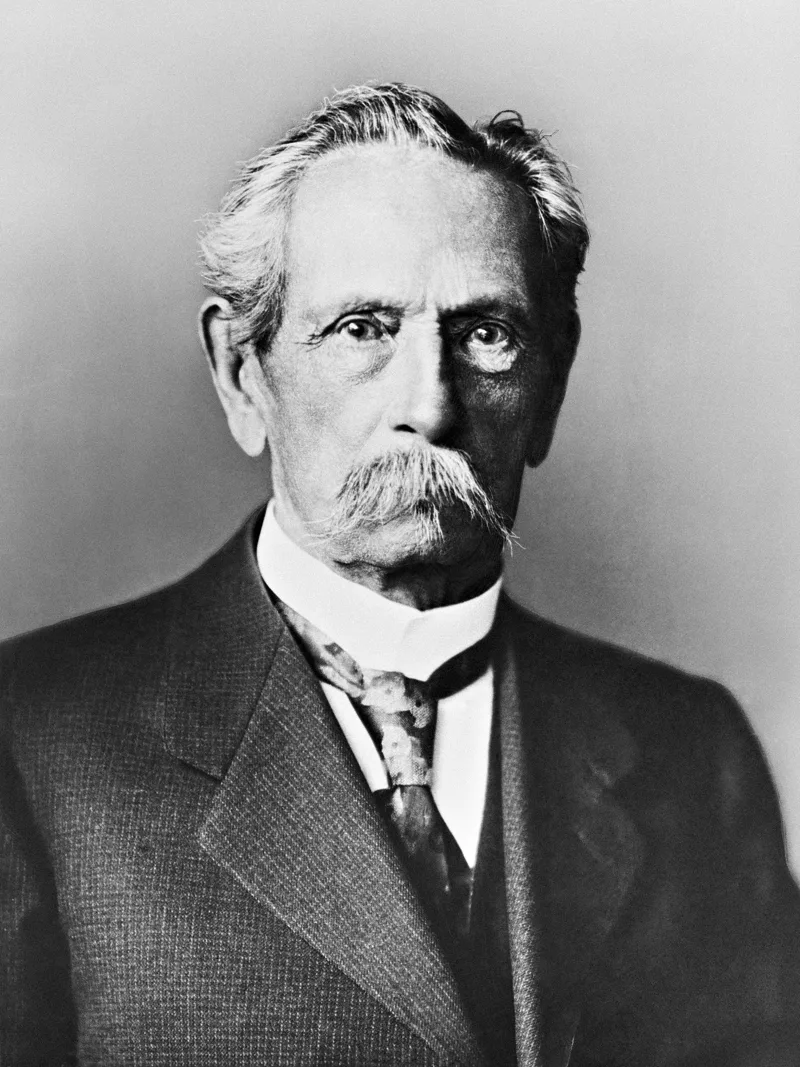
The modern engine is credited to Nicolaus Otto, who designed it in 1876. He worked with Gottlieb Daimler and Wilhelm Maybach and patented a compressed-charge, four-cycle engine. Karl Benz patented a reliable two-stroke petrol engine in 1879, and in 1886 began building motor vehicles commercially, each a three-wheeled chassis and four-cycle engine combined into one unit. In 1892 Rudolf Diesel developed the first compression-ignition engine.
Variations on the theme
The Atkinson and Miller cycles, used rarely but found in hybrids and cars built for fuel efficiency, change the thermodynamic cycle the engine follows. The Wankel replaces pistons with a triangular rotor orbiting in a chamber shaped like a figure eight, with four phases of operation of intake, compression, power and exhaust taking place in a chamber that moves and changes volume. Rotary engines of this design appear in some cars.