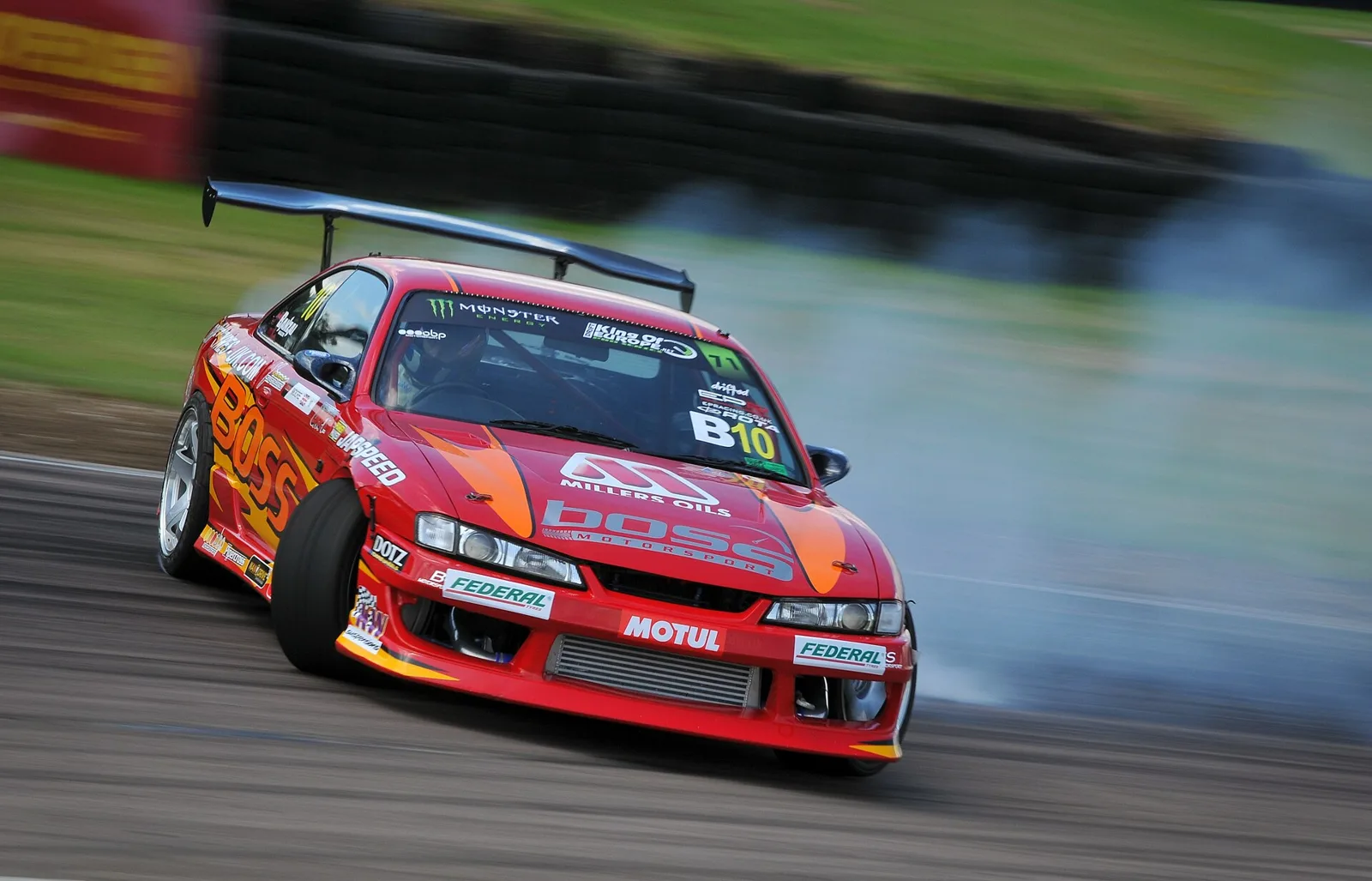
How a mountain-road habit of the 1970s, a hit video in 1987 and a manga with more than 55 million copies in circulation became a global motorsport.
Drift culture grew from Japanese mountain-road racing in the 1970s, was spread by Keiichi Tsuchiya's 1987 Pluspy video and the Initial D manga, and now runs through series such as the D1 Grand Prix and Formula Drift, which judge speed, angle and line.
In 1987, several Japanese car magazines and tuning garages agreed to film a mountain-road racer who preferred to travel sideways, and the video, Pluspy, became a hit that still inspires professional drifters.
What is drifting?
Drifting is a driving technique in which the driver provokes oversteer on purpose, gives up traction at the rear, and then holds the car under control through a whole corner or a run of corners. The rear tyres slide wider than the fronts, often so far that the front wheels point away from the turn. A car curving left with its wheels turned right is the classic picture, and the steering input that holds it there is called opposite lock, or counter-steering.
Picture pushing a loaded shopping trolley round a corner faster than it likes. The back swings out, you steer into the swing, and the trolley carries on. A drifter does that deliberately, in a car, and keeps the swing going for the length of the bend.
There are four traditional ways to start the slide. Clutch kicking means rapidly disengaging and re-engaging the clutch to upset the grip of the rear wheels. Power-oversteer uses excessive throttle. Weight transfer covers the Scandinavian flick and lift-off oversteer. The fourth is the handbrake turn. Keiichi Tsuchiya, of whom more in a moment, sets out six core methods in his 2003 book Drift Bible, starting with feint and lift-off, then braking, power over, shift lock and the E-brake.
None of this should be confused with the four wheel drift, an older cornering technique from Grand Prix and sports car racing. In competition, drifting is judged on speed, angle, showmanship and the line a driver takes through a corner or a set of corners.
He did not come from a racing dynasty. He learned to slide on the street, and the world copied him.
Where did drift culture begin?
Drifting competitions were first popularised in Japan in the 1970s. The foremost creator of the techniques was Kunimitsu Takahashi, a famous motorcyclist who switched to four wheels, won several championships and collected a legion of fans who loved the spectacle of smoking tyres.
The equipment helped. Bias-ply racing tyres of the 1960s to the 1980s lent themselves to driving with a high slip angle, so professional racers in Japan drove that way, and street racers followed their lead.
One of those watching closely was Tsuchiya, later known as the Drift King. He took Takahashi's ideas onto the mountain roads of Japan, the passes the Japanese call touge, and quickly earned a reputation among the racing crowd. The 1987 Pluspy video that followed became a hit. A year later, working with Daijiro Inada, the founder and chief editor of Option magazine, he helped organise the Ikaten, an event whose name abbreviates Ikasu Hashiriya Team Tengoku and which was among the first built around drifting alone.
Who is Keiichi Tsuchiya, the Drift King?
Keiichi Tsuchiya, born on 30 January 1956, is a Japanese professional racing driver known as the Drift King for using drifting in racing events that did not call for it, and for his part in turning drifting into a motorsport. He is no mere stylist. He was a two-time class winner at the 24 Hours of Le Mans and finished runner-up in the 2001 All Japan GT Championship.
He did not come from a wealthy family or a racing dynasty. He sharpened his skills on the street, appeared in illegal street racing videos made by Pluspy, and became a leading name on the underground scene, so much so that his racing licence was close to suspension while he was a circuit-racing freshman. He made his debut in the Fuji Freshman series in 1977, where he popularised oversteer, and later advised street racers in the film series Shuto Kousoku Trial to leave illegal racing behind if they wanted a professional career.
His car was a Toyota AE86 Sprinter Trueno, called Hachi-Roku in Japan, which means eight-six. Fans nicknamed it the little Hachi that could, and a two-part Pluspy video called The Touge records him driving it on the mountains. In 1984 he took six wins in the Fuji Freshman series in an AE86.
His circuit record is broad. At Le Mans in 1995 he scored a class win and eighth place overall in a Honda NSX. In 1999 he shared a Toyota GT-One with Ukyo Katayama and was chasing the leading BMW V12 LMR in the final hour when a slower privateer BMW forced him onto the grass and blew a tyre. The pair survived, set the fastest lap and finished second.
Away from the track he wears jade green on his overalls and helmet, hosts the video magazine Best Motoring and, in 2003, wrote Drift Bible. He left the D1 series in January 2011, co-founded the amateur Drift Muscle series and judged it himself, and in 2014 teamed up with the King of Europe Drift ProSeries to create the King of Asia ProSeries.
How did Initial D turn drifting into a worldwide culture?
Initial D is a manga by Shuichi Shigeno about illegal street racing on Japanese mountain passes, with drifting at its centre. It ran in Weekly Young Magazine from 17 July 1995 to 29 July 2013, filling 719 chapters and 48 volumes, and by April 2021 more than 55 million copies were in circulation. Tsuchiya helped with the editorial supervision.
The hero, Takumi Fujiwara, is a high school student who has spent years delivering tofu for his father Bunta in an ageing Toyota Sprinter Trueno, the AE86, without realising it has made him a superb mountain driver. Takumi beats stronger machines on Mount Akina with a trick called the gutter run, which puts the wheels into the road's drainage channels to hold speed through hairpins. The parallel with Tsuchiya is deliberate: both men began exploring their local touge while doing deliveries for family businesses, and Tsuchiya makes cameo appearances in the series.
The story spread through other formats. The anime franchise began with First Stage in 1998, followed by Second Stage in 1999 and 2000, a Third Stage film in 2001, Fourth Stage from 2004 to 2006, Fifth Stage in 2012 and 2013, and Final Stage in 2014. A live-action film arrived in Asia on 23 June 2005, directed by Andrew Lau and Alan Mak and starring Jay Chou as Takumi. Video games, including an arcade series that began in 2002, kept the cars in front of fans.
Western audiences met a different version at first. Tokyopop licensed the anime in 2001, changed character names, added slang and swapped the eurobeat soundtrack for rap and hip-hop.
How did drifting go international?
Among the first recorded drift events beyond Japan was a 1996 meeting at Willow Springs Raceway in California, hosted by the Japanese magazine and organisation Option. Inada, Tsuchiya and Kenji Okazaki, a drag racer in the NHRA Funny Car class, gave demonstrations in a Nissan 180SX the magazine had shipped over. Entrants included Rhys Millen and Bryan Norris.
Hawaii followed in 2002, when Grip Video teamed with Signal Auto and Battle Version to stage an official drift competition and demonstration at Hawaii Raceway Park. Fumiaki Komatsu, a D1 Grand Prix driver known as Drifter X, showed D1-level drifting in a 180SX. In early 2003 Ken Miyoshi was among the first to bring Drift Showoff events to the United States.
The D1 Grand Prix itself had pioneered the sport in 2001, and rivals followed: Formula D in the United States, WDS in China, RDS in Russia, the NZ Drift Series, the Australian Drifting Grand Prix and Drift Wars in Greece. Europe has the British Drift Championship, Drift Masters, Drift Allstars and King of Europe. Amateur drifting has surged in the twenty-first century.
Formula Drift Asia began in 2008 with an event in Singapore at the Changi Air Show Grounds, which sold out before the gates opened. Stops in Thailand and Malaysia followed in 2009 and 2010, and Indonesia joined for the 2011 and 2012 tour. Its first champion was Tengku Djan.
How is drifting judged?
Judges watch a short stretch of track, a handful of linked corners with good sightlines. The rest of the lap matters only for warming the tyres and positioning the car for the first judged bend. Most championships run two stages. Qualifying uses solo runs, called tanso, in front of the judges, and the best drivers make the final 16. The finals are tandem battles called tsuiso, or chases. Drivers are paired, each heat has two passes and each driver leads once, and the bracket narrows from eight heats to four, then two, then the final.
The lead car, the senko, often feints into the first corner to unsettle the chasing car, the atooi. Some European series count that as foul play and deduct points. Overtaking under grip automatically forfeits a pass, and so does spinning unless the other driver spins too. Stretching the lead while drifting helps win a pass, as does staying close while chasing, and the amount of tyre smoke also counts. When the judges cannot split two runs, the crowd often chants for one more time.
Scoring systems compared
| Series | Region | How runs are scored |
|---|---|---|
| D1 Grand Prix | Japan, from 2001 | Helped set early judging standards; has prototyped an electronic system with custom sensors that scores usually three track sections on speed, angle and fluidity |
| Formula Drift | United States | Line, angle and style; each run starts at 100 points and loses them for mistakes |
| King of Europe | Europe | GPS telemetry measures speed, angle and line in qualifying |
| Australian events | Australia | Chase car judged on how accurately it copies the lead car's drift |
Formula Drift gives every driver two non-consecutive judged solo runs, and the top 32 qualifiers go into a bracket that pairs first against 32nd, second against 31st and so on. A mistake costs between .25 and 1.75 points off the perfect 100. Style is split into initiation, fluidity and commitment. Commitment is about throttle, confidence and how close a driver will go to walls and clipping points. In the head-to-head rounds a panel of three judges decides whether driver one advances, driver two advances, or a One More Time is called. A follow car may pass only at inside clips, and a successful pass turns the leader's run into a zero.
What cars win at drifting?
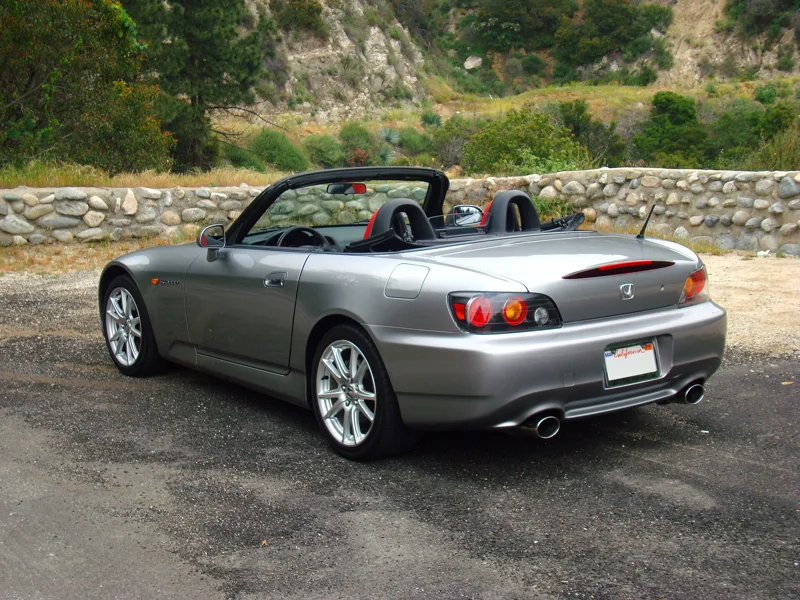
Most drift cars are rear-wheel-drive coupes or saloons of light to moderate weight, with a huge spread of power levels. Some all-wheel-drive models are converted to rear drive: the Nissan GT-R, Dodge Charger, Mitsubishi Lancer Evolution, Subaru WRX, BMW M4 Competition, Toyota Avensis and Scion tC. Unconverted all-wheel-drive cars were allowed in some early events but are banned in most competitions today. Formula Drift will not take front-wheel drive, though the Scion tC conversion caused debate among its drivers.
Local flavour matters. Drifters abroad often choose the home-market version of a Japanese car, such as a Nissan 240SX in place of a Silvia S13, and then fit Japanese engines such as the Toyota JZ-GTE or Nissan RB26DETT to match the original. The United Kingdom shares right-hand drive with Japan, so imports are common there, though they often cost more. Older BMWs, Volvo 300 series cars and Ford Sierras are also popular, and Australia and New Zealand add Holden Commodores and Ford Falcons.
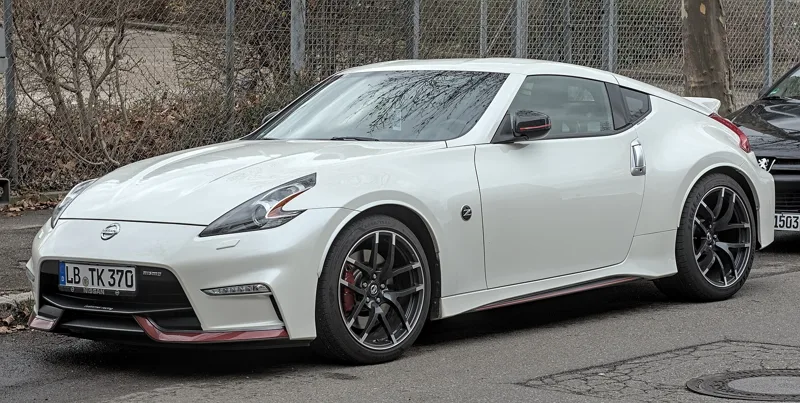
In the King of Europe series, BMWs have long won event after event, especially the E30, E36 and E46, which cost less than their Japanese rivals. V8 swaps giving 300 to 400 horsepower were once the favourite, but they have now made way for American V8s and the classic RB26DETT and 2JZ-GTE engines. Vaughn Gittin Jr. began popularising the Ford Mustang in 2005, when muscle cars had not been used at the top level before. By 2017 the front-runners in Formula Drift ranged from the Mazda MX-5 and Toyota 86 to the Nissan 370Z, Silvia S14 and S15, BMW E46 and Ford Mustang.
Formula Drift has no power limit. Engine, transmission, ECU and final drive are free so long as only the rear wheels drive the car, and outputs over 850 whp are common. Anyone chasing the Manufacturers Championship needs the chassis maker's own engine. Chevrolet small block V8s are popular because they are available and cheap to run, make plenty of torque and are easy to rebuild. A maximum tyre size, set by vehicle weight, keeps things in check.
What is the first thing to fit to a drift car?
A mechanical limited-slip differential is considered essential, and every other modification is secondary to it. An open or viscous differential gives relatively dull results in a sustained slide. The preferred type is a two-way clutch design, valued for consistent, aggressive lockup both on and off the throttle. Some cars run a spool, which has no differential action at all because the wheels are locked together. Drivers on a budget weld the differential's side gears to get the same effect.
What is Formula Drift?
Formula Drift is the premier professional drifting series in the United States. Jim Liaw and Ryan Sage co-founded it in 2003 alongside Slipstream Global Marketing, whose partnership had brought the D1 Grand Prix to the country. It has no connection with the FIA.
As of June 2024 it had 84 licensed drivers across its PRO and PROSPEC classes, racing over an eight-round championship. Feeder series such as USDrift, East10Drift, Evergreen Drift and Great Lakes let regional drivers earn licences, and winners and high finishers can step up to PROSPEC. Its current venues include Long Beach Street Circuit, Road Atlanta, Orlando Speed World and Evergreen Speedway, with Stafford Speedway, Lucas Oil Indianapolis Raceway Park and Las Vegas Motor Speedway on the 2026 list.
Chris Forsberg was the first three-time champion, winning in 2009, 2014 and 2016. Fredric Aasbo followed with 2015, 2021 and 2022. James Deane is the only driver with three titles in a row, in 2017, 2018 and 2019, and the only one with five, adding 2024 and 2025.
Where does drifting go next?
For 2026, the PRO Championship dropped its head-to-head tandem seeding bracket after a majority vote at driver summits and went back to two-run qualifying to fix the top 32. The PROSPEC class voted to keep tandem seeding, to maximise tandem seat time for its drivers.
The D1 Grand Prix has been prototyping and fine-tuning its sensor-based judging system, which it designed to remove subjectivity and the predisposition of judges, and some European series are testing it too.
Initial D has not finished either. Its successor MF Ghost ran from 2017 to 2025, and another Shigeno manga, Subaru and Subaru, began in 2025. Kodansha USA began re-releasing the original in omnibus form on 19 March 2024, and eleven volumes were out by 1 September 2026.
What does this mean for anyone who wants to try it?
Start with the drivetrain. A rear-wheel-drive coupe or saloon is the entry ticket, and a limited-slip differential comes before anything else. Cost shapes the choice. European drifters lean on older BMWs because they are cheap and easy to find, and a welded differential is the budget route to locked rear wheels.
Look for the local scene before the big series. The amateur scene keeps growing, and in the United States regional organisations in states from Florida to Washington act as the route to a licence. Everything on the pro ladder, from the feeders to the PRO class, grew out of drivers who first learned to hold a slide on their own roads and then took it to a track.
.jpg)