Ten minutes of San Francisco hills, a chase stitched together from locations miles apart, and a Paris chase shot with no special effects: how the best car chases were made.
Bullitt (1968) set the standard for movie car chases with driver's-eye shots and real speed on San Francisco's hills, edited from locations miles apart. Ronin (1998) answered it in Nice and Paris with no special effects, race drivers at the wheel and actors riding in cars driven at up to 160 km/h.
The most famous chase in film history cannot be driven. The sequence in Bullitt looks like one unbroken run through San Francisco, but it was assembled from locations miles apart, and a green Volkswagen Beetle is passed by the speeding cars again and again. Ronin answered it thirty years later in Nice and Paris.
What makes a movie car chase work?
On screen, a car chase means a scene in which two or more automobiles pursue one another, with or without a police car among them. The pleasure lies in speed, in the threat of collision and in the debris that follows. Some feature-length films have been built almost entirely around chases, often with high-powered exotic cars in the lead.
Staging one is brutal on equipment. Sequences need many takes and the loss of several vehicles, whether planned or accidental. Productions therefore tend to choose older models, one or two generations behind the cars currently on sale, because depreciation makes them cheap to buy second-hand. The two chases below show how far filmmakers went to make that wreckage look real.
The most famous chase in film history cannot be driven, because its streets were never joined up.
How was the Bullitt chase made?
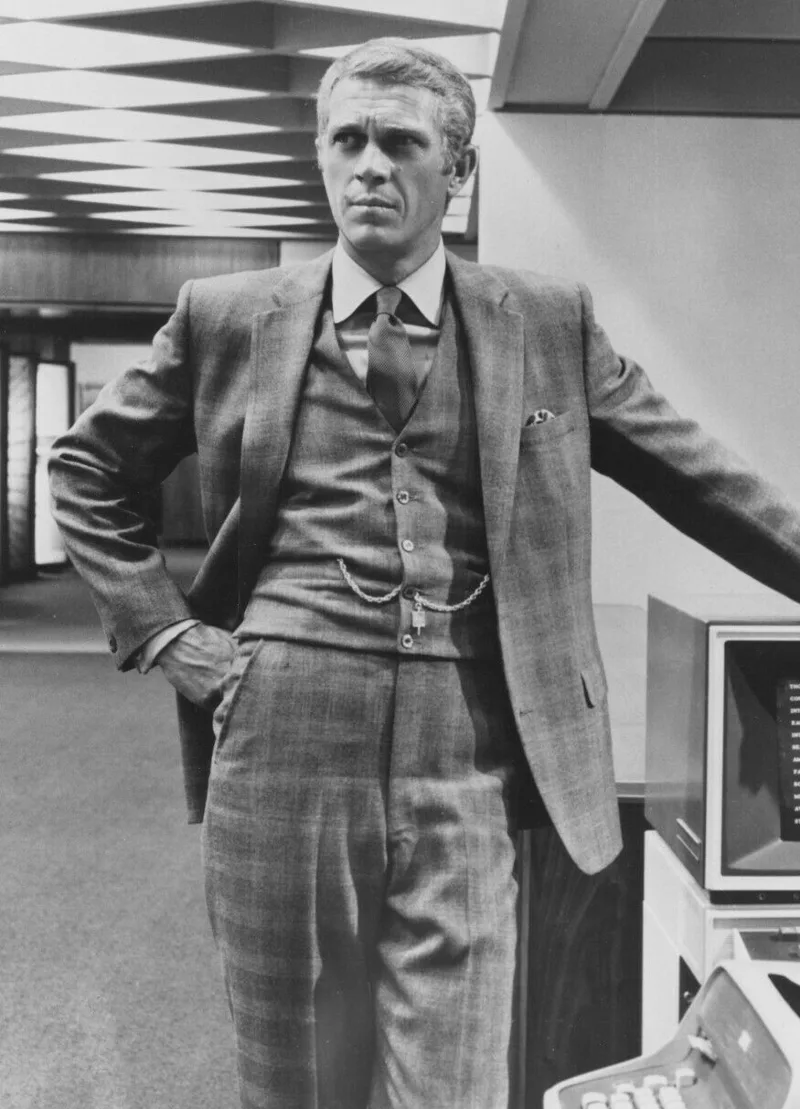
Bullitt, released in October 1968 and directed by Peter Yates, stars Steve McQueen as San Francisco detective Frank Bullitt. Its chase is the reason most people remember it. Critic Leonard Maltin called it a now-classic car chase and one of the screen's all-time best, and Emanuel Levy wrote in 2003 that it revolutionised Hollywood's standards.
Yates owed the job to a chase of his own. McQueen had seen Robbery, Yates' 1967 British feature, with its extended pursuit, and screenwriter Alan Trustman saw the same film while he was drafting the Bullitt chase. He insisted that McQueen and the producers watch it and consider Yates. It became his first American film.
A real city, not a studio set
Most of the film was shot on location in San Francisco, which was unusual then. The new lightweight Arriflex cameras let Yates work flexibly on real streets, and the production reasoned that location filming cost no more than Los Angeles because so little had to be built. McQueen described the aim as a film about reality rather than a theatrical one. The chase begins under Highway 101 in the Mission District and finishes out on San Bruno Mountain, near the Brisbane exit from Guadalupe Canyon Parkway.
Local authorities would not allow filming on the Golden Gate Bridge, but they did permit the Mission District, Bernal Heights and the outskirts of Brisbane. Shooting took three weeks and yielded 9 minutes 42 seconds of pursuit on screen.
Cars, speeds and stunt drivers
Warner Bros. bought two 1968 Ford Mustang GT Fastbacks in Highland Green, each with a 325-horsepower 390 V8 and a four-speed manual gearbox. Veteran racer and technician Max Balchowsky heavily modified the engines, brakes and suspension. One car did the stunt driving and the other was kept for McQueen's close-ups.
The opposition changed during preparation. Ford had offered two Galaxie sedans, but the producers found them too heavy for the jumps over San Francisco's hills, and they felt a Ford-against-Ford battle would not convince. Stunt driver Bill Hickman supplied two black 1968 Dodge Chargers with 375-horsepower 440 Magnum V8 engines instead. Balchowsky left the engines largely alone and only mildly upgraded the suspension of the stunt car.
The director asked for top speeds of about 130 km/h (81 mph), yet the cars, chase cars included, at times topped 170 km/h (110 mph). McQueen drove the close-ups. Stunt coordinator Carey Loftin, Bud Ekins (a motorcycle racer) and Loren Janes, who normally doubled for McQueen, took the fast sections. Ekins also performed a lowsider crash in front of a skidding truck.
The editing sleight of hand
Driver's-eye shots put the audience inside the cars, and the cutting gave the illusion of many different streets. It also left fingerprints. Bullitt's car shows crash damage down its passenger side well before the incident that causes it, the Charger loses five wheel covers with different ones missing from shot to shot, and an early crash into the camera explains a dented fender seen later. Plot the route on a map and it breaks into pieces that no driver could follow in real time.
What happened to the Bullitt cars?
The close-up Mustang was repaired, given one coat of fresh Highland Green and sold to a Warner Bros. employee, Robert Ross. After Ross it went to Frank Marranca, who shipped it to New Jersey, and in 1974 to Robert Kiernan, who bought it through an advertisement in Road & Track. McQueen tried to buy it back in 1977 and was refused. The Kiernans used it as a family car for 46,000 miles before putting it into storage in 1980. Their son Sean began restoring it in 2014 and had it authenticated in 2016. Mecum Auctions sold it on 10 January 2020 for $3.7 million.
The stunt car had a rougher life. Badly damaged during filming, it went to a scrapyard and was assumed lost for decades. In 2016 Hugo Sanchez bought two Mustang coupes from a backyard near Los Cabos, Mexico, planning to turn one into a clone of the Eleanor car from Gone in 60 Seconds. One of them was an S-code, which led Ralph Garcia to have it authenticated by Kevin Marti, and it proved to be the lost Bullitt car. Its full restoration began in 2017.
How did Ronin film its Paris and Nice chases?
Ronin, released in 1998, follows a team of former operatives hunting a mysterious briefcase. Director John Frankenheimer shot it in France from November 1997 to March 1998, and the film was praised for realistic chases in Nice and Paris. Critics set them beside the pursuits in Bullitt and The French Connection, and several media outlets placed them among the best ever filmed.
Frankenheimer had form. He described Ronin as a character-driven action picture rather than a computer-generated one, in the mould of Black Sunday and French Connection II. He also knew Paris well, having lived there for many years. A strict city ordinance barred film productions from firing guns, but French authorities helped him around it.
Real drivers, real speed
He avoided special effects in the chases, storyboarded them and reused the camera mounts from Grand Prix. The actors sat inside the cars while the cars were driven at up to 160 km/h (100 mph) by Jean-Pierre Jarier, a Formula One driver, together with Jean-Claude Lagniez and Michel Neugarten. The cast had first attended a high-performance driving school.
Speed on film is easy to fake by running the camera slowly, and the stunt coordinator, Lagniez, said the team treated not doing so as a priority, since it also alters the lighting. Cinematographer Robert Fraisse conceded that they sometimes shot at 22 frames per second, or 21, though not often. Cameras mounted below the front fenders supplied point-of-view shots with a heightened sense of speed, and Arriflex cameras handled the chase work.
The final chase
The climactic chase involved 300 stunt drivers. The production bought four BMW 535is plus five Peugeot 406s, then sliced one of each in two and towed the halves behind a Mercedes-Benz 500 E with the actors sitting inside. Right-hand-drive versions were also purchased, with a dummy steering wheel installed on the left while the stunt driver sat on the right and actually drove.
The first major chase was filmed in La Turbie and Nice, and the rest in Paris, including La Defense and the Pont du Garigliano. A road tunnel could not be blocked to traffic by day, so those scenes were shot at night. The freeway sequence, in which the actors dodge oncoming vehicles, took four hours on a closed road. With no second unit director or camera operator, Frankenheimer and Fraisse supervised the action work themselves for a further 30 days after the main unit finished. Frankenheimer thought music and sound effects did not mix well, so the final chase has very little score. Sound engineer Mike Le Mare recorded the cars on a racetrack and mixed them in later.
How do the two chases compare?
| Bullitt (1968) | Ronin (1998) | |
|---|---|---|
| Director | Peter Yates | John Frankenheimer |
| City | San Francisco | Nice and Paris |
| Cars | 1968 Ford Mustang GT (390 V8, 325 hp) against 1968 Dodge Charger (440 Magnum V8, 375 hp) | BMW 535is and Peugeot 406s, some cut in half and towed |
| Speeds | Plan of about 130 km/h; over 170 km/h reached | Up to 160 km/h with actors aboard |
| Camera idea | Driver's-eye shots, cuts joining distant streets | Fender-mounted point-of-view cameras, no special effects |
| Box office | $42.3 million | $70.7 million on a $55 million budget |
Why do real car chases look so different?
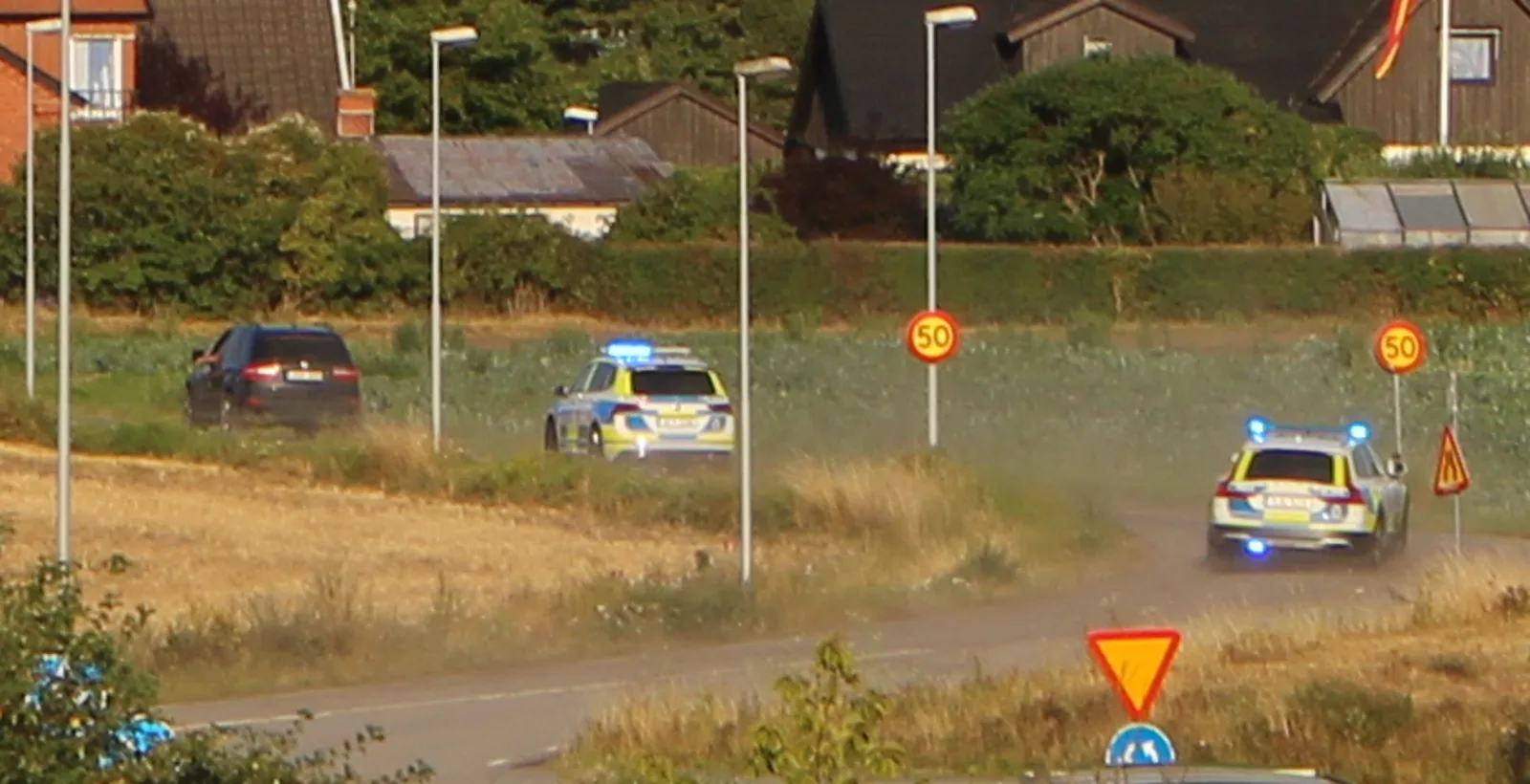
Real pursuits are messier and far more dangerous than anything cut together for a thriller. Newspapers reported police chases involving cars and motorcycles as early as the 1900s and 1910s, and when alcohol was banned in the United States, bootleggers and moonshiners raced the police, which led to car modifications and exhibitions that helped form stock car racing.
Television changed how they were seen. The earliest chase known to have been recorded in full on video took place in May 1988 in Berea, Ohio, filmed from a camera in a police cruiser. On 3 January 1992 a pursuit in Southern California became the first to be broadcast live, and viewers complained when a station switched to a rerun of Matlock. Los Angeles, with its constant live coverage, is often called the car chase capital of the world, and the 1994 low-speed pursuit of a white Ford Bronco carrying O. J. Simpson made the form a national event.
The human cost is part of the picture. Chase-related deaths in the United States run between 300 and 400 a year, and in the United Kingdom an estimated 40 people a year die in road incidents involving police, most following a pursuit. A 2023 report from the United States Department of Justice urges police to start a pursuit only after a violent crime, and only if the suspect threatens another straight away. Film does the opposite: it keeps the speed and the spectacle, and leaves the danger to trained drivers and closed roads.