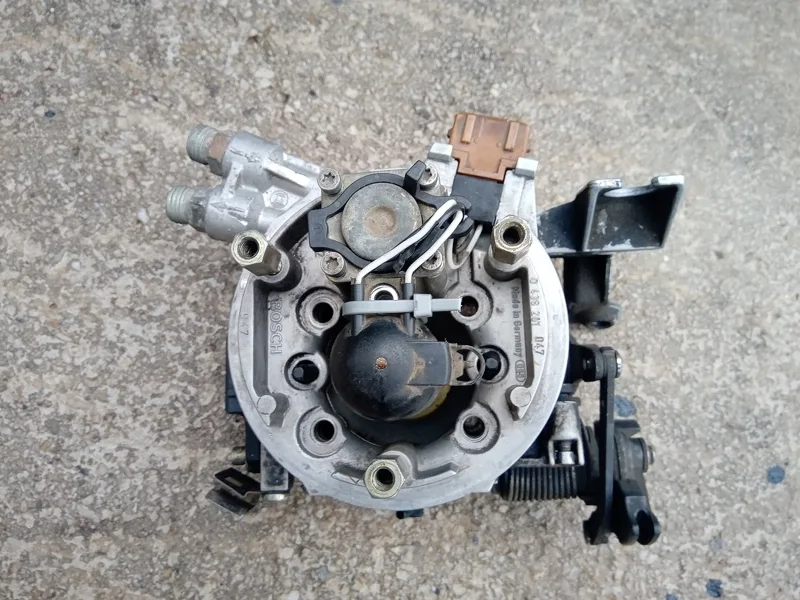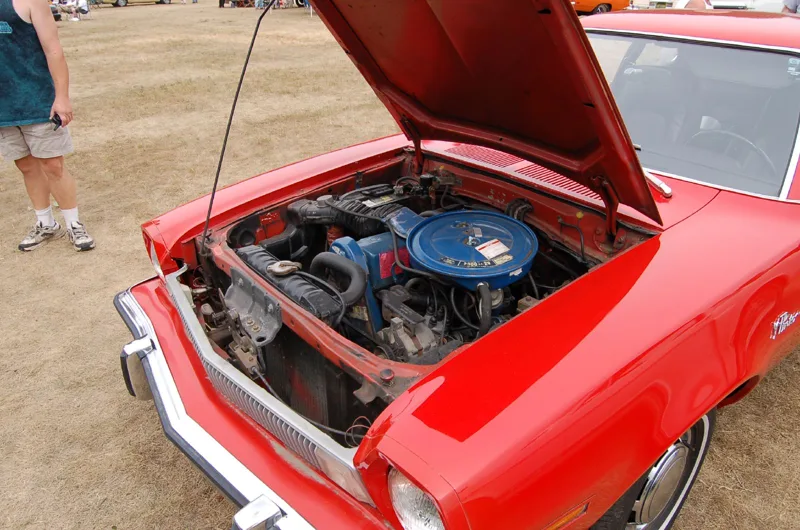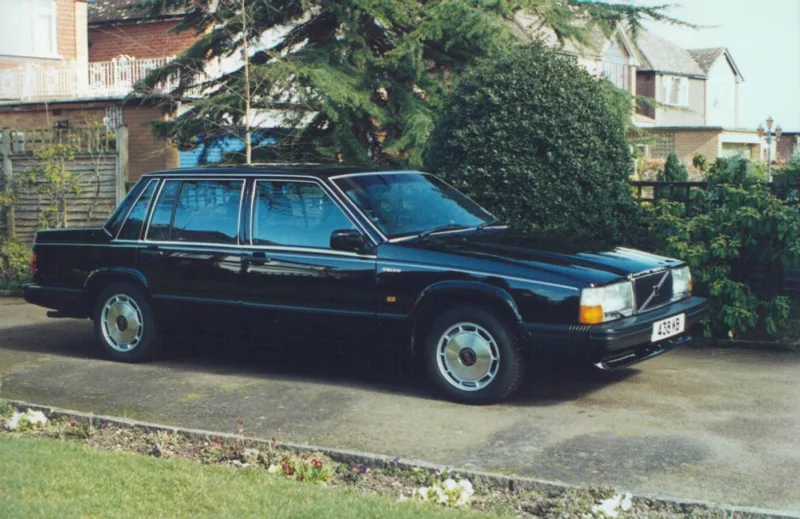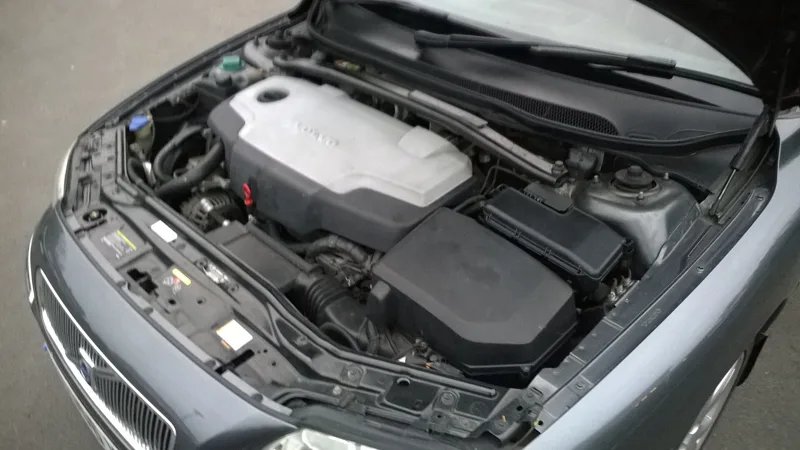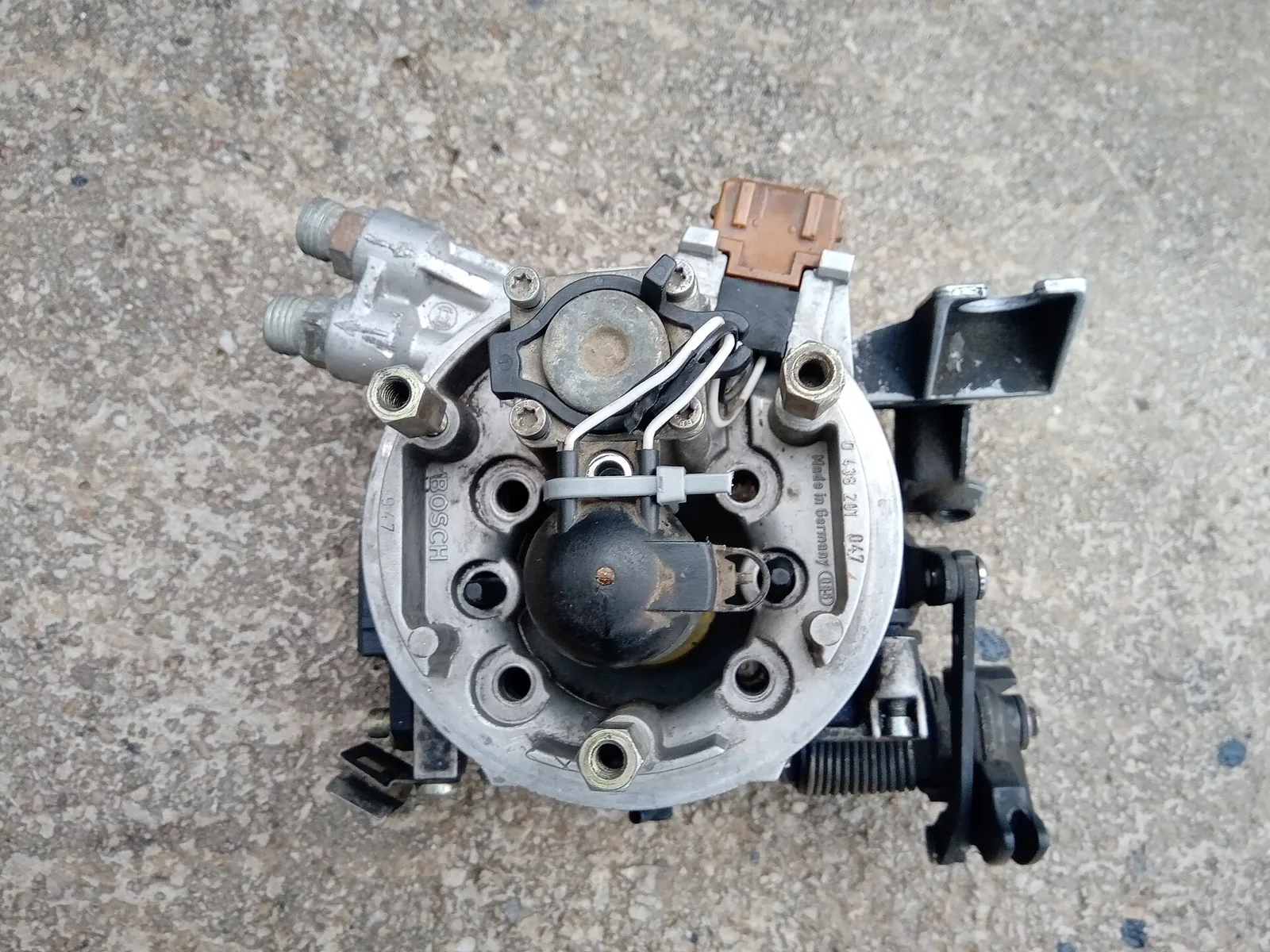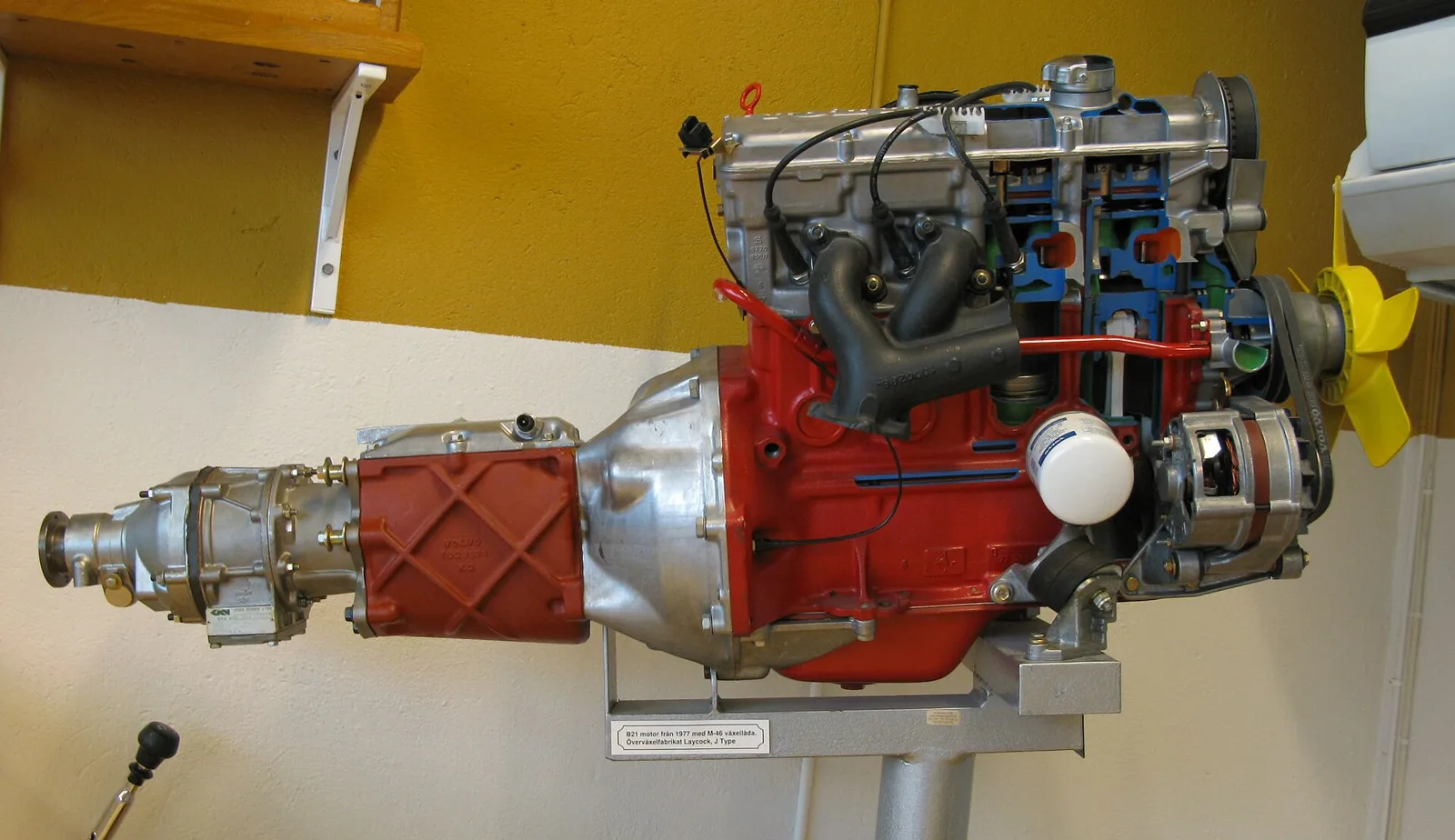
Volvo's red block, from the 1976 SOHC B21 through the turbo, low-friction and 16-valve versions to the marine 2.5 L.
The Volvo redblock is the family of slanted straight-four engines that began with the B21 in the Volvo 200 series. It was painted red on the block, and its SOHC design and aluminium crossflow head were a step up from the pushrod B20 it replaced.
The Volvo redblock is the name given to the slanted straight-four family that began with the B21 and its derivatives. The engines were painted red on the block, and the family ran from the 200 series through the 240, 700, 740, 940 and 960 ranges, as well as in marine installations.
Where did the red block come from?
The B21 was a slanted straight-four first used in the Volvo 200 series as a replacement for the B20. Its main changes were a switch from pushrods to SOHC and an aluminium crossflow head in place of the B20's iron head.
The B20 had been a pushrod engine with an iron head, so the B21 changed both the valvetrain and the head material.
Overhead-cam versions were first optional on the 240 and became standard in all markets from the 1976 model year. The overhead-cam motors came in 2.0 L (B19 and B200), 2.1 L (B21) and, eventually, 2.3 L (B23 and B230) displacements.
The engines are tilted about 15 degrees toward the exhaust side to make room for the more complicated injection systems. A toothed belt driven from the front of the crankshaft turns the camshaft and an intermediate shaft, which drives the oil pump, the distributor on 240 engines and the fuel pump on carburettor models.
A slanted four that started as a replacement for the B20 and became the basis of Volvo's turbo and 16-valve engines.
What were the B21's bore, stroke and output?
The B21 had an 80 mm (3.15 in) stroke and a 92 mm (3.62 in) bore. In the US its output ranged from 98 hp (73 kW) to 107 hp (80 kW), depending on compression ratio, and it was typically fitted with a B or M camshaft.
Blocks can be identified by their water plugs. B19 and B21 blocks have them on one side, while B23 blocks have them on both sides. Most single-camshaft versions were non-interference designs, so a broken toothed belt would not damage the engine, with the K series (B200K and B230K) as the exception.
How did the turbo red blocks arrive?
The B21FT, a turbocharged B21F, arrived in 1981 with a 7.5:1 compression ratio, a Garrett T3 turbocharger and a T camshaft, producing 127 hp (95 kW). The B21ET, sold outside North America, reached 155 hp (116 kW) with more boost. Volvo also cast the turbo engines from a slightly different mould, with a boss for the turbo oil return line.
Boost was 6.5 psi (0.45 bar) on the B21FT and 9 psi (0.62 bar) on the B21ET. The B23 came in 1981 with a 2.3 L capacity from an 80 mm stroke and a 96 mm bore, first in Canada and in 1979 elsewhere. Because turbo engines run hotter, Volvo fitted sodium filled exhaust valves and a thermostat-controlled oil cooler.
What did the intercooler boost system change?
The intercooler boost system, or IBS, arrived in 1983 for the B21FT. The kit included an intercooler, ducting, a new fan shroud, oil cooler lines and mounting brackets, and optionally an automatic transmission kit. It raised the B21FT to 157 hp (117 kW), slightly above the 155 hp (116 kW) of the non-intercooled European B21ET. Canada received the B21FT alongside a detuned B23E in 1983.
By mid-1984 North American 240 Turbos came with the intercooler boost system as standard, plus a bigger clutch and a stepped flywheel. Fuel system changes lifted the non-intercooled B21FT to 131 hp (98 kW), and the factory intercooled rating for the 1984.5 model reached 162 hp (121 kW).
What did the low-friction redblock change?
In 1985 Volvo introduced a revised low-friction design, dubbed the B200 and B230 by displacement. It had longer rods, pistons with a lower compression height, smaller low-friction bearings, a crankshaft with eight counterweights instead of four, and a heavy harmonic balancer in the crank pulley.
The rods measured 152 mm (6.0 in) centre to centre, 7 mm (0.28 in) longer than before. A 1989 crankshaft upgrade moved the thrust bearing back to the number five journal and enlarged the main bearings. In 1990 the connecting rods grew from 9 mm (0.35 in) to 13 mm (0.51 in).
In 1993 the B230 gained piston cooling jets to ease piston slap on the turbo motors, and its square timing belt gave way to a round-tooth belt that ran more quietly. North American availability ended in 1995, while European production continued until 1998, when the 940 was discontinued.
How were the red block engines named?
The names follow a B##X or B##VX pattern. B stands for "bensin", the Swedish word for gasoline, and ## is the displacement in decilitres. On the low-friction motors the V denotes SOHC, shown as 0, or DOHC with four valves per cylinder, shown as 4. The B230 is therefore a 2.3 L SOHC, while the B234 is a 2.3 L DOHC with 16 valves.
Volvo used a set of suffixes to describe each engine. A denoted a single constant-pressure carburettor, B meant high compression with twin carburettors, and E meant high compression with K-Jetronic mechanical injection and no catalyst. The ET suffix marked a K-Jetronic turbo. The F suffix denoted low compression with a catalytic converter for the Federal market, with compression ratios of 9.8:1 for the B230F, 9.5:1 for the B280F, 10.0:1 for the B234F and 10.7:1 for the B204F.
The FT carried LH-Jetronic 2.2 or 2.4 injection with a turbocharger and an 8.7:1 static compression ratio, achieved with dished pistons. The FTX was a higher-output B230FT of about 190 PS (140 kW), available through the Turbo+ package.
The FD was a B230F fitted with exhaust gas recirculation and a pulse air system for cleaner emissions. The FK was a low-pressure turbo from 1995, identical to the B230FT of that time but with boost lowered to 4 psi (0.28 bar), a change made for tax reasons in some countries and not supplied in North America.
Suffixes combine, so the B230FT is a 2.3 L SOHC turbo with LH-Jetronic injection, while the B204FT is a 2.0 L DOHC turbo with a catalytic converter.
Which special versions suited particular markets?
Several redblock variants were built to suit tax systems. The B17 was an export version for markets such as Greece and Israel, with a shorter stroke than the B19 and a bore and stroke of 88.9 mm x 71.85 mm for 1.8 L (1,784 cc). The B19ET was a 2.0 L (1,986 cc) turbo sold in markets such as Italy, where engines above 2 litres were heavily taxed.
The B19ET produced 107 kW (145 PS) from a bore of 88.9 mm and a stroke of 80 mm. It used forged pistons made by Kolbenschmidt and was a robust engine that later evolved into the B200 low-friction unit.
The B23ET and B23FT were offered for only two years, 1983 and 1984, in the 700 series. They were unusual because they used a block-mounted distributor, forged pistons and a forged crankshaft. They are often regarded as among the most robust Volvo turbo motors.
The B23ET was the only redblock known to have the small coolant passage version of the higher-flowing 405 cylinder head, while the FT made do with the normal 398 head.
What made the 16-valve redblock special?
The 16-valve redblock was introduced in 1988 for the 740 GLE and later used in the 940 and 960. It came as a 2.0 L turbo, the B204FT and GT, and as a naturally aspirated 2.3 L B234F rated at 155 PS (114 kW). The head was designed for Volvo by either Cosworth or Porsche.
The 2.0 L turbo was introduced for European markets whose tax structures were tied to engine size, such as Finland and Italy.
These motors had twin counter-rotating external balance shafts, and the block differed from the standard B230 because an external oil pump replaced the auxiliary shaft. The head was a new multi-piece design with a separate cam carrier and lower section. Later white-block motors trace their head design back to the two-piece setup of the B204 and B234.
The turbo B204 had an exhaust gas pyrometer that detected excessively high exhaust temperatures, and the fuel injection computer then enriched the mixture. It used a forged crankshaft, cast pistons and 13 mm (0.51 in) connecting rods.
What problems affect 16-valve engines?
The 16-valve is a powerful engine that has some well-known faults. The oil pump gear can fail around its mounting flange, or more often the grade 5 bolt holding the gear breaks. Owners are strongly advised to fit a grade 8 bolt when replacing the gear. Replacement balance shaft seals often start leaking again because of wear on the shaft itself, so the repair is not always permanent.
Timing belt failure can also come from improper tension on manual tensioners, which were fitted to 1989 to very early 1990 models only, or from poor adjustment of the balance shaft belt. Improper adjustment of either belt is a common cause of such failures. The 16-valve is an interference engine, so a belt failure causes damage. Balance shaft oil seals often leak on older engines, and many owners have removed the balance shafts, which only reduce high-rpm second-order vibration.
The recommended timing belt interval is 50,000 mi (80,000 km), or sooner if the engine is modified. It is also advisable to replace the crank and camshaft seals at each interval and to inspect the tensioner and idler pulleys for wear.
Did Volvo Penta use the redblock for marine engines?
Yes. Volvo Penta sold the OHC redblocks as marine engines, just as it had with the older OHV units. Depending on the model the displacement was 2.1 L (2,127 cc), 2.3 L (2,316 cc) or 2.5 L (2,490 cc), and the 2.5 L version was the largest of the family.
The 2.5 L marine engines, which had a longer stroke than any automotive redblock, known as the AQ151 with 8 valves and AQ171 with DOHC 16 valves, had a forged crankshaft with an 86 mm (3.39 in) stroke. Their pistons had a compression height 3 mm (0.12 in) lower. The 2.5 L blocks still carried the B230 casting mark, and Penta used both the 8-valve and 16-valve heads on the same block series. Unlike the automotive B2x4, the 16-valve marine versions did not use a different block with balance shafts.
Red block variants at a glance
| Engine | Displacement | Period | Output | Notes |
|---|---|---|---|---|
| B21 | 2.1 L | Standard from 1976 (240) | 98 hp (73 kW) to 107 hp (80 kW), US | SOHC replacement for the B20 |
| B21FT | 2.1 L | From 1981 | 127 hp (95 kW); 157 hp (117 kW) with IBS | Garrett T3 turbo |
| B21ET | 2.1 L | Outside North America | 155 hp (116 kW) | K-Jetronic turbo |
| B23 | 2.3 L | From 1981 | Identical to B21 apart from bore | 96 mm bore |
| B204GT | 2.0 L | From 1989 | About 200 hp (149 kW) | 16-valve turbo |
| B204FT | 2.0 L | From 1989 | 185 hp (138 kW) | Catalytic converter |
| B234F | 2.3 L | From 1988 | 155 PS (114 kW) | 16-valve naturally aspirated |