A clean-sheet pushrod V8 family from 1997 that carried the Chevrolet small-block through three generations and into the Corvette, trucks and supercars.
The LS family spans Gen III, IV and V engines built by General Motors from 1997. Displacements run from the 4.8 L LR4 truck engine to the 7.0 L LS7, and the Gen V line-up includes the 755 hp LT5, with a sixth generation expected next.
The General Motors LS family is a set of V8 engines, with a V6 offshoot, that GM has built since 1997. It grew out of the Chevrolet small-block, which has been produced in more than 100 million examples. The family now covers three generations, with a sixth expected to follow.
When did the LS engine family start?
The LS family started in 1997, when the LS1 arrived in the Chevrolet Corvette C5. It continued the first and second generation Chevrolet small-block but was a clean-sheet design, sharing only the connecting rod bearings and valve lifters with the earlier engines.
The LS name comes from the RPO code LS1, and it is now used loosely for Gen III and IV engines. That shorthand can mislead, because not every RPO code in those generations begins with LS. Gen V engines are generally called LT small-blocks after the LT1.
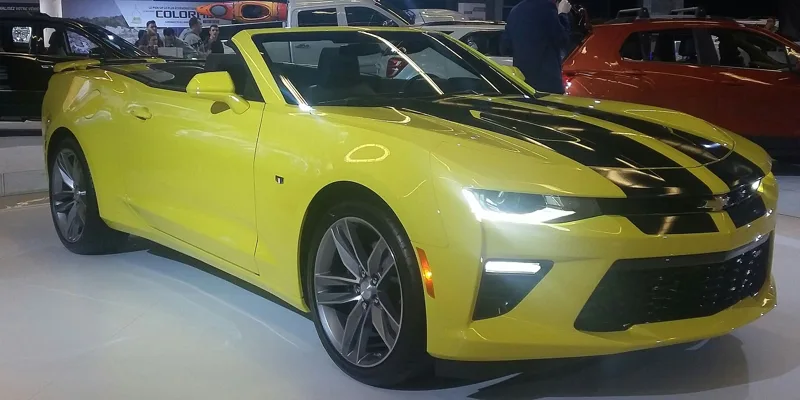
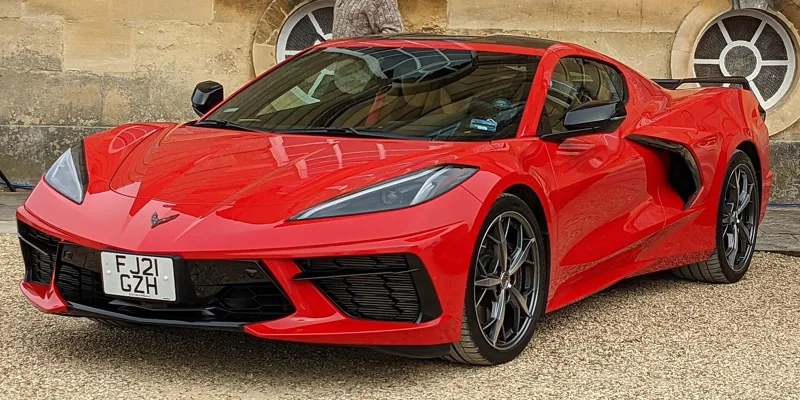
LS or LT engines have powered every generation of the Corvette since the C5, apart from the Z06 and ZR1 of the eighth generation, which use the unrelated Chevrolet Gemini small-block. Other users include the Camaro, the Firebird, the Holden Commodore, the Silverado and the Cadillac Escalade.
A pushrod V8 that GM kept by choice, then refined across three generations into a family that powers Corvettes, trucks and supercars.
How did the Chevrolet small-block begin?
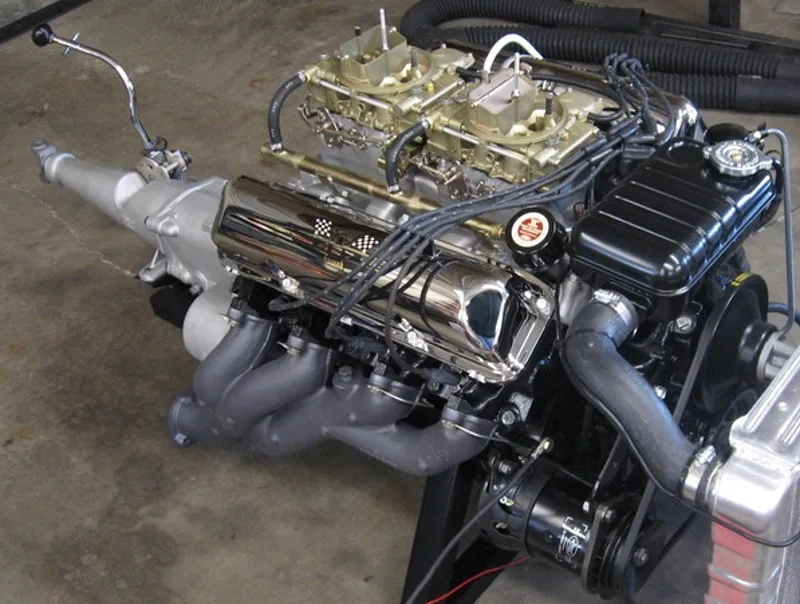
The original small-block was the brainchild of Chevrolet chief engineer Ed Cole. Its 1955 version, the 265 cu in (4,343 cc) Turbo-Fire, powered the Corvette and Bel Air and weighed 40 lb (18 kg) less than the inline-sixes it replaced, despite having two more cylinders.
The Turbo-Fire also raised output by 25%, and it helped cut the Corvette's 0-60 mph (0-97 km/h) time from 11 seconds to 8.7.
A larger version followed in 1957. The Super Turbo-Fire displaced 283 cu in (4,638 cc) and was the first engine offered with mechanical fuel injection. Its top model made 283 hp (211 kW; 287 PS) and brought the Corvette's 0-60 mph time down to 7.2 seconds.
Emissions rules then squeezed performance. The Malaise era, roughly 1973 to 1983, brought some of the lowest horsepower figures in muscle and pony cars, and Corvette output fell below 200 hp (149 kW; 203 PS) from a 350 cu in (5,735 cc) engine.
The 1992 LT1 began the second generation with a new ignition system, reverse-flow cooling and a new block, while the valvetrain and engine mounts carried over. It made 300 hp (224 kW; 304 PS). The LT4 that closed out the generation added 30 hp (22 kW; 30 PS).
Why did GM keep pushrod engines?
GM kept pushrod valve gear because a camshaft in the block kept the engine shorter than an overhead-cam design, and it left fewer parts to fail. Engineers also judged overhead cams unnecessary, since Corvette power needs could be met by adding displacement.
The choice was controversial. Ford planned to drop its small block for its Modular engines, and Chrysler had stopped building V8 passenger cars. GM's Northstar engines for Cadillac offered dual overhead cams, but they were initially limited to that brand and were not designed for rear-wheel-drive vehicles.
Sam Winegarden, a former GM chief engineer for small-blocks, acknowledged the stigma attached to pushrods but said switching was unnecessary. Current chief engineer Jake Lee added that overhead cams would have raised the engine by 4 in (102 mm), too tall for the Corvette's hood.
Approval for Gen III came in May 1992, after GM executives drove two Corvettes, one with a pushrod engine and one with a dual overhead cam engine. Tom Stephens, executive director of GM Powertrains, led the project. Work began in 1993, and prototypes reached test benches by the winter of that year. Ed Koerner, a former NHRA record holder, helped with the hands-on work.
What did the three generations share?
All three generations are pushrod, overhead valve engines. The camshaft sits in the valley and operates the valves through pushrods and rocker arms, which keeps the engine short and removes timing chains and extra camshafts.
Passenger-car blocks were aluminium, while truck blocks could be either material. Aluminium cylinder heads were used on every engine except the 1999 and 2000 LQ4, which had cast-iron heads. The 4.4 in bore spacing carried through every generation.
Long-runner intake manifolds boost low-speed torque. Gen III engines introduced six-bolt main bearings, powder-forged connecting rods and most hypereutectic pistons, and the powder-forged rods appear in every LS and LT engine except the LS7.
What was the Gen III architecture?
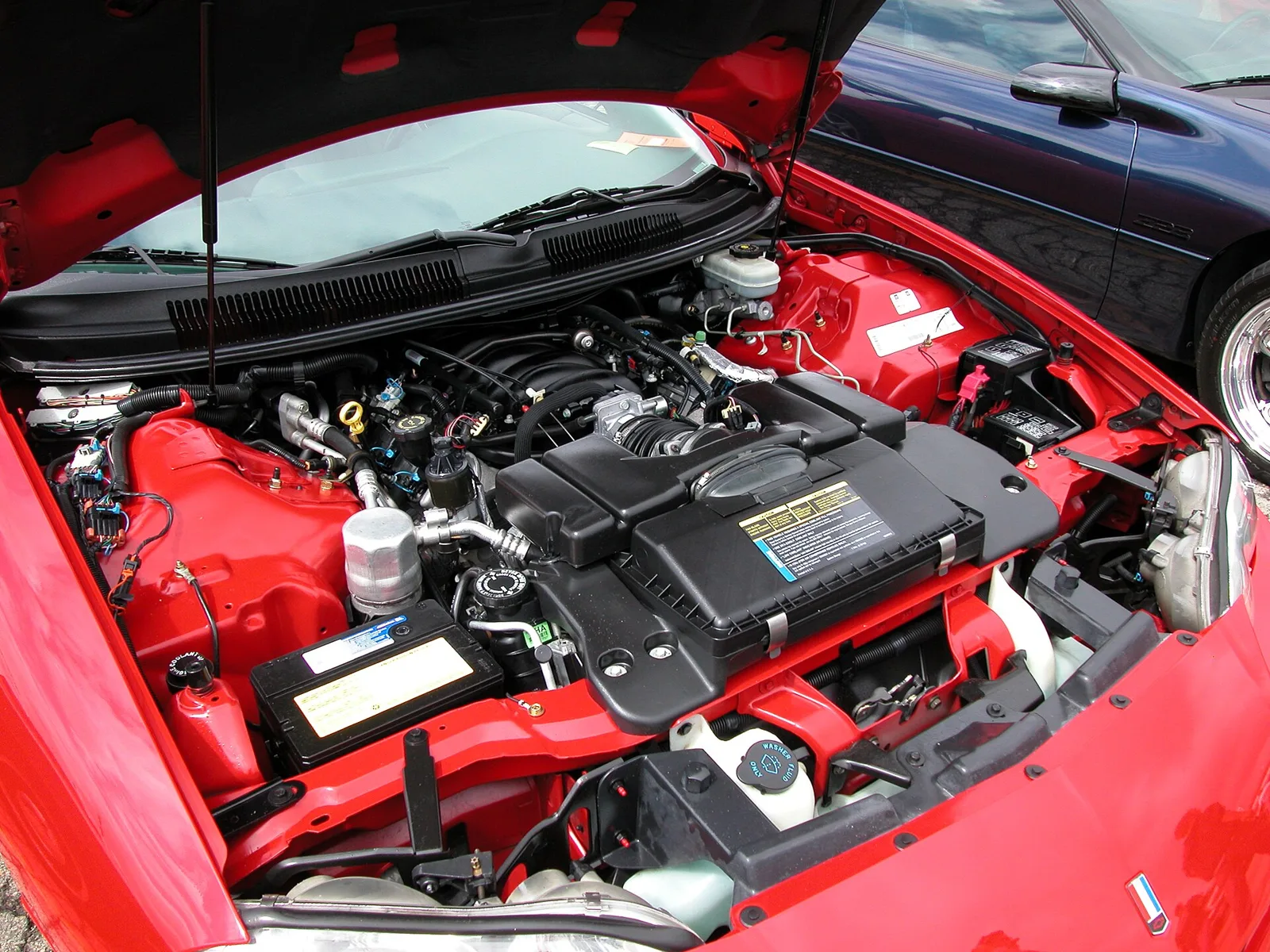
Gen III was a clean-sheet design built from 1997 to 2007. It used coil-near-plug ignition in place of a distributor, a square four-bolt cylinder head pattern and a firing order of 1-8-7-2-6-5-4-3, the same sequence used by many modern V8s.
Flat-topped pistons went into the LS1, LS6, LQ9 and L33, while the LQ4 truck engine received a dished version of the hypereutectic piston.
What were the LS1 and LS6?
The 5.7 L (5,665 cc; 345.7 cu in) pushrod engine has a 99 mm x 92 mm bore and stroke, or 3.898 in x 3.622 in. It is all aluminium and shares little with the LT1 beyond its displacement, external size and rod bearings.
The LS1 arrived in the 1997 Corvette rated at 345 hp (257 kW) at 5,600 rpm, and its torque peak was 350 lb ft (475 N m) at 4,400 rpm. Intake and exhaust changes in 2001 lifted it to 350 hp (261 kW) and 365 lb ft (495 N m), and manual Corvettes made 375 lb ft (508 N m).
In Australia the LS1 kept improving. HSV's VYII series reached 382 bhp (285 kW), and a Callaway version called the C4B, fitted to HSV GTS models, made 400 bhp (298 kW).
The LS6 was a higher-output LS1 with the same capacity. It made 385 bhp (287 kW) and 385 lb ft (522 N m) during 2001, then 405 bhp (302 kW) and 400 lb ft (542 N m) across 2002 to 2004. It had a 10.5:1 compression ratio and sodium-filled exhaust valves, and it debuted in the C5 Corvette Z06. Cadillac's CTS-V later received a 400 bhp (298 kW) version.
The SSC Ultimate Aero TT used an enlarged 6.3 L (384.4 cu in) LS6 block with two turbochargers.
What were the 4.8 and 5.3-litre truck engines?
The 4.8 L and 5.3 L were smaller truck versions of the LS1, designed to replace the 305 and the 350 in trucks. They share the same Gen III block and heads, so most parts interchange. The 4.8 L LR4 displaced 4,806 cc, and the 5.3 L had a 96 mm x 92 mm bore and stroke.
The LR4 made 255 hp (190 kW) in 1999 and 270 to 285 hp (201 to 213 kW) from 2000, with torque between 285 and 295 lb ft (386 to 400 N m). The 2005 and 2006 models made 285 hp (213 kW).
The LM7 was the 5.3 L workhorse, with a cast-iron block and aluminium heads. Its outputs were 270 hp (201 kW) and 315 lb ft (427 N m) during 1999, 285 hp (213 kW) and 325 lb ft (441 N m) from 2000 to 2003, and 295 hp (220 kW) and 335 lb ft (454 N m) from 2004 to 2007.
The L33 Vortec 5300 HO used an aluminium block with a flat-top piston. Its 799 cylinder heads matched the 243 castings found on LS6 and LS2 engines, lifting compression from 9.5:1 to 10.0:1. Power rose by 15 hp (11 kW) to 310 hp (230 kW), with 335 lb ft (454 N m). It was sold only in extended-cab, standard-bed 4WD pickups, and just 25% of 2005 Chevrolet and GMC full-size pickups had one.
How did the 6.0-litre LQ4 and LQ9 differ?
The 6.0 L was a larger iron-block LS engine for trucks, designed to bridge the gap between the new small blocks and the big blocks. The LQ4 made 300 to 335 hp (224 to 250 kW), while the LQ9, originally designed for Cadillac in 2002, reached 345 hp (257 kW) and 380 lb ft (515 N m) with 10:1 flat-top pistons.
The LQ9 was renamed VortecMAX for 2006 and gained 20 hp (15 kW) and 10 lb ft (14 N m) over the standard engine. Escalade models used a 3.73:1 rear axle and pickups a 4.10:1, and LQ9s were built only in Romulus, Michigan.
What changed in Generation IV?
Generation IV succeeded Gen III in 2004 and covers engines built from 2005 to 2020. It kept the Gen III design but added displacement on demand, which deactivates alternate cylinders, along with variable valve timing. Its families reached up to 7.4 L (7,441 cc; 454.1 cu in) and up to 776 bhp (579 kW).
A three-valve-per-cylinder design was planned for the LS7, which would have been a first for a GM pushrod engine. It was shelved because of its complexity, since the two-valve layout proved sufficient.
What made the LS2 and LS7 stand out?
The LS2 was the 6.0 L Corvette base engine from 2005, rated at 400 bhp (298 kW) at 6,000 rpm, while torque hit 400 lb ft (542 N m) at 4,400 rpm. The LS7 was a 7.0 L (7,011 cc; 427.8 cu in) engine producing 505 bhp (512 PS; 377 kW) at 6,300 rpm, the largest displacement in the production LS line-up.
The LS2 used the 243 cylinder heads from the LS6, without the sodium-filled valves, plus a smaller camshaft and 290 cc of extra capacity. Its 10.9:1 compression ratio was higher than the LS1's 10.25:1 and the LS6's 10.5:1. It also became the basis of the NASCAR specification engine from 2006.
The LS7 used sleeved cylinders in an aluminium block, with a 4.125 in (104.8 mm) bore and a 4 in (101.6 mm) stroke. Its forged steel crankshaft and titanium connecting rods supported a 7,000 rpm redline, and 470 lb ft (637 N m) arrived at 4,800 rpm. GM hand-built it at the Performance Build Center in Wixom, Michigan, and most went into the Z06.
How strong were the LS3 and LS9?
The LS3 became the Corvette's base engine for 2008, a 6.2 L (6,162 cc; 376.0 cu in) rated at 430 bhp (321 kW; 436 PS) at 5,900 rpm, and its torque reached 424 lb ft (575 N m) at 4,600 rpm. The supercharged LS9 reached 638 bhp (647 PS; 476 kW) at 6,500 rpm, while its torque peaked at 604 lb ft (819 N m) at 3,800 rpm.
The LS9 used an Eaton four-lobe Roots supercharger and a 9.1:1 compression ratio. It was fitted to the 2009 to 2013 Corvette ZR1, among other cars. The LS3 used the LS2 casting with a larger 103.25 mm bore, a more aggressive camshaft and 10.7:1 compression.
The L92, a 6.2 L all-aluminium pushrod engine with variable valve timing, debuted in the 2007 Cadillac Escalade. It produced 403 hp (301 kW) and 417 lb ft (565 N m) in applications such as the GMC Yukon Denali and Hummer H2.
What were the known problems?
The best-known faults were piston slap on cold starts in early LS engines, cracking cylinder heads on some 2001 to 2006 5.3 L engines, and lifter failures in Gen IV engines with AFM. In the 2020s the L87 also faced questions over oiling and bearing failures.
Piston slap was a cold-start knock that faded as the engine warmed. The 2001 to 2006 5.3 L problem, known as the Castech Head failure, traced to undetected porosity around the oil drains in some heads with casting number 706. GM issued a technical service bulletin on it.
Gen IV AFM lifters, in engines built between 2005 and 2016, could fail to leave AFM mode and send the engine into limp-home mode, risking damage to the pistons, camshaft or lifters. The fix replaced the lifters, lifter guides, camshaft and oil manifold plate, and it required removing the heads and reprogramming the ECU.
On the L87, independent teardown shops found pitting in the rod bearings and excessive chamfering on the crankshaft, which bled off oil pressure. Early theories blamed the recommended 0W-20 oil, but the teardowns pointed instead to lubrication problems.
What is Generation V?
Generation V began with the LT1, announced in 2012 and debuted in the 2014 Corvette Stingray. It displaces 6.2 L (6,162 cc; 376.0 cu in), with a 103.25 mm x 92 mm bore and stroke and an 11.5:1 compression ratio.
Gen V keeps the cam-in-block layout and 4.4 in bore spacing, with aluminium heads, direct injection, piston cooling jets and continuously variable valve timing. The intake and exhaust valve positions were flipped, so few parts interchange with Gen III or IV engines. The valvetrain remains two-valve pushrod.
The LT4 supercharged the 6.2 L to 10.0:1 compression using a 1.7 L Eaton TVS supercharger, and the Escalade-V used a 2.7 L unit. The LT5, which debuted at the 2017 Dubai Motor Show in the ZR1, uses a 2.6 L TVS supercharger and produced 755 hp (765 PS; 563 kW) at 6,400 rpm and 715 lb ft (969 N m) at 3,600 rpm.
The L8T is an iron-block 6.6 L of 6,564 cc, rated at 401 hp (299 kW) at 5,200 rpm and built for heavy-duty trucks. The L87 of 2019 used Dynamic Fuel Management, which switches between 17 firing orders every 125 milliseconds. The LT2 debuted in the 2020 Corvette Stingray with mid-engine placement and dry-sump lubrication.
The 4.3 L (260 cu in) EcoTec3 V6 is a Gen V engine whose bore and stroke measure 99.6 mm x 92 mm, with 11.0:1 compression. It replaces an unrelated 4.3 L V6 whose lineage dates back to 1978.
What is planned for Generation VI?
General Motors announced in January 2023 that a sixth generation of small-block was in place, backed by an investment of $854 million. The first Gen VI engines are due in the 2027 Corvette Grand Sport and Grand Sport X, with the 2027 Silverado and Sierra to follow.
The LS6 of this generation is a 6.7 L (6,698 cc; 408.7 cu in) with 13.0:1 compression and a 6,600 rpm limit. Truck engines include the L78 6.6 L, expected to replace the 6.2 L L87 in the Silverado and Sierra 1500, and the L76 5.7 L, which would be the first undersquare production GM small-block.
Which LS engines are the most important?
| Engine | Displacement | Typical application | Headline output |
|---|---|---|---|
| LS1 | 5.7 L (5,665 cc) | 1997 Corvette | 345 hp (257 kW) at 5,600 rpm |
| LS6 | 5.7 L (5,665 cc) | 2001 to 2004 Z06 | 405 bhp (302 kW) |
| LR4 | 4.8 L (4,806 cc) | 1999 truck | 255 hp (190 kW) |
| LM7 | 5.3 L (5,327 cc) | 1999 truck | 270 hp (201 kW) |
| LQ9 | 6.0 L (5,967 cc) | Cadillac and trucks from 2002 | 345 hp (257 kW) |
| LS2 | 6.0 L (5,967 cc) | 2005 Corvette | 400 bhp (298 kW) at 6,000 rpm |
| LS7 | 7.0 L (7,011 cc) | 2006 Z06 | 505 bhp (512 PS; 377 kW) at 6,300 rpm |
| LS3 | 6.2 L (6,162 cc) | 2008 Corvette | 430 bhp (321 kW; 436 PS) at 5,900 rpm |
| LS9 | 6.2 L (6,162 cc), supercharged | 2009 ZR1 | 638 bhp (647 PS; 476 kW) at 6,500 rpm |
| LT5 | 6.2 L (6,162 cc), supercharged | 2017 ZR1 | 755 hp (765 PS; 563 kW) at 6,400 rpm |
| L8T | 6.6 L (6,564 cc) | Heavy-duty trucks | 401 hp (299 kW) at 5,200 rpm |
What did the LSX and racing LS engines offer?
The LSX, introduced at the 2006 SEMA show, is a cast-iron racing block based on the LS7. It offers displacements of 364 to 511 cu in (6.0 to 8.4 L) and can withstand 2,500 bhp (1,864 kW). LSX376 crate engines support up to 1,000 hp (746 kW).
The LS5.5R was built for the Corvette C6.R in the GT2 class, which capped naturally aspirated displacement at 5.5 litres. GM shortened the stroke to 3.185 in (80.9 mm) from the 3.875 in (98.4 mm) of the earlier LS7.R engine, and the LS5.5R made 485 horsepower at 5,800 rpm.
The LS7.R, a variant of the LS7 used in the C6.R, was named Global Motorsport engine of the year at the Professional Motorsport World Expo 2006 in Cologne.
Why are LS engines popular for swaps?
Gen III and IV LS engines are popular for engine swaps in the car enthusiast and hot rodding community, a practice known as the LS swap. Their serviceability, parts availability and affordability keep the aftermarket support strong.