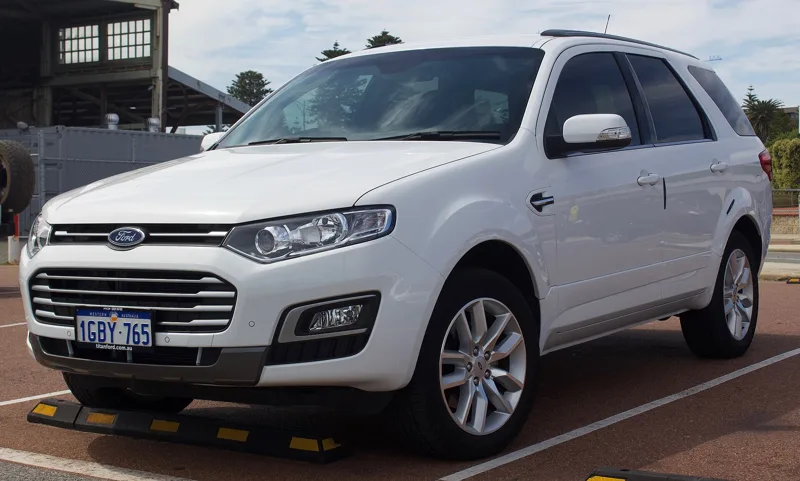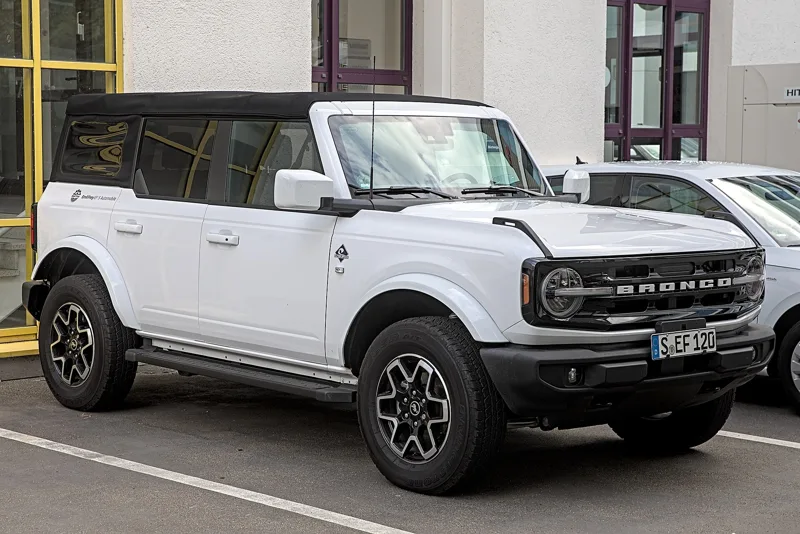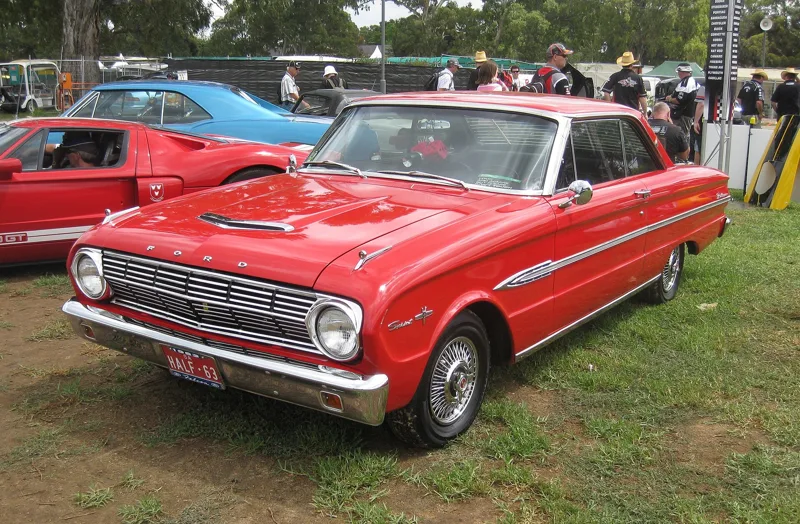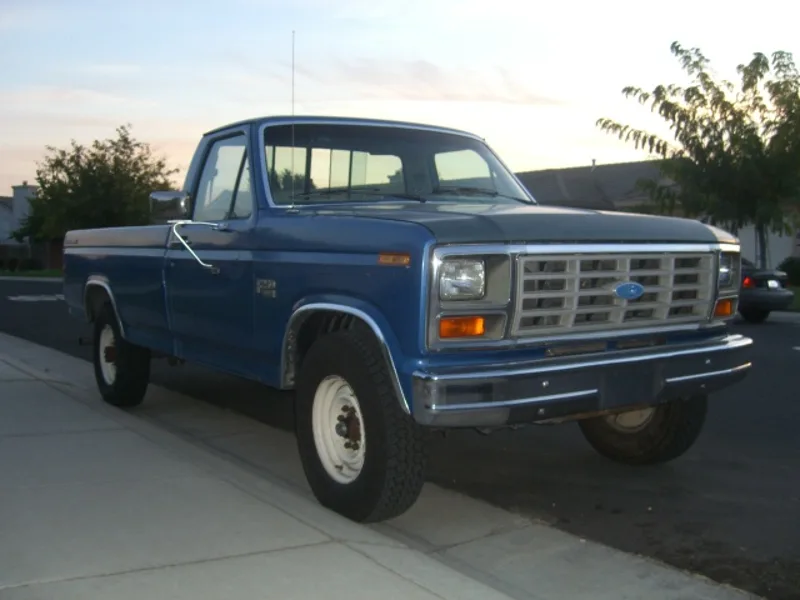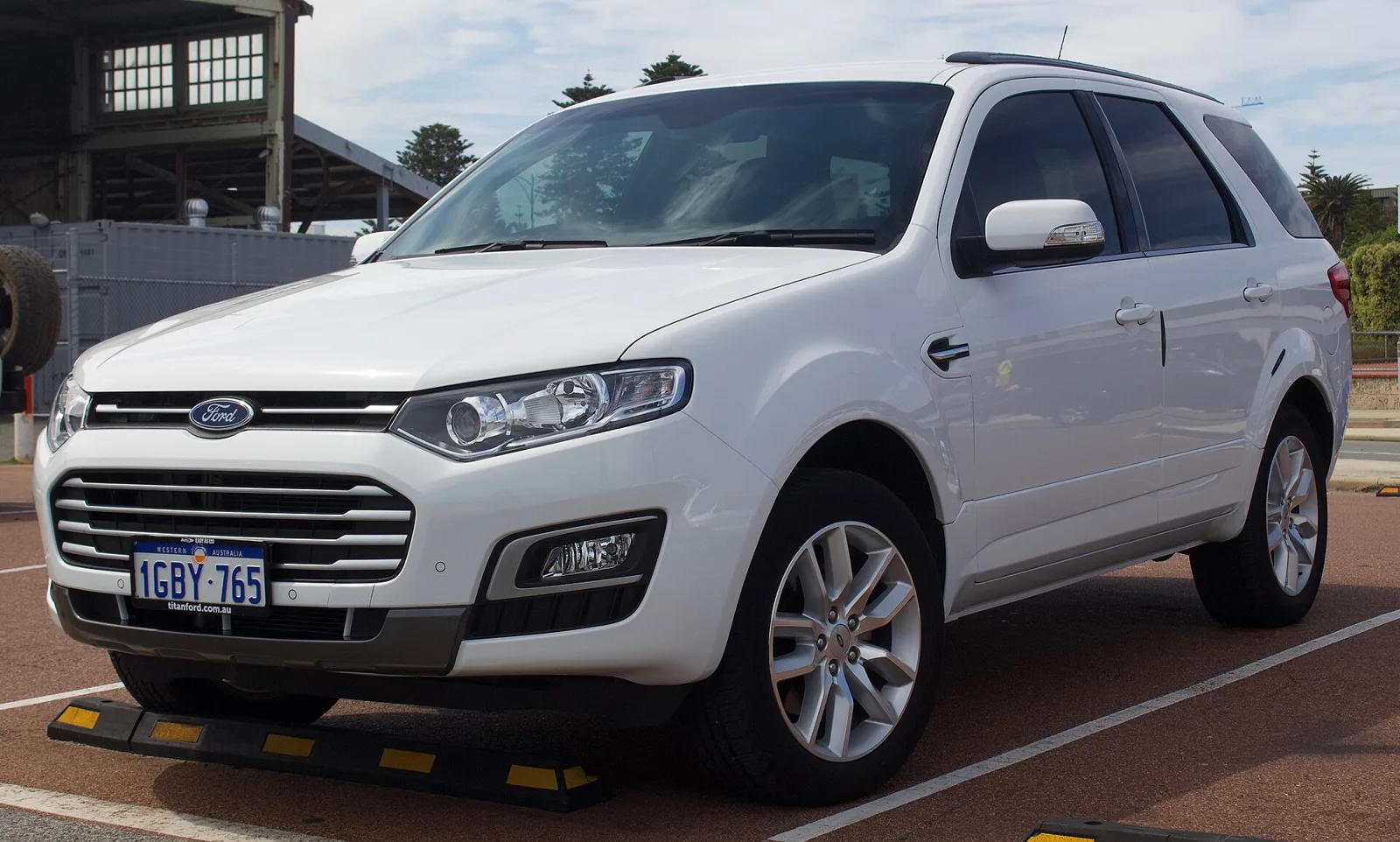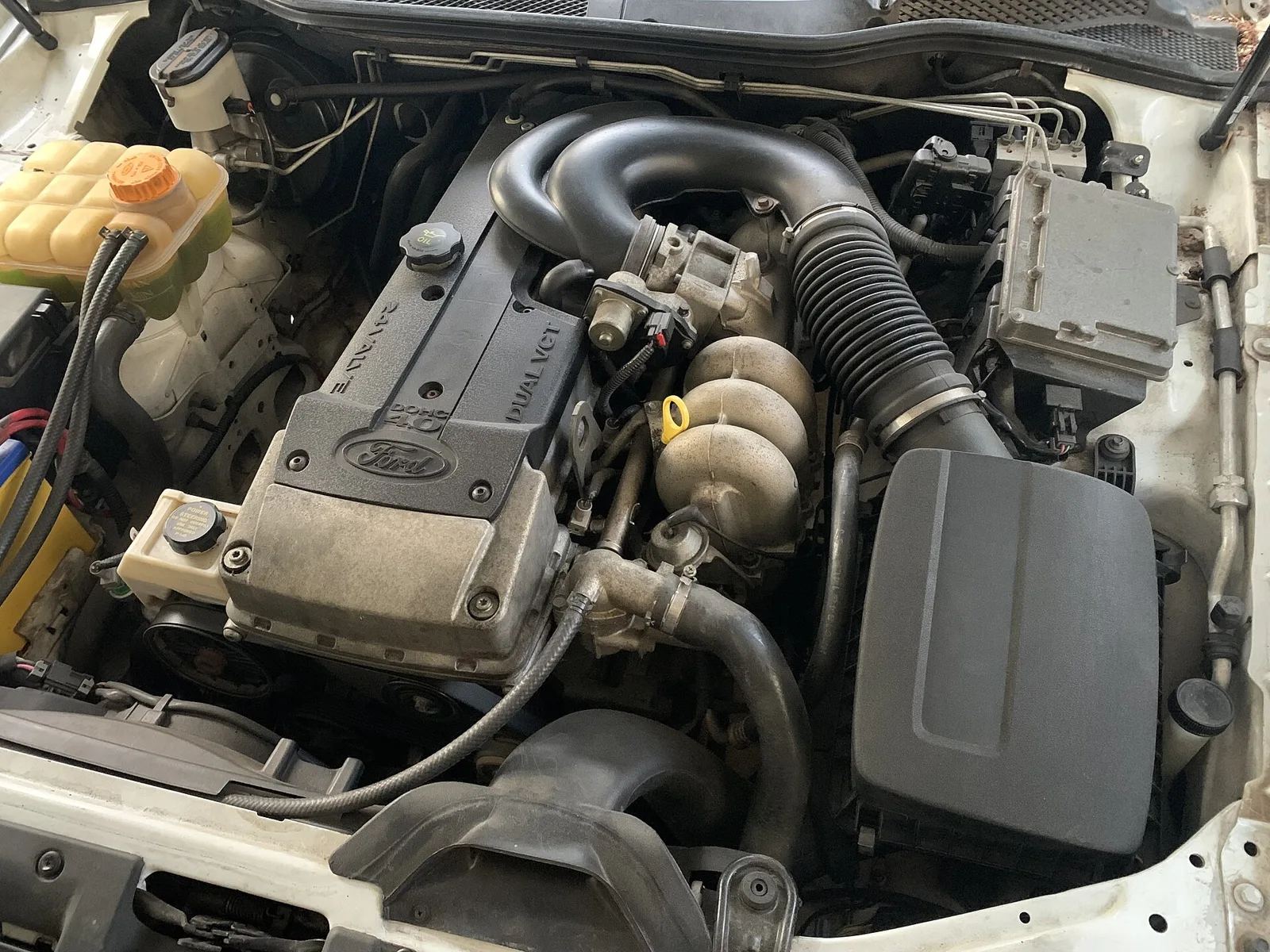
Flatheads, Falcon sixes and the turbocharged Barra, from the 1906 Model K to the last Australian-built straight-six car in 2016.
Ford built straight-six engines in North America and Australia, first from 1906 to 1908 and then from 1941 to 2016. The North American line ended in 1996, while Australian Falcon and Territory models kept the engine until 2016. Its best-known variants include the 240, the 300 and the turbocharged Barra.
Ford's straight-six story runs from the 1906 Model K to the last Australian-built straight-six car in 2016. Along the way the layout passed through flathead designs, overhead-valve inline sixes, the Falcon family and, in Australia, the Barra units that made serious power. Cost, emissions rules and fuel injection shaped each generation, and each one answered a different demand.
When did Ford build straight-six engines?
Ford made straight-sixes in two main periods, from 1906 to 1908 and again from 1941 to 2016. The North American line closed in 1996 as compact V6 designs took over, while Australian production ran until the Geelong plant shut in late September 2016.
The first straight-six appeared in the 1906 Model K. Ford dropped the layout after 1908 and returned to it in 1941 with the G-series, which opened the long production run that ended in 2016.
Across that run the engine powered cars, pick-up trucks and heavy trucks, along with irrigation pumps in some applications. Each generation changed the bore, the stroke, the cylinder head or the fuel delivery. The Australian version followed its own development path after local Falcon production began in 1960.
From the 1906 Model K to the FG X XR6 in 2016, one layout kept adapting to new demands.
How did the first-generation flatheads work?
The first generation used flatheads in every six-cylinder form, also called L-head engines. The G- and H-series displaced 3.7 litres (226 cu in) and served cars and trucks, while the M-series grew to 4.2 litres (254 cu in) for larger trucks and industrial use.
The G-series produced 67 kW (90 hp) for the 1941 model year. A 1948 update increased the compression ratio of the flathead six, creating the H-series, also called Rouge 226, which made 71 kW (95 hp) and 244 N m (180 lb ft) of torque.
The H-series had replaced the 2.2-litre (136 cu in) V8 of the 1937 Ford, and its production ended for the 1951 model year. The M-series, also called Rouge 254, ran from 1950 to 1953 in F6-series trucks and produced 86 kW (115 hp). The same family of engines also drove irrigation pumps and vineyard frost-control propellers.
What changed with the second-generation inline-six?
The second generation brought a fresh inline-six design, built between 1952 and 1964. It shared valve-train parts and lubrication problems with Ford's Y-block engine, and it was called Mileage Maker in cars and Cost Clipper in trucks. Its design was distinct from the first generation's flatheads.
The first version, a 3.5-litre (215 cu in) overhead-valve inline-six, arrived for the 1952 and 1953 F-Series and produced 75 kW (101 hp). By 1954 the engine had grown to 3.7 litres (223 cu in), with 86 kW (115 hp) in trucks and 89 kW (120 hp) in cars.
Truck output reached 102 kW (137 hp) in 1956, and the 1963 and 1964 trucks produced 108 kW (145 hp). A 4.3-litre (262 cu in) I-6 was also built from 1961 to 1964.
Why did the 144 become the basis for Falcon sixes?
The 144 cu in (2.4-litre) inline-six arrived in the 1960 Ford Falcon and became the basis for the Falcon straight-sixes that followed. It averaged 67 kW (90 hp) and could reach 30 mpg-US (8 L/100 km), but its intake was cast into the cylinder head, which limited later power gains.
The third generation, officially the Thriftpower Six, was built at the Lima Engine plant in Ohio from 1960 to 1984. The 170 option arrived in 1961 as a larger 2.8-litre (170 cu in) engine, as a stroked version of the 144 family.
The early 1965 Mustang used a 75 kW (101 hp) 170 between March and July 1964. Ford's Argentine Falcon ran a 170 from 1962 to 1970 rated at 72 kW (96 hp) at 4400 rpm, so the same basic design served markets on two continents.
How did the 200 and 250 engines differ?
The 200 was a 3.3-litre (200 cu in) inline-six introduced in mid-1963, and it gained seven main bearings from 1965 to reduce vibration. The 250 was a stroked 200 at 4.1 litres (250 cu in) that appeared in the 1969 Mustang and became its base engine in 1971.
The 1965 Mustang used the 200 as standard, rated at 89 kW (120 hp), and kept it as the base engine until 1971. In mid-1979 the 200 replaced the Cologne 2.8-litre V6 in the Mustang, because the Cologne plant could not meet demand from the US and Europe.
The 250 offered 116 kW (155 hp) in the 1969 Mustang. Its stroke rose from 79.4 to 99.3 mm (3.126 to 3.91 in), and production of the 250 ran until 1980.
What were the 240 and 300 engines?
The 240 and 300 were fourth-generation inline-sixes built at the Cleveland Engine plant from 1965 to 1996. Both used seven main bearings and long-wearing timing gears, and the 300 went on to lead the F-Series range. The 240 displaced 3.9-litre (240 cu in) and the 300 displaced 4.9-litre (300 cu in).
The 240 produced 112 kW (150 hp) gross and powered full-sized cars until 1972. Fleet models, trucks and vans kept it in service until 1974.
The 300 is a 240 with a 101 mm (3.98 in) stroke, and it launched at 127 kW (170 hp) gross in the 1965 F-Series. Net power ratings arrived in 1972, and by 1975 the 300 was the base F-Series engine at 89 kW (119 hp).
Fuel injection in 1987 lifted the 300 to 112 kW (150 hp) and an 8.8:1 compression ratio. The line finished in 1996, the end of inline-six petrol power for Ford cars and light trucks in North America.
How did the Australian six evolve?
Ford Australia began local Falcon production in 1960 with the same inline-six designs offered in North America. Over the following decades the engine gained a crossflow head, alloy heads, fuel injection and overhead cams, and it stayed in production for 56 years.
The 200 Super Pursuit arrived with the XM Falcon in February 1964 and produced 90 kW (121 hp). The XY Falcon of 1970 rated the 200 at 97 kW (130 hp) and the 250 at 116 kW (155 hp).
The 250-2V was a performance option with a two-barrel carburettor, rated at 127 kW (170 hp). Road tests showed the 0-97 km/h (0-60 mph) time falling from 14 to 10.7 seconds. It was dropped when the XB Falcon launched in September 1973.
What did the crossflow, alloy and injected engines change?
Australian Design Rule 27A took effect on 1 July 1976, and Ford responded with a cast-iron crossflow head. Alloy heads followed in 1980 and 1982, and Bosch injection reached the 4.1-litre engine in March 1983. Each change aimed to keep power up while meeting tougher rules.
The XC Falcon crossflow engines were quoted at 80 kW (107 hp) and 92 kW (123 hp), but that drop came partly from the switch to the DIN method. Ford claimed about a ten per cent gain over the earlier reverse-flow engines.
The June 1980 Alloy Head was an aluminium casting developed with Honda, and it was 22.4 kg (49 lb) lighter than the crossflow engine. The 3.3-litre was rated 84 kW (113 hp), and the 4.1-litre 94 kW (126 hp). The Alloy Head II, from March 1982, was rated 90 kW (120 hp) for the 3.3 and 105 kW (141 hp) for the 4.1.
The XF Falcon added EEC-IV and multi-point injection in 1984. ADR 37 then required unleaded petrol for new cars from 1 January 1986, so Falcon engines ran on 91 RON fuel with catalytic converters. The injected 4.1 reached 121 kW (162 hp), while the carburetted 4.1 stayed in production until 1993.
How did the Barra engine develop?
The Barra was a dual overhead cam straight-six introduced in 2002 with coil-on-plug ignition. Its name came from Barramundi, a BA Falcon development code name, and the number in each name gives output in kilowatts. It carried Australian straight-six development into its last decades.
The original Barra 182 was rated at 182 kW (244 hp), with 380 N m (280 lb ft) of torque, in the 2002 BA Falcon. The October 2005 BF Falcon lifted output to 190 kW (250 hp) and 383 N m (282 lb ft), and the 2008 FG Falcon listed 195 kW (261 hp) and torque of 391 N m (288 lb ft).
Turbocharged versions followed. The Barra 240T had 450 N m (330 lb ft) of torque, with power at 240 kW (322 hp), from 2002 to 2005, and the Barra 270T took over from 2008 to 2016 with 270 kW (362 hp) and 533 N m (393 lb ft).
Ford Performance Vehicles built the BA Mk II F6 Typhoon in 2004, whose ratings were 270 kW (362 hp) and 550 N m (410 lb ft). In the 2008 FG the Barra 310T made 310 kW (416 hp), and its torque was 565 N m (417 lb ft), which made it the first Australian-built engine over 100 hp (75 kW) per litre.
The strongest Barra came in the limited FG X XR6 Sprint of 2016, which was capped at 500 units. Its peak power of 325 kW (436 hp) came at 6000 rpm, and peak torque of 576 N m (425 lb ft) arrived at 2750 rpm. Overboost briefly lifted output to 370 kW (496 hp), with 650 N m (480 lb ft) available for up to ten seconds.
Why did Ford end straight-six production in Australia?
Ford had planned to end the straight-six in 2010 and import a V6, but it reversed course to upgrade the Barra for Euro IV standards. In May 2013 Ford decided to discontinue the Falcon and Territory, and the Geelong factory closed on 26 September 2016.
The Geelong closure ended vehicle manufacture in Australia altogether. The final car was completed at Broadmeadows on 7 October 2016, an FG X Falcon XR6 sedan finished in Kinetic Blue and fitted with the naturally aspirated Barra 195.
What were the main Ford straight-six specifications?
| Engine | Years | Displacement | Output | Torque |
|---|---|---|---|---|
| G-series | 1941 | 3.7-litre (226 cu in) | 67 kW (90 hp) | Not given |
| H-series | 1948 to 1951 | 3.7-litre (226 cu in) | 71 kW (95 hp) | 244 N m (180 lb ft) |
| M-series | 1950 to 1953 | 4.2-litre (254 cu in) | 86 kW (115 hp) | Not given |
| 144 | 1960 to 1964 | 2.4-litre (144 cu in) | 67 kW (90 hp), average | Not given |
| 200 | 1965 Mustang | 3.3-litre (200 cu in) | 89 kW (120 hp) | Not given |
| 250 | 1969 Mustang | 4.1-litre (250 cu in) | 116 kW (155 hp) | Not given |
| 240 | 1965 to 1972 | 3.9-litre (240 cu in) | 112 kW (150 hp) gross | Not given |
| 300 | 1965 to 1996 | 4.9-litre (300 cu in) | 127 kW (170 hp) gross | Not given |
| Barra 182 | 2002 | Not given | 182 kW (244 hp) | 380 N m (280 lb ft) |
| Barra 310T | 2008 | Not given | 310 kW (416 hp) | 565 N m (417 lb ft) |
| FG X XR6 Sprint | 2016 | Not given | 325 kW (436 hp) | 576 N m (425 lb ft) |
Rating methods changed more than once, from SAE gross to DIN and later to net figures, so older outputs cannot be compared directly with later ones. Read the table with that in mind.