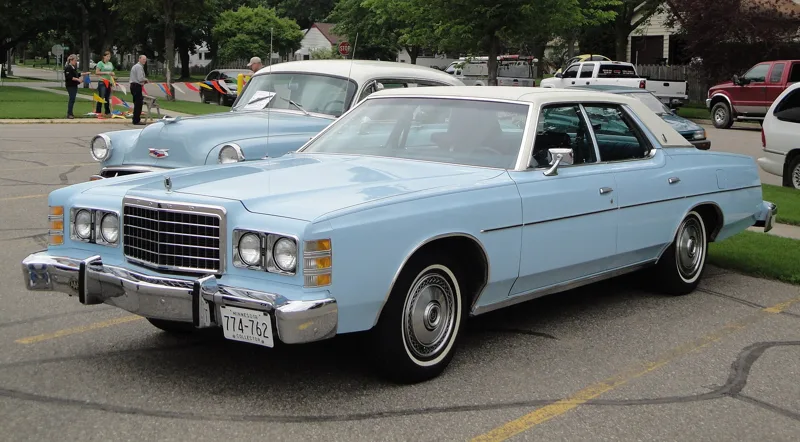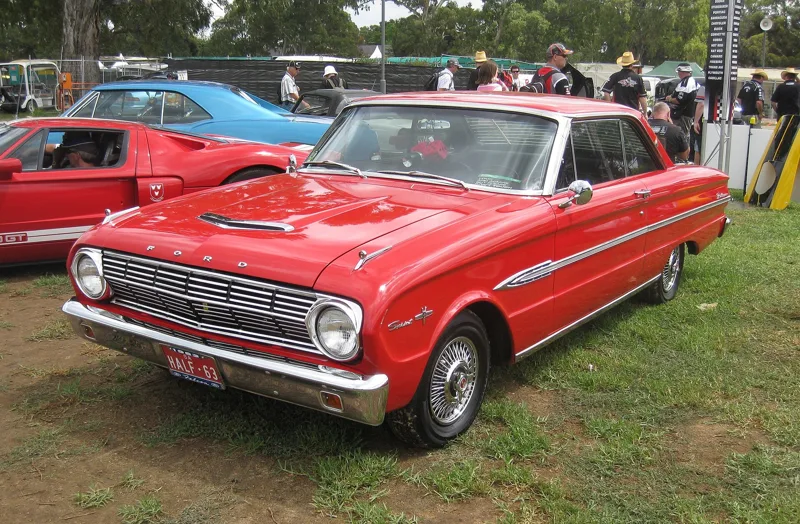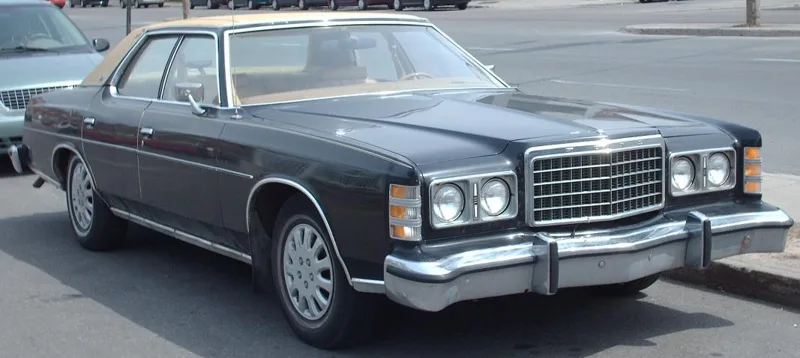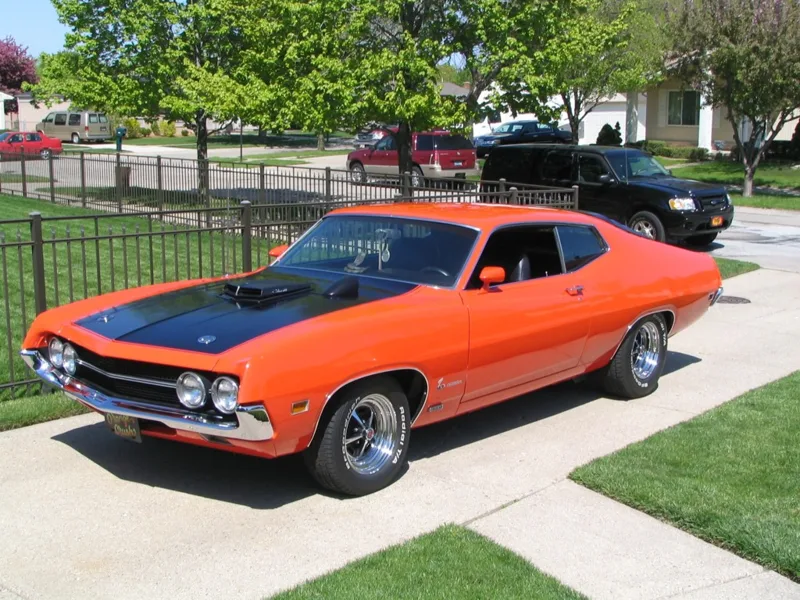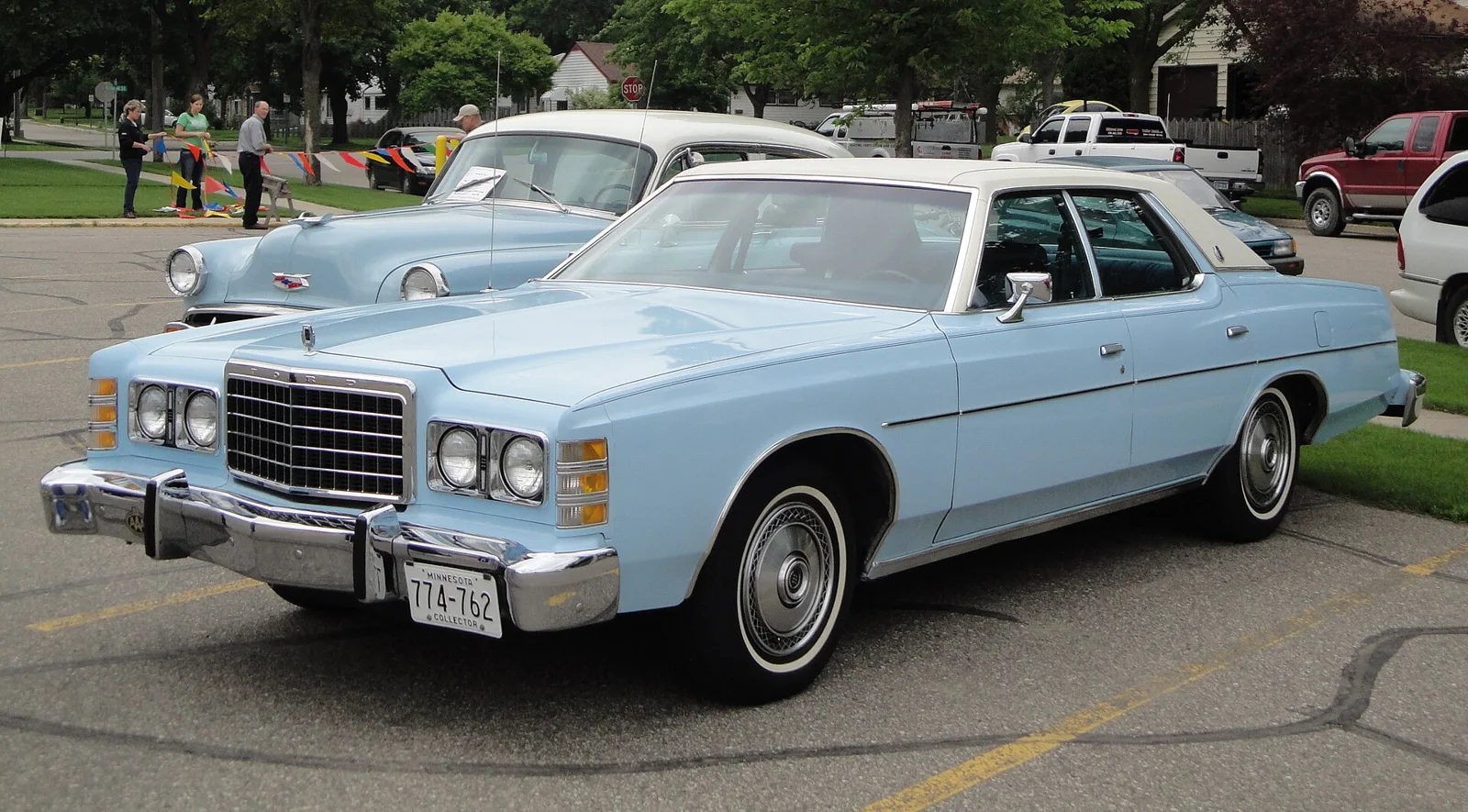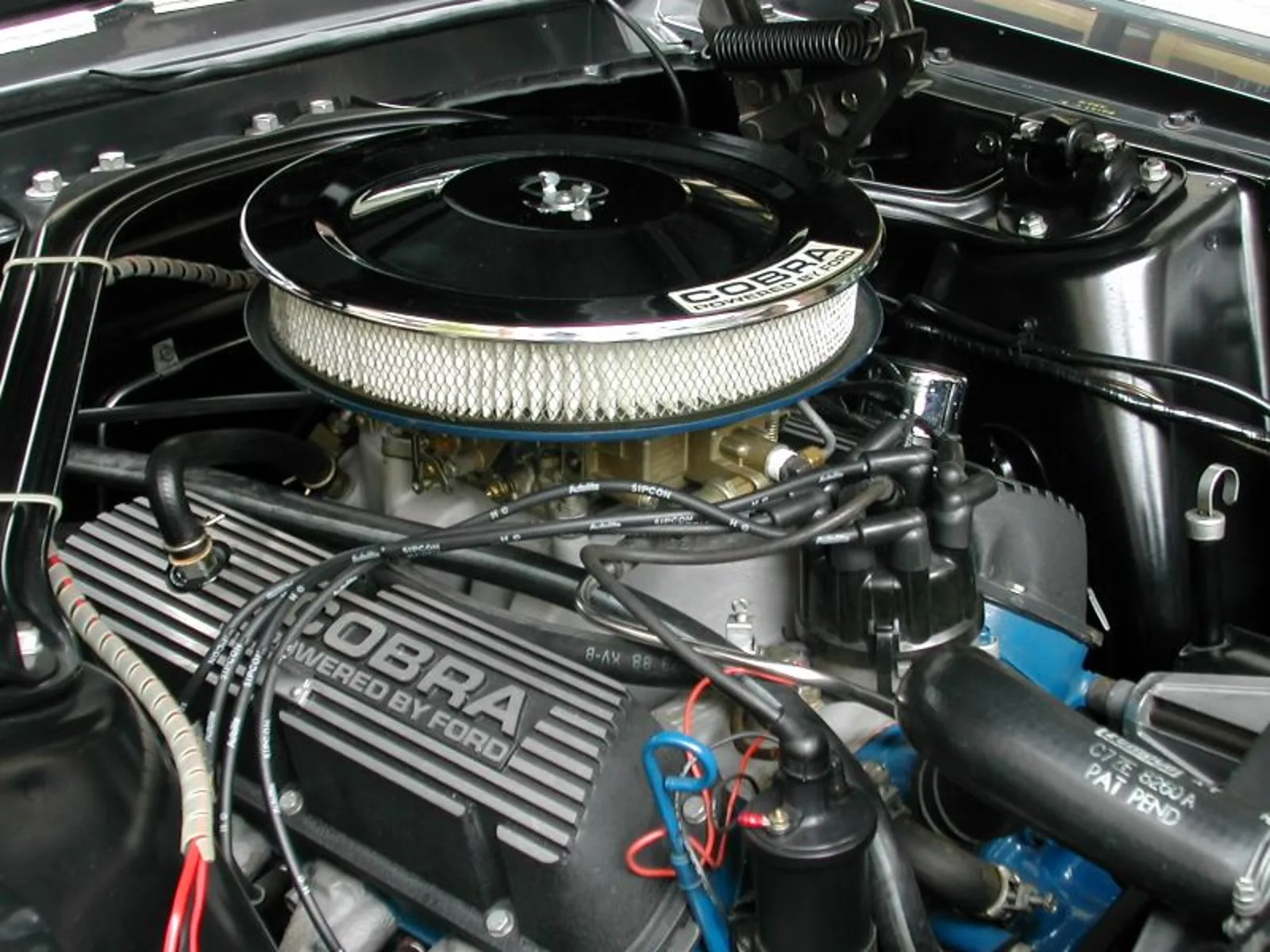
A 90-degree overhead valve V8 that began life as a 221 cubic inch lightweight in 1962 and grew into the 302 and 351 Windsor that carried Ford through to 2001.
The Ford small-block was a 90-degree overhead valve V8 built from 1961 to 2000 in sizes from 221 cubic inches to 351. Its most common size was the 302, later sold as the 5.0 Liter, and it powered Mustangs, trucks and Explorers for four decades.
Built by Ford from July 1961 to December 2000, the small-block was a compact V8 that started life as a light 221 cubic inch unit. It began as a light 221 cubic inch engine for the 1962 Fairlane and Mercury Meteor, and it grew into the 302 and 351 Windsor versions that powered Mustangs, pickups, police cars and family estates for nearly four decades.
Its long life came from a simple idea: a compact, thin-walled block that could be bored and stroked into many sizes. Enthusiasts still use it in racing and street builds, and Ford continues to sell crate versions of the engine through its performance parts division.
What was the Ford small-block?
This compact V8 relied on two valves per cylinder, operated from the centre of the vee. It used a short-skirt block with thin-wall casting, a separate aluminium timing chain cover, and coolant routed out of the block through the intake manifold, all of which helped keep weight down.
Carburettor designations ran as 2V or 4V, meaning two or four barrels, and the valves were in line. The block was bored to 260 cu in (4.3 L), then to 289 cu in (4.7 L), and it was finally stroked to 302 cu in (4.9 L), the size that became the most common for the rest of the engine's life.
Its retirement in 2001 came nearly forty years after the block design first appeared, and the engine outlasted the Modular V8 that was meant to replace it for much of the 1990s.
A compact, thin-walled V8 that grew from 221 cubic inches into the engine behind four decades of Ford performance.
Where did the small-block come from?
The small-block was designed as the successor to the Ford Y-block. It was first installed in the 1962 model year Ford Fairlane and Mercury Meteor, and its original capacity of 221 cu in (3.6 L) made it a lightweight alternative to the bulkier engines of the time.
The 221 was built as an advanced, compact design. It was 24 inches wide, 29 inches long and 27.5 inches tall, and it weighed only 470 lb (210 kg) dry despite having a cast iron construction. That made it one of the lightest and most compact V8s of its type in the era.
Enthusiasts often call the engine the Windsor, but Ford did not use that name for the whole line. The name was adopted later to set the 351 apart from the 351 Cleveland, a different engine of similar capacity. The two names came from the plants where each was made, Windsor in Ontario and Cleveland in Ohio.
How did the 221, 260 and 289 differ?
The 221 was the first version and was phased out at the end of May 1963, after about 371,000 had been made. Its successor, the 260, arrived in the middle of the 1962 model year as the Challenger. It kept the same block and two-barrel carburettor, while the bore grew to 3.80 in (97 mm) and compression rose slightly to 8.8:1.
The 289 followed in April 1963 and replaced the 260 as the base V8 for full-sized Fords. Its 4.00 in (101.6 mm) bore became the standard for most small-block Ford engines, and its stroke stayed at 2.87 inches. Around 3.5 million 289-2V and 289-4V engines were made at Cleveland Engine Plant 1 between 1963 and 1967.
| Version | Displacement | Rated output | Note |
|---|---|---|---|
| 221 | 221 cu in (3.6 L) | 145 hp (108 kW) at 4,400 rpm | First Fairlane V8, 1962-1963 |
| 260 Challenger | 260 cu in (4.3 L) | 164 hp (122 kW) at 4,400 rpm | Base engine on full-sized Fords |
| 289 A-code | 289 cu in (4.7 L) | 225 hp (168 kW) at 4,800 rpm | Four-barrel, 10.0:1 compression |
| 289 K-code | 289 cu in (4.7 L) | 271 bhp (275 PS; 202 kW) at 6,000 rpm | High-performance HiPo |
| 302 two-barrel | 302 cu in (4.9 L) | 220 hp (164 kW) at 4,600 rpm | From the 1968 model year |
| 351W four-barrel | 351 cu in (5.8 L) | 290 hp (216 kW) at launch | Windsor, from 1969 |
What made the K-code HiPo special?
The K-code HiPo was a high-performance Challenger 289 that appeared late in the 1963 model year as a special order for Ford Fairlanes. Starting in June 1964 it became an option for the Mustang. It was the only 289 offered in the intermediate Fairlanes, while lesser cars received the 260.
The HiPo was built for high-revving reliability. Solid lifters, sharper cam timing, 10.5:1 compression and a dual-point centrifugal distributor came with it, along with a bigger, manual-choke 595 CFM carburettor. Its crankshaft was made from 80% nodular iron, against the 40% of the standard item, and the counterweighting was increased to handle heavier connecting rod big ends.
With a single four-barrel Autolite 4100 carburettor, the HiPo produced 271 bhp (275 PS; 202 kW) at 6,000 rpm, with torque of 312 lb ft (423 N m) at 3,400 rpm. About 25,000 K-code engines were built at Cleveland Engine Plant 1 between March 1963 and June 1967, and the arrival of the 390 and 428 big-blocks eventually made the option less popular.
Carroll Shelby used a modified form of the HiPo for the 1965 to 1967 Shelby GT350. Shelby fitted exhaust headers, a cast aluminium intake and a Holley 715 CFM carburettor, and the GT350 version reached 306 bhp (310 PS; 228 kW) at 6,000 rpm, with 329 lb ft (446 N m) at 4,200 rpm. From 1966 to 1968 a Paxton supercharger lifted the GT350's output to around 390 hp (291 kW).
How did the 302 become the 5.0?
In 1968 the small-block's stroke was increased from 2.87 in to 3 in (76.2 mm), giving 302 cu in or 4,942 cc (4.9 L). The connecting rods were shortened so the engine could use the same pistons as the 289, and the 302 took over from the 289 early that year.
The most common form was a two-barrel with hydraulic lifters, rated at 220 hp (164 kW) at 4,600 rpm, peaking at 300 lb ft (407 N m) by 2,600 rpm. An optional four-barrel raised that to 230 hp (172 kW) at 4,800 rpm. The water pump was borrowed from the 351 Cleveland and moved the coolant into a more cross-flow direction in the radiator.
Emissions rules then reduced the figures year by year. By 1972 the two-barrel compression had dropped to 9.0:1 and its SAE gross output to 210 hp (157 kW), and under net ratings it made 140 hp (104 kW). By 1975 some models had fallen to 122 hp (91 kW).
From the 1978 model year the engine became widely known as the 5.0 Liter, although its metric displacement was 4,942 cc, or 4.9 litres. Car and Driver continued to call it a 4.9-liter engine. Throttle-body fuel injection arrived on the 1980 Lincoln Continental, and by 1983 it was fitted as standard to every non-H.O. 5.0 Liter. Sequential multi-port injection followed in 1986, identifiable by its large intake with an EFI 5.0 badge.
What was the 351W?
The 351W, or Windsor, debuted in 1969 and was often confused with the Ford 351 Cleveland, which began production in the same year. Its 351.9 cu in (5.8 L; 5,766 cc) came from a deck that stood 1.3 inches taller than the 289 and 302, which allowed a 3.5 in (88.9 mm) stroke. It was initially rated at 250 hp (186 kW) with a two-barrel carburettor and 290 hp (216 kW) with a four-barrel.
The 289, 302 and 351W shared the same bellhousing and motor mounts. The 351W had larger main bearing caps and thicker, longer connecting rods, and its firing order of 1-3-7-2-6-5-4-8 moved the noise of adjacent front cylinders to the sturdier rear of the block. The changes added about 25 lb (11 kg) to the dry weight.
Ford built around 8.6 million 351W engines between 1969 and 1996 at the Windsor Engine Plant Number One. In 1972 the rating changed to net, and the 351W's output fell from 161 hp (120 kW) to 153 hp (114 kW).
Why were the 255 and 5.6-litre versions unusual?
The 255 was created in the late 1970s to meet fuel economy rules. For the 1980 model year it was essentially a 302 with 3.68 in (93.5 mm) bores, giving 4.2 litres. It was a stopgap that would remain until a new V6 arrived, but it had dismal overall performance and was dropped at the end of the 1982 model year, with 253,000 built.
The 255 was rated at 115 to 122 hp (86 to 91 kW), depending on year and application. Some versions, such as the one in the Mercury Grand Marquis, used a variable-venturi carburettor and could manage over 27 mpg-US (11 km/L; 32 mpg-imp) on the highway.
At the other end of the scale, Ford Australia developed a 5.6-litre (5,605 cc) small-block in 2001 by lengthening the stroke to 86.4 mm (3.4 in). Output was 335 hp (250 kW) at 5,250 rpm, and 369 lb ft (500 N m) peaked at 4,250 rpm, and the engine was used in special 2001 to 2002 T series Falcons.
Which racing versions carried the small-block?
The small-block's racing career began with the Trans-Am series. The 289 powered Shelby Mustangs to the manufacturers' championship in 1965 and 1966, and the Boss 302 did the same in 1970. Ford developed the Boss 302 to win back the 5.0-litre title from the Camaro Z/28.
The Boss 302, officially the 302 H.O., took large-port, large-valve, quench-chamber heads adapted from the design destined for the 351 Cleveland. It was rated at 290 hp (216 kW), and its electrical revolution limiter stopped the engine at 6,150 rpm. Production ran only for the 1969 and 1970 model years.
The 302 Tunnel-Port was another racing development, based on a 1967 GT40 block with heads derived from the NASCAR 427. Shelby dynamometer runs showed 440 to 450 hp (328 to 336 kW) in a band that reached above 8,000 rpm. Small-block engines also won the 24 Hours of Le Mans in 1968 and 1969, both times in JWAE Ford GT40s.