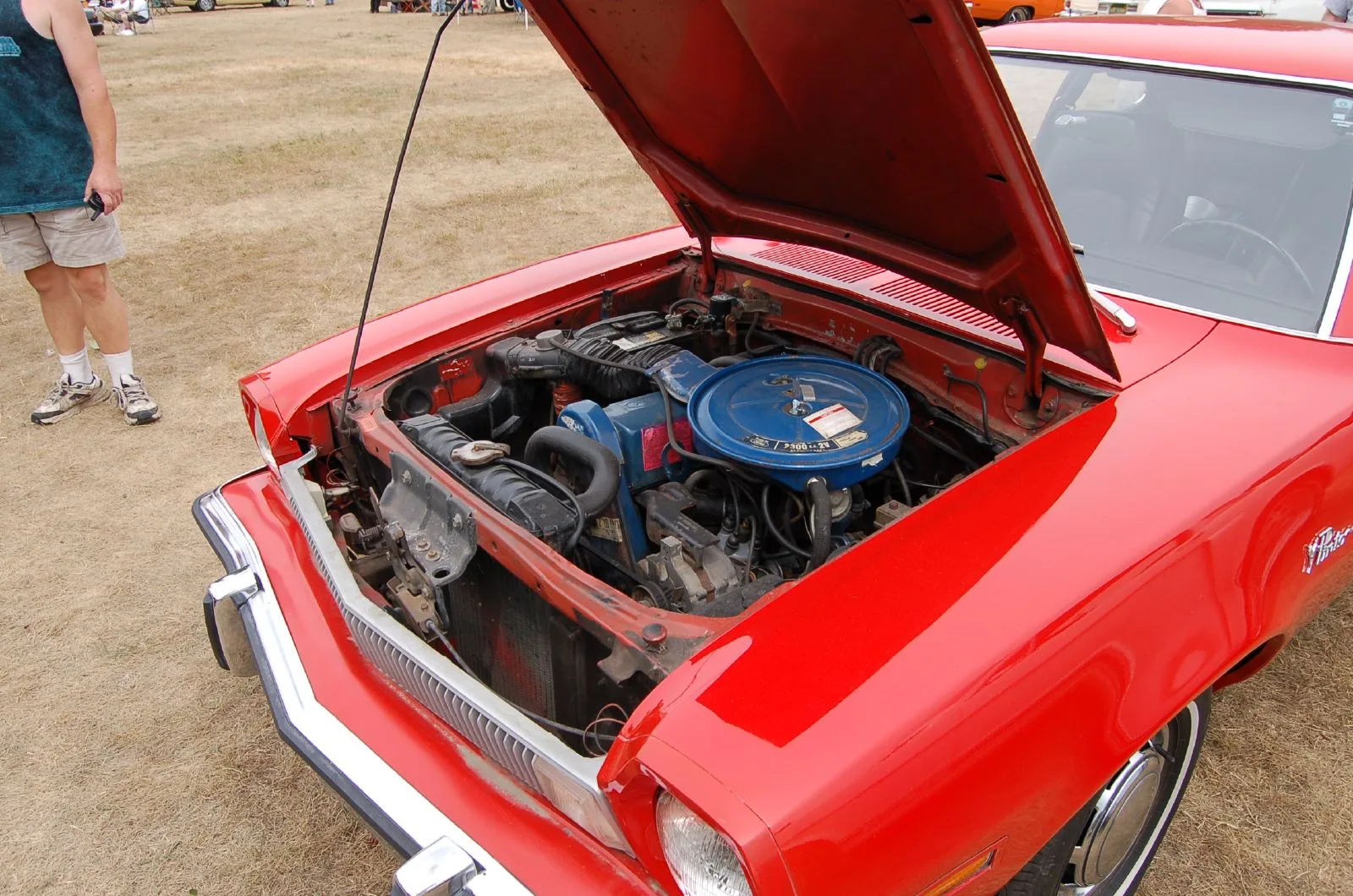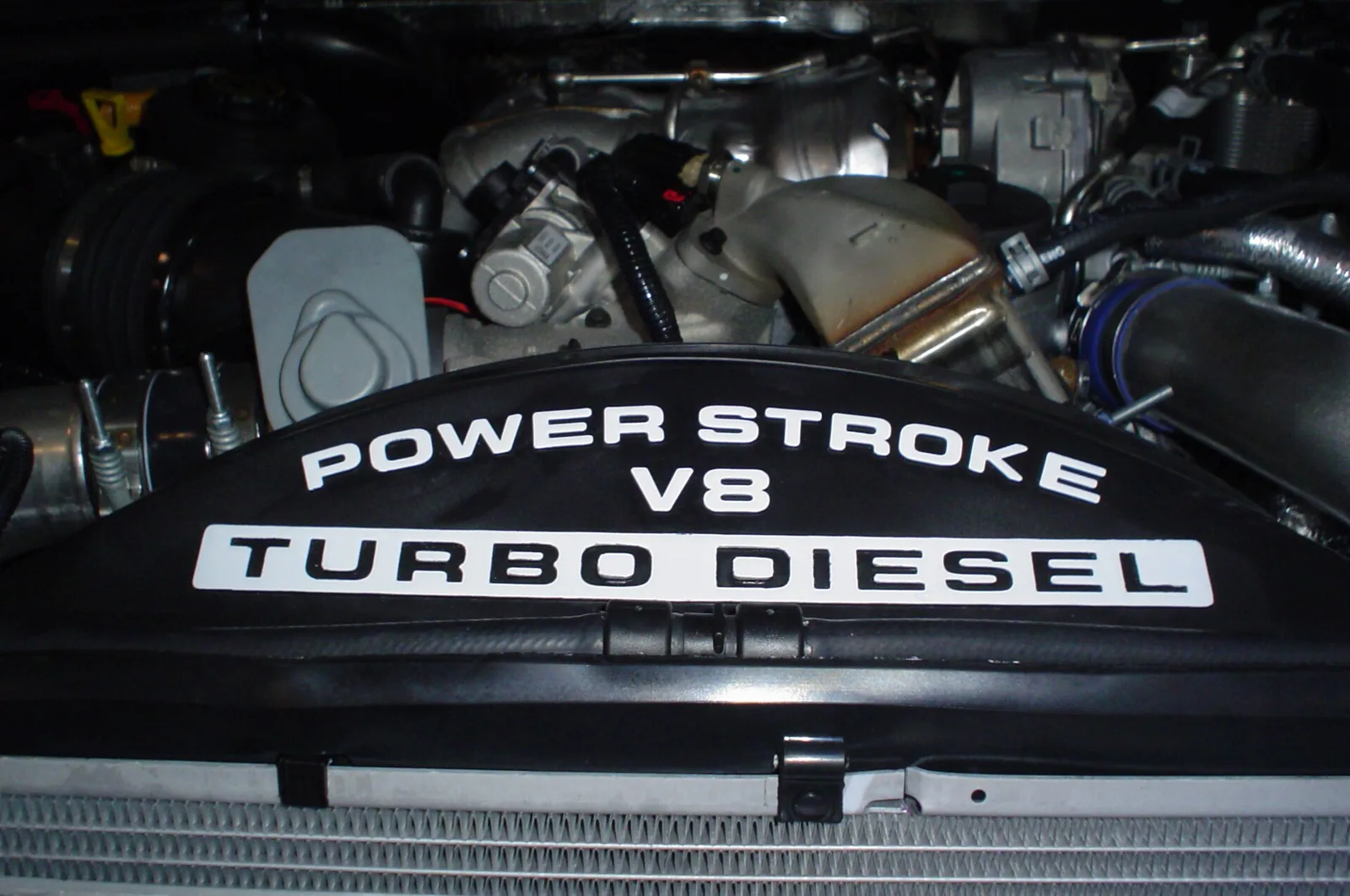
Navistar-built diesels badged by Ford until 2010, then Ford's own 6.7 L V8, with the 3.2 L five and 3.0 L V6 added later.
Power Stroke is a diesel engine family that Navistar International built from 1994 to 2010 and that Ford sold under its own badge. Ford began designing and producing its own Power Stroke diesels in 2011, starting with the 6.7 L V8 for Super Duty trucks.
The Power Stroke is a diesel family that Navistar International produced from 1994 to 2010, and Ford has built its own versions since 2011. It powers Ford's heavy-duty pickups and vans, and its output has grown from 250 hp (186 kW) in the 7.3 L to 500 hp (373 kW) in the high-output 6.7 L. Along the way it also carried a long list of known faults.
Where did the Power Stroke name come from?
Power Stroke is a diesel engine family built by Navistar International from 1994 to 2010. Ford sold those engines as rebadged Navistar medium-duty units, then began designing and producing its own diesels with the 6.7 L in 2011. The name covers pickups, vans and some commercial trucks.
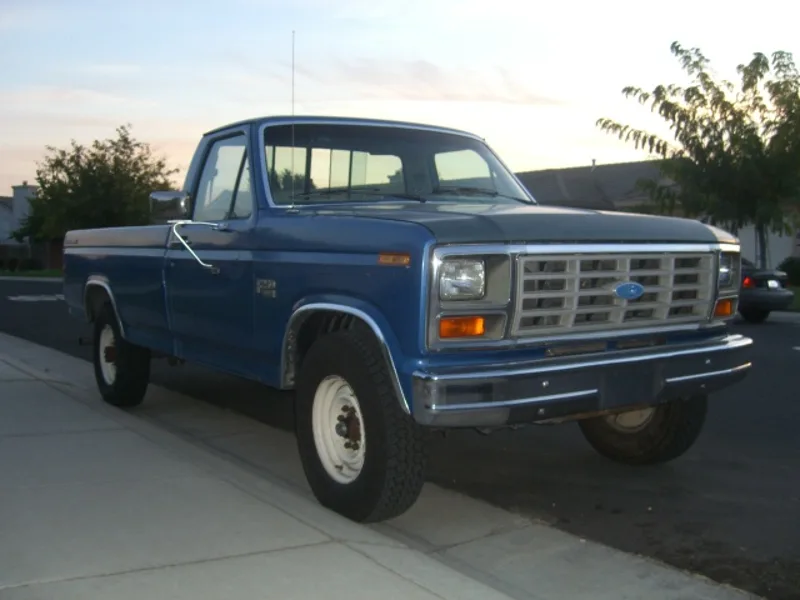
Navistar's engines were used in its own medium-duty trucks as well as in the Ford F-Series, including Super Duty trucks. Other applications included the Ford E-Series, the Excursion, the LCF commercial truck and South American production of the Ford Ranger.
The Power Stroke was marketed against large-block V8 and V10 petrol engines, and against rivals such as the General Motors Duramax V8 and the Dodge Cummins B-Series inline-six.
From a Navistar V8 to Ford's own 6.7 L, the Power Stroke grew from 250 hp to 500 hp.
What was the 7.3 L Power Stroke?
The 7.3 L Power Stroke was Ford's version of the Navistar T444E turbo-diesel V8, introduced in 1994 to replace the 7.3 L IDI V8. It kept the same bore and stroke as its predecessor, but the design was new. It was offered in three-quarter-ton and larger versions of the F-Series and Econoline.
The engine was electronically controlled and used direct injection, with a bore of 4.11 in (104.4 mm) and a stroke of 4.18 in (106.2 mm). It had a 17.5:1 compression ratio and a dry weight of about 920 lb (417 kg). The oil pan held 15 US qt (14 L; 12 imp qt), and the top end added another 3 US qt (2.8 L; 2.5 imp qt) for the high-pressure oil pump.
Automatic trucks from the final years of production made 250 hp (186 kW), and their torque reached 505 lb-ft (685 N-m). Manual-transmission trucks were rated higher, at 275 hp (205 kW) and 525 lb-ft (712 N-m).
What were the common 7.3 L problems?
The 7.3 L is often regarded as one of the most reliable diesels ever fitted to a light-duty truck, yet it had recurring faults. Most of them came from a few components: the camshaft position sensor, the fuel filter housing, the turbo up-pipes and the exhaust back-pressure valve.
A failed camshaft position sensor could cause a no-start condition or a stall while running. A simple check is to watch the tachometer while cranking, because a sensor that is not working will leave the needle still. The aluminium fuel filter housing could crack and leak, and its heater could short out and blow a fuse.
The turbo up-pipes were a major weak point, since leaks at the joints cost boost and drove exhaust temperatures higher. The exhaust back-pressure valve could stick closed when cold and make a loud, jet-like noise from the tailpipe.
The 7.3 L was built at International's Indianapolis plant. It stayed in production until the first quarter of model year 2003, and nearly 2 million were made.
What was the 6.0 L Power Stroke?
The 6.0 L Power Stroke replaced the 7.3 L from the second quarter of the 2003 model year. Listed as 6.0 L (365 cu in), it measured 5,954 cc (363.3 cu in), and it used a variable-geometry turbocharger with an intercooler.
Its bore measured 3.74 in (95 mm) and its stroke 4.13 in (105 mm). The compression ratio was 18.0:1, and output was 325 hp (242 kW) with torque at 570 lb-ft (773 N-m), and fuel was cut off at 4,200 rpm. It used 32 valves, 16 intake and 16 exhaust.
The 6.0 served in Super Duty trucks until 2007, in Econoline vans until model year 2010, and in Excursion SUVs until Ford ended Excursion production after the 2005 models. Many 6.0 engines experienced problems, and many owners who bought new trucks have since received class-action payments.
Why did the 6.0 L cooling system cause trouble?
The 6.0's main troubles centred on its in-block oil cooler and its EGR cooler. Sediment built up on the coolant side of the oil cooler, which cut coolant flow and raised oil temperatures. Reduced coolant flow also reached the EGR cooler, where thermal expansion fatigued the heat exchanging core.
The oil cooler sits in the block valley beneath the cartridge oil filter. Its sealed outer portion is bathed in engine oil, while coolant flows through the centre passages. Early EGR coolers, built from 2003 to 2004.5, were also prone to premature failure.
What was the 6.4 L Power Stroke?
The 6.4 L Power Stroke arrived for the 2008 Ford Super Duty range, from the F-250 through the F-550. It was the first light-truck engine to use dual turbochargers from the factory, and it was the first Power Stroke with a diesel particulate filter. It was retired after 2010 and replaced by the 6.7 L.
The 6.4 measured 3.87 in (98.3 mm) across the bore and 4.13 in (104.9 mm) along the stroke, for a displacement of 6,369 cc (6.4 L; 388.7 cu in). Ford rated it at 350 hp (261 kW) at 3,000 rpm, and the 650 lb-ft (881 N-m) peak came at 2,000 rpm at the flywheel.
The compound turbo system sent exhaust first to a low-pressure turbo, the larger of the two, which fed a smaller high-pressure turbo. That reduced lag when moving off from a stop and gave smoother power on the move. Dual EGR coolers could lower exhaust gas temperatures by up to 1,000 degrees before the gas reached the EGR valve.
The DPF trapped soot, and the engine periodically injected extra fuel on the exhaust stroke to regenerate it. The 6.4 needed ultra low sulfur diesel with no more than 15 ppm sulfur, since regular diesel causes emissions equipment faults and breaks the manufacturer warranty.
A single safety recall, 07S49, addressed the possibility of flames from the tailpipe. The fix was a PCM recalibration that reduced the risk of excessive exhaust temperatures under rare conditions.
How did the 6.7 L Power Stroke differ?
The 6.7 L Power Stroke debuted in 2011 Super Duty trucks, replacing the 6.4 L. It was the first Power Stroke that Ford developed and manufactured itself, working with AVL of Austria. Engineers nicknamed it Scorpion because the exhaust manifold and turbocharger sat in the engine's valley.
The engine used a compacted graphite iron block for strength with less weight, and reverse flow aluminium cylinder heads with the exhaust ports in the lifter valley. Each cylinder had six head bolts, and the heads had dual water jackets.
A Bosch common rail system delivered fuel at 29,000 psi (1,999 bar). Up to five injection events could take place in each cylinder per cycle, through eight-hole piezo injectors that sprayed into the piston bowl.
The engine supported B20 biodiesel, allowing blends of up to 20 percent biodiesel with 80 percent petroleum diesel. Its Garrett single-sequential turbocharger used a double-sided compressor wheel on one shaft, an arrangement described as an industry first. The block was cast by Tupy, which also did the initial machining, and the connecting rods came from Mahle.
How did the 6.7 L output grow over time?
The 6.7 L launched at 390 hp (291 kW), and its torque was 735 lb-ft (997 N-m). A software update soon after production began lifted it to 400 hp (298 kW) at 2,800 rpm, while 800 lb-ft (1,085 N-m) arrived at 1,600 rpm, with no physical changes to the engine. By 2015 the rating had climbed to 440 hp (328 kW), while torque stood at 860 lb-ft (1,166 N-m).
Ford credited a new turbocharger, new injector nozzles and exhaust improvements. Torque rose to 925 lb-ft (1,254 N-m) at 1,800 rpm for 2017 while horsepower stayed the same. For 2018 Ford lifted output to 450 hp (336 kW) and 935 lb-ft (1,268 N-m), to compete with the Duramax and Cummins engines.
What were the 3.2 L and 3.0 L Power Stroke engines?
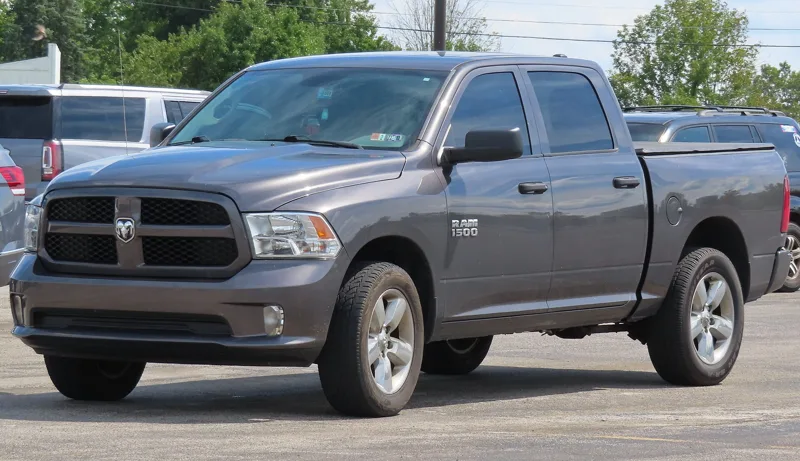
Ford's smaller Power Stroke engines were the 3.2 L inline-five and the 3.0 L V6. The 3.2 L arrived in the US-spec Transit for 2015, and the 3.0 L Lion V6 came in the 2018 F-150 to compete with the Ram 1500 EcoDiesel.
The 3.2 L was a modified version of the Ford Duratorq 3.2 L, adapted to US emissions rules. It used high-pressure common rail injection with piezo injectors, a water-cooled EGR system, a variable-geometry turbo and a variable-flow oil pump. It was rated at 185 hp (138 kW) at 3,000 rpm, and it delivered 350 lb-ft (475 N-m) across 1,500 to 2,750 rpm, while the Euro Duratorq 3.2 made 197 hp (147 kW).
A combined diesel oxidation catalyst and DPF formed one unit, and SCR injected diesel exhaust fluid to reduce NOx. The block was a rigid grey cast iron with a closed deck, while the crankshaft was cast iron and the connecting rods were forged.
The 3.0 L V6 had an 84 mm (3.31 in) bore, a 90 mm (3.54 in) stroke and a 16.0:1 compression ratio. It produced 250 hp (186 kW) at 3,250 rpm, and its 440 lb-ft (597 N-m) peak arrived at 1,750 rpm, paired with a Ford-GM 10-speed automatic. It could tow up to 11,440 lb (5,189 kg) when properly equipped, and it remained on sale in North America until the 2021 model year.
The 3.0 L was assembled in Dagenham, England.
What are the key Power Stroke specifications?
| Engine | Years | Displacement | Peak output | Torque |
|---|---|---|---|---|
| 7.3 L T444E | 1994 to 2003 | 7.3 L (444 cu in) | 250 hp (186 kW) | 505 lb-ft (685 N-m) |
| 6.0 L | 2003 to 2010 | 6.0 L (365 cu in) | 325 hp (242 kW) | 570 lb-ft (773 N-m) |
| 6.4 L | 2008 to 2010 | 6.4 L (388.7 cu in) | 350 hp (261 kW) | 650 lb-ft (881 N-m) |
| 6.7 L at launch | 2011 onward | 6.7 L | 390 hp (291 kW) | 735 lb-ft (997 N-m) |
| 6.7 L high output | 2023 | 6.7 L | 500 hp (373 kW) | 1,200 lb-ft (1,627 N-m) |
| 3.2 L inline-five | 2015 to 2019 | 3.2 L | 185 hp (138 kW) at 3,000 rpm | 350 lb-ft (475 N-m) |
| 3.0 L Lion V6 | 2018 to 2021 | 3.0 L | 250 hp (186 kW) | 440 lb-ft (597 N-m) |
What is the legacy of the Power Stroke?
The Power Stroke began as Navistar's heavy-duty diesel and became Ford's own engine family with the 6.7 L in 2011. The 7.3 L is still discussed as one of the best engines International produced, while the 6.0 and 6.4 are remembered for their faults and the payments that followed.