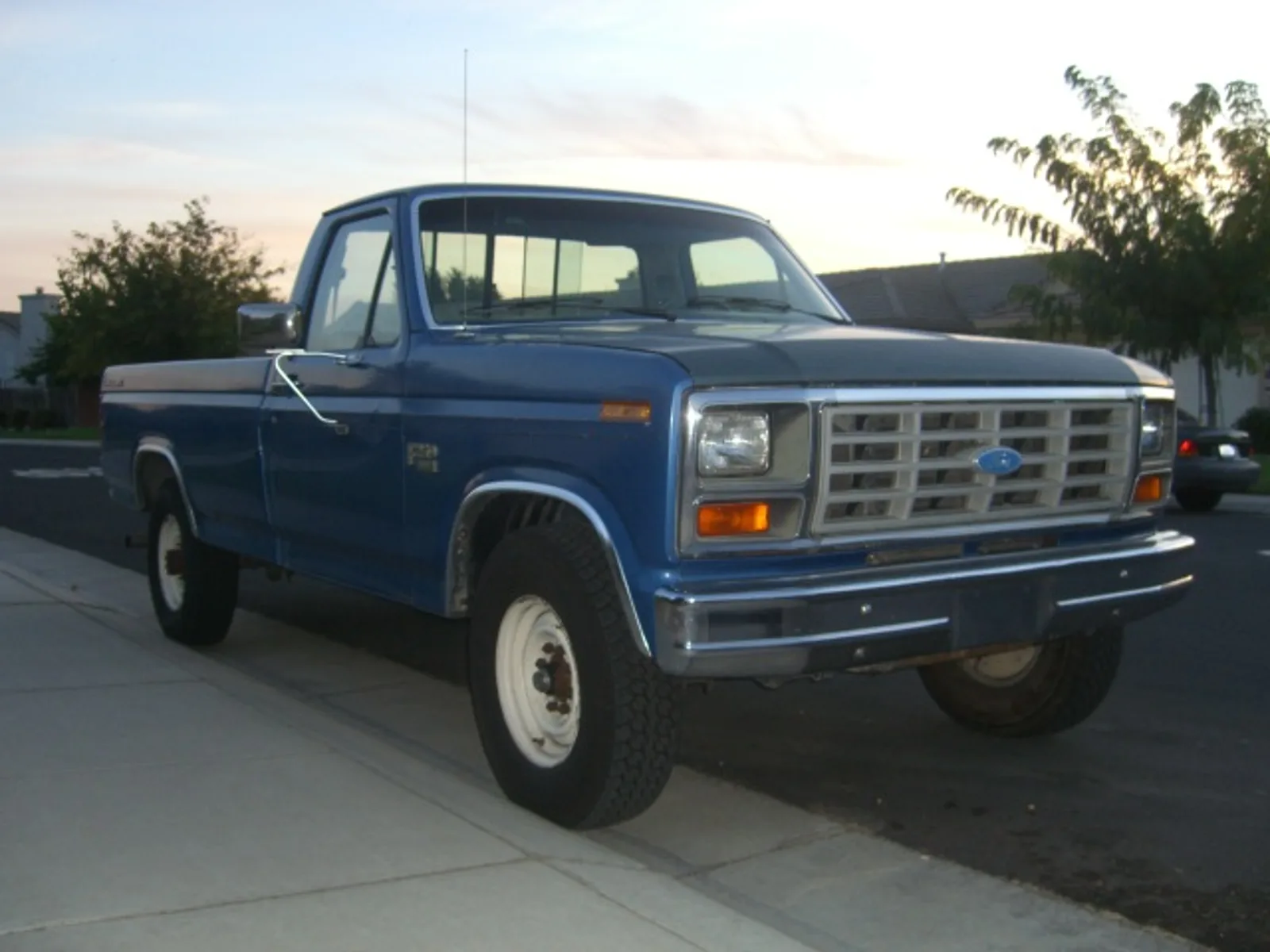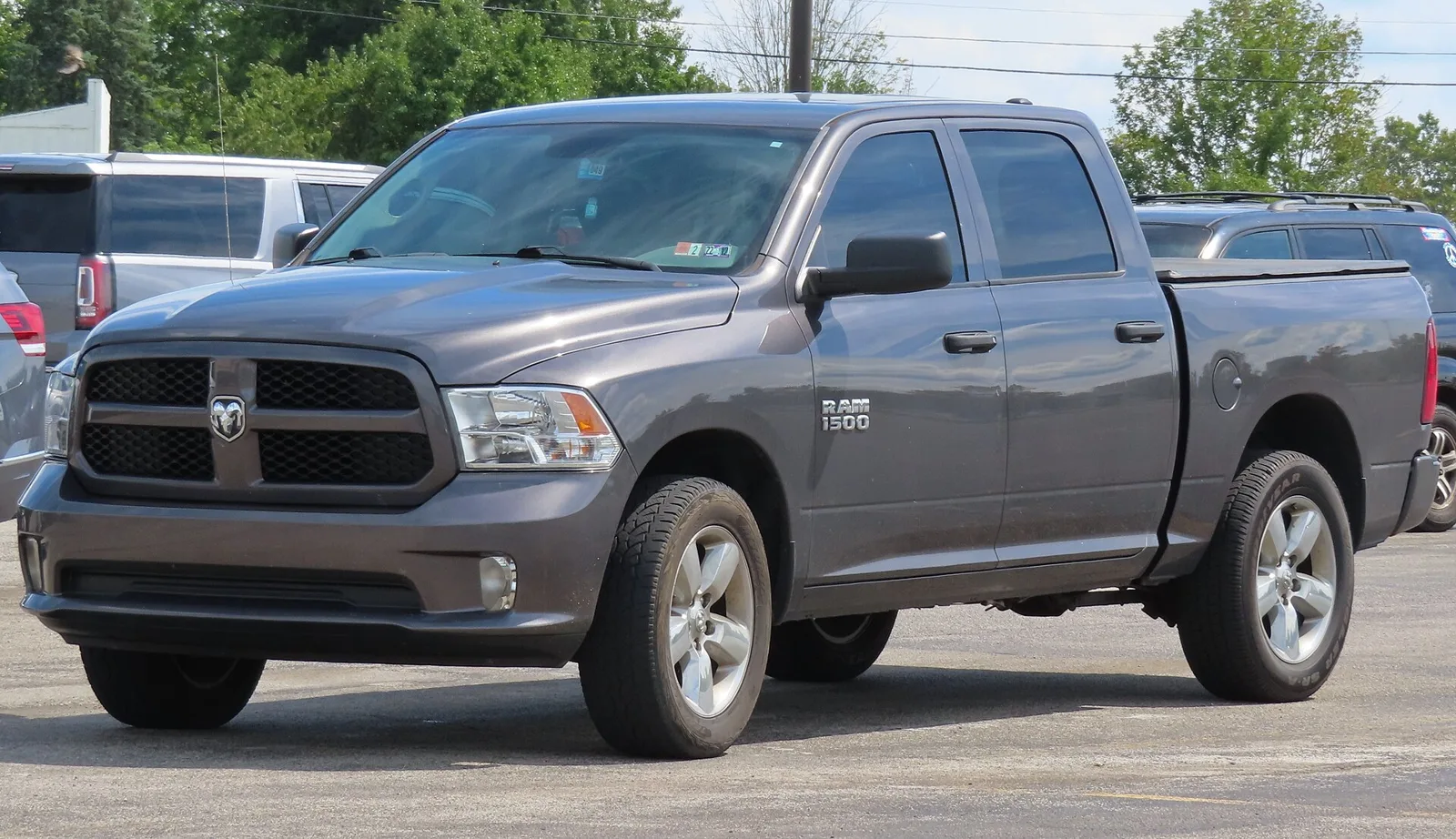
Dodge's first Ram and Ford's seventh-generation F-Series fought over the same work truck buyers, and the Ford's sales lead was built on payload, choice and steady updates.
The first Dodge Ram was a full-size pickup line from 1981 that struggled in the market against the Ford F-Series. The seventh-generation F-Series, built from 1980 to 1986, was Ford's full redesign with a new chassis and body. The two shared buyers and years, and the record points to the F-Series as the sales leader.
The Dodge Ram and the Ford F-Series seventh generation were both full-size trucks sold in North America in the early 1980s, and their model years overlapped from 1981 to 1986. Dodge's line had grown out of its D series, while Ford's F-Series was a complete redesign that brought a new chassis and body. The Ford was the sales leader, and the Dodge spent most of the period trying to catch up.
Where did the Ram and the F-Series seventh generation come from?
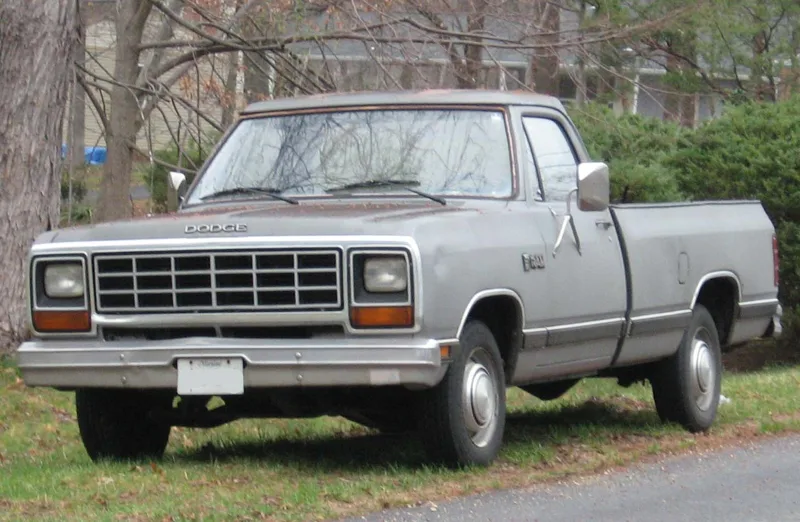
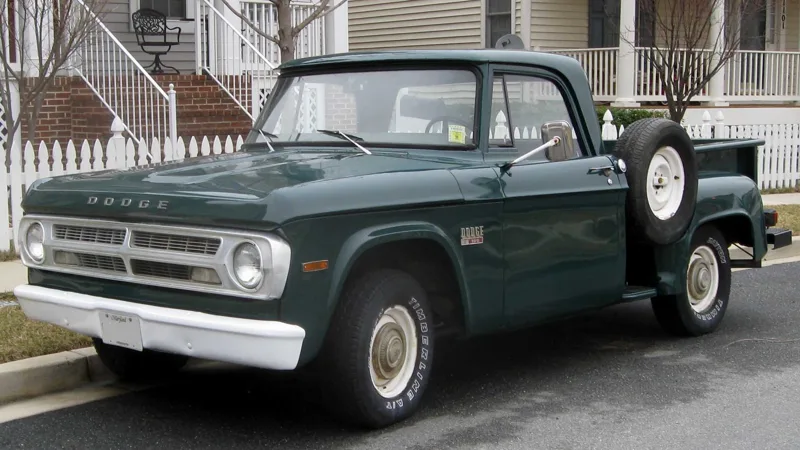
The Ram name arrived in October 1980 for the 1981 model year, when Dodge rebranded its D series pickups and B series vans. The first Ram was a facelift of the Dodge D-Series trucks that had been introduced in 1972, with squared-off body lines and larger wraparound tail lamps. The seventh-generation F-Series, produced from 1980 to 1986, was the first complete redesign since 1965.
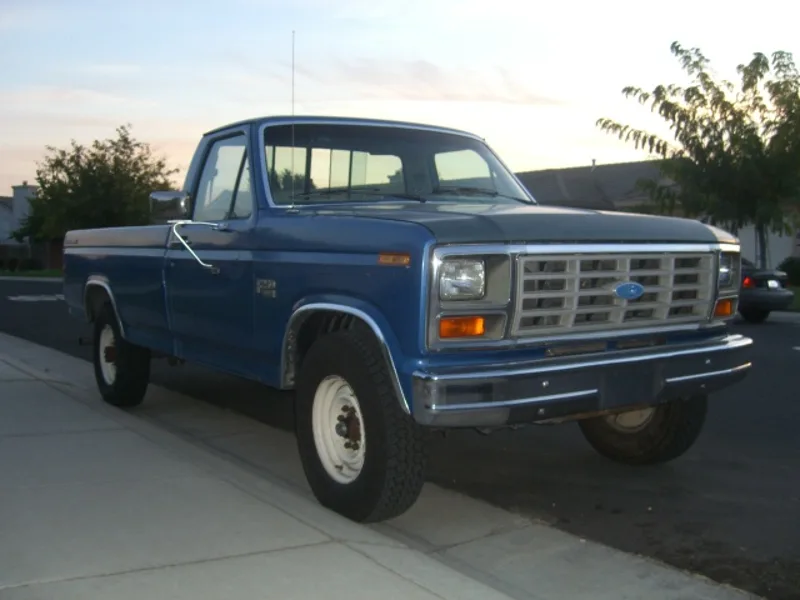
The Ford's new body had flatter panels and a squarer grille, which gave it the nickname bullnose among enthusiasts. It also introduced the Blue Oval grille emblem and, for the first time in the line, a diesel engine. The Ford's architecture kept most of its character until the 1997 model year, and it also underpinned the Bronco from 1980 to 1996.
The development of the F-Series was shaped by the 1979 oil crisis and by the arrival of federal fuel economy standards for light trucks. Downsizing was not a practical option for the line, because payload had to be kept, so the engineers focused on upgrading features that buyers already liked.
Two full-size trucks of the early 1980s, one that led the market on payload and steady upgrades and one that waited years for a diesel and a better cab.
Who led the market in this period?
The F-Series was the stronger seller. Halfway through the sixth generation it had become the best-selling truck in the United States, and the seventh generation kept that position against the Dodge and the General Motors C/K trucks. Ford's steady updates and wide choice of trims helped it hold the lead.
The Ram's sales were modest by comparison. Many years failed to reach 100,000 units, and the first-generation trucks were popular with fleets but sold poorly next to the F-Series and the C/K. The reasons were a cab and chassis design in production since 1972, a late diesel option and no big-block gasoline V8.
The Ram's interior received few updates after its 1980 launch, while the F-Series kept improving its cabin. The result was a gap that the Dodge had difficulty closing until its second generation arrived in 1994.
How did the engines of the two trucks differ?
The Ram's first engines were a 225 slant-6 and 318 and 360 V8s, and the line was pared down to those choices when it launched. For 1988 the slant-6 was replaced by a 3.9-litre V6 first used in the Dodge Dakota, and the 5.2-litre V8 gained electronic fuel injection that year.
The F-Series began 1980 with a 4.9-litre inline six, the 300 Truck Six, and offered optional 302 V8s branded as 5.0-litre, a 5.8-litre 351M V8 and a 6.6-litre 400 V8. In 1981 a 4.2-litre V8 rated at 115 hp was offered on the F-100, which made it the smallest-displacement V8 on a modern American pickup at the time.
By 1982 the F-100 had a 110-horsepower 3.8-litre V6 as its standard engine, the first V6 in the F-Series and the smallest-displacement engine the line had offered since 1953. The 1984 HO version of the 5.8-litre V8 raised output from 150 to 210 hp with a four-barrel carburettor, and in 1985 the 4.9-litre V8 became the first Ford light-truck engine with fuel injection, adding fifty-two hp.
Which diesel engines did each truck offer?
The Ram's diesel story began with a Mitsubishi naturally aspirated diesel on the 1978 D series, which was seldom ordered. The real change came in 1989 with the Cummins Turbo Diesel, a 5.9-litre straight-six with direct injection and a turbocharger. It was available on 250 and 350 pickups and on chassis-cab trucks above 8,500 pounds GVWR.
The Cummins did not need glow plugs, and it set the Ram apart from the V8 diesels offered by Ford and GM. It coincided with the first sales increase in several years, but it was in short supply for its first two years, and production only ramped up for 1991.
The F-Series became the first Ford light-duty truck to offer a diesel in 1983, with an International 6.9-litre IDI V8 added to the range. That engine arrived in the F-250HD and F-350, which were the heavier models in the line, and it gave Ford a diesel offering before the Ram had one of its own.
How did the chassis and axles compare?
The F-Series seventh generation returned to body-on-frame construction, with 8-inch frame rails and wheelbases close to those of the 1973 to 1979 generation. The front suspension was a Twin I-Beam on two-wheel-drive trucks, and a Twin Traction Beam on four-wheel-drive models, which was the first standard independent front suspension in a four-wheel-drive pickup.
Axles varied by model. The F-150 used a light-duty Dana 44 Twin Traction Beam, while the F-250 used a Dana 44 TTBHD and the F-350 a Dana 50. Rear axles included the Ford 9-inch and the 8.8, which was phased in gradually, and Ford moved to its own Sterling 10.25 in the middle of 1985.
The Ram also changed its frames over time. Partway through the 1991 model year, Dodge began using one-ton frames on the Ram 250 Cummins and Club Cab models, a move that reflected the heavier duty of the diesel versions.
What cab and bed choices did each truck offer?
The first Ram came as a standard cab, a Club extended cab and a crew cab, with 6.5-foot (2.0 m) and 8-foot (2.4 m) bed lengths. Utiline and Sweptline boxes were also offered. The Club Cab was dropped after 1982, but it returned for the 1990 models with fold-out jump seats.
The F-Series carried over three cab styles: a two-door cab, a SuperCab extended cab and a four-door crew cab. The crew cab left the line for 1980 and returned for 1983 on the F-350 alone. A Six Wheeler dual-rear-wheel option for the F-350 was introduced in 1980.
The F-Series offered a fendered 6 3/4-foot Flareside bed and 6 3/4-foot and 8-foot Styleside beds, with an 8-foot Six Wheeler bed for dual-rear-wheel trucks. Its Styleside bed was widened by 5 inches, and the line moved to a steel bed floor in place of the wooden floorboards.
What design features did each truck use?
The 1981 Ram introduced larger wraparound tail lamps and dual rectangular headlamps, along with a squared-off body. The interior had a new bench seat and a dashboard with an optional three-pod instrument cluster, which put the speedometer in the centre and the gauges in the side pods.
The F-Series made its own design changes. Halogen headlamps became standard in 1981, and radial-ply tyres were standard on all pickups that year. The clamshell hood was retired to improve aerodynamics, and the grille became flatter and more rectangular, which gave the line its bullnose look.
Ford also gave the F-Series a Blue Oval emblem centred in the grille for 1982, replacing the FORD lettering on the hood, and that design still appears on current F-Series vehicles apart from the Raptor. Dodge's Ram kept its own grille and crossbar appearance for most of the decade.
How did four-wheel drive work on each truck?
Four-wheel drive was offered on every seventh-generation F-Series model except the F-100. Buyers could choose manual or automatically locking front hubs, and the transfer cases came from New Process Gear or Borg-Warner. The two-speed system used a stick-shift engagement with 4 Low, 4 High, Neutral and 2 High.
The Ram's four-wheel-drive models were the W series, and the Power Ram name marked the four-wheel-drive trucks. Four-wheel-drive models could also be ordered with a plow package called the Sno Commander.
Both trucks therefore offered a working four-wheel drive, but the F-Series offered four-wheel drive across nearly its whole range.
Which features were added during production?
The Ram gained an overdrive automatic, the A500, for 1989, and an O/D off button that locked out fourth gear. Rear anti-lock brakes became standard on every version in 1991, and a message centre was added to show warning lights for the fuel-injected engines.
The F-Series gained a clutch interlock in 1984 that prevented starts without the clutch pedal being pressed, and galvanised steel panels were used to fight corrosion. In 1986 every truck received a full set of instruments, with only the tachometer remaining optional.
Both trucks therefore improved steadily, but the F-Series kept a larger lead in updates. Its changes were also tied to wider choice, from trim lines to radial tyres and fuel injection.
What was the wider legacy of each truck?
The F-Series did not stop with the seventh generation. Its 1980 architecture lasted until the 1997 model year and became the basis for the eighth and ninth generations. The F-100 ended in 1983, and the F-150 became the smallest F-Series from 1984 onward.
The Ram's story changed more dramatically. The second generation arrived in 1994, was named Motor Trend's Truck of the Year that year and sold 232,092 units in 1994 after 95,542 in 1993. That generation gave the brand the sales momentum the first Ram had lacked.
Side-by-side comparison
| Point | Dodge Ram (first generation) | Ford F-Series (seventh generation) |
|---|---|---|
| Model years | From 1981, name from October 1980 | 1980 to 1986 |
| Basis | Dodge D series facelift from 1972 | First complete redesign since 1965 |
| Standard engine | 225 slant-6 | 4.9-litre inline six |
| Larger engines | 318 and 360 V8s | 302 V8, 351M, 400 V8 in 1980 |
| Diesel | Cummins 5.9-litre straight-six from 1989 | International 6.9-litre IDI V8 from 1983 |
| Front suspension | Not given | Twin I-Beam or Twin Traction Beam |
| Cabs | Standard, Club and crew cab | Two-door, SuperCab and four-door crew cab |
| Bed lengths | 6.5 ft (2.0 m) and 8 ft (2.4 m) | 6 3/4 ft Flareside and Styleside, 8 ft Styleside |
| Sales | Rarely above 100,000 a year | Best-selling truck in the United States after the sixth generation |
| Notable later step | Second generation in 1994 | Architecture to the 1997 model year |