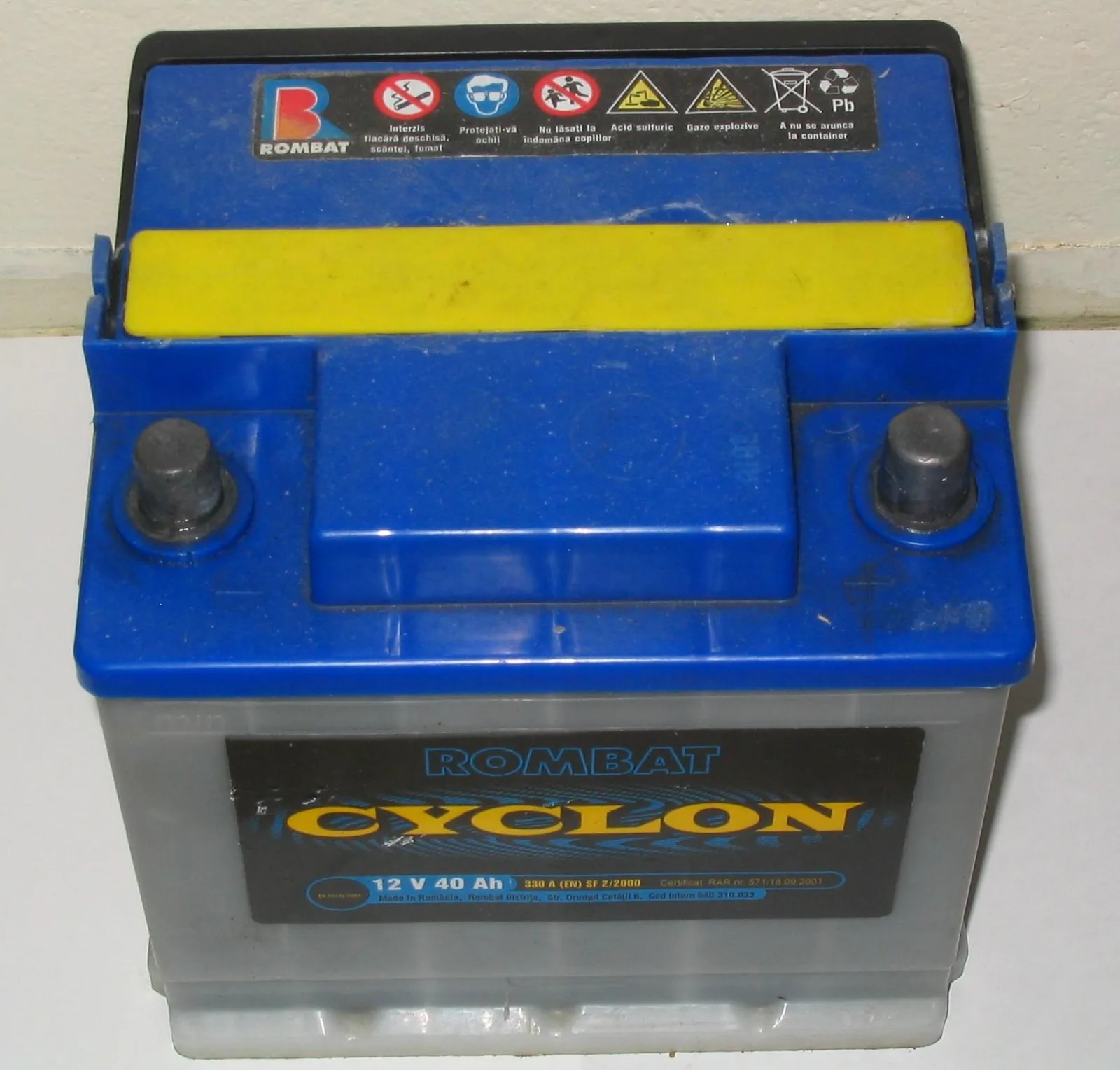
What a 12-volt lead-acid battery does under the bonnet, why it can explode, how electric cars still need one, and what happens when it is finally scrapped.
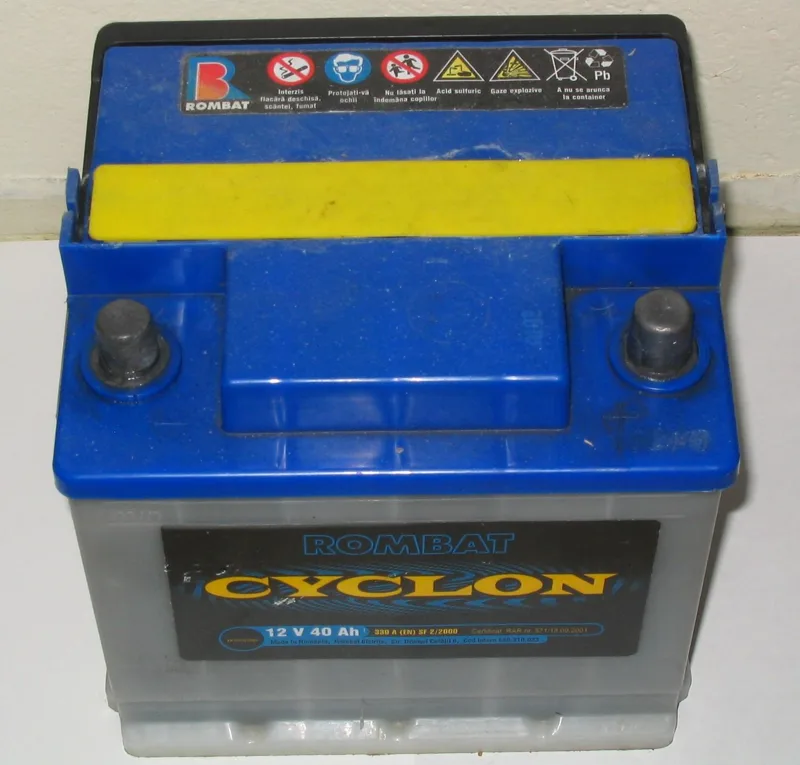
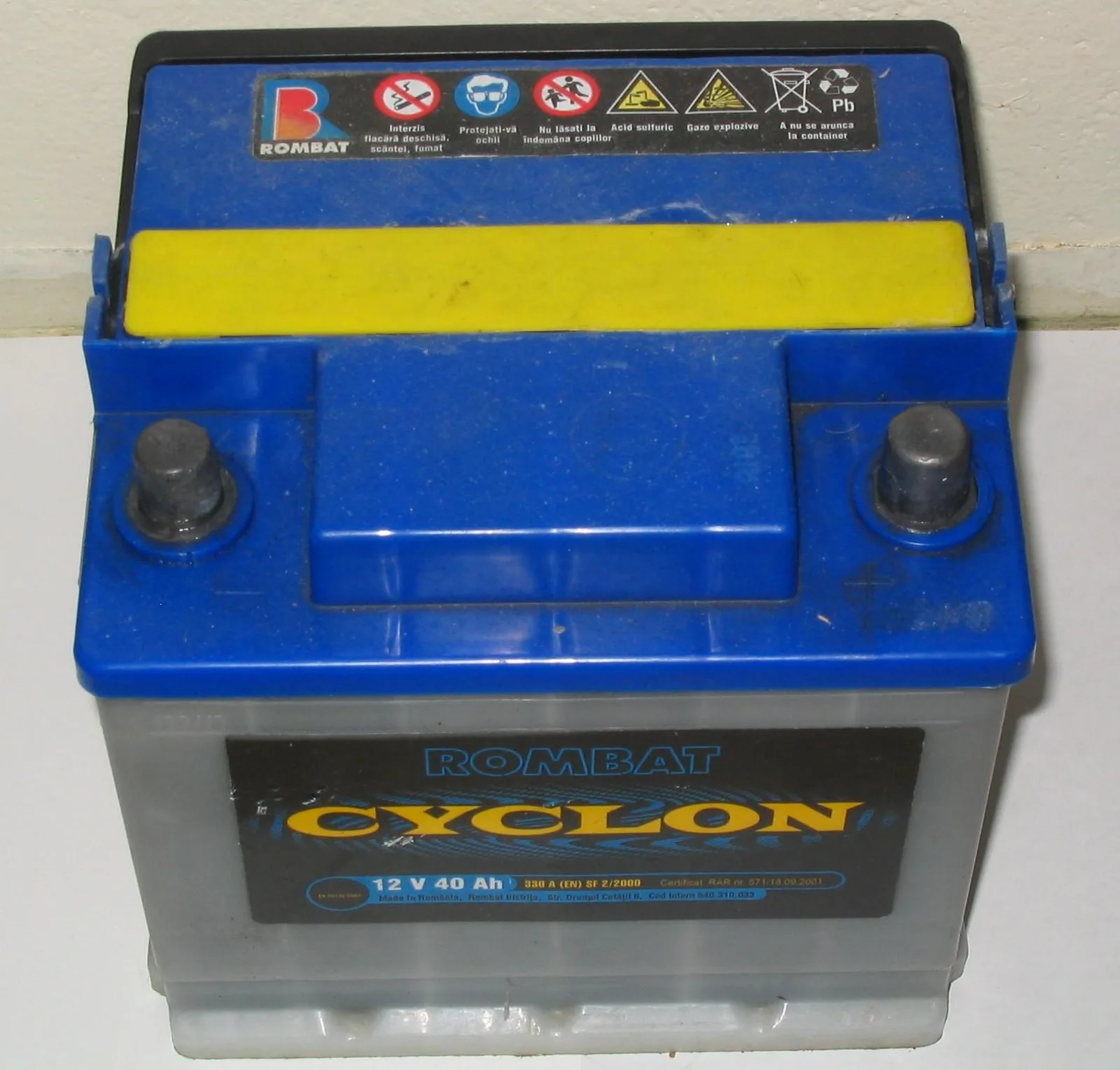
A car battery is usually a lead-acid unit of six 2.1-volt cells that starts the engine and powers the electrics when the engine is off. Ratings such as CCA and Ah show its starting and energy capacity. Its recycling is one of the most common in the world.
An automotive battery, often called a car battery or SLI battery, is a rechargeable unit, usually lead-acid, that starts a motor vehicle and powers its electrics while the engine is off. Its main job is to supply current to the starter motor, which turns the engine. Once the engine is running, the alternator takes over and recharges the battery as electrical demand rises and falls. Few components are so taken for granted, yet few are asked to do such a brutal job every morning.
What does a car battery actually do?
Starting uses less than three per cent of the battery's capacity, so automotive batteries are built to deliver a large current for a short time. Their names reflect the job: starting, lighting and ignition. They are not designed for deep discharge, and a full discharge shortens their life. While the engine runs, the alternator supplies most of the power, and a voltage regulator holds its output between 13.5 and 14.5 V. The battery also evens out voltage spikes that could damage electronics.
A car battery spends most of its life waiting, then gives up a huge burst of current in a few seconds.
How does a car battery work inside?
A conventional car battery is a wet cell with six cells connected in series, giving a nominal 12-volt system for most passenger cars and light trucks. Heavy trucks and earth-moving machines often use twelve cells for 24 volts. Each lead cell produces about 2.1 volts, which adds up to 12.6 volts at full charge. Every cell holds alternate plates, lead alloy grids filled with sponge lead on one side and coated with lead dioxide on the other, immersed in a sulfuric acid electrolyte.
When the battery discharges, the acid reacts with the plates and turns their surfaces into lead sulfate, which releases electrons through the external circuit. Recharging reverses the reaction, so the lead sulfate reforms into lead dioxide, and the process can repeat. Early cells had filler caps for topping up water, with a small vent that let hydrogen escape during charging. The cells are connected by short heavy straps, and the terminals are plated with lead to resist corrosion.
| Type | Strength | Weakness |
|---|---|---|
| Conventional flooded | Simple and inexpensive | Needs regular topping up with pure water |
| Low-maintenance | Different plate alloy cuts water loss | Very intolerant of deep discharge |
| VRLA or AGM | Tolerates deep discharge; cannot spill electrolyte | More expensive; no water top-up |
| Lithium-ion | Light, used as an option on some sports and hybrid cars | Specialist use, not a universal replacement |
Why can a car battery explode?
A battery can explode when hydrogen gas builds up at the negative electrode, typically because the vents are blocked or the space is poorly ventilated, and an ignition source is present. Blasts at start-up often trace back to grimy or corroded terminals. A review by the US National Highway Traffic Safety Administration in 1993 found that 31 per cent of battery explosion injuries happened while charging. Other common scenarios were working on cable connections, jump-starting and checking fluid levels.
Jump-starting causes trouble when people connect to the dead battery in the wrong order or attach the cable to the chassis rather than the grounded battery post. Around two in three of those hurt suffered chemical burns, and a large majority suffered eye injuries.
Do electric cars still need a 12-volt battery?
Yes, most do. Electric vehicles run on a high-voltage traction battery, but they usually also carry an automotive battery to power standard 12-volt accessories. That is often called an auxiliary battery. Instead of an alternator, an electric car uses a DC-to-DC converter to step the high voltage down to the float-charge level of about 14 V. Because an electric car has no starter motor, the auxiliary battery needs only a limited amount of energy. Tesla introduced a lithium-ion auxiliary battery storing just 99 Wh in 2021.
How did car batteries evolve?
Early cars had no batteries. Ignition came from a magneto, the engine was cranked by hand, the headlamps burned gas, and a bell or bulb horn stood in for an electric horn. Car batteries became widespread around 1920, when electric starter motors arrived. The first systems were 6-volt and positive-ground, but almost all road vehicles now use negative ground. Hudson Motor Car Company was the first to use a standardised battery in 1918, one built to the dimensional standards of the Battery Council International.
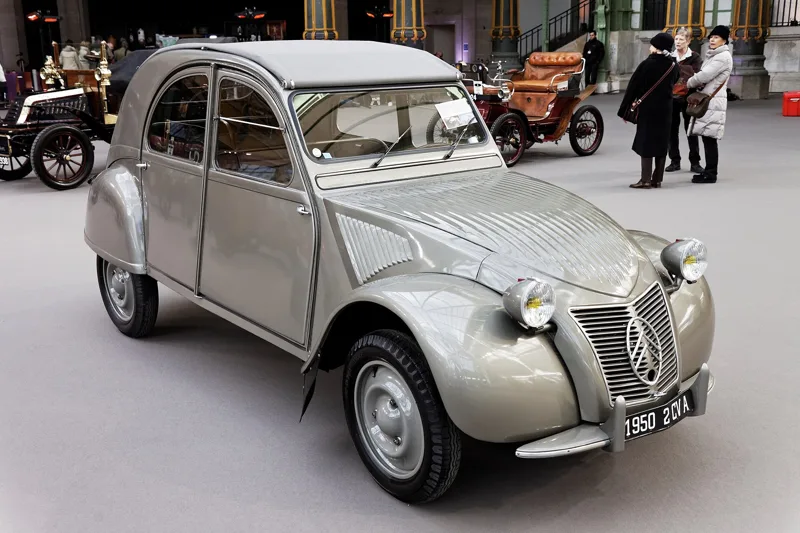
Cars kept 6-volt systems for decades, until larger engines with higher compression needed more starting power. Smaller cars held on longer, with the Volkswagen Beetle and the Citroen 2CV, which was still on 6 volts in 1970. The sealed AGM battery, which needs no refilling, was invented in 1971. A forty-two-volt standard was once proposed, but better motors, new wiring, digital controls and high-voltage hybrid systems largely ended that push. In 2023 Tesla began deliveries of the Cybertruck, which uses a 48-volt system and cuts 70 per cent of the wiring.
How are battery ratings measured?
Ampere hours (Ah) measure the energy a battery can store, and the rating is required by law in Europe. It is the total current delivered over 20 hours before the voltage falls below 10.5 volts at 80 degrees F (26.6 degrees C). In theory a 100 Ah battery supplies 5 amps for 20 hours, but capacity drops as the discharge rate rises, so a 100 Ah battery cannot hold 10.5 volts for 10 hours at 10 amps.
Cranking ratings describe starting power. Cold cranking amperes (CCA) measure the current available at 0 degrees F (-18 degrees C) for 30 seconds while holding at least 7.2 volts. Cranking amperes (CA) and marine cranking amperes (MCA) use 32 degrees F (0 degrees C), and hot cranking amperes (HCA) use 80 degrees F (27 degrees C) with at least 1.2 volts per cell. A 250 CCA battery therefore has more starting power than a 250 CA or MCA unit, and a 250 CA beats a 250 HCA. Modern fuel-injected engines start in a few seconds, so CCA matters less than it used to.
How long does a car battery last?
Excess heat is a leading cause of failure, because electrolyte evaporates and the plates lose surface area. Low temperatures can also cause failure. Deep discharge is the other threat. When a battery is left fully drained, for instance by leaving the lights on, lead sulfate coats the plates and can reduce life by a third or more. Sulfated batteries should be charged slowly. Corroded terminals can stop a car starting because of electrical resistance, and dielectric grease helps prevent that.
Date codes show when a battery was made, because stored batteries slowly lose charge. In the United States a battery made in October 2015 carries the code 10-5 or K-5, with the letters running from A for January and skipping I. South African codes give the year and week number, so 1336 means week 36 of 2013.
What happens to a car battery at the end of its life?
Recycling saves resources and keeps toxic lead out of landfill. A spent lead-acid battery is classed as hazardous waste under the Basel Convention. The EPA regards the 12-volt car battery as the most recycled consumer product on Earth. About 130 million auto batteries a year are replaced in the United States, and 99 per cent of them go in for recycling.
Problems arise where recycling is poorly regulated. Used batteries are shipped from industrialised countries to developing ones, where about 97 per cent of the lead can be recovered, but Pure Earth reckons more than 12 million people in poorer countries live with lead pollution from that work. The EPA tightened lead air standards in 2009, which made domestic recycling harder and more expensive, and American exports of used batteries to Mexico rose four-fold. Babies born with low birth weight increased among mothers living within a two-mile (3.2 km) radius of Mexican battery-recycling plants.